Plot Explained Spoilers guaranteed!
Plot Explained

Browse by genre

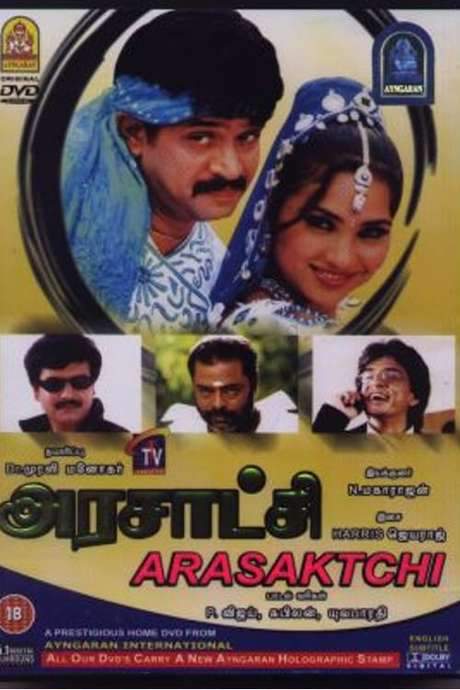
Arasatchi (2004) movie poster

Timeline

Arasatchi (2004) Timeline Explained – Every Event in Order

Release, runtime and language
2004 · 159 mins · Tamil
Loading streaming availability…
Directed by
N. Maharajan
Starring
Lara Dutta, Arjun Sarja, Nassar, Delhi Ganesh, Anandaraj, P. Vasu

Siddharth, scarred by the cruelty of corrupt attorneys, launches a ruthless crusade to murder every lawyer who helps criminals evade justice, refusing to spare even a family member when the target turns out to be his own kin.

On this page (5)
  1. 1 Where to watch
  2. 2 Events in order (13)
  3. 3 Timeline questions answered
  4. 4 Movie threads
  5. 5 Every angle
Loading streaming availability…

13 events in order · contains spoilers

Arasatchi Timeline: Events in Chronological Order

Every key event of Arasatchi (2004) in order, scene by scene, with when and where it takes place. Use it to untangle flashbacks, time jumps and parallel storylines, to refresh your memory before the sequel or to find the exact scene you are thinking of.

  1. Brammanadham is killed by a cricket ball

    Brammanadham, a lawyer who defends rapists and murderers, is killed when Siddharth hurls a cricket ball at him. The shocking act marks Siddharth's merciless stance against criminals and their defenders. The killing sets in motion a conflict that drives the rest of the story.

  2. Lara joins Siddharth at Rajesh's hotel as trainee

    Lara, Rajesh's daughter, returns from abroad to work at her father's five-star hotel. She becomes a trainee under the macho Siddharth, who runs the establishment with a strict, charismatic edge. The professional dynamic hints at a deeper future between them.

    Where
    Rajesh's five-star hotel
  3. Lara falls in love with Siddharth

    As Lara settles into her role, she finds herself drawn to Siddharth on a personal level. The budding romance between trainee and manager complicates Siddharth's vigilant stance toward crime. The relationship adds emotional stakes to the escalating conflict.

    Where
    Rajesh's hotel
  4. Prakash's raid leads to minister's arrest

    Prakash, a public cause campaigner, masterminds a raid on a brothel that results in the minister's arrest. The exposure of political corruption raises the stakes for everyone involved. This event places Siddharth squarely in the middle of a high-profile criminal saga.

    Where
    brothel district
  5. Siddharth witnesses the attack on Prakash's ally and refuses to testify

    During the aftermath, the minister's goons attack Prakash, and Siddharth is a witness to the crime. He chooses not to testify against those involved, a decision that deepens Lara's disillusionment with him. The incident marks a turning point in Siddharth's approach to justice.

    Where
    city streets
  6. Janakiraman defends the killer and wins acquittal

    Advocate Janakiraman takes up the killer's defense and secures an acquittal, despite Siddharth's fierce opposition. The courtroom victory highlights the power lawyers have to shield criminals. Siddharth's frustration grows as the legal system seems to shield those he opposes.

    Where
    courtroom
  7. Siddharth kills Janakiraman

    In a shocking turn, Siddharth murders Janakiraman after the acquittal. The act signals a dangerous escalation in his personal crusade against defenders of criminals. The line between justice and vengeance becomes increasingly blurred.

    Where
    courthouse
  8. Major Vishwanath vows to ensure the killer is caught

    Major Vishwanath, a military officer, witnesses the murder and postpones his own heart surgery to pursue the killer. He becomes a crucial, high-stakes ally in the pursuit. The episode injects a national-security dimension into Siddharth's vigilante campaign.

    Where
    hospital
  9. Siddharth explains his motive to target criminal defense lawyers

    Siddharth explains to the public why he targets lawyers who defend criminals, outlining the brutal logic behind his actions. He frames his mission as an attempt to deliver accountability beyond conventional justice. The explanation reframes the moral landscape for the audience.

    Where
    TV studio
  10. Vishwanath abandons his mission

    Vishwanath decides to abandon his mission after weighing the complexities and consequences. The withdrawal shifts the balance of pursuit and justice in the city. The decision echoes the film's theme of moral ambiguity.

    Where
    military/public sphere
  11. Karunakaran defends another rapist and is killed

    Karunakaran takes up the defense of another rapist and is killed soon after. The pattern of targeting high-profile defenders tightens the danger around Siddharth's circle. The violence amplifies the stakes of the legal battles between law and vengeance.

    Where
    courthouse
  12. Ashok Mehta arrives from Delhi and is revealed as Siddharth's brother-in-law

    Ashok Mehta arrives from Delhi as an advocate, and the twist reveals he is Siddharth's brother-in-law because Ashok's wife is Siddharth's long-lost sister. The personal connection deepens the family drama at the heart of the story. The revelation reframes the conflicts in familial terms.

    Where
    Delhi
  13. Ashok is shot dead on the court premises; chaos erupts

    In the climactic court premises sequence, Siddharth shoots Ashok dead. Police open fire, and bystanders form a human wall that is also shot. Siddharth addresses a TV crew, declaring that his mission has now spread to the masses.

    When
    climax
    Where
    court premises

Last updated: February 20, 2026 at 18:43

Was this helpful?

Timeline questions answered

Arasatchi Timeline Explained: Your Questions Answered

When does it happen, and why in that order? The questions people ask about the chronology of Arasatchi (2004): time jumps, flashbacks, cause and effect between scenes and the correct order of events, each answered with spoilers.

Q1

Why does Siddharth specifically target lawyers who defend criminals?

Siddharth launches his crusade after witnessing the cruelty and manipulation by corrupt attorneys who help criminals evade justice. His own father was scarred by such lawyers, which motivates him to take ruthless action against anyone who defends rapists and murderers. He believes the legal system is broken and that these lawyers are complicit in crimes by shielding the perpetrators.

Foreshadowing: The film opens with Brammanadham's death, establishing the pattern immediately.

  • motivation
  • siddharth
  • lawyers
  • criminals
  • vigilante
Q2

Why does Siddharth kill Brammanadham with a cricket ball?

Siddharth uses a cricket ball as a deliberate cover for his crime, making it appear as a tragic accident. This method allows him to kill Brammanadham, who defended rapists and murderers, while maintaining plausible deniability. The cricket ball becomes his signature weapon throughout his mission.

  • cricket ball
  • brammanadham
  • killing method
  • accident
Q3

Why does Lara leave Siddharth after the attack on Prakash?

Lara leaves Siddharth because he witnesses the minister's goons attacking Prakash but refuses to testify against them in court. This decision appears cowardly and contradicts the moral stance she expected from him. Her departure represents her disillusionment with his moral compromises.

Foreshadowing: The attack occurs right after Prakash's raid exposes the minister's corruption.

  • lara
  • prakash
  • testify
  • departure
  • moral conflict
Q4

Who is Ashok Mehta to Siddharth and why does it matter?

Ashok Mehta is Siddharth's brother-in-law because he is married to Siddharth's long-lost sister. This revelation creates the film's central twist, forcing Siddharth to confront whether he will spare his own family member. The personal connection transforms his crusade from a professional vendetta into a family betrayal.

  • ashok mehta
  • sister
  • brother-in-law
  • family twist
Q5

Why does Major Vishwanath abandon his mission to catch Siddharth?

Major Vishwanath, a military officer who witnessed Siddharth kill Janakiraman, decides to abandon his pursuit after grappling with the moral complexity of the situation. He postpones his heart surgery to catch the killer but ultimately weighs the consequences and chooses not to continue. His withdrawal shifts the balance of power in Siddharth's favor.

  • major vishwanath
  • heart surgery
  • mission
  • abandon
Q6

Why does Siddharth kill his own brother-in-law Ashok Mehta?

Siddharth adheres strictly to his code that no lawyer who defends criminals should be spared, even family. When Ashok Mehta arrives to defend a rapist, Siddharth sees him as another criminal defender regardless of their familial connection. The killing demonstrates how his crusade has consumed all moral boundaries.

Foreshadowing: The film explicitly states Siddharth refuses to spare even family members when the target is his kin.

  • ashok mehta
  • killing
  • family
  • brother-in-law
  • code
Q7

What happens in the final court scene with Siddharth?

In the climactic scene, Siddharth shoots Ashok Mehta dead on the court premises. Police open fire on the crowd, and bystanders form a human wall to protect Siddharth but are also shot. He then tells a TV crew that his mission has now spread to the masses, indicating his violent ideology has inspired others.

Foreshadowing: The buildup shows Siddharth's mission escalating from individual targets to inspiring mass violence.

  • court
  • ashok mehta
  • police
  • bystanders
  • human wall
  • tv crew
Q8

Why does Lara fall in love with Siddharth despite his violent nature?

Lara falls for Siddharth during her traineeship at her father's hotel, where he works as the charismatic and confident GM. His macho personality and mysterious intensity draw her in. However, the romantic subplot is abruptly abandoned as the story progresses, reflecting Siddharth's singular focus on his mission.

Foreshadowing: The timeline shows Lara's romantic development early in the story before the violence escalates.

  • lara
  • love
  • hotel
  • trainee
  • romance
Q9

Why does Siddharth refuse to testify against the minister's goons?

Siddharth refuses to testify because he has already decided to pursue his own form of justice outside the legal system. Testifying would require him to work within the very court system he despises. His decision reflects his belief that the legal system cannot deliver true justice, so he operates as a vigilante instead.

  • testify
  • minister goons
  • court
  • refuse
  • vigilante justice
Q10

How many lawyers does Siddharth kill in his crusade?

Siddharth kills four lawyers throughout the film: Brammanadham, Janakiraman, Karunakaran, and finally Ashok Mehta. Each victim is a lawyer who defended criminals (rapists or murderers) and was acquitted. The pattern shows escalating targets culminating in the family betrayal.

  • lawyers killed
  • brammanadham
  • janakiraman
  • karunakaran
  • ashok mehta
Q11

What triggers Siddharth's crusade against lawyers originally?

Siddharth's crusade is triggered by his father's suffering at the hands of corrupt attorneys. His father was scarred by the cruelty of lawyers who helped criminals escape justice. This personal trauma drives Siddharth to seek revenge on every lawyer who defends criminals, viewing them as equally guilty as the criminals they protect.

  • father
  • scarred
  • motivation
  • trauma
  • corrupt lawyers
Q12

Why do bystanders form a human wall to protect Siddharth at the end?

The bystanders form a human wall because Siddharth's message has resonated with the masses by the film's climax. His crusade against corrupt lawyers has inspired others who see him as a deliverer of justice outside a broken system. However, both the bystanders and Siddharth are shot by police, making the ending bleak.

  • bystanders
  • human wall
  • police
  • inspired
  • masses

Movie threads

More Movies Like Arasatchi, by Mood & Story

Curated lists built around what makes Arasatchi tick: the same mood, the same kind of story or the same emotional payoff. Each list explains why these movies belong together.

Vigilante justice movies with moral collapse like Arasatchi

When one person takes the law into their own hands, morality becomes the first casualty. If you liked Arasatchi's story of a man's violent crusade against corruption, you'll find similar films here. These movies explore the dark path of vigilante justice, where protagonists confront a flawed system, leading to heavy moral conflict and a bleak outlook. Discover other intense action-dramas about crime and punishment.

  • vengeful
  • grim
  • relentless
  • tense
  • angry
  • moral conflict
  • Tone: dark, grim, morally conflicted
  • Pacing: fast, relentless
Why these movies?

The story pattern: These narratives follow a clear, often linear descent into violence. A protagonist, typically scarred by injustice, embarks on a mission of retribution. The plot is driven by a series of confrontations, with the character's initial righteousness gradually eroding as they become as ruthless as the corruption they fight, culminating in a somber or tragic conclusion.

Why they belong together: Movies in this thread share a high-intensity, dark tone and a fast-paced structure focused on revenge. They are united by themes of systemic failure, the psychological cost of vengeance, and a heavy emotional weight that questions the very concept of justice.

Fast-paced crime thrillers with family betrayal like Arasatchi

A relentless criminal crusade is complicated by a shocking betrayal from within. Fans of Arasatchi's tense narrative and the devastating twist of family betrayal will find similar movies here. These stories combine fast-paced action with heavy drama, exploring how personal loyalties shatter under the weight of a violent mission. Discover other grim crime films where the enemy is closer than expected.

  • tense
  • betrayal
  • suspenseful
  • grim
  • family conflict
  • relentless
  • Tone: dark, tense, grim
  • Pacing: fast, suspenseful
Why these movies?

The story pattern: The narrative pattern involves a protagonist deeply committed to a dangerous goal, operating in a world of crime and corruption. The central conflict escalates until a devastating revelation: a key target or antagonist is someone they love or are bound to by blood. This twist forces an impossible choice, intensifying the drama and leading to a emotionally heavy resolution.

Why they belong together: These films are grouped by their shared combination of a fast, tense pace, a dark tone, and the powerful thematic focus on betrayal. The emotional core revolves around the conflict between a ruthless external mission and the collapse of intimate trust, creating a uniquely gripping and grim viewing experience.

Every angle

Arasatchi (2004) Explained: Plot, Timeline & Characters

Everything about Arasatchi in one place: what happens in the plot summary, the timeline in chronological order, the characters and meaning and a spoiler-free summary. What's After the Movie adds the cast, box office and post-credit scenes.

Coming soon on iOS and Android

The Plot Explained Movie Summary App

Plot summaries, endings explained and timelines on your phone. Catch up on any movie in minutes, save your favorites and never miss a twist again.

Be the first to know when we launch. Your email stays private, always.

Learn more about the app