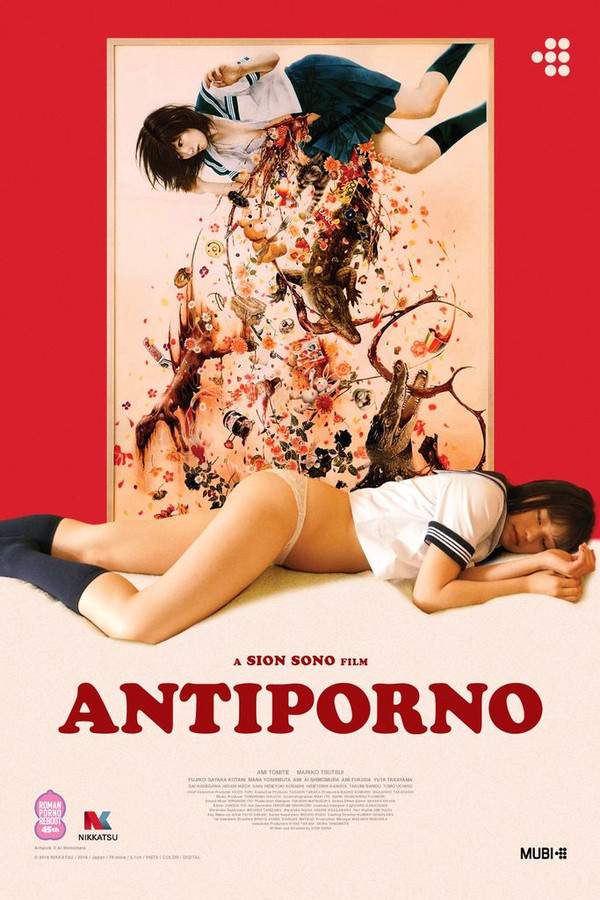
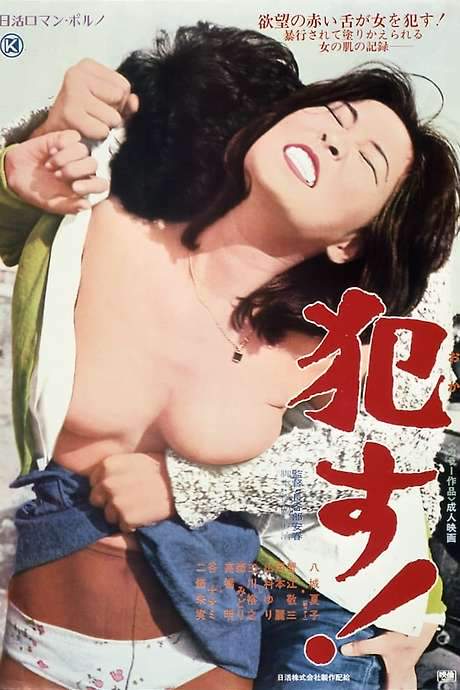
Kyôko Suzuki, [Ami Tomite], is a renowned artist and writer who feels trapped in a solitary gilded cage of success, speaking to the phantom memory of her dead sister [Ami Fukuda] as Taeko Suzuki. The grip of fame shadows every move, turning her creative life into a performance that never quite ends. When her assistant Noriko arrives—[Mariko Tsutsui]—to help prepare for a high-profile interview with a prominent lifestyle magazine, the atmosphere thickens with nerves, power, and a growing sense of unease. Kyôko wrestles with nausea and self-doubt, and, to shore up her dwindling confidence, subjects her older assistant to a sequence of ritual humiliations in front of others, a private game that spills into the public space of their small entourage. As the scene unfolds, the interviewer and a visitor join in the disturbing ritual, and the dynamics of control begin to feel almost ritualistic, almost staged, as if every act is a rehearsal for a larger narrative that might be controlling them all.
> Cut!
What begins as a controlled performance on camera reveals a harsher truth: the two women have been acting in a pornographic film, their lines and roles collapsing into one another. Noriko reveals herself to be the prima donna of the pair, frustrated with Kyôko's amateurishness and casting her into humiliations that echo the scripted sequence. The layers of their true personalities—two actresses both craving validation and wielding power—unfold alongside Kyôko’s own hidden past. The boundary between fiction and reality blurs further as Kyôko starts to question when the take will truly end, wondering who is directing whom in this endless loop of definitions and roles.
In a weighty flashback, Kyôko and Taeko sit at the family dinner with their parents, a scene that exposes a disturbingly casual approach to sex and desire. Taeko declares she is considering suicide and goes on to influence a classmate to kill her, a moment that marks the most piercing memory for Kyôko. The dinner table becomes a mosaic of trauma, revealing the way Kyôko absorbed lessons about intimacy from her parents’ own intimate moments and their troubled approach to sex education. The film then moves back and forth through time, with Kyôko continuing to perform and to drift through memories as if life were a script she could rehearse and rewrite, caught in a loop of action and reaction, a sensation some readers might describe as a Truman Show delusion or derealisation.
As the performances intensify, the roles within the pornographic film shift: Noriko’s earlier domination flips, and a chilling argument about freedom emerges—“freedom of women is essentially given by man and woman is not master of their own freedom.” In the following scene, Kyôko shouts her perspectives into the camera, while Taeko seems to flicker into view, alive enough to offer a birthday cake. The boundary between presence and absence, memory and illusion, feels thinner, the sense of being observed and judged intensifying with every cut and pause.
The conclusion is a relentless, operatic descent into the psyche of two women who are never merely themselves. Kyôko’s laughter erupts, maniacal and unrestrained, as paint spills across the floor in a riot of color that mirrors the chaos of memory and self-performance. When the moments quiet and she finally relaxes, Kyôko lies exhausted on the floor, seeking a way out of the endless loop of judgment and expectation that has become her life, still asking—perhaps almost rhetorically—for an exit from the surveillance of the self and the gaze of others.