#4,75627 Year: 2017
Runtime: 139 min
Language: Korean
Director: Yong-hwa Kim
Echo Score: 59Budget: $18M
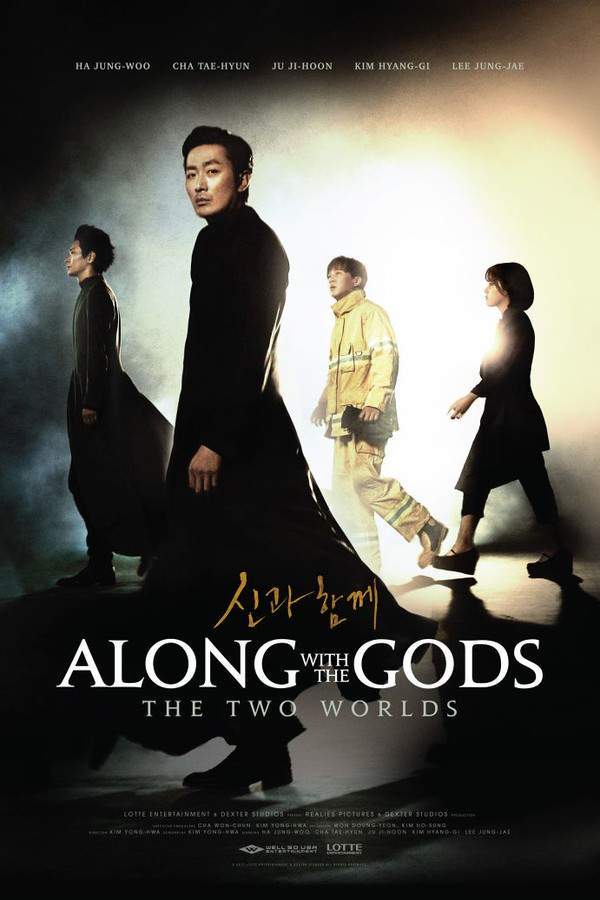
After death, a young firefighter finds himself guided through various realms of the afterlife by three spirit guardians. They lead him on a journey where his life's actions are judged against a strict moral code. As he confronts his past, his fate and the stability of the afterlife itself are put at risk, forcing the guardians to question their roles and the nature of justice.
Find where to stream, rent, or buy Along With the Gods: The Two Worlds (2017) in the US with current JustWatch availability, up-to-date pricing, and platform listings for subscription, rental, and digital purchase options.
Warning: spoilers below!
Haven’t seen Along With the Gods: The Two Worlds yet? This summary contains major spoilers. Bookmark the page, watch the movie, and come back for the full breakdown. If you're ready, scroll on and relive the story!
Read the complete plot breakdown of Along With the Gods: The Two Worlds (2017), including all key story events, major twists, and the ending explained in detail. Discover what really happened, and what it all means.
Firefighter Kim Ja-hong tragically loses his life while bravely performing his duties. In a unique twist of fate, he is guided to the afterlife by three guardians: Hae Won-maek, Lee Deok-choon, and their leader, Gang-rim. Their mission is to accompany and protect Ja-hong through seven grueling trials across a period of 49 days. Successful navigation of these trials will not only grant Ja-hong a chance at reincarnation but also earn the guardians the opportunity for their own rebirth.
In the first trial, aptly named the Hell of Murder, Ja-hong faces accusations concerning the death of a fellow firefighter who was trapped under debris during a devastating fire. As he stands on the brink of condemnation, a vital piece of evidence emerges: his colleague had urged him to prioritize the lives of civilians over his own desperate attempt to save him. Ja-hong bravely managed to rescue eight others but was forcibly restrained from returning to save his comrade as the structure collapsed. The judge ultimately acquits him, acknowledging his noble actions.
The second trial, Hell of Indolence, presents a character struggle as Ja-hong’s guardians highlight his inherent altruism and hard work. However, Ja-hong inadvertently undermines their arguments by confessing that his motivations were solely financial. Just as he is on the brink of punishment, Gang-rim intervenes, explaining that Ja-hong was driven by the need to support his brother and ailing mother, thus securing his second acquittal.
As the group makes its way to the Hell of Deceit, they come under attack from malevolent ghouls, triggered by a change in the fabric of Hell which indicates that a family member of Ja-hong has transitioned into a vengeful spirit. Gang-rim departs to investigate this mysterious shift, leaving the remaining guardians to continue the procession. Ja-hong finds himself accused of writing deceptive letters to the grieving families of the deceased, including Ji-yeon, the daughter of his fallen colleague. In a display of supernatural synergy, Gang-rim connects with Deok-choon from the mortal realm to advocate for Ja-hong, revealing that he had also penned false letters to uplift his mother’s spirits, which helped her focus on healing. The allegations against him crumble, leading to the dismissal of charges.
Gang-rim uncovers that it is Ja-hong’s brother, Kim Soo-hong, who has morphed into this vengeful spirit. The narrative twists further when it is revealed that Soo-hong met his end due to a tragic incident involving his partner, Dong-yeon, while on guard duty, a fact that was concealed by their superior, Lieutenant Park. Gang-rim intervenes to thwart a vengeful act initiated by Soo-hong, who is revealed to harbor resentment not towards Ja-hong but directed at Dong-yeon and Park. In a desperate plea, Dong-yeon tips off Soo-hong’s mother regarding his buried body, leading him to attempt suicide, but is saved by Gang-rim, illustrating the bond formed through their shared strife.
The trio navigates through the subsequent trials, including the Hell of Injustice and Betrayal, without facing formal judgment. However, in the Hell of Violence, Ja-hong’s past comes back to haunt him as he is tried for an incident from their youth where he physically abused Soo-hong during a period of severe neglect. As Ja-hong stands condemned, they attempt to merge his trial with the upcoming Hell of Filial Impiety. During this plea, Ja-hong confesses the deepest of his regrets that stemmed from their financial hardships, revealing that drugs to alleviate poverty drove his action.
In a revelatory twist, Soo-hong and Gang-rim bear witness to their mother enduring maltreatment at the hands of Park at an army base. This ignites Soo-hong’s ire, transforming him back into the malevolent spirit he once was, channeling his fury into a devastating tornado until he comprehends the repercussions of his wrath on Ja-hong’s fate.
Upon reaching the Hell of Filial Impiety, Ja-hong is swiftly pronounced guilty. He learns a heartbreaking truth: on the night he contemplated murder-suicide, his mother, Lee Duk-choon, had been awake and willing to accept his fate, as she recognized her burden on the family. In a pivotal moment, Soo-hong, with the aid of Gang-rim and Won-maek, accesses their mother’s dreams, discovering that she had already bestowed forgiveness upon Ja-hong for that dark night. This revelation clears him of judgment, allowing him the chance for rebirth.
Following these trials, Gang-rim becomes aware of the manipulations woven by Yeomra regarding his investigation into Soo-hong. This realization prompts him to confront Yeomra directly and select Soo-hong as the final soul to pass through before their own reincarnation, beautifully encapsulating their emotional tumult and the intertwined fates of these characters.
Last updated: November 09, 2024 at 11:34
Explore frequently asked questions about Along With the Gods: The Two Worlds (2017) with spoiler-rich answers covering the full plot summary, major story beats, character motivations, hidden details, and ending meaning. This movie summary FAQ helps explain confusing scenes, plot twists, and narrative decisions in clear, searchable detail.
Kim Soo-hong transformed into a vengeful spirit after his death because his partner Dong-yeon and Lieutenant Park concealed the truth about how he died. Soo-hong died during a guard duty incident, and the cover-up left his family suffering without knowing what truly happened to him. This injustice, combined with learning that his mother was being mistreated at the army base, fueled his rage and turned him into a malevolent spirit seeking revenge.
The narrative hints at Soo-hong's transformation when strange events occur in Hell, signaling a family member has become a vengeful spirit.
Ja-hong was accused in the Hell of Murder because a fellow firefighter died under debris during a fire, and Ja-hong was initially blamed for not saving him. He had managed to rescue eight civilians but was forcibly restrained from returning to save his colleague as the building collapsed. The judge ultimately acquitted him when evidence showed he was prevented from going back due to the structure's imminent collapse.
The story establishes early on that Ja-hong died a heroic death while saving others, setting up the moral complexity of the murder trial.
Ja-hong was accused of writing false letters to the grieving families of deceased firefighters, including Ji-yeon, the daughter of his fallen colleague. However, the truth revealed was more nuanced, Ja-hong had also written uplifting false letters to his own mother to help her heal from depression. While deceptive, these letters were motivated by love and compassion rather than malicious intent.
The deception charges emerge during the Hell of Deceit, where the guardians must defend Ja-hong's actions.
Ja-hong abused his brother during their youth because of extreme poverty and desperation. The family struggled financially, and Ja-hong turned to drugs and violence as a way to escape their grim circumstances. This dark period culminated in Ja-hong contemplating murder-suicide to end the family's suffering. Soo-hong witnessed this traumatic event, which further complicated their relationship.
The Hell of Violence trial directly confronts Ja-hong with this past trauma, forcing him to account for his actions during their childhood.
On the pivotal night Ja-hong contemplated murder-suicide, he was driven to despair by unbearable poverty affecting his family. However, his mother Lee Duk-choon was actually awake and aware of his dark intentions. Rather than stopping him, she silently accepted her fate, recognizing the burden she had become to her sons. This revelation comes during the Hell of Filial Impiety trial and becomes crucial to Ja-hong's redemption.
The Hell of Filial Impiety trial specifically examines Ja-hong's relationship with his mother and this darkest moment.
Ja-hong's mother forgave him through a dream visitation facilitated by Gang-rim, Won-maek, and Soo-hong. They accessed her dreams in the afterlife, where she revealed that she had already forgiven Ja-hong for his contemplation of murder-suicide. Her unconditional forgiveness, granted even while she was alive, became the key evidence that cleared Ja-hong of filial impiety and allowed him a chance at rebirth.
This emotional moment is set up through the buildup to the Hell of Filial Impiety, where forgiveness becomes the central theme.
Yeomra manipulated Gang-rim by using his investigation into Soo-hong's death as a way to influence the trial outcomes. Gang-rim discovered that Yeomra had been orchestrating events behind the scenes, directing how the investigation should proceed. This revelation led Gang-rim to confront Yeomra directly and ultimately choose Soo-hong as the final soul to pass through before their own reincarnation, overriding Yeomra's schemes.
The story builds toward this confrontation as Gang-rim uncovers inconsistencies in Yeomra's directives throughout the trials.
Gang-rim defended Ja-hong persistently because doing so would earn the guardians their own chance at rebirth if Ja-hong successfully completed all seven trials. Additionally, Gang-rim became personally invested in Ja-hong's fate as he witnessed the family's suffering and the injustice surrounding Soo-hong's death. His dedication went beyond duty, particularly when he intervened in the Hell of Indolence by explaining Ja-hong's financial motivations were to support his brother and ailing mother.
Gang-rim's personal stake becomes evident through his increasingly proactive interventions across multiple trials.
The ghouls attacked Ja-hong in the Hell of Deceit because a significant change had occurred in Hell, specifically, a family member of Ja-hong had died and transformed into a vengeful spirit. This disturbance in the afterlife's fabric attracted the malevolent ghouls who prey on such spiritual disruptions. Gang-rim departed to investigate this anomaly while the remaining guardians continued with Ja-hong's trial.
The attack serves as the narrative trigger that leads to the discovery of Soo-hong's vengeful spirit.
Lieutenant Park was responsible for covering up the circumstances of Soo-hong's death. When Soo-hong died during a guard duty incident involving his partner Dong-yeon, Park concealed the truth from Soo-hong's family. This cover-up prevented the family from knowing what actually happened to Soo-hong, contributing to their years of suffering and ultimately fueling Soo-hong's transformation into a vengeful spirit.
The injustice of this cover-up becomes a central point of conflict when Soo-hong's spirit seeks revenge.
Ja-hong must face seven grueling trials across 49 days in the afterlife. These trials take place in different hells: Hell of Murder, Hell of Indolence, Hell of Deceit, Hell of Injustice, Hell of Betrayal, Hell of Violence, and Hell of Filial Impiety. Successfully passing all seven trials grants him a chance at reincarnation and earns his guardians the opportunity for their own rebirth.
The seven trials are introduced at the beginning of Ja-hong's journey, establishing the stakes and structure of the narrative.
Discover curated groups of movies connected by mood, themes, and story style. Browse collections built around emotion, atmosphere, and narrative focus to easily find films that match what you feel like watching right now.
Characters are judged for their earthly deeds in a supernatural court.If you enjoyed the high-stakes moral trials of Along With the Gods, you'll like these films. This list features movies with supernatural realms, judgment after death, and intense character reckonings. Find similar fantasy dramas where characters must answer for their lives.
The narrative follows a protagonist's journey through a structured, often bureaucratic, afterlife where their life is meticulously reviewed. The plot is driven by a series of moral or ethical trials, often revealing hidden truths and forcing a confrontation with past sins, ultimately leading to a verdict that decides their eternal fate.
These films are grouped by their shared core concept of a post-mortem judgment system. They combine fantasy world-building with heavy moral drama, creating a specific vibe of existential dread mixed with the hope for redemption, all set against a backdrop of high-stakes supernatural justice.
Stories where hidden sacrifices and burdens come to light.For viewers who were moved by the themes of familial burden and sacrifice in Along With the Gods. These movies share a focus on characters carrying heavy secrets, dealing with grief and loss, and experiencing bittersweet emotional revelations. Discover similar dramatic stories with high emotional weight.
The story unravels a central mystery or hidden truth about a character's past actions, often involving a significant personal sacrifice made for the sake of family or brotherhood. The emotional journey is one of uncovering this burden, leading to a climactic revelation that recontextualizes everything and delivers a powerful, emotionally charged resolution.
This thread connects movies through their profound exploration of guilt, sacrifice, and the unspoken burdens of love. They share a heavy emotional weight, a dark or bittersweet tone, and a narrative structure built around uncovering painful, transformative truths about the past.
Don't stop at just watching - explore Along With the Gods: The Two Worlds in full detail. From the complete plot summary and scene-by-scene timeline to character breakdowns, thematic analysis, and a deep dive into the ending - every page helps you truly understand what Along With the Gods: The Two Worlds is all about. Plus, discover what's next after the movie.
Track the full timeline of Along With the Gods: The Two Worlds with every major event arranged chronologically. Perfect for decoding non-linear storytelling, flashbacks, or parallel narratives with a clear scene-by-scene breakdown.
Discover the characters, locations, and core themes that shape Along With the Gods: The Two Worlds. Get insights into symbolic elements, setting significance, and deeper narrative meaning - ideal for thematic analysis and movie breakdowns.