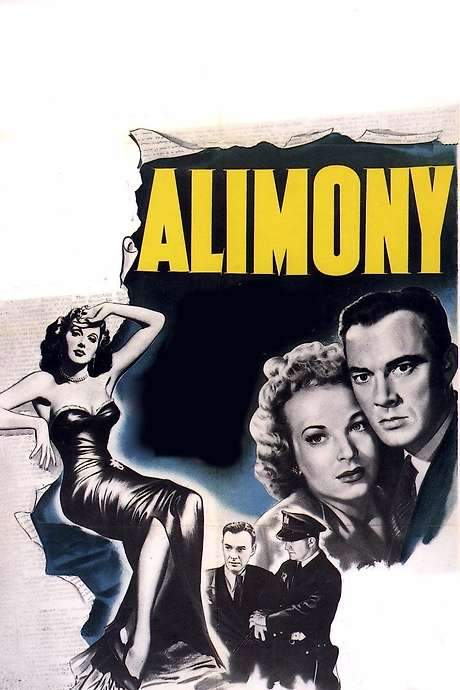
The Office of Dependency Benefits, or O.D.B., is a U.S. government agency tasked with paying and providing support to women whose husbands served in World War II. Even after the war, the office continues to handle these concerns, maintaining a quiet but essential presence in veterans’ families.
Colonel Pete Martin, Paul Kelly, is assigned to root out a pattern of incorrect and fraudulent claims within the agency. He goes undercover as a newspaper reporter—the job he held before the war—and begins his investigation on the West Coast, watching for signs of deception among the women who collect payments. Early on, he witnesses a sketchy exchange: Helen Keefe, Elizabeth Wright, hands cash to a dubious man named George Shields, Terry Frost, and soon after, is introduced to another equally suspicious man. Pete’s suspicions grow as he digs deeper.
At a restaurant, a sharp-eyed businesswoman named Sheila Seymour, Kay Francis, presents herself as the owner of a chic beauty salon and as someone running a canteen for servicemen. Pete remains unaware that she also sits at the top of a racketeering operation that exploits allotments for profit. To aid her, she has three men: Whitey Colton, Otto Kruger, Louis Moranto, Matty Fain, and Deacon Sam, Selmer Jackson.
Pete uncovers ongoing fraud at Sheila’s canteen and, sensing trouble, warns her that he’s onto the illegal activities. Sheila, furious with the possibility of exposure, fires Moranto and assigns Whitey to shadow Pete and keep tabs on the investigation. Pete continues to pose as a reporter, visiting Sheila’s operation and arranging an interview to gather background for his story. He remains vigilant but careful, not yet realizing the full extent of the criminal enterprise he’s up against.
Meanwhile, Sheila’s daughter Connie Seymour, Teala Loring, becomes a focal point. Sheila’s plan is to keep Connie in school for two more months, then take her to South America with Whitey as a sort of peaceable exit strategy. But trouble brews when Spike Malone, Bernard Nedell, and his girlfriend Gladys Smith, Gertrude Michael, try to muscle into the racket. Gladys recognizes Sheila from their days in reform school, creating a complex web of past loyalties and present motives. Pete’s investigations begin to reveal the scope of Sheila’s operation as Gladys starts sending blackmail letters, which Sheila orders Whitey to uncover and seize the blackmailer.
The truth about the racketeering scheme becomes clearer when Gladys ends up in jail and learns that Sheila is behind the entire allotment fraud operation. Gladys’ subsequent release becomes personal revenge toward Connie, and the tension escalates into a night of danger. Spike and Gladys orchestrate a spree of wild parties to lure Connie into trouble, then threaten Sheila’s family, demanding a large ransom for the girl. A confrontation erupts, and a gunfight ensues. Whitey and his men arrive to intervene, and a struggle leaves Spike wounded while Sheila kills Gladys.
After the chaos, Connie is ultimately placed under Pete’s guardianship, and he asks Sheila to help model a proper path for the girl. Sheila, using Whitey once again, attempts to aid in Connie’s protection by orchestrating an escape, but the situation turns violent, and Whitey is shot and wounded in the process. Pete’s chase leads him to Spike, revealing connections to Sheila that widen the case.
Despite the turmoil, Pete never loses sight of his duty. Connie is arranged to head for Mexico with trusted ally Deacon Sam, Selmer Jackson, but Sheila—the girl’s mother and the mastermind behind the racket—moves to eliminate the threat posed by Pete. In a final confrontation, Sheila is killed by one of Pete’s men as she tries to kill him. With the danger resolved, Pete files his report to the O.D.B. and judges that Connie’s past should be treated with caution but not condemned, deciding to let her continue toward an uncertain future rather than shutting the door on her life entirely.
Across this tense, morally gray landscape, the story follows a man’s determination to separate truth from fraud, highlight the human costs behind wartime support, and weigh the consequences of upholding duty when personal loyalties collide with the law. The investigation traverses deception, danger, and hard choices, leaving a lasting impression of the fragile balance between justice and mercy.