Plot Explained Spoilers guaranteed!
Plot Explained

Browse by genre

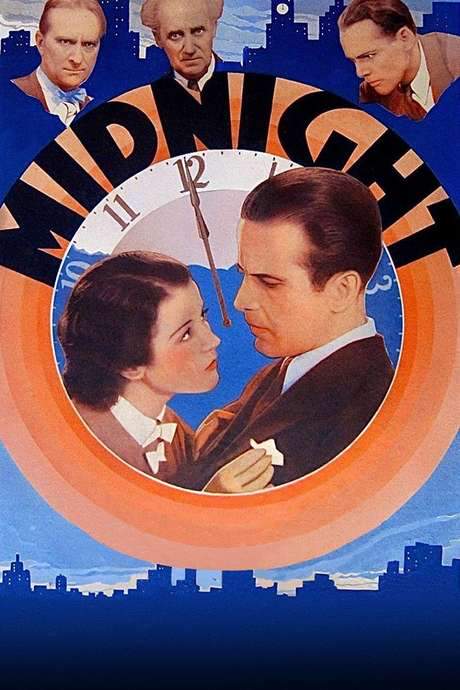
Midnight (1934) movie poster

Plot Summary

Midnight (1934) Plot Summary Explained

Release, runtime and language
1934 · 76 mins · English
Directed by
Chester Erskine
Starring
Humphrey Bogart, Granville Bates, Henry O'Neill, Richard Whorf, Henry Hull, Margaret Wycherly

At midnight, one woman is slated for execution while another plans a murder. Jury foreman Edward Weldon’s investigation results in a death sentence for Ethel Saxon. Meanwhile, his daughter Stella confesses to killing her lover, gangster Garboni, just as Saxon is about to be placed in the electric chair.

On this page (6)
  1. 1 Where to watch
  2. 2 What happens: full plot
  3. 3 Plot questions answered
  4. 4 Movie threads
  5. 5 Movies like Midnight
  6. 6 Every angle

Where to watch

Where to Watch Midnight (1934)

Where can you watch Midnight? Stream, rent or buy it in the US, including on fuboTV, Philo and Artiflix: current JustWatch availability with up-to-date prices.

Streaming availability powered by JustWatch

Full plot summary · contains spoilers

What Happens in Midnight: Full Plot Summary

The whole story of Midnight (1934) explained, from the opening scene to the final frame: every key event, every twist and what it all adds up to. Read it as a quick recap before the sequel, to check a scene you missed, or to finally understand what really happened.

A woman named Ethel Saxton, Helen Flint, is on trial for shooting her husband to death; her defense is that she did not mean to kill him, but fired under extreme emotional pressure because she could not stand that he was leaving her. The court and spectators entertain a glimmer of mercy, treating this as a crime of passion, a momentary flare of emotion rather than calculated harm. Yet the jury, led by Edward Weldon, O. P. Heggie, weighs the evidence with careful scrutiny. When he asks whether she picked up the money her husband had gathered to leave with, and she says yes, the mood shifts. That single detail is presented as a possible sign of premeditation, and the idea that the act was planned harder than the moment of heat festers in the room. The verdict comes quickly and cruelly, and Ethel Saxton is convicted of first-degree murder, sentenced to death, and prepared for a fate she bears with quiet dignity.

On the evening of Ethel's execution, the weight of Weldon’s decision presses down on him and those around him. Friends gather at his house to offer support and distraction—bridges and small talk fill the air—yet reporters swarm the doorstep, hungry for sensation. An unscrupulous journalist has bribed Weldon’s son-in-law to rig a fake radio broadcast from inside the house, amplifying sensational details of the impending execution and probing Weldon’s emotions for a public reckoning. The scene casts a halo of sorrow over the solemn moment, turning personal duty into a public spectacle.

Into this charged atmosphere steps Stella Weldon, Sidney Fox, a young woman drawn to a man named Gar Boni, Humphrey Bogart who appears at the trial and quickly captivates her. In the weeks that follow, she falls deeply in love with him, even as he warns that he is leaving town that night because the romance feels too intense for him to handle. He travels with a gun he insists is necessary for his work, a detail that unsettles Stella and intensifies the tension of their farewell. She pleads with him to stay, even threatening to meet him at the train station at midnight if he does not return to share one more moment.

As the fake broadcast continues to manipulate emotions, Weldon finds himself torn between his legal duty and his personal loyalties. He steps outside to address the waiting press with an emotional, if cautious, statement about the integrity of the law and the necessity of upholding it, even when it hurts those he loves. At that pivotal moment, a gunshot erupts in Gar Boni’s car across the street and a second tragedy darkens the night, cutting through the public spectacle with a brutal twist.

When Stella returns home carrying Gar Boni’s gun, she declares that she has shot him. The family quickly schemes to craft a self-defense narrative, urging Weldon to let the story evolve to protect her. Yet Weldon remains acutely aware of the law’s demands, and he contacts the District Attorney, Moffat Johnston, to report the truth. The investigators soon uncover a crucial clue: the bullet that killed Gar Boni did not come from Stella’s gun, but from a car across the street, revealing that Gar fell victim to a gangland rubout rather than a crime of passion. The revelation shifts the entire moral calculus, and Stella collapses into tears in her father’s arms as the weight of his earlier stance—his commitment to the rule of law—receives vindication, even as the family grapples with the emotional fallout of the night’s double tragedy.

Last updated: October 09, 2025 at 11:27

Was this helpful?

Plot questions answered

Midnight Plot Explained: Your Questions Answered

The questions people ask most about Midnight (1934): what happens in the confusing scenes, why the characters do what they do, the twists, hidden details and what the ending means. Each answer contains spoilers.

Q1

Why did the jury convict Ethel Saxon despite her emotional defense?

Jury foreman Edward Weldon asked Ethel if she picked up the money her husband had collected to leave with after shooting him. Her affirmative answer suggested premeditation rather than a crime of passionate impulse. This single detail convinced the jury she had planned the act, leading to a first-degree murder conviction and death sentence.

Foreshadowing: Earlier courtroom speculation about her acquittal contrasts sharply with how the money question shifts the jury's interpretation.

  • Ethel Saxon
  • jury
  • premeditation
  • money
  • conviction
  • crime of passion
Q2

Why does Gar Boni carry a gun throughout the movie?

Gar Boni insists his gun is necessary for his work as a gangster. He tells Stella it is for professional use, not for threatening her. The gun becomes a source of tension between them, especially when she notices it in his car.

Foreshadowing: The gun's presence foreshadows the violent world Gar inhabits and sets up the circumstances of his death.

  • Gar Boni
  • gun
  • gangster
  • work
  • threat
Q3

How did Gar Boni actually die?

Stella initially claims she shot Gar Boni in self-defense during an argument in his car. However, investigators discover the bullet that killed him did not come from her gun. Evidence shows the bullet came from a car across the street, confirming Gar Boni was killed in a gangland rubout, not by Stella.

Foreshadowing: The investigation reveals the truth behind the shooting, vindicating Edward Weldon's commitment to the law.

  • Gar Boni death
  • gangland rubout
  • bullet
  • investigation
  • self-defense
Q4

Why did Stella confess to shooting Gar Boni?

Stella returns home carrying Gar Boni's gun and declares she shot him. She presents it as self-defense, likely hoping to frame the situation as justified. The family initially urges Edward to help craft a story protecting her from murder charges.

Foreshadowing: Her confession sets up the family's moral dilemma and Edward's ultimate choice to report the truth.

  • Stella confession
  • self-defense
  • Gar Boni
  • family
  • Edward Weldon
Q5

Why did Edward Weldon report the truth to the District Attorney?

Despite pressure from his family to help exculpate Stella, Edward contacts the District Attorney to reveal what actually happened. His decision reflects his deep commitment to upholding the law, even when it means potentially incriminating his own daughter. He refuses to let personal loyalty override his legal oath.

Foreshadowing: Edward's earlier vote to convict Ethel Saxon was driven by the same principled adherence to the law, which now guides his decision about Stella.

  • Edward Weldon
  • District Attorney
  • truth
  • law
  • loyalty
  • oath
Q6

What was the fake radio broadcast about?

An unscrupulous journalist bribes Edward Weldon's son-in-law to rig a fake radio broadcast from inside the house. The broadcast pretended to report on Ethel Saxon's execution, describing her screaming and collapsing as she went to the electric chair. This was designed to manipulate Edward's emotions and create sensational content for the press.

Foreshadowing: The fake broadcast heightens the emotional tension of the execution night and puts Edward in the public eye.

  • fake broadcast
  • journalist
  • execution
  • manipulation
  • press
Q7

Why was Gar Boni leaving town?

Gar Boni tells his friends he is leaving town because Stella is getting too serious about their relationship. He finds her intensity overwhelming and decides to leave that night. He even warns her that he is departing, though he still meets her for a final encounter that ends in tragedy.

Foreshadowing: His decision to leave sets the stage for their final confrontation on the night of Ethel's execution.

  • Gar Boni
  • leaving town
  • relationship
  • Stella
  • departure
Q8

Why does Stella Weldon fall for a gangster?

Stella meets Gar Boni when he appears at her father's trial and is quickly captivated by him. Despite warnings from Gar's friends that she is getting too serious, she falls deeply in love with him. Her intensity concerns Gar, who ultimately feels trapped by the seriousness of her feelings.

Foreshadowing: Stella's romantic pursuit of Gar directly leads to the night's tragic events.

  • Stella Weldon
  • Gar Boni
  • romance
  • attraction
  • gangster
Q9

Why does Ethel Saxon's execution affect Edward Weldon so deeply?

As jury foreman, Edward Weldon asks the critical question about the money that leads to Ethel's conviction. He carries the weight of her death sentence. On the night of her execution, the public spectacle and fake broadcast amplify his guilt and emotional turmoil, making him question his role in the legal process.

Foreshadowing: Edward's crisis of conscience reaches its peak when he must choose between protecting his daughter and upholding the law.

  • Ethel Saxon
  • execution
  • Edward Weldon
  • guilt
  • jury
  • death sentence
Q10

What happens at midnight in the movie?

Midnight serves as the pivotal timing for two simultaneous events: Ethel Saxon is scheduled for execution at the death house, and Stella threatens to meet Gar Boni at the train station at midnight if he does not return. Both tragedies converge around this deadline, with Ethel's execution and Gar's death occurring as the clock strikes twelve.

Foreshadowing: The title "Midnight" reflects this convergence of fate and the deadline that drives the film's tension.

  • midnight
  • execution
  • deadline
  • train station
  • fate

Movie threads

More Movies Like Midnight, by Mood & Story

Curated lists built around what makes Midnight tick: the same mood, the same kind of story or the same emotional payoff. Each list explains why these movies belong together.

Movies about a single night of reckoning like Midnight

A single, tense evening forces life-altering choices and confronts moral consequences. If you liked the tense, compressed timeline of "Midnight," explore more movies where high-stakes events unfold over one decisive evening. These films share a similar feeling of relentless pressure, moral quandaries, and high-voltage drama, often centered on crime and personal sacrifice.

  • urgent
  • anxious
  • gripping
  • solemn
  • desperate
  • night-time
  • Tone: tense, desperate, morally fraught
  • Pacing: fast, relentless
Why these movies?

The story pattern: This narrative pattern unfolds primarily within a condensed timeframe, typically a single night. A central crisis—a murder, a kidnapping, a moral dilemma—ignites a chain of events that forces characters into a relentless series of confrontations and decisions, culminating in a resolution that carries heavy emotional and moral weight by dawn.

Why they belong together: Movies are grouped here for their shared structure of a compressed, high-tension timeline and their focus on irreversible acts that occur under the cover of darkness. They deliver a consistent experience of anxiety, urgency, and the heavy consequences that follow a night of intense action.

Movies with bittersweet justice and moral scars like Midnight

Stories where a legal victory or personal exoneration is shadowed by lasting grief. If you appreciated the complex, emotionally heavy ending of "Midnight," you'll find similar resonance in these movies. They explore stories where truth prevails or a crime is resolved, but the characters are left scarred by grief, guilt, or the collateral damage of the journey.

  • bittersweet
  • melancholic
  • solemn
  • gripping
  • thought-provoking
  • morally complex
  • Tone: bittersweet, melancholic, solemn
  • Pacing: steady, building to emotional climax
Why these movies?

The story pattern: The narrative journey typically involves a fight for truth or justice against a backdrop of violence or wrongful accusation. While the immediate threat is resolved, the climax reveals that the cost of this resolution is immense. The ending acknowledges a technical 'win' but emphasizes the enduring emotional and moral scars on the characters, leaving the audience with a poignant mix of relief and sorrow.

Why they belong together: These films are connected by their distinctive emotional payload: a conclusion that is simultaneously relieving and heartbreaking. They share a focus on the imperfect nature of justice and the heavy price of truth, creating a deeply resonant and thought-provoking viewing experience.

If you liked this

Movies Like Midnight

Similar movies to Midnight: the same genre, themes or kind of story. Each one comes with its own plot summary, timeline and ending explained.

Browse all movie summaries

Every angle

Midnight (1934) Explained: Plot, Timeline & Characters

Everything about Midnight in one place: what happens in the plot summary, the timeline in chronological order, the characters and meaning and a spoiler-free summary. What's After the Movie adds the cast, box office and post-credit scenes.

Coming soon on iOS and Android

The Plot Explained Movie Summary App

Plot summaries, endings explained and timelines on your phone. Catch up on any movie in minutes, save your favorites and never miss a twist again.

Be the first to know when we launch. Your email stays private, always.

Learn more about the app