Plot Explained Spoilers guaranteed!
Plot Explained

Browse by genre

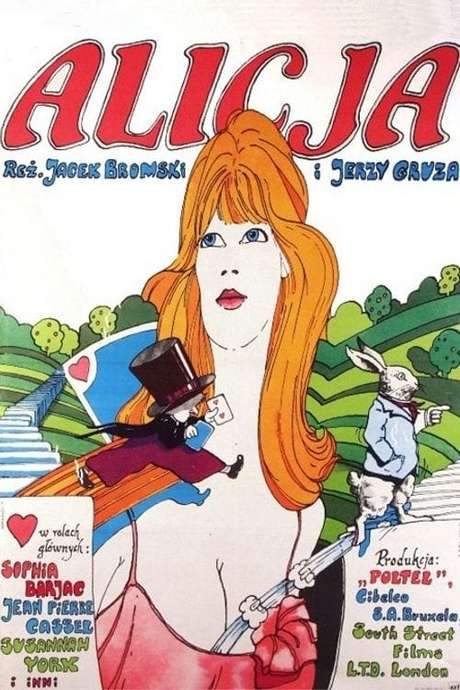
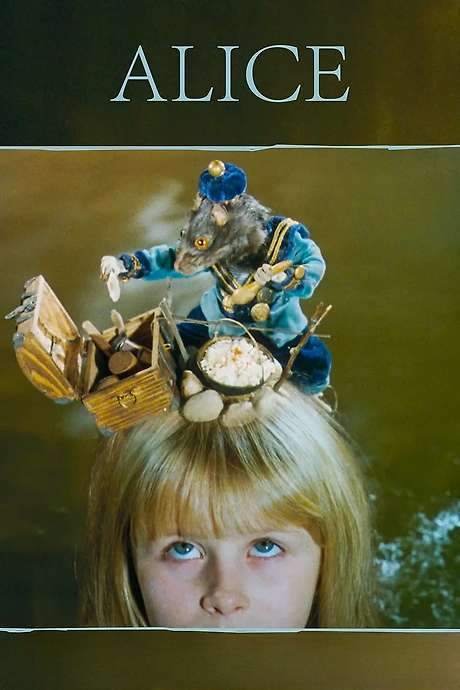
Alice (1988) movie poster

Timeline

Alice (1988) Timeline Explained – Every Event in Order

Release, runtime and language
1988 · 85 mins · French
Loading streaming availability…
Directed by
Gabriel Benattar
Starring
Martin Provost, Anne Consigny, Alain Fromager, Nadia Mourouzi, Denis Manuel

A quiet English girl named Alice chases a white rabbit and slips into a distorted version of her own world. She is surrounded by animated household objects and stuffed animals, confronting a surreal nightmare that forces her to navigate twisted, odd obstacles to escape. The film offers a bizarre, visually striking reinterpretation of Lewis Carroll’s ‘Alice’s Adventures in Wonderland’.

On this page (6)
  1. 1 Where to watch
  2. 2 Events in order (15)
  3. 3 Timeline questions answered
  4. 4 Movie threads
  5. 5 Movies like Alice
  6. 6 Every angle
Loading streaming availability…

15 events in order · contains spoilers

Alice Timeline: Events in Chronological Order

Every key event of Alice (1988) in order, scene by scene, with when and where it takes place. Use it to untangle flashbacks, time jumps and parallel storylines, to refresh your memory before the sequel or to find the exact scene you are thinking of.

  1. Alice and her sister by the brook

    Alice sits by a brook with her sister and throws rocks into the water. The peaceful moment hints at the imagination that will pull her into a strange world. The scene establishes a dreamy, childlike mood that underlines the adventure to come.

    When
    afternoon
    Where
    Brook
  2. Back home in the sitting room tossing rocks into tea

    Back at home, Alice returns to her sitting room and begins tossing rocks into a cup of tea. The ordinary ritual contrasts with the peculiar tremor in the air around her. A sense that something uncanny is about to happen hangs over the scene.

    When
    afternoon
    Where
    Alice's sitting room
  3. The Bunny comes alive from the glass case

    A creaking noise draws Alice's attention to a taxidermic White Bunny in a glass case. The Bunny moves, frees himself by grabbing a hidden pair of scissors, and smashes the case to escape. His sudden liberation marks the start of a surreal chase.

    When
    moments after
    Where
    Sitting room by the glass case
  4. Chase to the hilltop desk and fall into the cellar

    The Bunny darts toward a writing desk perched on a hill, and Alice follows into the pursuit. She crawls into the drawer and tumbles into a dark cellar beneath the desk. The descent plunges her into a strange, new realm.

    When
    immediately after
    Where
    Writing desk on a hill
  5. Descent through the dustbin and elevator ride

    Inside this other world, Alice slips into a dustbin and slides into an elevator that travels past shelves of odd objects. The elevator stops and deposits her atop a pile of leaves. The leaves stir, revealing another desk beyond.

    When
    shortly after
    Where
    Dustbin / Elevator
  6. Discovery of the tiny desk and key; miniature door and ink bottle

    The leaves uncover a new desk where a tiny key hides nearby. Alice uses the key to open a miniature door and sees the Bunny vanish into a painted garden. She also spots an unlabeled bottle of dark ink nearby, hinting at future powers.

    When
    soon after
    Where
    New desk world / miniature door area
  7. Ink transforms Alice into a china doll

    Alice drinks the dark ink and shrinks into a delicate china doll, unable to fit through the tiny door. The altered size makes the world feel both wondrous and perilous. The transformation foreshadows the changing scales of her journey.

    When
    shortly after
    Where
    Miniature door area
  8. Butter tart triggers size change; tears flood; Bunny drops tarts

    A butter tart makes her grow again, blocking the path through the door. Frustration erupts into tears, flooding the room with water-like tears. The Bunny arrives with a tray of tarts; after eating one, Alice returns to doll size and retrieves the key to continue the chase.

    When
    later
    Where
    Desk world
  9. Back to the brook; maid misrecognition and ink return to size

    Through the door, Alice returns to the banks of a brook and is mistaken for the Bunny’s maid, who orders her to fetch scissors from his house. Inside, she drinks from another ink bottle and becomes her true size again, only to be trapped inside the Bunny’s now-too-small house. The Bunny’s allies then send a skull-headed lizard down the chimney to eject her, but it bursts, spilling its sawdust innards.

    When
    after
    Where
    Brook / Bunny's house
  10. Imprisoned in a doll shell within a jars-filled storage room

    The Bunny and his animal companions trap Alice inside an Alice-shaped doll shell, locking it in a storage room filled with specimen jars. Her confinement intensifies the sense of danger and claustrophobic magic. She strains to find a way out of this surreal prison.

    When
    after
    Where
    Storage room with specimen jars
  11. Escape with the sardine can key; hall of doors

    Alice breaks free of the doll shell and discovers a key inside a sardine can. She uses the key to escape the storage room and steps into a hall of doors, each one leading to a different corner of the dreamlike world. The journey continues as she prepares to choose her next path.

    When
    after
    Where
    Storage room to hall of doors
  12. Caterpillar and mushroom advice

    In a room filled with sock-worms, a stocking-Caterpillar explains that eating one piece of his darning mushroom causes things to grow, while the other piece makes things shrink. He warns that size can be a tool or a trap depending on how it’s used. Alice weighs this knowledge as she plans her next move.

    When
    after
    Where
    Hall of doors
  13. Dollhouse enlargement and Bunny piglet; attic pursuit

    Following the sound of a screaming baby, Alice enters a tiny dollhouse and enlarges herself by eating a piece of the mushroom. She finds the Bunny tending a piglet in baby clothes, and the Bunny escapes, prompting her to chase him to the attic. There, a wind-up March Hare and a marionette Hatter host a mechanical tea party as she closes in.

    When
    after
    Where
    Dollhouse / Attic
  14. Painted garden, croquet, and court chaos

    Behind a curtain of clothes, Alice reaches the painted garden where the King and Queen of Hearts arrive with a troop of playing cards. The Queen orders the Bunny to behead several Jacks, and he complies, turning the croquet lawn into a chaotic spectacle of living animals. The surreal court grows increasingly ominous as events unfold.

    When
    climax
    Where
    Painted garden
  15. The trial and waking in the sitting room

    In a courtroom-like finale, Alice is put on trial for eating the Queen's tarts. The King pushes a scripted procedure and the Queen demands her head, while the Bunny advances with scissors. The dream ends as Alice wakes up in her sitting room, the room filled with familiar objects her adventure completed, and she considers her next move with the hidden drawer and its scissors nearby.

    When
    end
    Where
    Sitting room

Last updated: October 09, 2025 at 14:18

Was this helpful?

Timeline questions answered

Alice Timeline Explained: Your Questions Answered

When does it happen, and why in that order? The questions people ask about the chronology of Alice (1988): time jumps, flashbacks, cause and effect between scenes and the correct order of events, each answered with spoilers.

Q1

Why does the White Bunny have scissors and what do they represent?

The White Bunny carries scissors as his primary tool for solving problems in the dream world. Throughout the story, the scissors serve multiple purposes, he uses them to smash his glass case, behead the fencing Jacks for the Queen, and ultimately threaten Alice during the trial. The scissors represent power and violence concealed within seemingly harmless objects, a recurring motif in this surreal nightmare. At the end, Alice finds the actual scissors in the hidden drawer, suggesting they have escaped the dream into reality.

Foreshadowing: The Bunny's first action upon waking is to retrieve the scissors from a hidden drawer, establishing them as his essential instrument throughout the story.

  • white bunny
  • scissors
  • queen of hearts
  • beheading
  • power
Q2

How does the ink bottle change Alice's size?

The unlabeled bottle of dark ink in the miniature door area contains a shrinking potion that transforms Alice into a small china doll. When she drinks the ink, she becomes too small to pass through the tiny door she was trying to enter. The effect is reversible through consuming food, in this case, butter tarts that restore her to normal size. This creates a frustrating cycle where she shrinks, grows, and shrinks again, unable to reach the garden she pursues.

Foreshadowing: The ink bottle sits unlabeled near the key and door, its dark appearance suggesting something potent and unknown.

  • ink
  • shrinking
  • size change
  • china doll
  • potion
Q3

Why is Alice put on trial for eating the Queen's tarts?

In the surreal court scene, the King and Queen of Hearts place Alice on trial for allegedly eating their tarts. This absurd accusation represents the arbitrary, punishing logic of the dream world where trivial actions incur severe consequences. The trial follows no fair process, the King pushes a scripted outcome while the Queen demands execution. Alice's defiance in eating the remaining tarts herselfprovokes the Queen's fury, leading to the climactic threat of decapitation.

Foreshadowing: Earlier in the story, Alice consumes tarts multiple times while chasing the Bunny, establishing the tart as a significant object in this world.

  • trial
  • queen of hearts
  • tarts
  • court
  • accusation
Q4

What does the Caterpillar mean by the mushroom's two sides?

The stocking-wearing Caterpillar explains that his darning mushroom has two distinct sides, one makes things grow larger, the other makes things shrink. This gives Alice control over her size, unlike the unpredictable ink and tarts. She uses this knowledge to enlarge herself when entering the tiny dollhouse, allowing her to explore that realm. The mushroom represents agency in a world where size changes have otherwise trapped or frustrated her.

Foreshadowing: The Caterpillar appears in a room filled with sock-worms that bore holes in the floor, suggesting the importance of修补 (mending) and control over one's circumstances.

  • caterpillar
  • mushroom
  • size control
  • growing
  • shrinking
Q5

Why do the animals trap Alice in a doll shell and how does she escape?

After Alice defeats the skull-headed lizard by kicking it down the chimney, the Bunny and his animal allies imprison her in an Alice-shaped doll shell as punishment. This confinement occurs in a storage room filled with specimen jars, reinforcing the theme of Alice being trapped within her own form. She escapes by breaking free from inside the shell, a display of resilience, and discovers a key inside a sardine can, which allows her to continue her journey through the hall of doors.

Foreshadowing: The earlier detail of Alice being trapped inside the Bunny's too-small house establishes the pattern of imprisonment in the dream world.

  • doll shell
  • imprisonment
  • escape
  • storage room
  • specimen jars
Q6

Does Alice really wake up at the end or is she still dreaming?

Alice awakens in her sitting room, but the boundary between dream and reality has clearly blurred. The room now contains the various objects from her journey, playing cards, china dolls, marionettes, the inkwell, and socks, which did not exist there before. The empty glass case where the taxidermic Bunny was kept now reveals a hidden drawer containing the Bunny's scissors. This ambiguous ending suggests either the dream has leaked into reality or Alice has not fully escaped the nightmare.

Foreshadowing: Throughout the story, the dream world contains objects from Alice's waking room, foreshadowing the reverse contamination at the end.

  • ending
  • waking
  • dream
  • reality
  • scissors
  • ambiguity
Q7

Why does the Queen of Hearts want to cut off everyone's heads?

The Queen of Hearts operates on a cruel, arbitrary logic where any offense, whether real or imagined, warrants immediate execution. She orders the White Bunny to behead the two fencing Jacks without hesitation, and later demands Alice's head for eating tarts and for simply existing. When Alice defiantly eats the remaining tarts, the Queen escalates to decree that everyone present must have their head severed, revealing her volatile, violent nature and the dangerous absurdity of this dream world.

Foreshadowing: The Queen's pattern of violence is established early when she commands the Bunny to use his scissors on the Jacks.

  • queen of hearts
  • beheading
  • execution
  • violence
  • threat
Q8

What is the significance of the piglet in baby clothes and the mechanical tea party?

In the dollhouse, Alice encounters the Bunny tending a piglet dressed in baby clothes, a surreal image that plays with expectations of care and nurturing. The piglet represents the distorted, unnatural logic of the dream world. Later, in the attic, the mechanical tea party hosted by the wind-up March Hare and marionette Hatter continues this theme of artificial, clockwork existence, suggesting a world of manufactured beings rather than organic life.

Foreshadowing: The sound of a screaming baby leads Alice to the dollhouse, connecting the piglet to themes of infancy and transformation.

  • piglet
  • baby
  • march hare
  • hatter
  • tea party
  • mechanical
Q9

What does the 'Which one?' moment mean at the end of the film?

The 'Which one?' moment occurs when Alice, now awake in her sitting room, faces a choice between two scissors or possibilities. The final image shows her holding the scissors that crossed over from the dream, contemplating what to do with the White Bunny, who is 'late, as usual.' This lingers on the possibility that Alice might use the scissors on the Bunny, blurring whether the dream's violence will now spill into reality or remain fantasy.

Foreshadowing: The Bunny's scissors have been instruments of threat and violence throughout the dream, and their presence in the waking world suggests consequences.

  • which one
  • choice
  • scissors
  • ending
  • violence
  • bunny
Q10

Why does Alice's frustration cause the room to flood with her tears?

When Alice grows too large to pass through the miniature door after eating a butter tart, her frustration and tears manifest as a literal flood that fills the room with water. This follows the dream logic where emotions have physical, world-altering effects. The flood represents overwhelming feeling in a reality that responds to her inner state, and it creates the circumstance for the Bunny to return with his tray of tarts, which allow Alice to return to doll size.

Foreshadowing: Earlier, Alice sits by a brook tossing rocks into water, establishing her connection to water and the emotional weight of that scene.

  • tears
  • flood
  • emotions
  • water
  • frustration
Q11

What does the hall of doors symbolize and why is choice important?

After escaping the storage room, Alice enters a hallway lined with numerous doors, each representing different possibilities and paths through the dream world. This moment emphasizes agency and the necessity of choice in a world that has otherwise controlled her through size changes and imprisonment. Her decision to open doors leads her to the Caterpillar, the dollhouse, and ultimately the painted garden, showing that active choice drives progression rather than passive acceptance.

Foreshadowing: Earlier, Alice was repeatedly forced into situations by external forces (the Bunny, the animals), making this moment of free choice significant.

  • doors
  • choice
  • hallway
  • possibilities
  • path

Movie threads

More Movies Like Alice, by Mood & Story

Curated lists built around what makes Alice tick: the same mood, the same kind of story or the same emotional payoff. Each list explains why these movies belong together.

Surreal subconscious journeys like in Alice

Protagonists navigate fluid, dreamlike worlds governed by distorted reality. Discover movies like Alice, where characters explore bizarre, dreamlike worlds. These films feature distorted reality, psychological disorientation, and a surreal journey into the subconscious. If you enjoyed the dream logic and unsettling whimsy of Alice, you'll find similar adventures here.

  • dreamlike
  • surreal
  • unsettling
  • psychological
  • fluid
  • symbolic
  • Tone: whimsical, unsettling
  • Pacing: variable, dreamlike
Why these movies?

The story pattern: These narratives often begin with a character entering an altered state—through dreams, psychological breaks, or magical portals. The plot progresses not with traditional logic but with the associative, unpredictable flow of a dream. The protagonist is typically a traveler trying to make sense of an unstable world, facing symbolic challenges that reflect internal conflicts.

Why they belong together: This thread groups movies that share a core experience of exploring a non-linear, subconscious landscape. They are united by a specific blend of whimsical tone and unsettling atmosphere, a variable pacing that mirrors dream states, and a focus on themes of identity and the blurry line between reality and fantasy.

Unsettling whimsical fantasies like in Alice

Whimsical settings mask a subtle, pervasive sense of dread and confinement. Explore whimsical fantasies with a dark edge, similar to Alice. These movies blend playful, surreal visuals with an underlying sense of dread and psychological tension. If you liked the quirky but nightmarish feel of Alice, this collection offers more stories where fairy-tale logic meets unsettling atmospheres.

  • quirky
  • nightmarish
  • confining
  • melancholic
  • bizarre
  • visually striking
  • Tone: whimsical, nightmarish
  • Pacing: variable, unpredictable
Why these movies?

The story pattern: The narrative pattern involves a character, often young or naive, entering a fantastical world that initially seems enchanting. However, the charm quickly reveals darker undercurrents—threats of control, loss of identity, or surreal dangers. The journey becomes one of resilience against a backdrop of beautiful but sinister oddities.

Why they belong together: These movies are grouped by their distinct tonal blend: a primary whimsical tone consistently contrasted with unsettling or melancholic elements. They share a medium emotional weight and intensity, avoiding outright horror but maintaining a palpable sense of psychological threat and confinement within a fantastical framework.

If you liked this

Movies Like Alice

Similar movies to Alice: the same genre, themes or kind of story. Each one comes with its own plot summary, timeline and ending explained.

Browse all movie summaries

Every angle

Alice (1988) Explained: Plot, Timeline & Characters

Everything about Alice in one place: what happens in the plot summary, the timeline in chronological order, the characters and meaning and a spoiler-free summary. What's After the Movie adds the cast, box office and post-credit scenes.

Coming soon on iOS and Android

The Plot Explained Movie Summary App

Plot summaries, endings explained and timelines on your phone. Catch up on any movie in minutes, save your favorites and never miss a twist again.

Be the first to know when we launch. Your email stays private, always.

Learn more about the app