







Plot Explained Spoilers guaranteed!
Plot Explained

Browse by genre

Agnes of God (1985) movie poster

Timeline

Agnes of God (1985) Timeline Explained – Every Event in Order

Release, runtime and language
1985 · 98 min · English
Directed by
Norman Jewison
Starring
Jane Fonda, Anne Bancroft, Meg Tilly, Gabriel Arcand, Anne Pitoniak, Françoise Faucher

A young nun, Sister Agnes, is accused of a shocking crime, and a court-appointed psychiatrist, Dr. Martha Livingston, is brought in to assess her. Agnes claims to have no memory of the events and insists on a virgin birth, presenting a perplexing case that challenges Dr. Livingston’s professional and personal beliefs. As the psychiatrist investigates, she becomes entangled in a complex web of faith, doubt, and conflicting institutional interests, struggling to discern the truth and facing powerful forces determined to control the narrative.

On this page (6)
  1. 1 Where to watch
  2. 2 Events in order (13)
  3. 3 Timeline questions answered
  4. 4 Movie threads
  5. 5 Movies like Agnes of God
  6. 6 Every angle

Where to watch

Where to Watch Agnes of God (1985)

Where can you watch Agnes of God? Stream, rent or buy it in the US, including on YouTube Free, Amazon Video and Apple TV Store: current JustWatch availability with up-to-date prices.

Streaming availability powered by JustWatch

13 events in order · contains spoilers

Agnes of God Timeline: Events in Chronological Order

Every key event of Agnes of God (1985) in order, scene by scene, with when and where it takes place. Use it to untangle flashbacks, time jumps and parallel storylines, to refresh your memory before the sequel or to find the exact scene you are thinking of.

  1. Evening prayers interrupted by screams

    During evening prayers, the nuns hear screams from Sister Agnes's room. Agnes is found bleeding and a dead infant is discovered in a basket by Mother Superior Miriam. The shocking events set in motion the investigation and Agnes's arrest for manslaughter.

    When
    Evening
    Where
    Convent, Montreal
  2. Sister Agnes charged and psychiatrist assigned

    Sister Agnes is charged with manslaughter over the infant's death. Court psychiatrist Martha Livingston is assigned to determine if she is competent to stand trial. The case hinges on whether Agnes truly understands pregnancy and birth, or if her claimed naivety is a defense.

    Where
    Courtroom
  3. Agnes's initial interview and amnesia about pregnancy

    In an initial interview, Agnes claims she does not remember being pregnant or giving birth and shows little understanding of how babies are conceived. Mother Miriam cautions Livingston that Agnes is innocent who was kept at home and sheltered from the world. The exchange hints at a mother daughter dynamic intended to protect a troubled girl.

    Where
    Sister Agnes's room
  4. Miriam asserts Agnes is naive and unaware

    Mother Miriam tells Livingston that Agnes is innocent and could not have known what pregnancy was or who the father might be. She emphasizes that she kept Agnes naive to shield her from harsh truths. This testimony casts doubt on Agnes's own memory.

    Where
    Convent
  5. Weight fear and stigmata episode

    Mother Miriam recalls an episode where Agnes stopped eating, fearing she was getting fat, and then displayed stigmata on her hand that healed within a day. The episode is used to illustrate Agnes's extraordinary experiences rather than ordinary medical or sexual knowledge. Livingston weighs how such phenomena relate to Agnes's mental state.

    Where
    Convent
  6. Friendship with Sister Marie-Paul and the bell tower

    Agnes describes her friendship with Sister Marie-Paul, the oldest nun, who showed her a secret place, the bell tower. Agnes later guides Livingston to the bell tower, suggesting a hidden world within the convent. The secret place becomes a symbol of Agnes's concealed knowledge and possible trauma.

    Where
    Bell tower, Convent
  7. Conception date and bedsheet confession

    Mother Miriam asserts that Agnes conceived on January 23, the night she burned her bedsheets confessing they were stained. She argues this proves a hidden pregnancy contrary to Agnes's claimed naivety. Livingston uses this to probe the timeline but remains cautious about the truth.

    Where
    Convent
  8. Hidden tunnel discovered

    Livingston, while exploring the grounds, discovers a workroom with a concealed staircase leading to a tunnel that opens to the barn. An archivist explains that many old convents have secret tunnels to move between buildings during winter. The tunnel provides a hidden route that could connect Agnes's room to the barn.

    Where
    Workroom to Barn tunnel
  9. Miriam opposes Livingston; courtroom decision

    Mother Miriam attempts to have Livingston removed from the case, but Livingston appeals to court authorities and is retained. The power struggle shows the clash between institutional protection and investigative pursuit. The confrontation underscores the pressure to keep convent secrets.

    Where
    Courtroom / Convent
  10. Second hypnosis reveals pregnancy and potential ally

    Livingston obtains a second court order to hypnotize Agnes. Under hypnosis, Agnes admits that she did give birth and that another woman in the convent knew about the pregnancy, but she refuses to identify the person. The revelation deepens the mystery of hidden involvement within the convent.

    Where
    Convent workroom
  11. Marie-Paul's death and the bar encounter

    Under questioning during hypnosis, Agnes describes that on the night Sister Marie-Paul died, she was told by a presence to meet Him in the barn. She experiences a possibly real encounter that culminates in stigmata and heavy bleeding. She declares that Him raped her and that she hates God.

    When
    Night of Marie-Paul's death
    Where
    Barn / Convent
  12. Verdict and return to the convent

    Agnes is found not guilty by reason of insanity and is returned to the convent, where a doctor can visit periodically. The court's decision reflects doubt about Agnes's culpability and the nature of her experiences. The verdict preserves the convent's status while ensuring ongoing care.

    Where
    Court; Convent
  13. Final implication of a possible trespasser

    The judge notes that Agnes heard a voice singing beneath her bedroom window for six nights, and on the seventh night, a male figure lay on top of her. The implication is that she may have been raped by a trespasser, complicating the interpretation of her pregnancy and trauma. The final image leaves uncertainty about the true source of her experiences.

    Where
    Bedroom window, Convent

Last updated: November 22, 2025 at 15:58

Was this helpful?

Timeline questions answered

Agnes of God Timeline Explained: Your Questions Answered

When does it happen, and why in that order? The questions people ask about the chronology of Agnes of God (1985): time jumps, flashbacks, cause and effect between scenes and the correct order of events, each answered with spoilers.

Q1

Why was Sister Agnes found not guilty by reason of insanity?

The court found Agnes not guilty by reason of insanity because the psychiatric evaluation revealed she suffered from severe psychological disturbances. Under hypnosis, Agnes recalled being told to meet someone in the barn, experienced what appeared to be a traumatic event, and exhibited stigmata bleeding. Her profound naivety about pregnancy and sex, combined with the traumatic memories she suppressed, led the court to determine she lacked criminal culpability for the infant's death.

  • verdict
  • insanity defense
  • court
  • manslaughter
Q2

What did Mother Miriam know about Agnes's pregnancy?

Mother Miriam knew about the pregnancy before the infant was discovered. Under a second hypnosis session, Miriam acknowledged she was aware Agnes was pregnant and had placed a wastebasket in Agnes's room. However, she denied any role in the baby's death and maintained she was protecting Agnes by keeping her ignorant about sexual matters.

  • mother miriam
  • pregnancy
  • convent secrets
  • cover-up
Q3

Who was the man Agnes met in the barn?

The identity of the man Agnes met in the barn remains ambiguous. Under hypnosis, Agnes described being told by someone who had seen 'Him' from the bell tower to meet 'Him' in the barn, then experienced what she interpreted as a divine or traumatic encounter. Later, she stated 'He' raped her. The film also reveals she heard singing beneath her window for six nights before a man lay with her on the seventh night, suggesting a possible human trespasser.

  • barn
  • rape
  • attacker
  • trespasser
  • identity
Q4

Why did Agnes claim a virgin birth?

Agnes claimed a virgin birth because she had been deliberately kept sheltered and naive by Mother Miriam, who raised her. Agnes displayed remarkably limited understanding of how babies are conceived, believing storks or God brought them. She had no memory of the pregnancy or birth itself, leading her to interpret the event as miraculous rather than the result of a human encounter.

  • virgin birth
  • naivety
  • sex education
  • memory loss
Q5

Why did Agnes experience stigmata?

Agnes experienced stigmata twice during the film, first after refusing to eat because she believed she was getting fat, and again during a hypnotic session when she recalled the barn encounter. The stigmata manifested as bleeding from her hand. The film presents this as a physical manifestation of either her religious ecstasy or her psychological trauma, leaving the interpretation open between divine phenonemon and psychosomatic response to repressed memory.

  • stigmata
  • bleeding
  • religious
  • trauma
  • mysticism
Q6

What was the hidden tunnel under the convent for?

The hidden tunnel connected the convent's workroom to a barn outside the property. An archivist explained that many older convents had such tunnels to allow discreet movement between buildings during harsh Canadian winters. The tunnel provided a secret route that could explain how someone could have entered Agnes's room area without detection, connecting the barn where she may have been assaulted to the main convent building.

  • tunnel
  • barn
  • secret passage
  • architecture
Q7

Why did the court allow hypnosis to be used on Agnes?

The court granted permission for hypnosis because Dr. Livingston needed to determine whether Agnes was competent to stand trial. Agnes claimed no memory of being pregnant or giving birth, and her stated naivety was central to the defense. The court order allowed Livingston to probe Agnes's repressed memories, which eventually revealed she did give birth and that someone else in the convent knew about the pregnancy.

  • hypnosis
  • memory
  • repression
  • court order
  • psychiatry
Q8

How was Mother Miriam related to Sister Agnes?

Mother Miriam was Agnes's aunt. This family connection was revealed during Livingston's investigation and explains why Miriam was so fiercely protective of Agnes. Miriam had raised Agnes since childhood and deliberately kept her sheltered and ignorant about sexual matters, creating the circumstances that led to Agnes's confusing pregnancy and subsequent traumatic experience.

  • aunt
  • family
  • niece
  • mother superior
  • loyalty
Q9

What happened to Sister Marie-Paul?

Sister Marie-Paul was the oldest nun who befriended Agnes and showed her the secret bell tower. She died before the film's main events. Under hypnosis, Agnes mentioned that on the night Marie-Paul died, she was told by someone to meet 'Him' in the barn, suggesting Marie-Paul may have had knowledge about the pregnancy or the identity of the person who assaulted Agnes.

  • sister marie-paul
  • death
  • bell tower
  • eldest nun
Q10

Why did Agnes burn her bedsheets on January 23?

Agnes burned her bedsheets on January 23 after discovering they were stained, interpreting this as a sin requiring confession. Mother Miriam used this as evidence that Agnes must have understood she was pregnant, since stained sheets could indicate menstruation or pregnancy. This became a key point in establishing whether Agnes truly lacked knowledge of pregnancy or was concealing it.

  • bedsheets
  • confession
  • january 23
  • stained
  • pregnancy evidence
Q11

Why did Mother Miriam keep Agnes so sheltered from the world?

Mother Miriam kept Agnes sheltered partly to protect her innocence but also because of family trauma. Livingston discovered that Agnes's mother suffered verbal and sexual abuse, and Miriam had taken responsibility for raising Agnes. This protective isolation, however, backfired by leaving Agnes completely unprepared to understand or protect herself from what happened.

  • shelter
  • innocence
  • protection
  • abuse
  • naivety
Q12

What did the singing voice beneath Agnes's window mean?

Before the judge delivered the verdict, Agnes revealed she heard a voice singing beneath her bedroom window for six consecutive nights. On the seventh night, a man lay on top of her. This final testimony suggests Agnes may have been stalked and raped by a human trespasser rather than experiencing a divine encounter, though the film leaves this interpretation deliberately ambiguous.

  • singing
  • window
  • stalking
  • assault
  • testimony

Movie threads

More Movies Like Agnes of God, by Mood & Story

Curated lists built around what makes Agnes of God tick: the same mood, the same kind of story or the same emotional payoff. Each list explains why these movies belong together.

Movies with institutional suspense like Agnes of God

Tense dramas where a lone investigator confronts powerful, secretive institutions. If you liked the tense clash between faith and science in Agnes of God, explore more movies where a single investigator battles a secretive institution. These stories feature strong professional protagonists, oppressive settings, and high-stakes psychological drama.

  • claustrophobic
  • suspenseful
  • oppressive
  • investigative
  • thought-provoking
  • moral conflict
  • Tone: tense, intellectual, oppressive
  • Pacing: steady, investigative
Why these movies?

The story pattern: The narrative typically follows an outsider's methodical investigation into a mysterious event, facing obstruction from those in power who wish to protect the institution's reputation. The journey is less about action and more about a slow-burn unraveling of truth, challenging both the protagonist's beliefs and the audience's perceptions.

Why they belong together: Movies in this thread share a specific type of tension derived from systemic secrecy, a protagonist challenging a powerful establishment, and an exploration of conflicting worldviews, often faith versus reason. The pacing is steady and the mood is consistently oppressive and intellectually engaging.

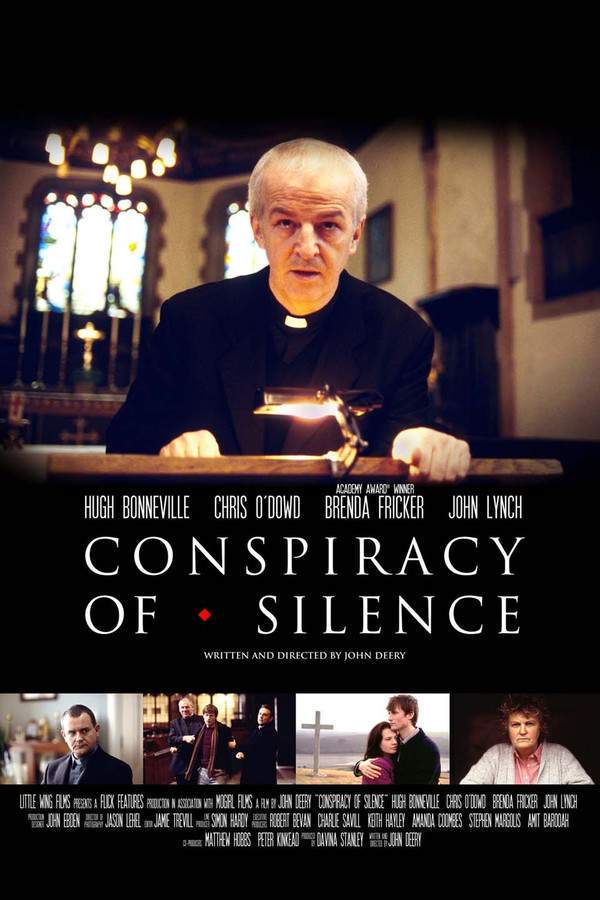
Psychological mystery movies about trauma like Agnes of God

Unraveling a dark past through the unreliable lens of memory and trauma. Fans of Agnes of God's exploration of repressed memory and psychological trauma will enjoy these similar mystery dramas. These films feature complex characters, ambiguous truths, and a heavy emotional weight as they piece together a painful past.

  • melancholic
  • mysterious
  • somber
  • anxious
  • psychological
  • unreliable memory
  • Tone: melancholic, mysterious, somber
  • Pacing: steady, methodical
Why these movies?

The story pattern: The story is driven by the quest to understand a traumatic incident, using tools like therapy, hypnosis, or interviews to peel back layers of denial and pain. The narrative structure is often complex, presenting multiple possibilities and leaving the final truth somewhat ambiguous, reflecting the elusive nature of memory itself.

Why they belong together: These films are grouped by their shared focus on a psychological investigation into a traumatic event, featuring unreliable narrators, themes of repressed memory, and emotionally heavy subject matter. They prioritize moody, melancholic atmospheres and complex, often ambiguous conclusions over clear-cut answers.

If you liked this

Movies Like Agnes of God

Similar movies to Agnes of God: the same genre, themes or kind of story. Each one comes with its own plot summary, timeline and ending explained.

Browse all movie summaries

Every angle

Agnes of God (1985) Explained: Plot, Timeline & Characters

Everything about Agnes of God in one place: what happens in the plot summary, the timeline in chronological order, the characters and meaning and a spoiler-free summary. What's After the Movie adds the cast, box office and post-credit scenes.

Coming soon on iOS and Android

The Plot Explained Movie Summary App

Plot summaries, endings explained and timelines on your phone. Catch up on any movie in minutes, save your favorites and never miss a twist again.

Be the first to know when we launch. Your email stays private, always.

Learn more about the app