Plot Explained Spoilers guaranteed!
Plot Explained

Browse by genre

Advocate (2020) movie poster

Timeline

Advocate (2020) Timeline Explained – Every Event in Order

Release, runtime and language
2020 · 114 min · Hebrew
Echo score 80
Loading streaming availability…
Directed by
Philippe Bellaiche, Rachel Leah Jones
Starring
Hanan Ashrawi, Avigdor Feldman, Benjamin Netanyahu, Harry Reasoner, Israa Jaabis, Josh Breiner

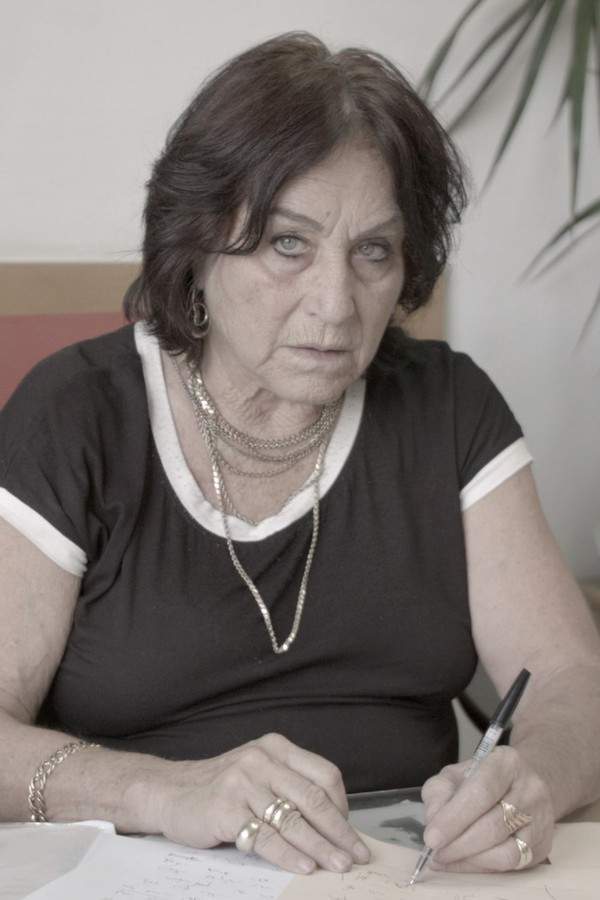
This moving documentary profiles Lea Tsemel, a Jewish-Israeli lawyer known for her tireless defense of Palestinian political prisoners. For decades, she has challenged Israeli legal and societal norms, advocating for human rights and often facing significant controversy. While some Israelis question her methods, Palestinians view her as a steadfast ally in their fight for justice, highlighting the complex and often fraught landscape of the Israeli-Palestinian conflict.

On this page (5)
  1. 1 Where to watch
  2. 2 Events in order (15)
  3. 3 Movie threads
  4. 4 Movies like Advocate
  5. 5 Every angle
Loading streaming availability…

15 events in order · contains spoilers

Advocate Timeline: Events in Chronological Order

Every key event of Advocate (2020) in order, scene by scene, with when and where it takes place. Use it to untangle flashbacks, time jumps and parallel storylines, to refresh your memory before the sequel or to find the exact scene you are thinking of.

  1. A career of five decades begins

    Lea Tsemel builds her career as a Jewish-Israeli human-rights lawyer defending Palestinians accused of terrorism within the Israeli judicial system. Over fifty years of practice, she becomes one of the most prominent — and most controversial — figures willing to take on these cases.

    Where
    Israel
  2. A family in the crossfire

    Tsemel shares her life with her husband, fellow activist Michael Warschawski, with whom she raises their children Nissan and Talila. The whole family later sits for interviews in the documentary, offering an intimate look at the personal side of her unrelenting work.

  3. Vilified as the 'devil's advocate'

    As Tsemel continues defending Palestinian suspects, public opinion splits sharply around her. Admirers hail her as a hero, while critics brand her a traitor or the 'devil's advocate,' and the vilification escalates into years of death threats.

  4. The documentary takes shape

    Filmmakers weave together archival material from Tsemel's long career with intimate present-day interviews. Alongside Tsemel, her husband, and her children, associates from her law firm reflect on her methods, convictions, and the cases that define her.

  5. Two legal battles anchor the story

    The narrative narrows to two contemporary cases handled by Tsemel together with her co-counsel, Tareq Barghout. The trials of a teenage boy and a woman accused of a bombing become the dramatic spine of the film.

  6. Ahmad, a 13-year-old defendant

    Following an incident in which his cousin was killed by security forces, 13-year-old Ahmad finds himself facing the most serious of charges. Despite a lack of evidence that he planned to harm anyone, he is accused of attempted murder.

  7. Tsemel and Barghout defend Ahmad

    Tsemel and Barghout take on Ahmad's defense, confronting a legal system that treats a child as a terrorist. They battle to counter a prosecution built on assumptions rather than proof as the boy's case moves through the courts.

  8. Ahmad is convicted

    Despite the absence of evidence that he intended to hurt anyone, Ahmad is convicted of attempted murder. The verdict underscores the steep odds facing Palestinian defendants within the Israeli judicial system.

  9. Israa Jaabis and the burning car

    Israa Jaabis stands accused of a failed suicide bombing after an incident in which she set fire to her car. Prosecutors frame the event as a deliberate attack intended to take lives.

  10. Defense: depression, not terrorism

    Tsemel argues that Jaabis' actions were most likely a suicide attempt stemming from personal depression, not a plot to harm others. She fights to reframe the case from an act of terrorism into the story of a woman in crisis.

  11. The court rules against Jaabis

    Rejecting the defense's interpretation, the court rules that Jaabis' intent was purely to kill. The verdict delivers a painful defeat and echoes the pattern seen earlier in Ahmad's case.

  12. A matter of moral obligation

    Tsemel explains that she sees her work as a moral duty rather than a mere profession. As a beneficiary of the conquering power, she believes she is obligated to support the Palestinian struggle for liberation.

  13. "Israelis have no right to tell Palestinians how to struggle"

    In one of the film's most poignant moments, Tsemel asserts that Israelis have no right to dictate the means of Palestinian resistance. The statement crystallizes the philosophy that has guided — and defined — her entire legal career.

  14. An 'angry optimistic woman'

    Tsemel describes herself as an 'angry optimistic woman,' capturing her fury at injustice alongside her refusal to abandon hope. Her enduring optimism persists despite decades of losing battles, hostility, and personal risk.

  15. Animation protects the vulnerable

    To maintain the privacy of certain individuals connected to the cases, the filmmakers turn to animation for several segments of the film. These animated passages blend with the archival footage and interviews to complete the documentary's visual texture.

Last updated: November 23, 2026 at 20:06

Was this helpful?

Movie threads

More Movies Like Advocate, by Mood & Story

Curated lists built around what makes Advocate tick: the same mood, the same kind of story or the same emotional payoff. Each list explains why these movies belong together.

Defiant justice seekers like in Advocate

Courageous advocates challenge entrenched power while absorbing threats, controversy, and personal loss. Explore movies like Advocate featuring courageous lawyers, activists, and defenders who challenge institutions and face severe backlash. These similar legal and human-rights stories emphasize moral conviction, contested cases, death threats, personal sacrifice, and the struggle to seek justice without easy resolution.

  • defiant
  • sober
  • urgent
  • polarizing
  • gravely personal
  • morally charged
  • Tone: grave, urgent, morally charged
  • Pacing: variable, pressure building
Why these movies?

The story pattern: The central figure begins with a firm commitment to principle, then moves through cases and confrontations that repeatedly test that commitment. Institutional resistance and public attacks raise the personal stakes, while difficult testimony and moral ambiguity complicate the mission. The arc usually advances through costly acts of resistance rather than a tidy institutional triumph.

Why they belong together: These films share a grave, confrontational tone and emphasize people operating under pressure rather than abstract politics. Their combination of legal conflict, intimate testimony, and mounting threats creates sustained moral stakes, keeping admiration for the advocate inseparable from uncertainty about the surrounding system.

The human cost of political violence like in Advocate

Intimate stories reveal grief, accusation, and resilience where political violence has no clean resolution. Find movies like Advocate that place grief, depression, family testimony, and personal suffering inside politically charged conflict. These dark documentaries and dramas examine terrorism accusations, imprisonment, and resistance while balancing multiple perspectives, revealing the human damage behind disputes that offer no straightforward moral or narrative resolution.

  • grief-stricken
  • intimate
  • grave
  • reflective
  • politically charged
  • unresolved
  • Tone: dark, grave, intimate
  • Pacing: variable, reflective and concentrated
Why these movies?

The story pattern: Stories in this thread move between intimate accounts of loss and wider accounts of ideology, accusation, and resistance. Each personal history exposes how political violence reverberates through families, mental health, and daily life. The structure accumulates fragments and competing viewpoints, leaving consequences tangible while the larger conflict remains unresolved and morally contested.

Why they belong together: The common thread is not a single political position but the experience of living inside severe conflict. Personal testimony, archival context, and disputed claims create a grave, variable rhythm, while depression, threats, and tragedy prevent the conflict from feeling abstract. A fragile thread of resolve supplies defiance without erasing the surrounding darkness.

If you liked this

Movies Like Advocate

Similar movies to Advocate: the same genre, themes or kind of story. Each one comes with its own plot summary, timeline and ending explained.

Browse all movie summaries

Every angle

Advocate (2020) Explained: Plot, Timeline & Characters

Everything about Advocate in one place: what happens in the plot summary, the timeline in chronological order, the characters and meaning and a spoiler-free summary. What's After the Movie adds the cast, box office and post-credit scenes.

Coming soon on iOS and Android

The Plot Explained Movie Summary App

Plot summaries, endings explained and timelines on your phone. Catch up on any movie in minutes, save your favorites and never miss a twist again.

Be the first to know when we launch. Your email stays private, always.

Learn more about the app