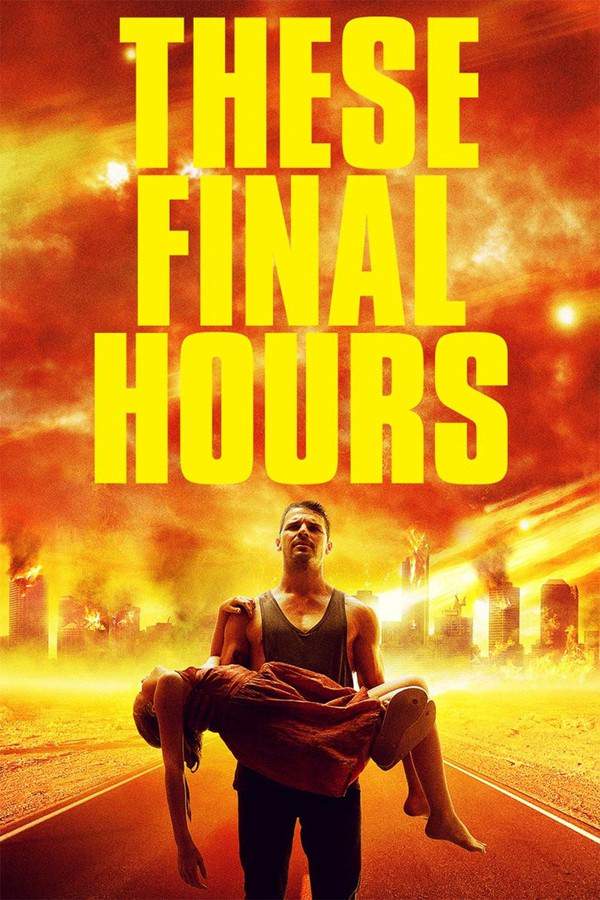
An artistic couple residing in Austin, Texas, awaken to a startling discovery: they are the only two people left on Earth. Everyone else has vanished, and it turns out their actions may be responsible for the global disappearance. They must now grapple with the implications of their situation and the immense responsibility they bear as the last remnants of humanity.
Find where to stream, rent, or buy A Room Full of Nothing (2019) in the US with current JustWatch availability, up-to-date pricing, and platform listings for subscription, rental, and digital purchase options.
Warning: spoilers below!
Haven’t seen A Room Full of Nothing yet? This summary contains major spoilers. Bookmark the page, watch the movie, and come back for the full breakdown. If you're ready, scroll on and relive the story!
Explore the full timeline and setting of A Room Full of Nothing (2019). Follow every major event in chronological order and see how the environment shapes the story, characters, and dramatic tension.
Last updated: October 01, 2025 at 12:18
Meet the key characters of A Room Full of Nothing (2019), with detailed profiles, motivations, and roles in the plot. Understand their emotional journeys and what they reveal about the film’s deeper themes.
Last updated: October 01, 2025 at 12:18
Explore the central themes of A Room Full of Nothing (2019), from psychological, social, and emotional dimensions to philosophical messages. Understand what the film is really saying beneath the surface.
Last updated: October 01, 2025 at 12:18
Browse frequently asked questions about A Room Full of Nothing (2019) focused on characters, relationships, themes, symbols, setting, and story context. This movie info FAQ gives spoiler-aware explanations for character arcs, world details, and thematic interpretation so readers can better understand what the film is really about.
The film takes place in Austin, Texas, primarily in a suburban home and surrounding areas. The setting includes a downtown gallery where Phyllis has her work exhibited, the woods near their house, and later a barren desert landscape as events unfold.
The story unfolds in the present-day, contemporary context, with details suggesting the early 2020s. The tone and setting reflect modern life where art, work, and intimate relationships coexist in a typical suburban American setting.
Phyllis is an aspiring fine artist living with Barry in Austin. She is passionate about her craft and increasingly driven by a vision of reshaping the world through her art. She initiates the manifesting experiment that drives the film's central conflict.
Barry is an actor in community theater who longs for escape from everyday life. He embodies restlessness and becomes increasingly dependent on Phyllis as their world unravels, eventually confronting the fatal consequences of their choices.
The film explores how the couple's manifesting experiment collapses the social world, forcing all attention inward. Their relationship becomes the sole reality they inhabit, heightening both dependency and tension. The absence of others reveals how fragile human connection becomes when institutions and community disappear.
Phyllis's art sits at the center of the experiment, blurring the line between creation and control. The story questions whether art liberates or traps, and who gets to define meaning when the universe obeys a single will. Her creative impulse becomes a powerful force that reorganizes life itself.
Manifesting grants the couple dangerous agency, allowing Phyllis to sculpt their reality. The dynamics shift from partnership to control as one person guides the world to suit personal happiness. Consequences become fatal as their choices erase others, questioning responsibility when desire outweighs consent.
The narrative pivots to a barren desert that epitomizes their isolation after civilization vanishes. The landscape becomes a mirror for moral emptiness and the cost of unchecked wishes. Barry's descent into despair contrasts with Phyllis's calculated detachment, culminating in tragedy.
The film uses a contemporary gallery opening to provide contrast between art-world critique and domestic space. The critic's voice and Phyllis's own ambition shape what is considered real within their world, examining how the art market and personal ambition interact with creative vision.
Most of the action centers on a modest house in an Austin suburb, highlighting quiet, everyday life. The suburban setting evolves into an isolated landscape that mirrors the characters' inward collapse, transforming from a typical domestic space into a landscape of psychological desolation.
Discover curated groups of movies connected by mood, themes, and story style. Browse collections built around emotion, atmosphere, and narrative focus to easily find films that match what you feel like watching right now.
Characters confront profound questions of reality and purpose in uncanny settings.If you liked the surreal premise and heavy themes of A Room Full of Nothing, this list features similar movies where characters confront existential crises in uncanny or magically real settings. These films often have a melancholic tone and a slow, meditative pace, exploring isolation and the nature of reality.
These narratives often begin with a strange event or shift in reality that forces characters to question everything they know. The plot is less about external action and more about an internal journey of discovery, typically leading to a bleak or bittersweet realization about the human condition.
They are grouped by their shared foundation in surrealism or magical realism used as a lens to examine weighty philosophical ideas. The mood is consistently reflective, anxious, and dreamlike, with a pacing that allows the psychological tension and uncanny atmosphere to build gradually.

Global catastrophe explored through the lens of a small group or couple's relationship.For viewers who appreciated the couple-centric drama of A Room Full of Nothing, this collection highlights films where a cataclysmic event isolates a small group, forcing them to navigate both survival and the complexities of their relationships. These are character-driven stories with a heavy emotional weight.
The narrative follows a small cast, often a couple or family, as they become the last survivors or one of the few groups left after a major disaster. The external conflict of the apocalypse is matched by the internal conflicts within the relationship, with the story examining how love, guilt, and dependency evolve under immense pressure.
These films share a specific focus on micro-level human drama within a macro-level catastrophe. They prioritize character dynamics over action, resulting in a slow, deliberate pace and a tone that is often bleak, melancholic, or intensely dramatic, exploring themes of isolation and shared responsibility.
Don't stop at just watching - explore A Room Full of Nothing in full detail. From the complete plot summary and scene-by-scene timeline to character breakdowns, thematic analysis, and a deep dive into the ending - every page helps you truly understand what A Room Full of Nothing is all about. Plus, discover what's next after the movie.
Read a complete plot summary of A Room Full of Nothing, including all key story points, character arcs, and turning points. This in-depth recap is ideal for understanding the narrative structure or reviewing what happened in the movie.
Track the full timeline of A Room Full of Nothing with every major event arranged chronologically. Perfect for decoding non-linear storytelling, flashbacks, or parallel narratives with a clear scene-by-scene breakdown.