Plot Explained Spoilers guaranteed!
Plot Explained

Browse by genre

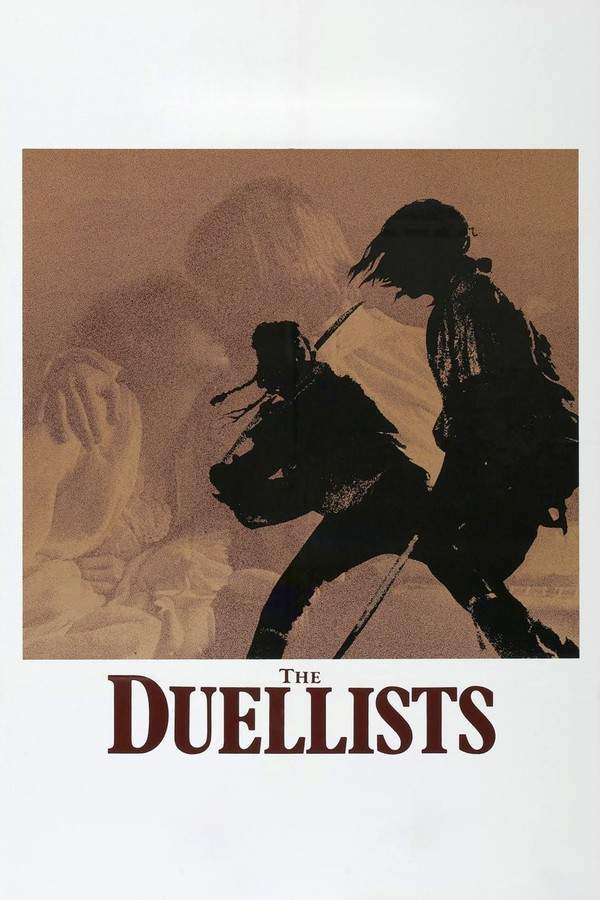
The Duellists (1978) movie poster

Plot Summary

The Duellists (1978) Plot Summary Explained

Release, runtime and language
1978 · 100 min · English
JustWatch #16,584 1,174
Directed by
Ridley Scott
Starring
Harvey Keitel, Keith Carradine, Albert Finney, Edward Fox, Alun Armstrong, Cristina Raines

Two French soldiers, Armand d'Hubert and Gabriel Féraud, find themselves locked in a prolonged and escalating cycle of duels following a minor disagreement. Serving under Napoleon's command, their personal feud persists for fifteen years as they advance through the ranks, becoming generals. Despite the passage of time and the ongoing war, their mutual animosity remains intense, fueled by an initial dispute that fades from memory.

On this page (7)
  1. 1 Where to watch
  2. 2 What happens: full plot
  3. 3 Plot questions answered
  4. 4 The book behind the movie
  5. 5 Movie threads
  6. 6 Movies like The Duellists
  7. 7 Every angle

Where to watch

Where to Watch The Duellists (1978)

Where can you watch The Duellists? Stream, rent or buy it in the US, including on fuboTV, MGM Plus and Philo: current JustWatch availability with up-to-date prices.

Streaming availability powered by JustWatch

Full plot summary · contains spoilers

What Happens in The Duellists: Full Plot Summary

The whole story of The Duellists (1978) explained, from the opening scene to the final frame: every key event, every twist and what it all adds up to. Read it as a quick recap before the sequel, to check a scene you missed, or to finally understand what really happened.

In the charming city of Strasbourg in 1800, tensions escalate dramatically when Lieutenant Gabriel Feraud, a fervent Bonapartist and passionate duelist, nearly kills the Mayor's nephew during a fierce duel. The fallout from this dangerous incident forces Mayor Brigadier-General Treillard to intervene, ordering Lieutenant Armand d'Hubert, of the 3rd Hussars, to place Feraud under house arrest. However, Feraud perceives this command as a personal slight and promptly challenges d'Hubert to a duel, which ends abruptly as Feraud loses consciousness before a clear resolution can be reached.

This initial clash serves as a catalyst for a series of tumultuous events. The chaos of war provides a brief pause in their rivalry, but six months later, Feraud once again confronts d'Hubert, leading to a duel that leaves d'Hubert gravely injured. As d'Hubert recuperates, he focuses on honing his fencing skills, only to face Feraud once more in a subsequent duel. This encounter spirals into a savage wrestling match, ultimately interrupted by outside intervention, illustrating the fierce animosity boiling between the two men.

With d'Hubert’s promotion to captain offering a sliver of hope—given that military protocol forbids dueling between officers of differing ranks—he is dispatched to Lübeck, where he is taken aback to find that Feraud has also risen in rank to captain. Just weeks ahead of d'Hubert’s expected promotion to major, he attempts to slip away unnoticed but is thwarted by Feraud’s timely challenge. During this confrontation, d'Hubert’s former lover, Laura, cautions him against the fatalistic path of dueling, foreboding his inevitable demise.

Despite her warnings, the duel ensues, and d'Hubert ultimately triumphs, wounding Feraud and forcing him to concede defeat. Elated, d'Hubert prepares to leave the field, but soon learns that Feraud's regiment is being sent to Spain while he remains in Northern Europe, trapped in a perpetual cycle of vendettas and violence.

As the French Army retreats from Moscow, d'Hubert and Feraud, now both colonels, unintentionally reunite amid the chaos of war. Initially distrustful, they must set aside their rivalry to collaborate in a desperate attempt to reconnect with their forces. The tension escalates when Feraud seeks volunteers to track down Russian Cossacks, with d'Hubert being the sole officer to join him. Their mission quickly turns perilous as they fall under attack. With quick reflexes, Feraud dispatches one foe, while d'Hubert skillfully defends against the others. In the aftermath, d'Hubert wryly remarks, >“Pistols next time,” implying their conflict is far from over, and he offers Feraud a drink to celebrate their narrow escape. However, Feraud's distant demeanor speaks volumes, as he coldly accepts the gesture without a word.

Post-Napoleon's exile to Elba, d'Hubert recuperates at his sister Leonie's home where he meets the enchanting Adele. As their romance flourishes, Colonel Perteley—a devoted Bonapartist—pressures d'Hubert to rejoin the Napoleonic faction, but he remains steadfast. Feraud, upon learning of d'Hubert's refusal, labels him a traitor, his disdain palpable.

The drama escalates following Napoleon's defeat at Waterloo, leading d'Hubert to marry Adele and enlist in the service of Louis XVIII. Meanwhile, Feraud faces dire consequences for his actions during the Hundred Days war, finding himself captured and sentenced to execution. Unbeknownst to him, it is d'Hubert who intervenes, imploring the Minister of Police to spare Feraud's life. As a result, Feraud is granted parole but must live under close supervision. Meanwhile, d'Hubert and Adele look forward to welcoming their first child.

As d'Hubert's standing rises in the new French Army, a surprising challenge arrives from Feraud, demanding a pistol duel. Reluctantly adhering to the code of honor, d'Hubert accepts the duel invitation. The two warriors meet at a dilapidated château, reminiscent of their troubled past. In a startling twist, Feraud’s careless ruse allows d'Hubert an advantage. Instead of swiftly eliminating his adversary, d'Hubert seizes the moment, declaring his life is now in d'Hubert's hands, thus mandating that Feraud "conduct [himself] as a dead man," never again daring to provoke a duel.

As d'Hubert finally finds solace in a quiet life with his beloved, Feraud is confined to a lonely outpost, his life now a shadow of its former glory, consumed by a fading obsession for dueling. In starkly separate worlds, one man enjoys domestic tranquility while the other, bound by history and rivalry, endures a slow, haunting decline, echoing the fate of his once-glorious leader, caught in the relentless grasp of a bygone era.
Last updated: November 22, 2024 at 19:00

Was this helpful?

Plot questions answered

The Duellists Plot Explained: Your Questions Answered

The questions people ask most about The Duellists (1978): what happens in the confusing scenes, why the characters do what they do, the twists, hidden details and what the ending means. Each answer contains spoilers.

Q1

Why does Gabriel Féraud challenge Armand d'Hubert to a duel?

Féraud challenges d'Hubert because he views the order to place him under house arrest as a personal insult rather than a standard military command. Though d'Hubert was simply following the Mayor's orders, Féraud's hot-headed nature and pride convince him that d'Hubert deliberately humiliated him. This perceived slight ignites the vendetta that will consume both men for fifteen years.

  • feraud
  • d'hubert
  • duel
  • house arrest
  • insult
  • strasbourg
Q2

Why does Armand d'Hubert save Gabriel Féraud from execution?

Despite their bitter rivalry, d'Hubert intervenes because he has grown morally above the cycle of violence. After Waterloo, when Féraud faces execution for his Bonapartist activities during the Hundred Days, d'Hubert appeals to the Minister of Police to spare his life. This act represents d'Hubert's rejection of their destructive feud, he chooses mercy over revenge, demonstrating personal growth that Féraud never achieves.

  • d'hubert
  • feraud
  • execution
  • Waterloo
  • mercy
  • parole
Q3

Why does d'Hubert spare Féraud's life during their final duel?

When d'Hubert gains the upper hand at the château, he chooses not to kill Féraud but instead forces him to live as a 'dead man', never again allowed to provoke a duel. This is d'Hubert's ultimate victory: not through violence, but by denying Féraud the noble death he craves. Féraud is condemned to a lonely, meaningless existence, which d'Hubert correctly recognizes as a fate worse than death for a man obsessed with honor.

  • château duel
  • final confrontation
  • spared
  • life sentence
  • honor
Q4

Why does the duel between d'Hubert and Féraud last for fifteen years?

The rivalry persists because each time they appear to resolve their conflict, external circumstances keep them connected while new insults arise. Military promotions briefly offer hope, protocol forbids duels between officers of different ranks, but both men rise in rank together, keeping them as equals. Additionally, Féraud's obsessive nature refuses to let go, and d'Hubert's sense of honor compels him to accept every challenge, creating an endless cycle that spans the Napoleonic Wars.

  • fifteen years
  • promotions
  • military ranks
  • napoleonic wars
  • cycle
Q5

What happens when d'Hubert and Féraud reunite during the Moscow retreat?

During the chaotic French retreat from Moscow, both men, now colonels, accidentally reconnect and are forced to temporarily set aside their rivalry to survive. They volunteer together to fight Russian Cossacks, fighting back-to-back against common enemies. This brief collaboration shows that beneath their hatred, both are capable of military camaraderie. However, the tension remains, and d'Hubert's comment 'Pistols next time' confirms their feud is merely suspended, not resolved.

  • Moscow
  • Cossacks
  • retreat
  • reunion
  • collaboration
  • colonel
Q6

Why does Laura warn d'Hubert against fighting Féraud?

Laura, d'Hubert's former lover, warns him because she recognizes the fatalistic pattern of their rivalry, she sees that continuing down this path will inevitably lead to d'Hubert's death. Her warning in Lübeck, just before d'Hubert's promotion to major, represents the voice of reason attempting to pull him away from destruction. D'Hubert ignores her counsel and fights anyway, winning but confirming that the cycle continues regardless.

  • Laura
  • warning
  • Lübeck
  • fatalism
  • fate
  • lover
Q7

Why does Féraud keep challenging d'Hubert despite repeated defeats?

Féraud's obsession with honor and his inability to accept shame drives him to keep fighting. Each defeat, whether losing consciousness in their first duel, being wounded in Lübeck, or being overpowered at the château, only hardens his resolve. Unlike d'Hubert, who grows weary of violence and seeks peace, Féraud cannot conceive of living without the duel defining his existence. His identity is entirely constructed around his fighting prowess, making surrender psychologically impossible.

  • feraud
  • defeat
  • obsession
  • honor
  • shame
  • challenge
Q8

How does the political context of the Napoleonic era affect their rivalry?

The constantly shifting political landscape, Napoleon's rise, exile to Elba, Hundred Days return, and final defeat at Waterloo, directly impacts both men's circumstances and positions. When d'Hubert switches allegiance to Louis XVIII after Waterloo, Féraud labels him a traitor. These political divisions provide new justifications for their personal animosity while also forcing them into different life paths: d'Hubert finds prosperity under the new regime, while Féraud faces execution for his Bonapartist loyalty.

  • napoleon
  • bonapartist
  • louis xviii
  • hundred days
  • politics
  • allegiance
Q9

Why does d'Hubert's impending fatherhood matter to the story?

D'Hubert's relationship with Adele and their expectation of a child represents everything Féraud can never have, domestic peace, love, and a future beyond violence. While d'Hubert builds a life centered on family and loyalty to the new king, Féraud is condemned to a lonely outpost. The contrast highlights the thematic resolution: d'Hubert's victory is not military but personal, he has built what Féraud destroys. This impending fatherhood also motivates d'Hubert to finally end the cycle rather than pass violence to the next generation.

  • adele
  • leonie
  • fatherhood
  • family
  • peace
  • domestic life
Q10

Why does the rivalry begin in Strasbourg?

Strasbourg serves as the starting point because it is where Féraud's reckless behavior nearly kills the Mayor's nephew, forcing official intervention. This incident places d'Hubert in the position of enforcer, which Féraud wrongly interprets as personal antagonism. The city represents the beginning of a misunderstanding that spirals beyond control, and later duels repeatedly reference their shared history there.

  • strasbourg
  • mayor
  • nephew
  • house arrest
  • beginning

Movie threads

More Movies Like The Duellists, by Mood & Story

Curated lists built around what makes The Duellists tick: the same mood, the same kind of story or the same emotional payoff. Each list explains why these movies belong together.

Movies about obsessive rivalries like The Duellists

Stories where a personal conflict spirals into a lifelong, all-consuming battle. If you enjoyed the relentless personal feud in The Duellists, this section features other movies where two characters are locked in a long-term, escalating rivalry. These films explore similar themes of pride, obsession, and the psychological weight of a conflict that transcends its initial reason.

  • obsessive
  • fatalistic
  • tense
  • honor-bound
  • rivalry
  • pride
  • Tone: tense, fatalistic
  • Pacing: steady, time-spanning
Why these movies?

The story pattern: Narratives in this thread typically follow a linear progression through time, marked by repeated confrontations that escalate in stakes and intensity. The central conflict is a constant, shaping the characters' destinies and often leading to a resolution that is more about exhaustion or moral defeat than clear victory.

Why they belong together: Movies are grouped here based on their shared focus on a single, deepening interpersonal conflict. They share a tense, character-driven tone, a steady pacing that allows the feud to develop, and a thematic exploration of honor, pride, and the futility of prolonged animosity.

Grim historical dramas with personal stakes like The Duellists

Historical epies where sweeping events frame an intimate, character-driven conflict. For viewers who liked the Napoleonic Wars setting of The Duellists, this section highlights similar historical dramas. These movies use a period backdrop to explore intense personal journeys, codes of honor, and character conflicts within a grim, atmospheric world.

  • grim
  • period atmosphere
  • melancholic
  • honor-bound
  • historical
  • fatalistic
  • Tone: grim, melancholic, tense
  • Pacing: steady, atmospheric
Why these movies?

The story pattern: The narrative pattern involves a protagonist or pair of characters navigating their personal destinies against an unforgiving historical canvas. The external world of war or social change serves as a pressure cooker, intensifying the internal and interpersonal drama, which often concludes on a bittersweet or melancholic note.

Why they belong together: These films are united by their compelling blend of a well-realized historical setting and a focus on intimate, character-driven conflict. They share a melancholic or tense tone, a steady pacing that allows for atmospheric immersion, and a medium emotional weight derived from personal struggle within a larger, indifferent world.

If you liked this

Movies Like The Duellists

Similar movies to The Duellists: the same genre, themes or kind of story. Each one comes with its own plot summary, timeline and ending explained.

Browse all movie summaries

Every angle

The Duellists (1978) Explained: Plot, Timeline & Characters

Everything about The Duellists in one place: what happens in the plot summary, the timeline in chronological order, the characters and meaning and a spoiler-free summary. What's After the Movie adds the cast, box office and post-credit scenes.

Coming soon on iOS and Android

The Plot Explained Movie Summary App

Plot summaries, endings explained and timelines on your phone. Catch up on any movie in minutes, save your favorites and never miss a twist again.

Be the first to know when we launch. Your email stays private, always.

Learn more about the app