

Plot Explained Spoilers guaranteed!
Plot Explained

Browse by genre

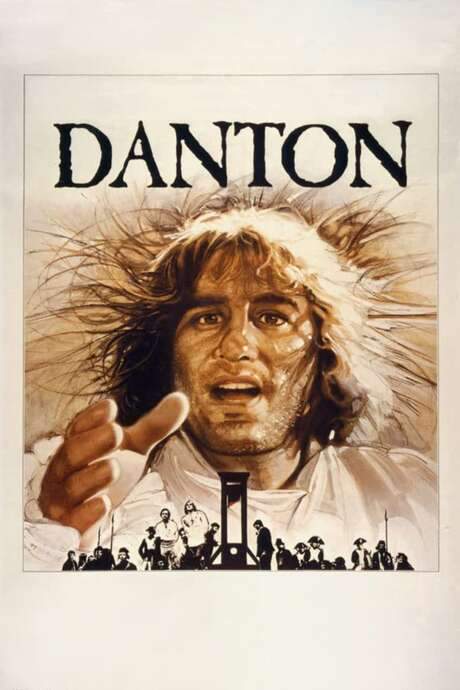
Danton (1983) movie poster

Timeline

Danton (1983) Timeline Explained – Every Event in Order

Release, runtime and language
1983 · 136 mins · French
JustWatch #9,062 3
Directed by
Andrzej Wajda
Starring
Jerzy Trela, Marek Kondrat, Angela Winkler, Gérard Depardieu, Andrzej Seweryn, Anne Alvaro

Former allies Danton and Robespierre, once comrades in the Revolution, become enemies by 1793 as Robespierre imposes the Reign of Terror and orders executions. Danton, a popular advocate of the people, returns from the countryside to denounce the regime and demand rights. Robespierre arranges Danton’s arrest and execution, sealing their tragic conflict.

On this page (6)
  1. 1 Where to watch
  2. 2 Events in order (14)
  3. 3 Timeline questions answered
  4. 4 Movie threads
  5. 5 Movies like Danton
  6. 6 Every angle

Where to watch

Where to Watch Danton (1983)

Where can you watch Danton? Stream, rent or buy it in the US: current JustWatch availability with up-to-date prices.

Streaming availability powered by JustWatch

14 events in order · contains spoilers

Danton Timeline: Events in Chronological Order

Every key event of Danton (1983) in order, scene by scene, with when and where it takes place. Use it to untangle flashbacks, time jumps and parallel storylines, to refresh your memory before the sequel or to find the exact scene you are thinking of.

  1. Paris under the Terror: Robespierre spots Danton

    In cold spring 1794 Paris, bread lines stretch through the rain and fear grips the city. Robespierre peers out onto the streets and sees Danton returning from the countryside, celebrated by a hungry, dispirited populace who still regard him as a hero. The political climate foreshadows the looming confrontation between the two former allies.

    When
    Spring 1794
    Where
    Paris
  2. Héron orders destruction of Desmoulins' print shop

    Héron, head of the secret police, visits Robespierre and is told to crush Desmoulins' print shop, which is publishing pro-Danton circulars. Robespierre sanctions the move, signaling the regime's readiness to silence dissent. The print shop’s destruction marks the first direct blow against Danton's influence.

    When
    Evening of that day
    Where
    Desmoulins' print shop
  3. Saint-Just urges Danton’s execution

    While Robespierre is attended by his barber, Saint-Just enters and presses for Danton to be guillotined. Robespierre refuses to bow to this pressure, trying to balance friendship with revolutionary duty. The tension reveals the rift between personal loyalties and political necessity.

    When
    That day
    Where
    Robespierre's flat
  4. Committee of Public Safety pushes to eliminate Danton

    At a meeting of the Committee of Public Safety, other members advocate for removing Danton, arguing he threatens the Republic. Robespierre, torn by his friendship with Danton, resists the push and delays any drastic move. The power struggle escalates as rivals try to outmaneuver him.

    When
    That day
    Where
    Committee of Public Safety
  5. Westermann discusses coup with Danton; Danton refuses

    General Westermann discusses a coup to overthrow Robespierre with Danton, who refuses to join such illegal action. Danton believes the people's support through his newspaper and presence will shield him. He urges Bourdon to denounce Héron, hoping to expose the secret police.

    When
    That day
    Where
    Paris
  6. Héron arrested following Bourdon’s denunciation

    Bourdon's denunciation of Héron triggers the arrest of Héron and several of his associates. The secret police's grip on power begins to crack as one of its chief instruments is neutralized. The arrests ignite further warnings of the danger Robespierre faces from within his own coalition.

    When
    That night
    Where
    National Convention
  7. Danton invites Robespierre to a private dinner; Robespierre's attempt to win him over; Westermann's men outside

    That night, Danton hosts Robespierre for a lavish dinner in a private room, hoping to win him to a more moderate stance. Robespierre refuses to yield and leaves after failed talks. On the street, he encounters a group of armed men who turn out to be Westermann's coup force, who Danton still refuses to join.

    When
    That night
    Where
    Private dining room, Paris restaurant; Paris street
  8. Robespierre confronts Desmoulins; Desmoulins' fury; wife pleads

    Robespierre goes to Desmoulins' house, where Desmoulins is furious about the destruction of his press and refuses to talk. Desmoulins' wife begs him to stay and live, asking Robespierre to intervene with gentler measures. Robespierre leaves unable to change his friend’s path.

    When
    That night
    Where
    Desmoulins' house
  9. Arrest warrant issued for Danton, Desmoulins, Westermann

    Robespierre returns to the Committee of Public Safety and obtains a warrant for the arrest of Danton, Desmoulins, Westermann, and several associates. The interior politics of the Revolution snap into a new, deadly phase. The act sets the stage for an irreversible collapse of Danton’s coalition.

    When
    That night
    Where
    Committee of Public Safety
  10. National Convention reacts; Bourdon switches sides

    The National Convention erupts in outrage at the arrests, while Bourdon abandons Danton to back Robespierre. The political landscape shifts as an old ally joins the faction of the Committee. Robespierre’s position gains the upper hand, though at a steep moral cost.

    When
    Morning
    Where
    National Convention
  11. Trial before the Revolutionary Tribunal begins

    The trial opens with Danton, Desmoulins, Westermann and allies facing a tribunal that is short of jurors but proceeds. Danton interrupts repeatedly, challenging the proceedings. Prosecutor Fouquier complains that there is little ground for conviction, but the court presses on.

    When
    Morning
    Where
    Revolutionary Tribunal
  12. No-tolerance gag order; guilty verdict after interruptions

    A decree is issued prohibiting anyone from speaking out of turn in court. Within minutes, the accused are bundled out and the verdict of guilty is read. The legal process is revealed as a hollow instrument in service of political ends.

    When
    Soon after noon
    Where
    Courthouse; Revolutionary Tribunal
  13. Danton’s final reflections before execution

    On the eve of their deaths, Danton sits in prison, depressed at having failed the people rather than the Revolution’s goals. He questions whether his life mattered as the crowd’s passionate support wanes. His emotional state foreshadows the bloodshed to come.

    When
    Day before execution
    Where
    Prison
  14. Execution and Robespierre’s breakdown

    Danton, Desmoulins, and Westermann are led to the scaffold and guillotined as the crowd falls silent. Robespierre’s long-suppressed tension fractures; Saint-Just presses him toward dictatorship. Robespierre recognizes that dictatorial power would betray the Revolution’s ideals, symbolized by a child reciting the Rights of Man amid the tragedy.

    When
    Execution day
    Where
    Guillotine; Paris

Last updated: December 03, 2025 at 23:58

Was this helpful?

Timeline questions answered

Danton Timeline Explained: Your Questions Answered

When does it happen, and why in that order? The questions people ask about the chronology of Danton (1983): time jumps, flashbacks, cause and effect between scenes and the correct order of events, each answered with spoilers.

Q1

Why does Robespierre order Danton's arrest?

Robespierre orders Danton's arrest because he sees him as a political threat to the Republic. Although they were once close friends and revolutionary comrades, Danton's growing popularity and his newspaper Le Vieux Cordelier challenge Robespierre's authority. When other Committee members and Saint-Just push for Danton's execution, Robespierre initially resists due to their friendship, but ultimately signs the arrest warrant, believing that maintaining revolutionary unity requires eliminating opposition.

Foreshadowing: Earlier, Robespierre watches Danton return to Paris hailed as a hero by the hungry crowds, foreshadowing the political rivalry to come.

  • robespierre
  • danton
  • arrest
  • committee of public safety
  • french revolution
Q2

Why does Danton refuse to join Westermann's coup?

Danton refuses to join the coup because he genuinely believes his popularity and his newspaper will protect him from Robespierre's regime. He tells Westermann that illegal violent action would only give Robespierre an excuse to crush the opposition. Danton is confident that the people's support and his oratory are sufficient weapons, choosing to fight Robespierre through political means rather than armed rebellion.

Foreshadowing: This decision reflects Danton's tragic flaw, his belief that popular affection equals political safety.

  • danton
  • westermann
  • coup
  • refusal
  • popularity
Q3

Why doesn't Danton resist when the arrest warrant is issued?

Danton allows himself to be arrested because he remains confident that the people will rally to his defense. Despite having the opportunity to rally troops or flee, he chooses restraint, believing his oratory and the affection of the masses will protect him. This proves to be a fatal miscalculation, instead of the expected popular uprising, he faces a swift trial and execution.

Foreshadowing: His confidence is foreshadowed by the heroic welcome he receives upon returning to Paris, which inflates his belief in his invincibility.

  • danton
  • arrest
  • resistance
  • people support
  • miscalculation
Q4

Why does Bourdon switch sides and support Robespierre?

Bourdon switches sides when he denounces Héron in the National Convention, aligning himself with Robespierre. This appears to be political opportunism, when Danton's position weakens, Bourdon abandons him to save himself. By backing Robespierre, Bourdon demonstrates the fragile nature of revolutionary alliances and the self-preservation instincts that drive many politicians during the Terror.

Foreshadowing: Earlier, Danton asks Bourdon to denounce Héron, not knowing Bourdon would use this to curry favor with Robespierre instead.

  • bourdon
  • betrayal
  • switch sides
  • opportunism
Q5

Why is Danton's trial considered a political farce?

Danton's trial is a farce because the outcome is predetermined. The Revolutionary Tribunal lacks sufficient jurors, and Danton's constant interruptions threaten to expose the weakness of the charges. Rather than risk his disruption, Robespierre pushes through a gag order prohibiting any accused person from speaking. The accused are quickly removed, convicted, and executed, the trial exists merely to legitimize the execution politically rather than deliver actual justice.

Foreshadowing: The trial's theatrical quality mirrors the broader political theater of the Terror, where trials become instruments of power rather than truth.

  • danton
  • trial
  • revolutionary tribunal
  • fake trial
  • gag order
Q6

What happens to Desmoulins in the film?

Desmoulins is arrested alongside Danton and Westermann. His printing shop was destroyed by Héron on Robespierre's orders for publishing pro-Danton pamphlets. Despite Robespierre's attempt to reason with him, Desmoulins refuses to abandon his friend. Like Danton, he faces a swift show trial and is guillotined, becoming another victim of the Terror he once helped fuel.

Foreshadowing: The destruction of his print shop foreshadows his fate, as Robespierre targets anyone who spreads dissent.

  • desmoulins
  • execution
  • print shop
  • arrest
Q7

What is the significance of the dinner scene between Robespierre and Danton?

The dinner scene represents Robespierre's final attempt at reconciliation. Robespierre wines and dines Danton, hoping to persuade him to join or at least not oppose the Committee's direction. Danton coolly refuses, demonstrating his unwavering commitment to his moderate position. The scene underscores how personal friendship has been entirely subordinated to political necessity, neither will yield, making conflict inevitable.

Foreshadowing: The failed dinner predicts the coming rupture, showing both men know a confrontation is unavoidable.

  • dinner
  • reconciliation
  • robespierre
  • danton
  • negotiation
Q8

Why does Robespierre break down after the execution?

Robespierre breaks down after witnessing Danton's execution because the weight of his choices finally crashes down on him. Throughout the film, he has struggled to balance personal loyalty with revolutionary necessity. Saint-Just urges him to declare dictatorship, but Robespierre recoils, admitting that if dictatorship becomes necessary, democracy itself is an illusion. The execution of his former friend shatters his moral composure, revealing the psychological cost of the Terror he orchestrated.

Foreshadowing: His earlier resistance to executing Danton, despite pressure from Saint-Just, shows his internal conflict that culminates in this breakdown.

  • robespierre
  • breakdown
  • dictatorship
  • democracy
  • guilt
Q9

What is the significance of the Declaration of the Rights of Man at the end?

The film ends with a child reciting the Declaration of the Rights of Man and of the Citizen against the backdrop of the execution. This serves as a bitter irony, the noble ideals that sparked the Revolution have been betrayed by the Terror itself. The Declaration, once a beacon of liberty, now stands hollow as the Republic executes its own citizens. The scene emphasizes the tragedy of revolutionary ideals corrupted by fear and moral compromise.

Foreshadowing: This thematic bookend highlights how far the Revolution has strayed from its founding principles.

  • declaration rights man
  • ideals
  • betrayal
  • revolution
  • ending
Q10

Why does Saint-Just urge Robespierre to declare a dictatorship?

Saint-Just presses Robespierre to declare a dictatorship because he believes only iron-fisted control can sustain the Republic amid its enemies. After Danton's execution, Saint-Just sees an opportunity to consolidate power and eliminate the remaining political instability. He represents the most radical faction that views mercy as weakness and believes the Revolution can only survive through absolute authority.

Foreshadowing: Saint-Just's earlier demands for Danton's execution showed his commitment to uncompromising revolutionary violence.

  • saint-just
  • dictatorship
  • radical
  • committee of public safety
Q11

Why is Héron arrested after Bourdon's denunciation?

Héron is arrested because Bourdon denounces him in the National Convention, exposing the secret police's abuses. Danton had asked Bourdon to do this, hoping to weaken Robespierre's tools of control. The arrest momentarily cracks the secret police's power, but it also triggers Robespierre to accelerate his moves against Danton, as the loss of Héron makes Robespierre more vulnerable and desperate to eliminate his political rivals.

Foreshadowing: This backfires on Danton, exposing the secret police pushes Robespierre to act more swiftly against him.

  • heron
  • arrest
  • bourdon
  • denunciation
  • secret police

Movie threads

More Movies Like Danton, by Mood & Story

Curated lists built around what makes Danton tick: the same mood, the same kind of story or the same emotional payoff. Each list explains why these movies belong together.

Movies about corrupted revolutions like Danton

Stories where high ideals are corrupted by power, leading to personal and political tragedy. Find more movies like Danton that explore the tragic downfall of political idealism. These films often feature historical or fictional revolutions where the pursuit of power betrays the original cause, leading to bleak conclusions and heavy emotional weight for viewers who enjoy serious political dramas.

  • tragic
  • serious
  • somber
  • grim
  • ideological
  • betrayal
  • Tone: tense, bleak, tragic
  • Pacing: steady, deliberate
Why these movies?

The story pattern: The narrative typically follows a visionary or revolutionary figure whose ideals clash with the pragmatic, often brutal, necessities of maintaining power. The story arc is a descent, moving from hope and action to disillusionment, betrayal, and often a tragic end, highlighting the fragility of political virtue.

Why they belong together: Movies in this thread are united by their focus on the moral corrosion of power, the collapse of utopian visions, and the personal tragedies that occur when political comrades become enemies. They share a tense, serious, and ultimately bleak tone.
Claustrophobic political thrillers with fatal rivalries like Danton

Intense stories of personal betrayal within a collapsing political system. If you liked the tense power struggle and grim atmosphere of Danton, this list features similar movies about fatal rivalries in oppressive settings. These stories are characterized by high intensity, a steady pace towards a tragic conclusion, and a heavy focus on moral conflict and betrayal.

  • tense
  • claustrophobic
  • oppressive
  • anxious
  • grim
  • betrayal
  • Tone: oppressive, tense, grim
  • Pacing: steady, relentless
Why these movies?

The story pattern: The narrative is built around a central, escalating conflict between two powerful figures whose relationship has soured. Set against a backdrop of political turmoil, the story creates a sense of claustrophobia and inevitability, as ideological debates become personal battles leading to a definitive, bleak resolution.

Why they belong together: These films are grouped by their oppressive atmosphere, the intense focus on a single, fatal rivalry, and the exploration of how power corrupts personal bonds. They deliver a consistent experience of dread and tragic inevitability.

If you liked this

Movies Like Danton

Similar movies to Danton: the same genre, themes or kind of story. Each one comes with its own plot summary, timeline and ending explained.

Browse all movie summaries

Every angle

Danton (1983) Explained: Plot, Timeline & Characters

Everything about Danton in one place: what happens in the plot summary, the timeline in chronological order, the characters and meaning and a spoiler-free summary. What's After the Movie adds the cast, box office and post-credit scenes.

Coming soon on iOS and Android

The Plot Explained Movie Summary App

Plot summaries, endings explained and timelines on your phone. Catch up on any movie in minutes, save your favorites and never miss a twist again.

Be the first to know when we launch. Your email stays private, always.

Learn more about the app