





Plot Explained Spoilers guaranteed!
Plot Explained

Browse by genre

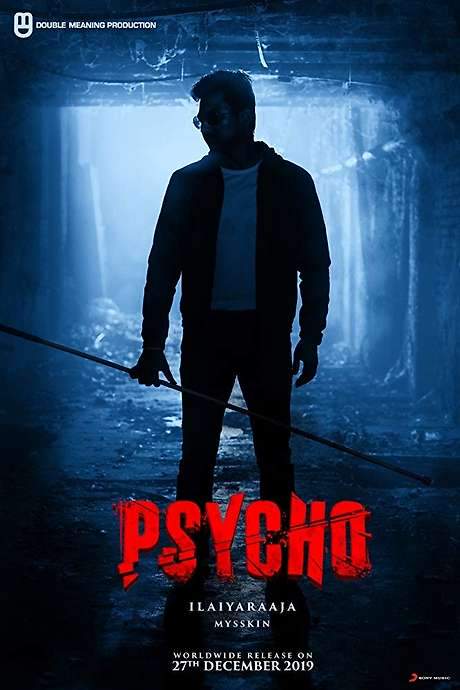
Psycho (2020) movie poster

Ending Explained

Psycho (2020) Ending Explained – Final Scene & Meaning

Release, runtime and language
2020 · 145 mins · Tamil
Echo score 64
Directed by
Mysskin
Starring
Aditi Rao Hydari, Singampuli, Nithya Menen, Aadukalam Naren, Udhayanidhi Stalin, Ram

Inspired by a Buddhist tale, this thriller follows a blind man drawn into a disturbing murder mystery. He attempts to rescue his lover, who has been kidnapped by a dangerous psychopath. The story explores themes of obsession, guilt, and the blurred lines between sanity and madness.

On this page (6)
  1. 1 Where to watch
  2. 2 What happens at the end
  3. 3 Final events in order
  4. 4 Ending questions answered
  5. 5 Movie threads
  6. 6 Every angle

Where to watch

Where to Watch Psycho (2020)

Where can you watch Psycho? Stream, rent or buy it in the US, including on Netflix, Netflix Standard and Apple TV Store: current JustWatch availability with up-to-date prices.

Streaming availability powered by JustWatch

Ending explained · contains spoilers

What Happens at the End of Psycho?

How Psycho (2020) ends, what the final scene means, which earlier moments set it up and how to read the ending if the film leaves it open. The full ending explained, with every spoiler.

Alfred Hitchcock’s Psycho revolutionized the thriller genre by delivering a twist ending that completely reframes the narrative. While the film initially leads the audience to believe that the murderer is Norman Bates' jealous mother, the climax reveals the terrifying truth: the mother has been dead for years. The imposing figure seen attacking Marion Crane and Detective Arbogast is actually Norman himself, dressed in his mother's clothing. This revelation is not simply a matter of a disguise; it is the culmination of a deep psychological break, confirmed by a psychiatrist who explains that Norman suffers from Dissociative Identity Disorder.

The tragedy of the ending lies in how Norman’s psyche fractured under the weight of an abusive and codependent relationship. His mother, Norma, instilled a crippling sense of guilt in him regarding his sexual desires, creating a moral "mother" persona that would punish him for any perceived transgression. Consequently, whenever Norman feels attraction toward a woman, the "Mother" personality emerges to destroy the object of his desire to protect him from sin. By the film's conclusion, the sympathetic man audiences thought they knew has been completely erased. In the chilling final moments, as "Mother's" voice takes over his internal monologue, it becomes clear that the dominant personality has won, and Norman Bates is effectively gone forever.

Last updated: March 30, 2026 at 15:53

Was this helpful?

The last 4 events

How Psycho Ends: The Final Events in Order

The last events of Psycho (2020) in chronological order, the run-up to the ending explained above. The complete timeline has all 14 events, scene by scene.

Open the full timeline
  1. Kamala reveals a college function lead

    Kamala reveals she had prior notice that the killer had gone to a college function. With renewed hope, they return to the college to review recordings for a breakthrough. The turn of events re-centers them on a concrete target.

    When
    Next day / Evening
    Where
    College
  2. Angulimala identified and Dagini's past revealed

    Kamala uncovers the killer's name, Angulimala, during the college investigations. Dagini, meanwhile, sneaks around the psycho's lair and meets a jailed woman who explains that the killer was her former student, punished brutally for his crimes. The revelation ties the killer's history to his present actions.

    When
    Evening / Night
    Where
    Psycho's lair / College
  3. Final confrontation at the lair

    At 11:45 PM, Gautham reaches the psycho's lair as the killer is about to behead Dagini. Intruder alarms trigger, and Gautham cuffs the killer's leg to free Dagini, with Kamala aiding their escape. The killer's imprisoned teacher swallows a key in a desperate act, and the psycho rages as he hunts them down.

    When
    11:45 PM
    Where
    Psycho's lair
  4. Aftermath and final fate

    Dagini displays signs of Stockholm syndrome in subsequent interviews, expressing sympathy for the killer and questioning the idea that he is a pure villain. The killer, having tasted a moment of imagined love, ends the pursuit by jumping off a cliff with a smile.

    When
    After the confrontation
    Where
    City / cliff

Ending questions answered

Psycho Ending: Your Questions Answered

The questions people ask most about the ending of Psycho (2020): what the final scene means, how the twist works, what happens to each character and how to read the ending. Each answer contains spoilers.

Q1

Why is Norman Bates revealed as the actual murderer instead of his mother?

Norman Bates is the actual murderer because his mother has been dead for years. Throughout the film, the audience is led to believe that Norman's elderly mother is the killer who attacks Marion Crane and Detective Arbogast. However, the final revelation shows that Norman himself was dressed in his mother's clothing, committing these murders. A psychiatrist explains that Norman suffers from Dissociative Identity Disorder, which caused him to adopt his mother's persona to cope with the guilt she instilled in him regarding his sexual desires.

Foreshadowing: Earlier scenes showing Norman tending to his mother in the motel kitchen actually depict him maintaining the illusion of her presence.

  • norman bates
  • murderer reveal
  • mother dead
  • dissociative identity disorder
  • psycho twist ending
Q2

What happened to Norman Bates' mother in the film?

Norman's mother, Norma Bates, died years before the film's events. Norman killed her, likely in a fit of jealousy and rage, and buried her in the backyard. Rather than accepting her death, Norman preserved her body and maintained the delusion that she was still alive, speaking for her and even pretending to be her when necessary.

Foreshadowing: The motel office contains bird specimens, which Norman uses as a psychological metaphor for prey and predators.

  • norma bates
  • death
  • body preserved
  • psychosis
Q3

Why does Norman dress in his mother's clothing to commit the murders?

Norman dresses as his mother because of his dissociative identity disorder. When Norman feels attracted to a woman, his mother's persona emerges to punish and destroy the object of his desire. This 'Mother' personality believes that Norman's sexual feelings are sinful and must be eliminated. By dressing in her clothing and assuming her voice, Norman literally becomes his mother to carry out these attacks.

Foreshadowing: Norman's discomfort around Marion and his sudden mood shifts hint at his internal conflict.

  • mother costume
  • cross-dressing
  • split personality
  • murder motive
Q4

What happens to Norman Bates at the end of Psycho?

At the end of Psycho, Norman Bates is apprehended by authorities but is not cured of his condition. In the final moments, as Norman sits in a holding cell, 'Mother's' voice takes over his internal monologue, saying 'I wouldn't even harm a fly.' This chilling conclusion indicates that the 'Mother' personality has completely overtaken Norman, and the sympathetic man audiences thought they knew is effectively gone forever.

Foreshadowing: The earlier scene where Norman speaks in two different voices when Marion visits hints at his fractured psyche.

  • final scene
  • arrest
  • mother voice
  • overtaken personality
Q5

Why does Mother's voice take over Norman's mind in the final scene?

Mother's voice takes over at the end because the 'Mother' personality has won the internal battle for control of Norman's mind. Throughout the film, Norman struggles against his mother's persona, but as the psychiatrist explains, the mother's influence has completely dominated Norman's identity. The final line 'I wouldn't even harm a fly' delivered in Mother's voice represents the tragic erasure of Norman Bates as a separate, sympathetic identity.

Foreshadowing: Norman's occasional shifts into his mother's harsh voice foreshadow this complete takeover.

  • mother voice
  • internal monologue
  • personality takeover
  • psychological break
Q6

Why does Norman kill Marion Crane in the shower scene?

Norman kills Marion Crane because when he feels attraction toward her, his 'Mother' personality emerges to destroy the object of his desire. Norma Bates instilled in Norman a crippling sense of guilt about his sexual desires, creating a moral 'mother' persona that punishes him for any perceived transgression. When Marion enters the motel, her beauty and the romantic tension trigger this protective murder mechanism.

Foreshadowing: Norman watches Marion from the office with clear attraction before his mood suddenly shifts.

  • marion crane
  • shower scene
  • kill motive
  • attraction guilt
Q7

What does the psychiatrist's explanation of Dissociative Identity Disorder reveal about Norman?

The psychiatrist reveals that Norman suffers from Dissociative Identity Disorder, a psychological condition where two or more distinct personalities exist within one individual. In Norman's case, his mother created such overwhelming guilt about his sexual desires that his mind split into two: the child Norman who craves affection, and the 'Mother' persona who punishes any romantic impulses. This explanation transforms the audience's understanding of Norman from a sympathetic innkeeper to a dangerous, unstable killer.

Foreshadowing: The film's ambiguous early scenes where Norman seems contradictory hint at his psychological complexity.

  • psychiatrist explanation
  • multiple personalities
  • split mind
  • psychology
Q8

Is Norman still dangerous at the end of Psycho despite being arrested?

Norman remains extremely dangerous at the end despite his arrest. The final scene makes clear that the 'Mother' personality has completely taken control, meaning Norman no longer exists as a separate, rational identity capable of distinguishing right from wrong. Being in police custody does not cure his mental illness, and the dominant 'Mother' persona shows no remorse for the murders.

Foreshadowing: Norman's earlier claims that 'a mother's protected her son' take on sinister meaning in retrospect.

  • dangerous
  • cured
  • arrest
  • mental illness
  • remorse
Q9

What does the ending reveal about Norman's relationship with his mother?

The ending reveals that Norman's relationship with his mother was abusive and codependent. Norma Bates instilled a crippling sense of guilt in Norman regarding his sexual desires, making him feel that any romantic attraction was sinful. This psychological abuse created the 'Mother' persona that now controls him. The tragic irony is that Norman killed his mother yet cannot escape her influence, as her voice dominates his mind forever.

Foreshadowing: The peephole scene where Norman watches Marion undress shows his conflicted desires and guilt.

  • abuse
  • codependent relationship
  • mother daughter guilt
  • psychological trauma
Q10

Why is the twist ending of Psycho considered one of the greatest in film history?

The twist ending works because Hitchcock masterfully manipulates the audience's expectations. We sympathize with Norman throughout the film, viewing him as a helpful, awkward innkeeper. The revelation that this seemingly gentle man is actually a murderous psychopath creates profound cognitive dissonance. Additionally, the scientific explanation of Dissociative Identity Disorder grounds the horror in psychological reality, making it more disturbing than a simple twist.

Foreshadowing: The audience's sympathy for Norman makes the betrayal more devastating.

  • twist ending
  • greatest twist
  • audience manipulation
  • psychological horror

Movie threads

More Movies Like Psycho, by Mood & Story

Curated lists built around what makes Psycho tick: the same mood, the same kind of story or the same emotional payoff. Each list explains why these movies belong together.

High-stakes psychological thrillers like Psycho

Stories where the hunt for a killer becomes a desperate psychological battle. If you liked the tense, high-stakes cat-and-mouse game in Psycho, you'll find more movies like it here. These psychological thrillers feature desperate protagonists pushed to their limits while hunting dangerous criminals.

  • suspenseful
  • anxious
  • dark
  • psychological
  • desperate
  • gritty
  • Tone: tense, dark, suspenseful
  • Pacing: steady, methodical
Why these movies?

The story pattern: The narrative follows a protagonist, often facing a significant disadvantage or personal vulnerability, who is drawn into a deadly investigation. The plot unfolds methodically as they follow clues, but the core tension comes from the psychological warfare between the hunter and the hunted, exploring themes of obsession, trauma, and the nature of evil.

Why they belong together: Movies in this thread share a gripping, steady pace, a consistently tense tone, and high intensity driven by life-or-death stakes. They balance a procedural investigation with deep psychological exploration, making the viewer feel the protagonist's fear, desperation, and moral conflict.
Movies with bittersweet endings after trauma like Psycho

Stories where survival comes at a heavy psychological cost. If you were impacted by the ambiguous, bittersweet ending of Psycho, explore more movies like it. These stories focus on characters who survive horrific events but are forever changed, leaving the audience with a complex, emotionally resonant conclusion.

  • somber
  • dark
  • psychological
  • traumatic
  • bittersweet
  • ambiguous
  • Tone: dark, bittersweet, somber
  • Pacing: steady, character-focused
Why these movies?

The story pattern: The narrative builds towards a climax where the protagonist survives a deeply traumatic event, but the victory is hollow. The resolution focuses on the aftermath and the lingering psychological damage, leaving characters and the audience with a sense of loss and ambiguity about the future, rather than clear-cut closure.

Why they belong together: These films are grouped by their shared emotional journey: they present a heavy, intense story that concludes not with pure triumph, but with a melancholic acknowledgment of the cost of survival. The tone is dark and the emotional weight is heavy, making the bittersweet ending feel earned and impactful.

Every angle

Psycho (2020) Explained: Plot, Ending, Timeline & Characters

Everything about Psycho in one place: what happens in the plot summary, the timeline in chronological order, the characters and meaning, the ending explained and a spoiler-free summary. What's After the Movie adds the cast, box office and post-credit scenes.

Coming soon on iOS and Android

The Plot Explained Movie Summary App

Plot summaries, endings explained and timelines on your phone. Catch up on any movie in minutes, save your favorites and never miss a twist again.

Be the first to know when we launch. Your email stays private, always.

Learn more about the app