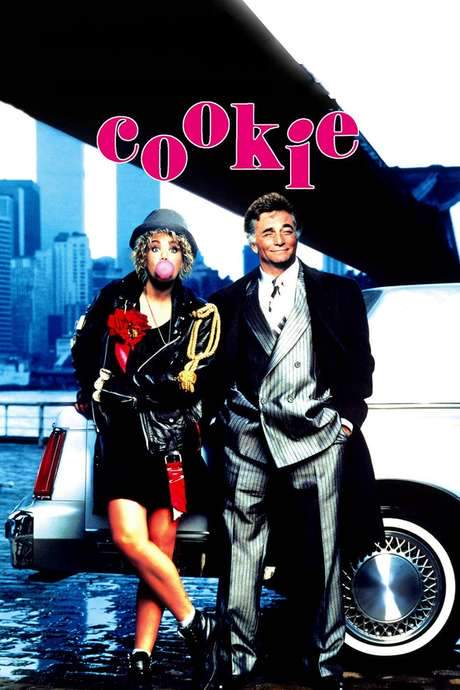
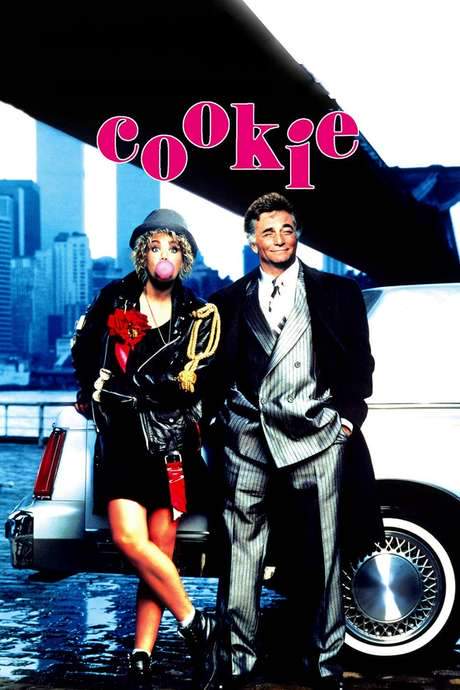
Night beside the Brooklyn Bridge opens with a tense, cinematic image: a man walks to a massive stretch limo, steps inside, and the car erupts in a blaze of destruction. The aftermath shifts to a pair of elements that frame the story: a view through binoculars that morphs into the film’s title, and a tabloid headline declaring “Dapper Dino dead.” At the funeral, attention centers on an elegantly dressed woman veiled in black, hinting at the personal costs of the crime world that will unfold. A flashback then pulls us back a few months to meet Cookie Voltecki, Emily Lloyd and her friend Pia, as they roam a street fair with a rebellious energy that feels straight out of 1989.
In court, a swift intervention by a lawyer named Henry Solomon shaves Cookie’s time on the inside, releasing her on her own recognizance and hustling her into a waiting limo for a long drive to meet her father. The man who awaits her is Dapper Dino Capisco, a parolee who has spent thirteen years behind bars and now faces the challenge of reintegrating into a world that has changed without him. Dino’s initial joy at his daughter’s presence is tempered by his suspicion and worry—he is concerned about his parole and the way Cookie’s mouthy, quick-witted attitude might complicate things. Cookie’s mother Lenore, played by Dianne Wiest, is a key figure in the family dynamic, and Dino’s relationship with his own family is shown as strained yet central to the plot.
To keep Cookie on a steadier path, Dino sends her to work with his partner, Carmine, on 7th Avenue. Dino is released and returns home to an annoying wife, Bunny, who drives him back into the daily grind of a life that echoes the tensions between old loyalties and new threats. Lenore readies herself for a visit from Dino, who intends to take her to Atlantic City, and any sense of normalcy is soon interrupted by the larger chessboard of crime that surrounds them. A fleeting moment of intimacy between Dino and Lenore hints at a past not fully explained, while Cookie’s defiance remains a constant undercurrent.
In Atlantic City, a powerful mob figure known as Arnold Ross informs Dino that he has bought Carmine out, which means Dino’s retirement plans and the money he counted on are now jeopardized. Dino confronts Carmine, who promises they will talk at his Christmas party, setting up a confrontation that will test loyalties and threaten fragile alliances. At Lenore’s urging, Dino agrees to take Cookie along, and the plan to keep their fates intertwined moves forward. Enzo Della Testa, the formidable capo di tutti cappi, makes it clear to Carmine that Dino must be dealt with, tightening the web of pressure around the family.
Carmine welcomes Dino back into his circle of friends, but the mood sours when Carmine’s son makes a pass at Cookie, prompting Cookie to respond with a bold act—the burning of his tie with a cigarette. Dino pulls Cookie aside and shares a chilling piece of wisdom: you never let people know that revenge is coming. The pair then slides into a limousine for a ride that becomes a high-stakes pursuit, as federal agents tail them and Cookie skillfully evades capture.
A pivotal sequence unfolds back at Bunny’s apartment, where Dino’s status as a fugitive or a target becomes tangled with Cookie’s resolve. She hints at a protective strategy, declaring that the day she will divorce Dino is the day he dies, a line that foreshadows the deadly games ahead. District Attorney Segretto, shaping public perception, plants photos in newspapers to portray Dino as the next godfather, while Carmine sweetens the pot with a tempting offer of cash. In a tense, almost ceremonial moment, Carmine’s men open fire on Dino’s car, while Cookie drives, and they explode a limousine that Dino is in.
Cookie reaches out to Segretto with a proposition: she is willing to testify against her father’s associates if he can place her in witness protection. She suggests faking Dino’s death to keep him safe, a plan that hints at the lengths people will go to shield themselves from the consequences of their criminal lives. Dino and Cookie begin to plant misleading information—Dino claims he has millions and plans to retire to Sicily—so that law enforcement can be misled. The police, in a twist, rig Cookie’s world with danger, and the plan to bury Dino’s wealth in a final, devastating blow hinges on a dramatic misstep: two motorcycle cops, one wearing a fake mustache, steal the money meant to seal Dino’s fate.
Carmine, realizing his own risk, calls to meet Dino under the bridge at 9 pm. The opening scene’s mood repeats itself in a variation, as Carmine steps into the limo, accompanied by a corpse dressed in Dino’s clothes, and the entire operation detonates in an explosion. In a cruel irony, Cookie, Ross, Vito, and everyone involved in the conspiracy celebrate the supposed victory as a victory that should never have happened. The district attorney is aghast at the unintended consequences of the plan, and Dino asserts that the arrangement must still be honored, underscoring the stubborn, inescapable pull of loyalty.
As the dust settles, Dino and Lenore leave on a small plane, while Cookie embraces her father in a tender moment that acknowledges the fragile family bonds at the heart of the story. The film pivots to an ending where Cookie wears a funeral-like elegance and a kiss from Vito signals a new, if uncertain, future. Dino and Lenore wed in Minnesota, even as mourners disperse, and Cookie, lifting her veil, shares a quiet look with Della Testa as he salutes her. The final image lingers on Cookie’s calm smile and a shrug that suggests life goes on, even as the past casts a long shadow over the family’s fate.
> "deal with"
In the closing chapters, the story remains anchored in the uneasy alliance of family duty and criminal power, with Cookie navigating the blurred line between defiance and protection, and Dino trying to secure a future that might finally offer some peace. The film blends moments of dark humor with stark, sobering consequences, offering a portrait of a family pulled between love, revenge, and the unspoken rules that govern a world where loyalty is both weapon and shield. The final scenes underscore the cost of choosing sides and the precarious balance that sustains a life lived under the shadow of crime. Cookie’s last Broadway-like flourish—an upward glance, a knowing smile, and a simple shrug—leaves the impression that, for all the violence and schemes, the human story persists, stubborn and unresolved.