





Plot Explained Spoilers guaranteed!
Plot Explained

Browse by genre

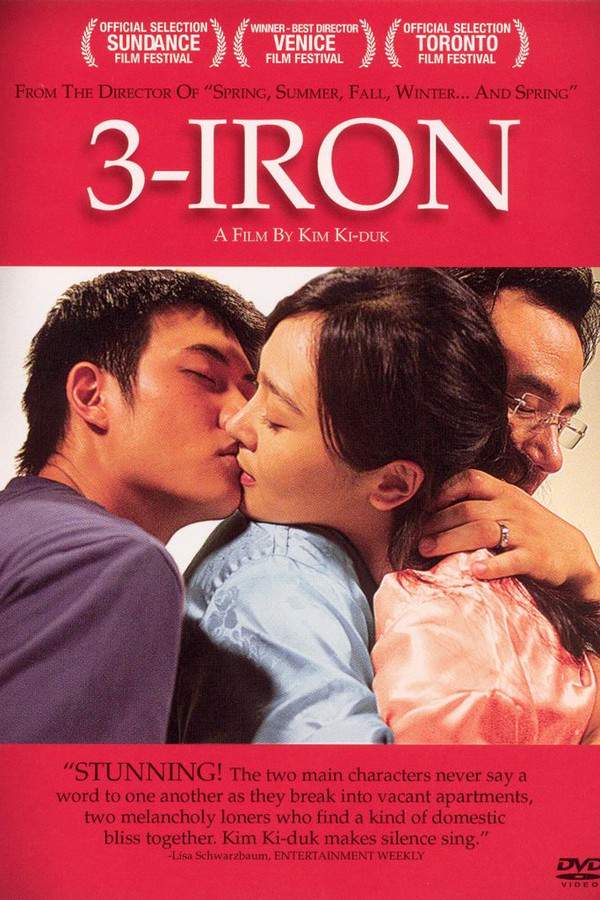
3-Iron (2005) movie poster

Characters & Themes

3-Iron (2005) Characters, Setting & Themes Explained

Release, runtime and language
2005 · 88 min · Korean
Starring
Seung-yeon Lee

A restless young man living in abandoned homes develops an unexpected connection with a woman enduring an unhappy marriage. Their lives become intertwined through a shared interest in golf, offering a temporary escape from their respective hardships. As they confront the repercussions of her difficult past, their bond strengthens, providing solace and a glimmer of hope for a better future.

On this page (7)
  1. 1 Where to watch
  2. 2 Characters explained (2)
  3. 3 Where & when it takes place
  4. 4 Themes & meaning (3)
  5. 5 Character & meaning questions
  6. 6 Movie threads
  7. 7 Every angle

Where to watch

Where to Watch 3-Iron (2005)

Where can you watch 3-Iron? Stream, rent or buy it in the US, including on Amazon Video, Apple TV Store and Fandango At Home: current JustWatch availability with up-to-date prices.

Streaming availability powered by JustWatch

2 main characters · contains spoilers

3-Iron Characters Explained: Who Is Who

The main characters of 3-Iron (2005), heroes and villains: what drives them, how they change over the course of the story and what each of them reveals about the film's bigger ideas.

  • Tae-suk

    Tae-suk is a quiet and observant character who exemplifies solitude and introspection. He finds solace in sneaking into empty apartments, revealing an unusual blend of curiosity and detachment from societal norms. His actions reflect a desire for connection while grappling with feelings of guilt and responsibility.

    • 🕵️‍♂️ Solitary
    • 💔 Compassionate
    • 🌌 Introspective
  • Sun-hwa

    played by Seung-yeon Lee

    Sun-hwa is portrayed as a deeply conflicted character shaped by the abuse she faces from her husband. A former model, her beauty carries an underlying sorrow, and her brief encounters with Tae-suk offer a glimmer of hope and affection. Her character symbolizes the struggle for freedom and the quest for genuine connection in a suffocating environment.

    • 👩‍🎤 Beautiful
    • 💪 Resilient
    • 🕊️ Hopeful

Last updated: October 22, 2024 at 21:48

Was this helpful?

Setting

Where and When Does 3-Iron Take Place?

The setting of 3-Iron (2005): the year and time period, the places and locations, and how they shape the characters, the mood and the tension of the story.

Time period

The film does not specify a particular time period, but it portrays contemporary life in urban settings. This allows for themes of modernization and isolation to resonate throughout the storyline, reflecting struggles that could be relevant in today’s society.

Location

Residential apartments, Traditional Hanok

The movie takes place primarily within various residential apartments, which serve as temporary homes for Tae-suk. These spaces become a backdrop for his silent observations and interactions. A significant moment unfolds in a traditional hanok, a Korean-style house known for its unique architecture and warm atmosphere, creating a contrast to the modern apartments.

  • 🏢 Apartments
  • 🏺 Hanok

Last updated: October 22, 2024 at 21:48

Was this helpful?

3 major themes

3-Iron Meaning: Themes & Message Explained

What is 3-Iron (2005) really about? The emotional, social and philosophical themes the film keeps returning to, its symbolism and the message beneath the surface.

  • Abuse

    The theme of abuse is central to the characters' motivations, particularly Sun-hwa's struggle with her brutal husband. Tae-suk's silent intervention highlights the complexities of compassion and action in the face of domestic violence.

  • Isolation

    Isolation effects are explored through Tae-suk's solitary lifestyle and his peculiar method of living in other people's homes. This sense of detachment is contrasted with his evolving relationship with Sun-hwa, showcasing a deep bond formed through shared silence and unspoken understanding.

  • Reality vs Dream

    The film blurs the lines between reality and dream, especially towards the end, leaving viewers questioning the nature of existence and personal relationships. Through the couple’s experiences, the narrative invites contemplation on whether their actions are grounded in reality or a surreal escapism.

Last updated: October 22, 2024 at 21:48

Was this helpful?

Character & theme questions

3-Iron Characters & Meaning: Your Questions Answered

The questions people ask about 3-Iron (2005): who the characters really are, their relationships, what the symbols mean, where it takes place and what the movie is really about. Each answer contains spoilers.

Q1

Where is 3-Iron set?

The film takes place primarily in various residential apartments across urban South Korea, which serve as temporary homes for Tae-suk as he silently moves through empty spaces. A significant scene occurs in a traditional hanok, a Korean-style house with distinctive architecture that contrasts sharply with the modern apartments, creating a warmer, more intimate setting for the characters' relationship.

  • setting
  • apartments
  • hanok
  • korea
  • locations
Q2

What is a hanok and why is it significant in the film?

A hanok is a traditional Korean house characterized by its curved roof, wooden structure, and heated floor system called ondol. In 3-Iron, the hanok represents a sanctuary, a place of warmth and authenticity that contrasts with the cold, sterile modern apartments Tae-suk usually inhabits. The setting becomes symbolic of the genuine connection he develops with Sun-hwa.

  • hanok
  • traditional house
  • korean architecture
  • setting
Q3

When does 3-Iron take place?

3-Iron is set in contemporary, present-day South Korea with no specific year mentioned. This timeless setting allows the film to explore universal themes of modernization, isolation, and emotional disconnection that remain relevant regardless of the exact time period, emphasizing that these struggles could happen to anyone anywhere.

  • time period
  • contemporary
  • modern
  • era
Q4

What does 3-Iron say about isolation?

The film explores isolation through Tae-suk's unusual lifestyle of living in other people's empty homes, representing a physical manifestation of his emotional detachment. His solitary existence is contrasted with the deep bond he forms with Sun-hwa, suggesting that genuine connection can emerge from the most isolated circumstances. The theme emphasizes that isolation is not always a choice but often a response to emotional pain.

  • isolation
  • loneliness
  • solitude
  • disconnection
Q5

What role does abuse play in 3-Iron?

Abuse is a central theme that drives Sun-hwa's character arc and motivates Tae-suk's intervention. Sun-hwa endures brutal domestic violence from her husband, which symbolizes the suffocating environment she desperately wants to escape. Tae-suk's silent presence and eventual action represent a form of compassion and resistance against this abuse, highlighting the complexities of witnessing violence and the moral questions surrounding intervention.

  • abuse
  • domestic violence
  • sun-hwa
  • husband
Q6

What does reality vs dream mean in 3-Iron?

The film blurs the line between reality and dream, particularly through its ambiguous ending that leaves viewers questioning whether the characters' journey actually occurred. This surreal element invites interpretation about whether Tae-suk and Sun-hwa's connection is a literal escape or a psychological refuge from their painful realities. The theme suggests that hope and imagination can sometimes feel more real than harsh truth.

  • reality
  • dream
  • surreal
  • ambiguity
  • ending
Q7

Who is Tae-suk in 3-Iron?

Tae-suk is a quiet, introspective young man who lives by sneaking into empty residential apartments, living briefly in strangers' homes without their knowledge. His real name remains unknown throughout the film, emphasizing his detached, almost ghostly existence. Despite his solitary lifestyle, he possesses a deep capacity for compassion, as evidenced by his concern for Sun-hwa and his desire to help her escape her abusive situation.

  • tae-suk
  • main character
  • protagonist
Q8

Who is Sun-hwa in 3-Iron?

Sun-hwa is a former model trapped in an abusive marriage whose real name is Seung-yeon Lee. She represents the struggle for freedom and genuine connection in a suffocating environment. Her beauty and grace carry underlying sorrow, and her encounters with Tae-suk offer her the first glimpses of hope and affection she has experienced. Her character embodies the desire to break free from emotional and physical imprisonment.

  • sun-hwa
  • seung-yeon lee
  • female lead
  • abuse victim
Q9

What is the relationship between Tae-suk and Sun-hwa?

Tae-suk and Sun-hwa form an unusual bond based on shared silence, mutual understanding, and escape from their respective hardships. Their connection develops through Tae-suk's observations of her in her apartment and their brief encounters, eventually evolving into a partnership where they flee together. Their relationship is characterized by minimal dialogue and deep emotional intimacy, representing two isolated souls finding solace in each other.

  • relationship
  • connection
  • romance
  • tae-suk
  • sun-hwa
Q10

What does golf represent in 3-Iron?

Golf serves as both a literal activity and a symbolic element in the film. The title refers to a specific golf technique, and the sport appears as a shared interest that initially brings the characters together. Golf represents an escape from their difficulties, a temporary refuge that allows them to briefly experience freedom and normality. The precision and patience required in golf also mirror the careful, quiet nature of their relationship.

  • golf
  • symbolism
  • sport
  • 3-iron
Q11

What is the tone and mood of 3-Iron?

3-Iron has a predominantly melancholic tone characterized by quiet suffering and loneliness, yet it is punctuated by moments of tender hope. The film maintains a slow, meditative pace that invites reflection rather than anxiety. Despite handling heavy themes like domestic abuse and imprisonment, the presentation remains gentle and poetic, preventing the film from becoming overwhelming while still conveying emotional depth.

  • tone
  • mood
  • atmosphere
  • style

Movie threads

More Movies Like 3-Iron, by Mood & Story

Curated lists built around what makes 3-Iron tick: the same mood, the same kind of story or the same emotional payoff. Each list explains why these movies belong together.

Movies about silent connection like 3-Iron

Romantic bonds formed without words, offering solace against a harsh reality. If you liked the quiet, nonverbal romance in 3-Iron, explore these other movies where characters find profound connection without words. These films share a similar meditative, tender mood and focus on the power of silent understanding to provide escape from difficult circumstances.

  • quiet
  • tender
  • lonely
  • dreamlike
  • romantic
  • thoughtful
  • Tone: melancholic, tender
  • Pacing: slow, meditative
Why these movies?

The story pattern: The narrative often centers on isolated individuals who discover a kindred spirit. Their communication is subtle—gestures, shared rituals, and quiet companionship—forming a bond that serves as a refuge. The central conflict typically involves their struggle to maintain this fragile connection against an unyielding external world.

Why they belong together: These films are grouped by their shared focus on unspoken communication, a melancholic yet tender tone, and the theme of love as a quiet sanctuary. They often feature a slow, observational pace that mirrors the characters' internal states and prioritizes atmospheric emotion over explicit dialogue.
Dreamlike escape movies similar to 3-Iron

Characters retreat into a surreal, intimate world to endure their difficult lives. Find more films like 3-Iron that explore dreamlike escapism from difficult situations. These stories often feature characters retreating into surreal or intimate worlds, creating a unique blend of melancholic reality and hopeful, almost magical moments of connection and freedom.

  • dreamlike
  • melancholic
  • surreal
  • oppressive
  • romantic
  • lonely
  • Tone: melancholic, dreamlike
  • Pacing: slow, atmospheric
Why these movies?

The story pattern: The narrative follows characters facing oppressive circumstances—be it emotional imprisonment or urban alienation—who find unconventional ways to escape. Their methods are often ritualistic or stealthy, creating a private universe. The story unfolds with an ambiguous quality, leaving the viewer to question what is real and what is a necessary dream for survival.

Why they belong together: This thread groups films that share a specific mood mix: a melancholic core grounded in real hardship, punctuated by dreamlike, romantic, or surreal interludes. The pacing is often slow and atmospheric, allowing the viewer to sink into the characters' subjective experience of finding beauty in desolation.

Every angle

3-Iron (2005) Explained: Plot, Timeline & Characters

Everything about 3-Iron in one place: what happens in the plot summary, the timeline in chronological order, the characters and meaning and a spoiler-free summary. What's After the Movie adds the cast, box office and post-credit scenes.

Coming soon on iOS and Android

The Plot Explained Movie Summary App

Plot summaries, endings explained and timelines on your phone. Catch up on any movie in minutes, save your favorites and never miss a twist again.

Be the first to know when we launch. Your email stays private, always.

Learn more about the app