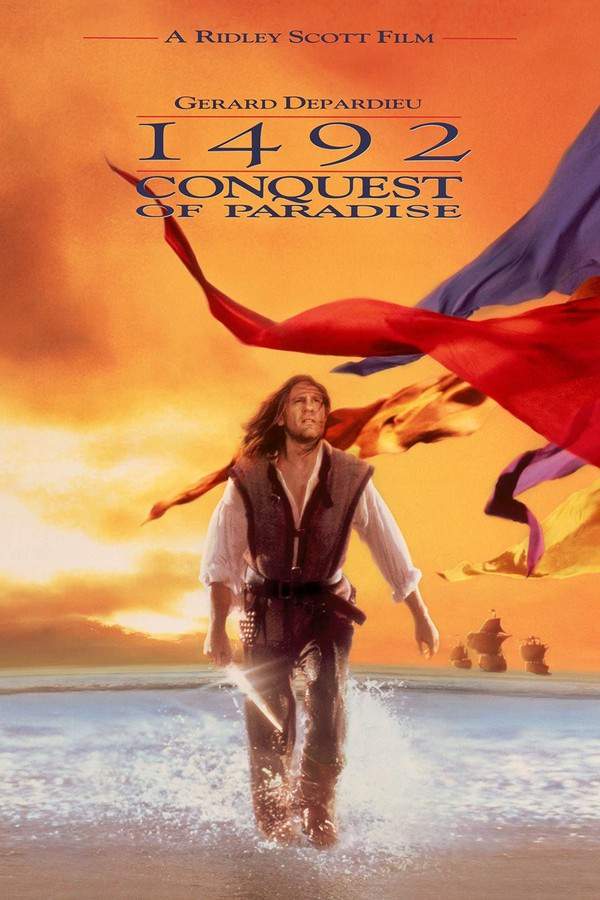
Year: 1992
Runtime: 154 min
Language: English
Director: Ridley Scott
Budget: $47M
In 1492, Christopher Columbus embarks on a voyage to India, facing storms and unrest among his crew. Upon reaching the New World, his arrival triggers a conflict with Don Adrian de Moxica, a nobleman driven by a desire for conquest. Columbus had hoped to find a peaceful paradise, but Moxica’s ambitions threaten to disrupt the fragile balance of the newly discovered land, setting the stage for a clash of ideologies and a struggle for control.
Find where to stream, rent, or buy 1492: Conquest of Paradise (1992) in the US with current JustWatch availability, up-to-date pricing, and platform listings for subscription, rental, and digital purchase options.
Warning: spoilers below!
Haven’t seen 1492: Conquest of Paradise yet? This summary contains major spoilers. Bookmark the page, watch the movie, and come back for the full breakdown. If you're ready, scroll on and relive the story!
Explore the full timeline and setting of 1492: Conquest of Paradise (1992). Follow every major event in chronological order and see how the environment shapes the story, characters, and dramatic tension.
Last updated: October 22, 2024 at 22:04
Meet the key characters of 1492: Conquest of Paradise (1992), with detailed profiles, motivations, and roles in the plot. Understand their emotional journeys and what they reveal about the film’s deeper themes.
Last updated: October 22, 2024 at 22:04
Explore the central themes of 1492: Conquest of Paradise (1992), from psychological, social, and emotional dimensions to philosophical messages. Understand what the film is really saying beneath the surface.
Last updated: October 22, 2024 at 22:04
Browse frequently asked questions about 1492: Conquest of Paradise (1992) focused on characters, relationships, themes, symbols, setting, and story context. This movie info FAQ gives spoiler-aware explanations for character arcs, world details, and thematic interpretation so readers can better understand what the film is really about.
The story is set primarily in the Caribbean islands, specifically Guanahani (modern-day San Salvador Island) and Hispaniola (which includes modern-day Haiti and the Dominican Republic). These locations represent the first landfall points of Columbus's voyage to the Americas. The film also references Castile in Spain, showing the departure point of the expedition.
The film takes place in the late 15th century, specifically beginning in 1492 during the Age of Discovery. This era was marked by European powers seeking new trade routes and territories across uncharted waters. The time context reflects a period of significant cultural and economic shift due to encounters between explorers and indigenous populations.
Columbus is portrayed as an ambitious and determined navigator driven by his vision of discovery and finding new trade routes. He grapples with skepticism from theologians and his crew while displaying leadership qualities during turbulent times. His character reflects the complexity of a man who oscillates between visionary ideals and flawed leadership in the face of adversity.
Moxica serves as the fierce antagonist embodying ruthlessness in pursuit of gold and power. His harsh leadership leads to brutal punishments and instills fear among native populations and fellow Spaniards. His character highlights the darker aspects of colonization and the moral decay stemming from unchecked ambition.
Colonization permeates the narrative as Columbus's voyages lead to encounters with native tribes and subsequent exploitation of their resources. The film explores the consequences of ambition, showcasing both the allure of discovery and the dark realities that accompany colonization. It raises questions about power dynamics and the impact on indigenous cultures.
Adventure is central to Columbus's quest, driven by his desire to discover new lands and riches. The perilous journey across uncharted waters and challenges faced by the crew underline the spirit of exploration. This theme evokes a sense of courage amid uncertainty as characters navigate both external and internal conflicts.
Justice emerges through the conflict with Moxica and the struggles faced by native inhabitants. The harsh treatment of natives in the name of gold mining leads to moral dilemmas and questions about fairness in leadership. The film examines how the desire for wealth can lead to injustice and suffering.
Queen Isabella I is portrayed as a benevolent yet pragmatic ruler weighing the risks and rewards of Columbus's voyages. Her approval of the expedition highlights her belief in the potential of new trade routes, but her reaction to modest returns speaks to leadership challenges. Her character illustrates the complexity of power in the context of exploration.
Pinzón is a savvy shipowner who plays a crucial role in Columbus's expedition by providing essential support during the voyage. His character balances pragmatism with loyalty, showcasing the importance of partnerships in exploration. He embodies the spirit of collaboration necessary for such ambitious undertakings.
The dominant tone is bittersweet, as Columbus achieves his dream of discovery but this victory is irrevocably tainted by violence, exploitation, and personal ruin. The film creates a poignant mixture of triumph and tragedy throughout its narrative. This melancholic reflection underscores the human cost of historical events.
Guanahani represents a pivotal moment in the Age of Discovery, highlighting initial encounters between Europeans and Indigenous populations. Hispaniola became a significant site for Columbus's settlements and interactions with native tribes. These locations mark the beginning of sustained contact between two previously separated worlds.
The film shows that Columbus's paradise ideal ultimately fails as violence and exploitation follow discovery. The narrative weaves together themes of ambition, ideology, and the consequences of colonialism throughout its linear arc. Heavy emotional weight is driven by depictions of brutal punishment and the cyclical nature of violence.
The central conflict emerges between Columbus's hope for a peaceful paradise and Moxica's ambitions driven by desire for conquest. Additional tensions include crew mutinies, violent conflicts with natives, and political betrayals. These conflicts set the stage for a clash of ideologies and struggle for control.
The film belongs to Adventure, Biography, Drama, and History genres. This combination allows it to explore both the personal journey of Columbus and the broader historical implications of his voyages. The dramatic elements balance the factual historical narrative with emotional storytelling.
The narrative complexity is moderate, following a linear chronological arc while weaving together themes of ambition, ideology, and consequences of colonialism. The steady pacing builds tension through crew mutinies, violent conflicts, and political betrayals. These high-stakes moments balance with reflective periods throughout the film.
Discover curated groups of movies connected by mood, themes, and story style. Browse collections built around emotion, atmosphere, and narrative focus to easily find films that match what you feel like watching right now.
Grand journeys where ambition leads to tragic and bittersweet consequences.If you liked the reflective and melancholic tone of 1492: Conquest of Paradise, explore other movies like it. This collection features grand, steadily-paced historical dramas with heavy emotional weight and bittersweet endings, focusing on the tragic cost of ambition.
Stories in this thread often follow a linear epic structure, building from a momentous goal or discovery toward an inevitable collapse. The protagonist's initial triumph is steadily eroded by hubris, external conflict, or the grim realities of their actions, culminating in a fall that is both personal and symbolic.
Movies are grouped here for their shared combination of epic scale with a somber, reflective mood. They balance grandeur with intimacy, using steady pacing to build a sense of tragic inevitability and a focus on the heavy emotional consequences of historical forces.
Stories where a new world is found, but innocence and ideals are shattered.Find movies similar to 1492: Conquest of Paradise that explore the dark side of exploration. These films share themes of discovery leading to conflict, the failure of utopian ideals, and a bittersweet reflection on the human cost of historical encounters.
The narrative pattern involves a journey toward a goal—a new land, a scientific breakthrough, or a utopia—that initially promises wonder. This promise is quickly complicated by the introduction of human flaws like greed, pride, and violence, leading to an irreversible corruption of the ideal and a poignant sense of loss.
These films are united by their exploration of a specific thematic arc: the collision between idealism and harsh reality. They share a conflicted, somber mood born from depicting paradise being lost to the very forces that discovered it, creating a powerful and reflective experience.
Don't stop at just watching - explore 1492: Conquest of Paradise in full detail. From the complete plot summary and scene-by-scene timeline to character breakdowns, thematic analysis, and a deep dive into the ending - every page helps you truly understand what 1492: Conquest of Paradise is all about. Plus, discover what's next after the movie.
Read a complete plot summary of 1492: Conquest of Paradise, including all key story points, character arcs, and turning points. This in-depth recap is ideal for understanding the narrative structure or reviewing what happened in the movie.
Track the full timeline of 1492: Conquest of Paradise with every major event arranged chronologically. Perfect for decoding non-linear storytelling, flashbacks, or parallel narratives with a clear scene-by-scene breakdown.
Discover movies like 1492: Conquest of Paradise that share similar genres, themes, and storytelling elements. Whether you’re drawn to the atmosphere, character arcs, or plot structure, these curated recommendations will help you explore more films you’ll love.
1492: Conquest of Paradise (1992) Plot Summary & Movie Recap
1492: Conquest of Paradise (1992) Scene-by-Scene Movie Timeline
1492: Conquest of Paradise (1992) Spoiler-Free Summary & Key Flow
Movies Like 1492: Conquest of Paradise – Similar Titles You’ll Enjoy
The Mission (1986) Spoiler-Packed Plot Recap
The New World (2005) Detailed Story Recap
Brave New Land (2000) Complete Plot Breakdown
Christopher Columbus, The Enigma (2007) Full Movie Breakdown
Jericho (1991) Full Movie Breakdown
Christopher Columbus (1000) Full Summary & Key Details
Orinoko, New World (1984) Complete Plot Breakdown
The Longest Voyage (2020) Plot Summary & Ending Explained
1521: The Quest for Love and Freedom (2023) Film Overview & Timeline
Captain from Castile (1947) Detailed Story Recap
The Other Conquest (1999) Complete Plot Breakdown
Hispanoamérica: Song of Life and Hope (2024) Full Movie Breakdown
New World (1978) Movie Recap & Themes
Magellan (2025) Story Summary & Characters
Dawn of America (1951) Complete Plot Breakdown