Plot Explained Spoilers guaranteed!
Plot Explained

Browse by genre

Your Friend the Rat (2007) movie poster

Characters & Themes

Your Friend the Rat (2007) Characters, Setting & Themes Explained

Release, runtime and language
2007 · 11 mins · English
JustWatch #34,477
Starring
Peter Sohn, John Ratzenberger, Lou Romano, Patton Oswalt, Jim Capobianco

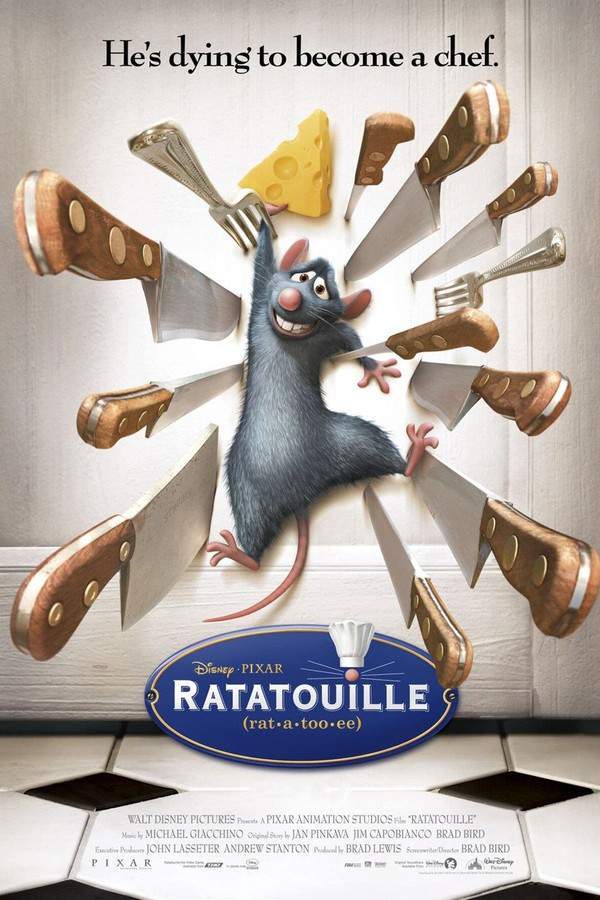
Rats may never win popularity contests, but this chronicle traces the intertwined history between humans and their rodent companions. Guided by Remy—star of Ratatouille—and his hesitant brother Emile, the film walks through centuries of myth, disease and culture, all seen from a rat’s point of view, urging us to reconsider coexistence.

On this page (8)
  1. 1 Where to watch
  2. 2 Characters explained (2)
  3. 3 Where & when it takes place
  4. 4 Themes & meaning (4)
  5. 5 Character & meaning questions
  6. 6 Movie threads
  7. 7 Movies like Your Friend the Rat
  8. 8 Every angle

Where to watch

Where to Watch Your Friend the Rat (2007)

Where can you watch Your Friend the Rat? Stream, rent or buy it in the US, including on Disney Plus, Amazon Video and Apple TV Store: current JustWatch availability with up-to-date prices.

Streaming availability powered by JustWatch

2 main characters · contains spoilers

Your Friend the Rat Characters Explained: Who Is Who

The main characters of Your Friend the Rat (2007), heroes and villains: what drives them, how they change over the course of the story and what each of them reveals about the film's bigger ideas.

  • Remy (Patton Oswalt)

    Remy is an articulate, idealistic rat who challenges old prejudices about his species. He uses history and storytelling to advocate for peace between rats and humans. His curiosity and leadership drive the narrative, turning a lecture into a call for mutual understanding.

    • 🐀 Protagonist
    • 🧠 Intelligent
    • 🎤 Orator
  • Emile (Peter Sohn)

    Emile is Remy's brother, more cautious but supportive. He helps deliver information through animation and visual aids, adding humor and warmth to the presentation. His presence anchors the performance and helps translate complex history into accessible ideas.

    • 🐀 Brother
    • 🎨 Artist
    • 🤝 Ally

Last updated: October 03, 2025 at 19:38

Was this helpful?

Setting

Where and When Does Your Friend the Rat Take Place?

The setting of Your Friend the Rat (2007): the year and time period, the places and locations, and how they shape the characters, the mood and the tension of the story.

Time period

Various historical periods

The narrative references ancient India, the Roman Empire, the Black Death era, and the Chinese zodiac, weaving a panorama of how rats were perceived across cultures. It also nods to Victorian England through the rat-catching anecdote, blending myth, superstition, and science. The framing emphasizes how perceptions shift with context rather than with inherent nature of rats.

Location

Stage, Auditorium

The segment unfolds on a stage or in an auditorium where Remy and Emile deliver a narrated presentation about rats. It blends live performance with 3D and 2D animation, giving a documentary-feel to a playful show. The setting suggests a small educational performance aimed at inviting the audience to rethink common fears about rats.

  • 🏛️ Theatrical
  • 🎭 Stage Presence
  • 🗣️ Educational

Last updated: October 03, 2025 at 19:38

Was this helpful?

4 major themes

Your Friend the Rat Meaning: Themes & Message Explained

What is Your Friend the Rat (2007) really about? The emotional, social and philosophical themes the film keeps returning to, its symbolism and the message beneath the surface.

  • Coexistence

    Remy argues for peace between rats and humans, highlighting the potential for mutual benefit. The film contrasts fear with evidence, showing how rats have historically contributed as companions, workers, and subjects of study. It suggests that harmonious relations are possible when stereotypes are replaced with understanding. The tone remains hopeful but grounded in historical context.

  • History as Lens

    History is used to illuminate how culture shapes attitudes toward rats. By tracing sacred roles, superstitions, and scientific uses across eras, the film demonstrates that fear is often culturally constructed. This lens encourages viewers to question present-day prejudices by reflecting on the past. It argues that changing context can alter behavior toward living beings.

  • Performance & Meta-Narrative

    The on-stage presentation and meta-narration blur lines between storyteller and subject, emphasizing that storytelling can alter perception. The use of 2D and 3D animation within the film mirrors how ideas about rats evolve over time. The musical element in the segment reinforces memory and engagement, making complex history accessible. The narrative uses performance to persuade through empathy rather than force.

  • Perception vs Reality

    The film juxtaposes myth and fact to challenge biased views of rats. It shows how misinformation can lead to harm, while evidence can guide ethical treatment. The central ethical question invites viewers to reconsider how society handles animals and how we judge beings by stereotypes. Ultimately, it promotes a more nuanced understanding of rats as capable of positive roles.

Last updated: October 03, 2025 at 19:38

Was this helpful?

Character & theme questions

Your Friend the Rat Characters & Meaning: Your Questions Answered

The questions people ask about Your Friend the Rat (2007): who the characters really are, their relationships, what the symbols mean, where it takes place and what the movie is really about. Each answer contains spoilers.

Q1

Where does the presentation take place?

The segment unfolds on a stage or in an auditorium where Remy and Emile deliver their narrated presentation. The setting blends live performance with 3D and 2D animation, creating a documentary-feel to a playful educational show aimed at inviting the audience to reconsider their fears about rats.

  • setting
  • stage
  • auditorium
  • presentation location
Q2

What historical periods does the film cover?

The narrative references ancient India, the Roman Empire, the Black Death era, the Chinese zodiac, and Victorian England. It weaves a panorama of how rats were perceived across cultures, blending myth, superstition, and science while emphasizing how perceptions shift with context rather than with the inherent nature of rats.

  • historical periods
  • ancient india
  • roman empire
  • black death
  • victorian england
  • chinese zodiac
Q3

What does the film say about humans and rats coexisting?

Remy argues for peace between rats and humans, highlighting the potential for mutual benefit. The film contrasts fear with evidence, showing how rats have historically contributed as companions, workers, and subjects of study. It suggests that harmonious relations are possible when stereotypes are replaced with understanding.

  • coexistence
  • rats
  • humans
  • peace
  • stereotypes
  • understanding
Q4

How does the film use history to explore prejudice?

History is used to illuminate how culture shapes attitudes toward rats. By tracing sacred roles, superstitions, and scientific uses across eras, the film demonstrates that fear is often culturally constructed. It encourages viewers to question present-day prejudices by reflecting on the past and argues that changing context can alter behavior toward living beings.

  • history
  • prejudice
  • culture
  • fear
  • stereotypes
  • context
Q5

Who are Remy and Emile and what is their role?

Remy is an articulate, idealistic rat who uses history and storytelling to advocate for peace between rats and humans. His curiosity and leadership drive the narrative, turning a lecture into a call for mutual understanding. Emile is Remy's more cautious but supportive brother, who helps deliver information through animation and visual aids, adding humor and warmth to the presentation.

  • remy
  • emile
  • characters
  • ratatouille
  • narrators
Q6

What message does the film convey about perception versus reality?

The film juxtaposes myth and fact to challenge biased views of rats. It shows how misinformation can lead to harm, while evidence can guide ethical treatment. The central ethical question invites viewers to reconsider how society handles animals and promotes a more nuanced understanding of rats as capable of positive roles.

  • perception
  • reality
  • myth
  • fact
  • stereotypes
  • ethics
Q7

Why does the film use a stage presentation format?

The on-stage presentation and meta-narrative blur lines between storyteller and subject, emphasizing that storytelling can alter perception. The use of 2D and 3D animation within the film mirrors how ideas about rats evolve over time. The narrative uses performance to persuade through empathy rather than force, making complex history accessible and engaging.

  • performance
  • meta-narrative
  • stage
  • animation
  • storytelling
Q8

What is the overall tone of the film?

The tone is whimsical and playful, featuring playful animation shifts, a musical number, and the humorous framing device of two rats as passionate narrators. While it touches on serious subjects like the Black Death, the presentation is consistently framed through a comedic, buddy-dynamic lens, keeping the experience light and hopeful rather than heavy.

  • tone
  • whimsical
  • playful
  • comedic
  • musical
  • hopeful
Q9

How does the film reference Victorian England?

The film references Victorian England through a rat-catching anecdote, blending it with other historical periods to show how different eras perceived rats differently. This particular reference contributes to the broader argument that attitudes toward rats are shaped by cultural context rather than any fixed nature.

  • victorian england
  • rat-catching
  • historical reference
Q10

What ancient cultures does the film discuss regarding rats?

The film discusses ancient India, the Roman Empire, and the Chinese zodiac as part of its historical panorama. These references show how rats held various roles across cultures, from sacred positions to zodiac symbols, demonstrating the wide range of human-rat relationships throughout history.

  • ancient india
  • roman empire
  • chinese zodiac
  • cultures
  • rats history

Movie threads

More Movies Like Your Friend the Rat, by Mood & Story

Curated lists built around what makes Your Friend the Rat tick: the same mood, the same kind of story or the same emotional payoff. Each list explains why these movies belong together.

Playful Educational Journeys like Your Friend the Rat

Stories that impart knowledge wrapped in whimsy and charm. Find movies like Your Friend the Rat. These similar films combine education with entertainment, using animation, humor, and unique storytelling to explore fascinating topics in a lighthearted and engaging way.

  • educational
  • playful
  • thoughtful
  • quirky
  • hopeful
  • informative
  • Tone: whimsical, hopeful, earnest
  • Pacing: variable, engaging
Why these movies?

The story pattern: Movies in this thread typically frame information through a compelling narrator or character guide. The narrative often breaks the fourth wall, uses multiple animation styles or historical vignettes, and prioritizes a conversational, engaging tone over a dry, lecturing style, leading to a satisfying increase in understanding.

Why they belong together: These films are grouped by their shared goal of making learning an enjoyable experience. They share a whimsical tone, a mix of humor and earnestness, and a creative approach to presenting information that captivates both children and adults.
Movies with Quirky Narrators like Your Friend the Rat

Where the story is told from a surprising and humorous perspective. Discover more films with quirky narrators like Your Friend the Rat. If you enjoyed the rat's-eye view of history, you'll love these stories told from unexpected, humorous, and deeply personal perspectives.

  • quirky
  • satirical
  • earnest
  • thoughtful
  • conversational
  • personality-driven
  • Tone: satirical, earnest, quirky
  • Pacing: variable, conversational
Why these movies?

The story pattern: The narrative pattern centers on a character, often an animal or an outsider, who directly addresses the audience to challenge preconceptions. The story unfolds through their passionate, and sometimes bickering, commentary, creating a buddy-dynamic that makes the thematic argument feel personal and persuasive.

Why they belong together: This thread connects films based on their unique narrative voice. The central similarity is the use of a charismatic, unexpected guide whose personality fundamentally shapes the storytelling, blending humor with a sincere message to reconsider our views.

If you liked this

Movies Like Your Friend the Rat

Similar movies to Your Friend the Rat: the same genre, themes or kind of story. Each one comes with its own plot summary, timeline and ending explained.

Browse all movie summaries

Every angle

Your Friend the Rat (2007) Explained: Plot, Timeline & Characters

Everything about Your Friend the Rat in one place: what happens in the plot summary, the timeline in chronological order, the characters and meaning and a spoiler-free summary. What's After the Movie adds the cast, box office and post-credit scenes.

Coming soon on iOS and Android

The Plot Explained Movie Summary App

Plot summaries, endings explained and timelines on your phone. Catch up on any movie in minutes, save your favorites and never miss a twist again.

Be the first to know when we launch. Your email stays private, always.

Learn more about the app