Year: 2026
Runtime: 1 h 45 m
Language: english
Director: Hubert Davis
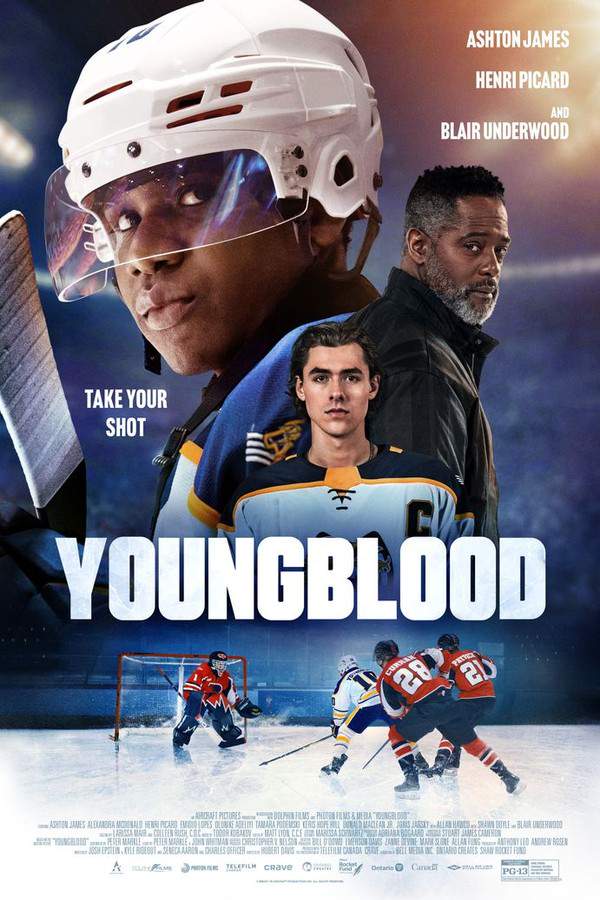
Raised on grit and hockey by his hard‑line father (Blair Underwood), Dean Youngblood leaves Detroit to join Canada’s Hamilton Mustangs. His elite skill turns heads, but his arrogance makes enemies and lands him on the bench under a resentful coach. After a costly clash with rival goon Carl Racki, Dean receives guidance from team captain Sutton and unexpected support that forces him to confront his flaws and fight for his place on the ice.
Warning: spoilers below!
Haven’t seen Youngblood yet? This summary contains major spoilers. Bookmark the page, watch the movie, and come back for the full breakdown. If you're ready, scroll on and relive the story!
Read the complete plot breakdown of Youngblood (2026), including all key story events, major twists, and the ending explained in detail. Discover what really happened, and what it all means.
Dean “D” Youngblood grows up in Detroit under the tough guidance of his father, Blane Youngblood, who teaches him to answer disrespect on the ice with grit, while his mother, Ruby Youngblood, tries to temper that fire by reminding him that true hockey greatness comes from scoring goals, not just fighting. She even passes down a keepsake—a gold wing-wheel hockey pin in the shape of the Detroit Red Wings logo—that symbolizes both pride and caution as the years pass.
When [Dean “D” Youngblood] is nine, tragedy strikes: his mother dies unexpectedly. In the wake of the loss, [Blane Youngblood] hardens his stance toward his sons, pressing the lesson that fighting is a part of the game and must be met with unwavering resolve. The pin remains a quiet reminder of a childhood that abruptly shifted, and Dean’s world tightens around the rink’s rough edge.
Time jumps to adolescence, and a moment on the ice changes everything. A white opponent taunts [Dean] with racist language, and he responds with a punch. The act lands him a suspension, isolating him from the sport he loves just as a storm of emotion brews inside him.
A year later, the brothers [Dean] and [Kelly Youngblood] find themselves working for their father’s roofing business, a calmer, grittier life away from the rink. Their old coach arrives with a second chance: the Hamilton Mustangs, an ECHL team that has endured a rash of injuries and playoff pressure. The coach explains that this opportunity could be [Dean]‘s road back to professional hockey, a path that would require trust and teamwork. Behind the scenes, rumors swirl about how the coach treats his players, a tension that looms over the upcoming tryout, and [Kelly Youngblood] quietly voices concern about those rumors.
Dean travels to Hamilton, Ontario to try out, competing against a favored white player for the coveted spot. The head coach, Murray Chadwick, intends to choose the white player, but an assistant coach pushes for a change in strategy to boost the team’s playoff chances. In a pivotal moment, Dean earns the spot, earning a chance to prove himself on this new stage.
On the Mustangs, the new atmosphere feels unfamiliar to him. He is initially closed off, but the team’s captain, Denis “Sutty” Sutton, reaches out in a bid to break through the shield surrounding him. A spark arrives when he meets Jessie, a bright, encouraging presence who helps him open up. As the bond deepens, Jessie and Dean begin dating, weaving personal stakes into the team’s quest for success.
The playoff push unfolds with steady momentum. At first, Chadwick benches Dean, but under the insistence of his father and the growing belief from within the team, he asks for a chance to be paired with Sutty. The duo quickly finds chemistry, and their on-ice connection translates into a string of crucial goals that breathe new life into the Mustangs’ bid for the postseason.
Dean continues to wrestle with impulses and the temptation to retaliate, even as the need to stay focused becomes ever more pressing. Jessie provides a candid perspective, revealing that Chadwick himself once battled similar struggles and was removed from a previous team after he struck a player. This revelation adds a layer of complexity to Dean’s choices and keeps the stakes firmly in the present.
The pressure peaks when a rival player, Carl Racki, delivers a brutal hit that injures [Denis “Sutty” Sutton]. Faced with the choice between revenge and winning the game, Dean chooses the latter, prioritizing the team’s success over retribution.
The story culminates in a forward-looking gaze, with flashes of Dean on the ice and the dream of hockey’s highest levels. The final image hints at his ascent, as the film closes with glimpses of Dean playing for the Los Angeles Kings in the NHL, signaling a long and winding journey from Detroit streets to the grand stage of professional hockey.
Last updated: August 28, 2026 at 07:33
Explore frequently asked questions about Youngblood (2026) with spoiler-rich answers covering the full plot summary, major story beats, character motivations, hidden details, and ending meaning. This movie summary FAQ helps explain confusing scenes, plot twists, and narrative decisions in clear, searchable detail.
After Ruby dies when Dean is nine, Blane Youngblood doubles down on his belief that hockey demands toughness and that a player must always answer disrespect with force. With Ruby no longer there to balance his philosophy with the message that goals win games, Blane fills that void with a harder, more combative hockey ethic. This shift sets the emotional foundation for Dean's later struggles with anger and discipline on the ice.
Ruby's gold wing-wheel pin and her reminder that 'goals win games, not fists' already hinted at the tension between Blane's mindset and what Dean would eventually need to learn.
The gold wing-wheel pin, shaped like the Detroit Red Wings logo, is a keepsake from Dean's mother Ruby that represents both pride in his hockey roots and the caution that goals matter more than fists. It carries her voice into scenes where Blane's aggressive philosophy dominates, serving as a quiet emotional anchor tied to her memory. Throughout Youngblood, the pin contrasts the bruising identity Blane imposes with the smarter, skill-first player Dean is being asked to become.
Ruby hands the pin to Dean before her death, planting the idea that her influence will persist even when she is gone.
As a teenager, Dean is taunted with racist slurs by an opposing player during a game and responds by punching him, an action that triggers an official suspension. The league punishes the retaliation regardless of the provocation, and Dean is cut off from the sport he loves at a critical stage of his development. The suspension is the direct cause of his time away from hockey and the roofing job that follows.
Blane's earlier lessons about answering disrespect with fists set up the exact impulse Dean cannot control on the ice.
The Mustangs are buried by injuries during their playoff push, and Dean's old coach identifies him as an undrafted talent who could fill a critical hole on the roster. He frames the opportunity as Dean's only realistic path back to professional hockey, knowing that without game action Dean will likely stay stuck working roofing in Detroit. Kelly's quiet mention of the coach's harsh reputation foreshadows the difficult locker room Dean is about to enter.
The timing lines up with Dean's suspension lifting, suggesting the Mustangs were watching him even while he was out of competitive hockey.
Chadwick enters the tryout intending to award the roster spot to a favored white candidate, a decision shaped by personal preference and the comfort of a familiar profile for his playoff roster. An assistant coach pushes back and argues that Dean's skill set gives the Mustangs a better chance to survive the postseason, forcing Chadwick to override his initial plan. The reversal shows that Dean's talent ultimately outweighs the coach's bias, but it also tells viewers that Chadwick had to be convinced rather than persuaded on merit alone.
Kelly's warning about the coach's harsh treatment of players hints that Chadwick's preferences may be part of a deeper pattern rather than a single decision.
Chadwick keeps Dean on the bench early on because he does not fully trust a player who walked in through a coaching change of heart rather than through his own plan. He also wants to see whether Dean can absorb the team's system without leaning on the aggressive instincts that already cost him a suspension in Detroit. The benching functions as a test of patience, and it is only after Blane urges Dean to demand a chance that Chadwick relents and pairs him with Sutty.
Jessie's later reveal about Chadwick's own past discipline problems explains why the coach is extra cautious about a player with a temper.
Jessie tells Dean that Chadwick once battled the same kind of impulse-control issues Dean struggles with and was ultimately removed from a previous team after he struck a player. The story reframes Chadwick from a simple antagonist into a coach who recognizes Dean's danger because he has lived it himself. It also gives Dean a reason to take Chadwick's tough love seriously, knowing the discipline comes from experience rather than arbitrary authority.
Chadwick's hesitation to play Dean mirrors the consequences he personally suffered, a parallel Jessie only spells out later in the playoffs.
When Racki delivers a brutal hit that injures Sutty, Dean is confronted with the exact crossroads his mother and Sutty have been preparing him for his whole life. Choosing revenge would echo the reckless punch that got him suspended in Detroit and repeat the pattern Blane reinforced after Ruby's death. Instead, Dean channels the grief into his game, trusts his linemate's example, and plays for the win, which is the moment his growth becomes visible on the ice.
Ruby's wing-wheel pin lesson that goals win games is the quiet counterweight to Blane's fight-first philosophy in this exact scene.
Once Chadwick agrees to play Dean alongside Sutty, the Mustangs gain a working line where Dean's scoring instinct is stabilized by the captain's poise and two-way responsibility. Their chemistry produces a string of crucial goals that directly fuel the team's playoff push, turning a roster held together by injuries into a credible contender. The pairing also gives Dean a mentor figure who models the controlled aggression he has been struggling to find on his own.
Sutty reaching out to the guarded Dean in the locker room foreshadows exactly the kind of on-ice partnership that later saves the Mustangs' season.
The closing flash-forward of Dean in an NHL jersey with the Los Angeles Kings is a narrative payoff that compresses the long journey from Detroit streets to the top level of professional hockey. It confirms that the choices he made in Hamilton, especially choosing the team over revenge, were the turning points that allowed his talent to finally break through. The image ties back to Ruby's original belief that goals, not fights, define a great hockey player, since Dean ultimately reaches the NHL on the strength of his scoring rather than his fists.

Ruby telling a young Dean that goals win games sets up the final image of him succeeding at hockey's highest level.
Discover curated groups of movies connected by mood, themes, and story style. Browse collections built around emotion, atmosphere, and narrative focus to easily find films that match what you feel like watching right now.
Talented outsiders battle personal demons while chasing the dream.If you loved Youngblood, explore more sports movies with emotional depth and underdog energy. These films follow talented athletes facing personal struggles, grief, and pressure, finding redemption through hard work, mentorship, and team. Perfect for fans of inspiring hockey, football, and boxing stories where the real victory is growth.
A gifted but flawed athlete leaves home or overcomes hardship to chase a professional dream. Early arrogance or emotional baggage causes a humbling setback, often a brutal loss, injury, or confrontation with a rival. A mentor or captain steps in to guide them. The protagonist must choose revenge and ego or growth and team, ultimately earning their place through sacrifice, humility, and grit, with a triumphant forward-looking ending.
Grouped for their hopeful, redemption-driven sports arcs that mix fierce competition with character growth. They share a medium emotional weight, a variable pacing that alternates between quieter character beats and faster sports sequences, and a happy ending earned through personal transformation. Themes of racism, grief, father-son tension, and second chances weave through the locker-room drama.
Broken sons learn to trust again through mentors, teammates, and love.Looking for more movies like Youngblood that explore father-son tension, child grief, and healing through chosen family? These dramas follow young protagonists shaped by loss and hard parents, finding surrogate fathers and brothers on teams or in communities. Expect bittersweet character studies about identity, second chances, and learning to let love in.
A young man or woman starts the story carrying a wound from childhood, usually the sudden death of a parent or an emotionally distant, controlling father. They leave home seeking a fresh start, expecting to prove themselves alone. A demanding coach, a wise captain, or a patient partner slowly becomes a surrogate family, challenging the protagonist to drop their armor. The climax forces a reckoning with the original wound, and the resolution is about choosing connection over isolation.
These films share a moderate complexity built around intersecting subplots of family, romance, mentorship, and identity. They carry medium emotional weight with room for both tender romance and hard confrontations, often involving sports, music, or art as the arena where growth happens. Racial identity, grief, and the search for a father figure are common throughlines that make them feel like kindred stories.
Don't stop at just watching - explore Youngblood in full detail. From the complete plot summary and scene-by-scene timeline to character breakdowns, thematic analysis, and a deep dive into the ending - every page helps you truly understand what Youngblood is all about. Plus, discover what's next after the movie.
Track the full timeline of Youngblood with every major event arranged chronologically. Perfect for decoding non-linear storytelling, flashbacks, or parallel narratives with a clear scene-by-scene breakdown.
Discover the characters, locations, and core themes that shape Youngblood. Get insights into symbolic elements, setting significance, and deeper narrative meaning - ideal for thematic analysis and movie breakdowns.