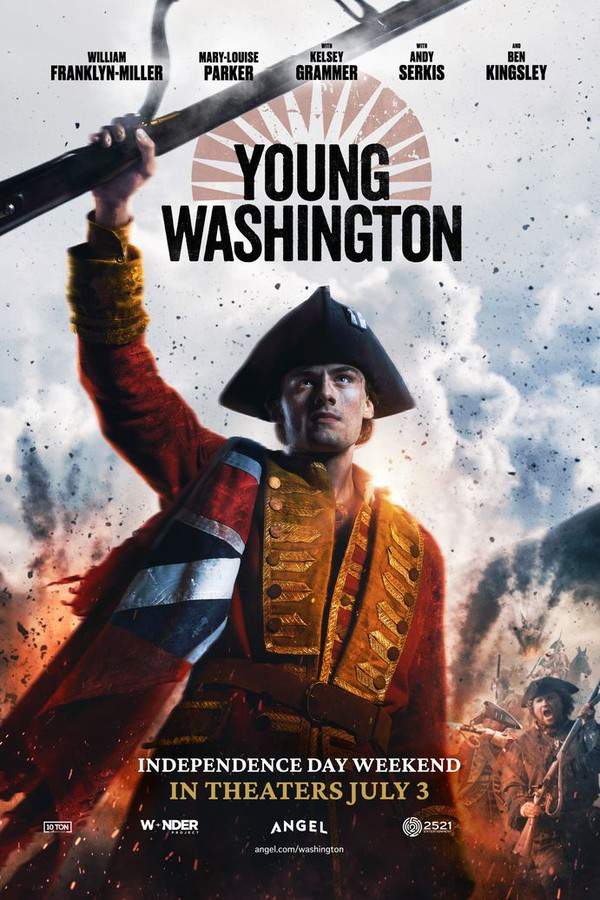
Young Washington
 #12221
 Year: 2026
Runtime: 2 h 5 m
Language: english
Director: Jon Erwin
Echo Score: 49Budget: $20M
Before becoming the Father of a Nation, he served as a soldier fighting to survive. A single misstep thrusts a young George Washington into a conflict, testing his honor, loyalty and courage. As alliances crumble and the frontier erupts into war, he must confront his enemies and the man he is becoming. This story reveals Washington’s early trials.
Where to Watch Young Washington?
Find where to stream, rent, or buy Young Washington (2026) in the US with current JustWatch availability, up-to-date pricing, and platform listings for subscription, rental, and digital purchase options.




Streaming availability powered by 
Warning: spoilers below!
Haven’t seen Young Washington yet? This summary contains major spoilers. Bookmark the page, watch the movie, and come back for the full breakdown. If you're ready, scroll on and relive the story!
Young Washington (2026) – Full Plot Summary & Ending Explained
Read the complete plot breakdown of Young Washington (2026), including all key story events, major twists, and the ending explained in detail. Discover what really happened, and what it all means.
France’s attempt to seize the Ohio Territory in 1755 sets a tense backdrop as Britain orders the French to withdraw and Native nations rally to defend their lands. In this context, the story follows a young man who will become a defining figure in American history, tracing his origins, decisions, and the costs of leadership.
On July 9th, 1755, in a remote Pennsylvania wilderness, a gravely ill George Washington [William Franklyn-Miller] wakes to the clash around him, staggers from his tent, and mounts his horse with a mission to rally his men. A wary British soldier cautions him that the risk may be too great, yet Washington presses on, determined to recover those under his command.
Twelve years earlier, a younger George [Will Joseph] attends the funeral of his father Augustine, flanked by his mother Mary Washington [Mary-Louise Parker]. There, he meets his older half-brother Lawrence Washington [John Foss], who gifts him a compass and reveals that he has been named general of the Virginia Militia. The boy, who has long seen his family name as a burden, yearns for more privileges and a different life. With education scarce after his father’s death, Lawrence takes young George under his wing, teaching him to survey land, spar, and even play chess. When George finally pursues a place in the British Army, he is rejected because of his background and education, a setback that fuels his resolve.
In 1753, Washington makes a bold intrusion into the Belvoir Estate, home of Lord Fairfax [Kelsey Grammer], even though he has no invitation. Inside, he meets Sally Cary Fairfax [Mia Rodgers], with whom he quickly falls for. He also encounters Thomas Gage [Michael Benz] and Christopher Gist [Leo Hanna], and through Gist he gains access to a circle of men who will shape his path. In Fairfax’s library, Fairfax himself takes a liking to Washington, and later, after a round of introductions at a pub, Washington asks Gist to join him in securing land for Fairfax. He also begins writing to Sally during his travels, a bond that strengthens despite the miles.
Three months later, along the Allegheny River, Washington and Gist encounter warriors of the Mingo tribe led by Half-King Tanacharison [Ryan Begay]. The natives are suspicious, seeing the pair as possible intruders, but Washington insists they are only surveyors. Tanacharison guides them to a vantage point overlooking a French camp, and the two groups return to relay the news to their superiors. On the journey back, they are forced into a perilous situation, descending a cascade and later crossing a frozen lake on foot after their raft is wrecked.
Back home, Washington learns that Lawrence is in poor health from tuberculosis. He then meets Robert Dinwiddie [Ben Kingsley], who assesses the situation, endorses Washington’s terms, promotes him to Major, and sends him to deliver a message to the French demanding they vacate the area. Before departing, Washington and Sally share a first kiss, a moment that underscores the personal stakes behind the political struggles ahead.
With Washington, Gist, and their men moving forward, Tanacharison and his followers join them, bringing a Native perspective to the mission. The two groups eventually confront the French at Jumonville’s camp. Joseph Jumonville [Clement Toyon] invites them to dine, but the French make clear they have no intention of leaving. Amid the mounting tension, Dinwiddie issues an ultimatum demanding the French depart at once.
Back at Fairfax House, the tension between Washington and William Fairfax [Joel Smallbone] surfaces once more, with Thomas Fairfax explaining that Sally and William are betrothed. The expedition grows weary and uncertain; some men doubt the purpose of their mission, and the alliance with Tanacharison becomes more complex as the native leader pushes Washington toward actions that could spark a broader war. The French and their allies respond with force, and Jumonville’s group is captured and executed, accelerating the slide toward combat.
Washington and his men establish Fort Necessity, but the situation deteriorates as James Mackay [Jonno Davies] and other British troops arrive with orders that dissent from Washington will not be tolerated. Washington faces pressure from Dinwiddie to assert command, even as Mackay warns that French reinforcements are on the horizon. The conflict escalates; Washington’s cautious approach clashes with Tanacharison’s more aggressive stance, and the next morning the French strike first. Mackay is shot in the back, and Washington’s militia braces for a brutal fight. They try to hold out in the fort, but the defense falters, Gist is killed, and Fort Necessity burns. Washington mourns the losses and returns to Dinwiddie, who condemns the outcome but is impressed by Washington’s resolve. The episode ends with Washington resigning for a time, returning home to Mary after Lawrence’s death, and receiving a quiet sermon of providence from his mother.
In 1755, Washington re-enlists and meets General Edward Braddock [Andy Serkis], who leads a mission to retake Fort Duquesne. Washington aids the march, though he falls ill with dysentery. When Braddock’s troops are ambushed, Washington awakens in the middle of the battle and rushes to find the wounded general. Braddock survives long enough to urge a retreat, and Washington takes a rear-guard position to shield the remaining Virginians as they fall back. The assault ends disastrously for the British, but Washington’s leadership earns respect among the Virginia soldiers and his peers.
In the aftermath, Tanacharison’s observations, shared with another Native leader, affirm that Washington endured repeated wounds and near misses—an impression some take as Providence guiding his destiny. Dinwiddie returns to praise Washington, who is promoted to colonel and placed in command of the Virginia Regiment. Washington dons a new uniform and is greeted by his men with pride.
The film closes by placing Washington’s actions within a longer arc: four years after his surrender at Fort Necessity, he returns to Fort Duquesne, where the French burn the fort and retreat. On July 4th, 1775, Washington helps form an army from the thirteen colonies to challenge the British Empire, and a year later the colonies begin to take shape as a new nation—the United States of America.
In this retelling, the personal and political threads of Washington’s early life are explored with care, highlighting the people who shaped him—parents, mentors, allies, lovers, and enemies—while situating his growth within the larger upheaval of a land on the edge of transformation. The story honors the complexity of ambition, loyalty, and the high cost of leadership, keeping faith with the historical sequence while presenting a vivid, character-driven drumbeat of a nation’s origin.
Last updated: August 02, 2026 at 13:01
Young Washington (2026) Plot Questions Answered – Summary FAQ
Explore frequently asked questions about Young Washington (2026) with spoiler-rich answers covering the full plot summary, major story beats, character motivations, hidden details, and ending meaning. This movie summary FAQ helps explain confusing scenes, plot twists, and narrative decisions in clear, searchable detail.
Why does the film open with Washington waking up in the middle of a battle?
The film opens on July 9, 1755, in the Pennsylvania wilderness, where a gravely ill George Washington wakes amid the chaos of Braddock's ambush. This non-linear opening immediately establishes the physical and moral cost of frontier warfare, setting the tone before the story flashes back twelve years to trace how a grieving, ambitious boy became the kind of leader who would rally men under fire.
Why was young George Washington rejected when he applied to the British Army?
Washington was denied a commission in the British Army because of his colonial background and limited formal education, despite his family name. The rejection hardened his resolve to prove himself through skill, land surveying, and frontier service rather than pedigree, and it pushed him toward the Virginia Militia, where his rise would actually begin.
What role did Lawrence play in shaping the young George Washington?
After their father Augustine's death, Lawrence took George under his wing, teaching him to survey land, spar, and play chess to sharpen strategic thinking. Lawrence also gifted George a compass at Augustine's funeral, symbolically handing down both a tool and a sense of direction. Their bond gave George the education, ambition, and sense of duty that his father's early death had denied him.
The compass Lawrence gives young George becomes a visual echo of the leadership and navigation he will need on the frontier.
Why does Washington show up uninvited at the Belvoir Estate?
In 1753, Washington boldly walks into the Belvoir Estate during a gathering despite having no invitation, a move that reflects both his social ambition and his willingness to take risks. The intrusion introduces him to Sally Cary Fairfax, Thomas Fairfax, and Christopher Gist, all of whom will shape his future. It is the moment his charm, nerve, and lack of status collide head-on with Virginia's ruling class.
Who is Sally Cary Fairfax and why is her relationship with Washington significant?
Sally Cary Fairfax is the woman Washington falls for at Belvoir, and the two begin a tender correspondence while he is on the frontier. Their bond is cut short when it is revealed that Sally is betrothed to William Fairfax, Washington's own ally. The relationship underscores the personal sacrifices behind Washington's political rise and gives the frontier struggle a quiet emotional cost.
What was the mission Governor Dinwiddie sent Washington on in 1753?
Dinwiddie promoted Washington to Major and ordered him to deliver an ultimatum to the French, demanding they withdraw from the Ohio Territory. The assignment was meant to be diplomatic, but it forced Washington deep into contested frontier territory, where the fragile alliance with Half-King Tanacharison and the growing presence of French troops made war almost inevitable.
Why is the Jumonville encounter considered the spark of a wider war?
When Washington's group reached the French camp led by Joseph Jumonville, Jumonville was captured and executed by Tanacharison's faction, an act the French and British later used to accuse each other of starting hostilities. The killing deepened mistrust on the frontier and made any peaceful resolution of the Ohio dispute impossible, dragging the colonies into the larger French and Indian War.
Tanacharison's growing pressure on Washington during the expedition hinted that the Mingo leader was prepared to use lethal force against the French.
Why did Washington build Fort Necessity in the middle of hostile territory?
After the Jumonville incident, Washington needed a defensible position to hold the ground his men had taken and to await further orders. Fort Necessity was hastily constructed in an exposed clearing, and British officer James Mackay arrived with conflicting commands that fractured the colonial chain of command. The poorly chosen site left Washington vulnerable when the French struck at dawn.
The site of Fort Necessity is shown in early scouting scenes as low ground surrounded by forest, hinting at its tactical weakness.
How did the Battle of Fort Necessity actually unfold?
At dawn the French and their allies opened fire, killing Mackay and pinning Washington's militia inside the fort under heavy rain. As the fight wore on, Gist was killed, the fort caught fire, and Washington's men were forced to surrender. The defeat humiliated Washington publicly but also revealed his willingness to stay with his troops until the end.
Why did Washington resign his commission after losing Fort Necessity?
Dinwiddie publicly condemned the loss and blamed Washington for provoking a war he could not win. Facing political disgrace alongside personal grief over Lawrence's death from tuberculosis, Washington chose to resign and return home to his mother Mary. The resignation allowed him to retreat, reflect, and return later with a cleaner reputation when Braddock's expedition offered a second chance.
What made Braddock's ambush so devastating for the British?
General Braddock led a long, exposed column through the frontier expecting a conventional European-style engagement, while French and Native forces used the trees and terrain to fire from concealed positions. The column was torn apart in a running fire, Braddock was mortally wounded, and the survivors fled in disarray. The disaster exposed the limits of traditional European tactics on American ground.
Washington's earlier caution about frontier terrain and Tanacharison's warnings about forest warfare foreshadow the failure of Braddock's conventional approach.
How did Washington survive Braddock's disastrous defeat?
Although weakened by dysentery, Washington rallied the Virginia soldiers during the retreat and formed a disciplined rear guard to shield them from pursuit. His calm under fire and refusal to abandon the wounded earned him the respect of the men who had seen officers flee. Tanacharison and other Native leaders later remarked that Washington seemed protected by Providence, having survived multiple wounds and near misses.
Tanacharison's earlier observation that Washington kept surviving dangerous encounters on the frontier builds toward this moment of apparent destiny.
Why does the film keep returning to the idea of Providence guiding Washington?
Throughout the film, Native leaders like Tanacharison note that Washington repeatedly survives wounds, illness, and ambushes that kill those around him. This sense of Providence becomes the film's way of suggesting that Washington's survival is more than luck, hinting at the destiny that will eventually place him at the head of a new nation. His mother Mary reinforces the theme with a quiet sermon about God's hand in suffering.
Mary Washington's earlier words about suffering and faith return during Washington's lowest moments, framing his survival as part of a larger purpose.
How do Washington's early failures connect to the founding of America?
The humiliations at Jumonville, Fort Necessity, and Braddock's ambush taught Washington hard lessons about leadership, terrain, and alliance-building that traditional schooling could never have provided. Four years after Fort Necessity he returns to find Fort Duquesne abandoned, and on July 4, 1775, he helps form an army from the thirteen colonies. The closing montage suggests that the man forged in those losses is the same man who will shepherd a new nation into being.
Washington's early promise to rally his men in 1755 is mirrored in his final role leading the colonial army in 1775.

Explore Movie Threads
Discover curated groups of movies connected by mood, themes, and story style. Browse collections built around emotion, atmosphere, and narrative focus to easily find films that match what you feel like watching right now.
Wartime coming-of-age stories like Young Washington
A young soul tempered by battle, loss, and impossible choices before history remembers them.Looking for movies like Young Washington? These films trace young heroes forged through war, loss, and the burdens of leadership. Expect bittersweet character arcs, heavy emotional weight, tense battlefield moments, and quiet scenes of personal growth. Perfect for fans of historical origin stories, mentor figures, and protagonists who pay a personal cost for the legend they become.

Battle Cry
1955

Only The Brave
2006

Once Upon a Time in a Battlefield
2003

Darby’s Rangers
1958
Days of Glory
2006

The Great War
1959

Sajjan Singh Rangroot
2018
Young Washington
2026

D-Day the Sixth of June
1956
Some Kind of Hero
1982

Between Heaven and Hell
1956

The Dawns Here Are Quiet
1972

First to Fight
1967

The Crossing
2015

Billy Lynn's Long Halftime Walk
2016
Narrative Summary
Stories in this thread typically open during or just before a defining conflict and use non-linear or flashback structures to trace the protagonist's earlier life. Mentors arrive and die. Romantic interests are complicated or lost. The hero makes decisions that haunt them, wins battles that feel like defeats, and ends the film stepping into a larger role they did not ask for. The arc is less about triumph and more about becoming someone capable of bearing the weight of what comes next.
Why These Movies?
These films share a coming-of-age structure tied to real or realistic conflict, where growth comes at a steep emotional price. They balance tense combat and political pressure with reflective personal moments, and they tend to end on bittersweet notes where the protagonist has changed irrevocably. The combination of heavy sadness, sustained tension, and earned transformation is what binds them together.
Epic colonial and frontier war movies like Young Washington
Sweeping historical battles where empires rise, alliances fracture, and the frontier bleeds.If you liked Young Washington, you'll love these sweeping historical war dramas set on colonial and frontier battlefields. Movies in this thread feature tense combat sequences, somber patriotic tone, heavy losses, and the moral complexities of nation-building and uneasy alliances. Great for fans of The Last of the Mohicans, The Revenant, and other period war epics.

Drums Along the Mohawk
1939

The Charge of the Light Brigade
1936
Gettysburg
1993

The Rising Hawk
2019

Band of Brothers
1000

The Lighthorsemen
1987
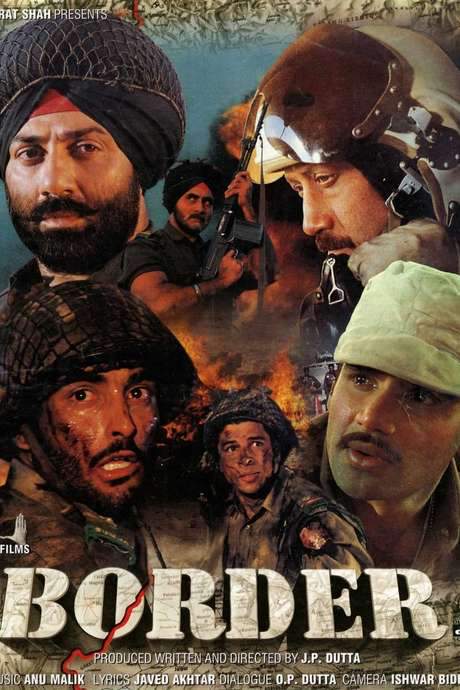
Border
1997
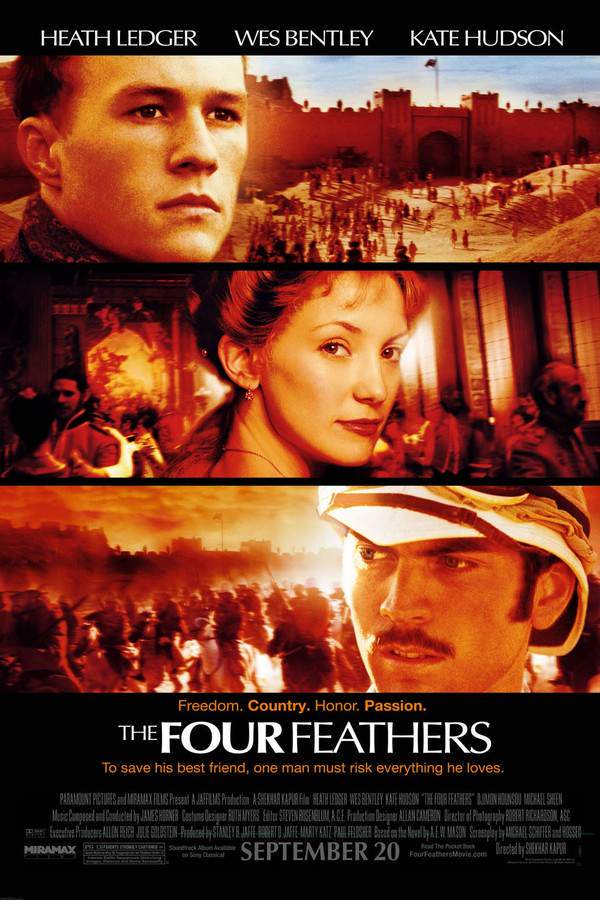
The Four Feathers
2002

The Day of the Siege: September Eleven 1683
2012

1945
2022

Pippa
2023
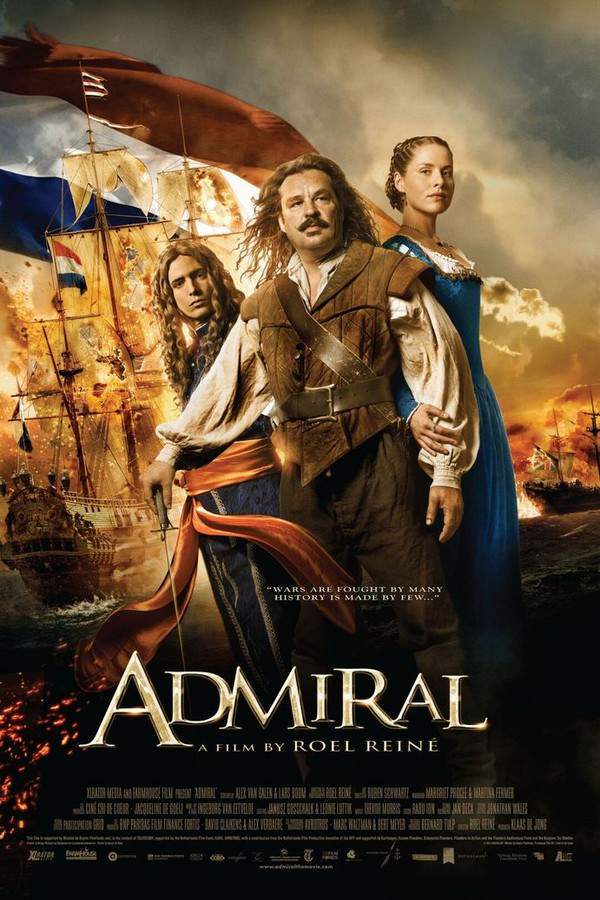
Admiral
2016
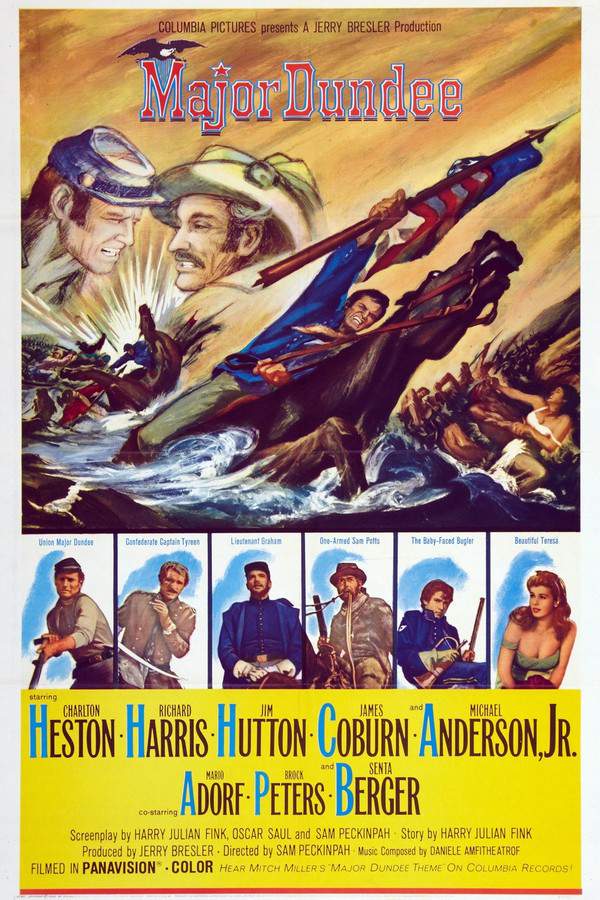
Major Dundee (re-release)
2005

Captain Horatio Hornblower R.N.
1951
Pawankhind
2022
Narrative Summary
Stories in this thread tend to follow soldiers, scouts, or young officers navigating the violent chaos of colonial-era conflict. They move between battlefield ambushes, fragile truces, fragile loyalties, and personal reckonings with the violence being committed. The narrative often hints at a larger historical outcome while staying grounded in the human experience of those caught in the early stages of empire and revolution.
Why These Movies?
These films share an 18th and 19th century historical setting, large-scale frontier or colonial warfare, and a mood that blends patriotic grandeur with melancholic awareness of cost. They tend to use variable pacing to alternate between tense battle set pieces and quieter character scenes, and they foreground morally complicated alliances, indigenous relations, and the personal price of service. The combination of epic scope and somber tone ties them together.
Unlock the Full Story of Young Washington
Don't stop at just watching - explore Young Washington in full detail. From the complete plot summary and scene-by-scene timeline to character breakdowns, thematic analysis, and a deep dive into the ending - every page helps you truly understand what Young Washington is all about. Plus, discover what's next after the movie.
Young Washington Timeline
Track the full timeline of Young Washington with every major event arranged chronologically. Perfect for decoding non-linear storytelling, flashbacks, or parallel narratives with a clear scene-by-scene breakdown.

Characters, Settings & Themes in Young Washington
Discover the characters, locations, and core themes that shape Young Washington. Get insights into symbolic elements, setting significance, and deeper narrative meaning - ideal for thematic analysis and movie breakdowns.


