







Plot Explained Spoilers guaranteed!
Plot Explained

Browse by genre

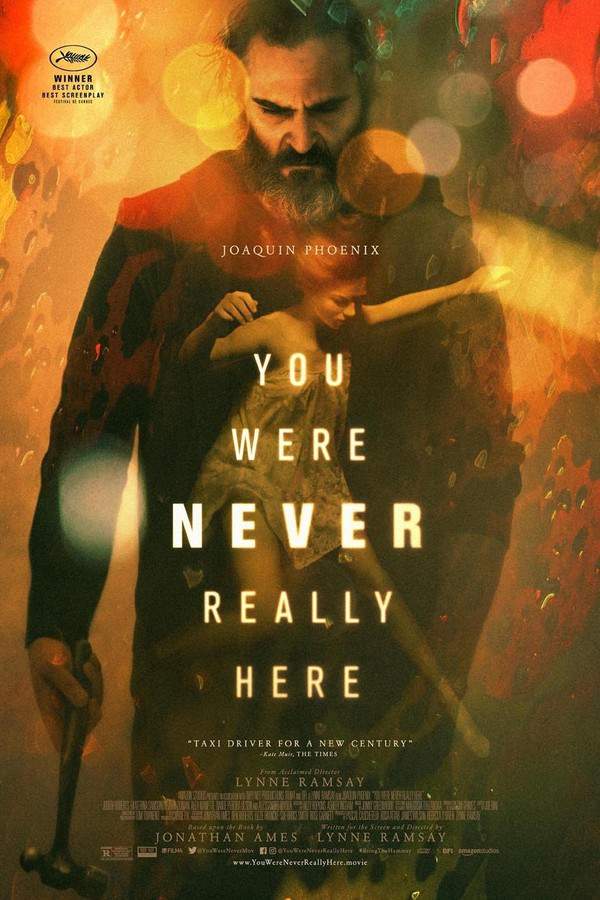
You Were Never Really Here (2018) movie poster

Timeline

You Were Never Really Here (2018) Timeline Explained – Every Event in Order

Release, runtime and language
2018 · 89 min · English
Echo score 82
JustWatch #7,870 5
Directed by
Lynne Ramsay
Starring
Dante Pereira-Olson, Joaquin Phoenix, Alessandro Nivola, Judith Roberts, John Doman, Alex Manette
Budget
$2.5M

A former U.S. Marine with a violent past is hired to rescue the daughter of a New York City politician from a sex trafficking ring. As he delves deeper into the mission, he uncovers a vast conspiracy and is forced to confront his own personal demons. The dangerous operation pushes him to his physical and emotional limits as he fights to protect the girl and expose the corrupt individuals involved.

On this page (7)
  1. 1 Where to watch
  2. 2 Events in order (15)
  3. 3 Timeline questions answered
  4. 4 The book behind the movie
  5. 5 Movie threads
  6. 6 Movies like You Were Never Really Here
  7. 7 Every angle

Where to watch

Where to Watch You Were Never Really Here (2018)

Where can you watch You Were Never Really Here? Stream, rent or buy it in the US, including on Amazon Prime Video, Amazon Prime Video Free and Amazon Video: current JustWatch availability with up-to-date prices.

Streaming availability powered by JustWatch

15 events in order · contains spoilers

You Were Never Really Here Timeline: Events in Chronological Order

Every key event of You Were Never Really Here (2018) in order, scene by scene, with when and where it takes place. Use it to untangle flashbacks, time jumps and parallel storylines, to refresh your memory before the sequel or to find the exact scene you are thinking of.

  1. Joe's Introduction

    The film opens with Joe, a skilled hired gun, residing in a rundown motel. He specializes in recovering missing trafficked girls, showcasing his gritty lifestyle and formidable skills right from the start.

    When
    Unknown
    Where
    Motel
  2. Successful Mission

    After completing a job, Joe meticulously cleans up the scene to erase any traces. This highlights his professionalism and the lengths he goes to in protecting his identity.

    When
    Unknown
    Where
    Alley in New York City
  3. Confrontation in the Alley

    While canvassing the streets, Joe faces an assailant in an alley. Utilizing his combat skills, he defends himself and manages to escape, displaying his ability to handle immediate threats.

    When
    Unknown
    Where
    Alley
  4. Emotional Challenges

    Back at home in New York City, Joe struggles with PTSD stemming from his traumatic past and experiences as a Gulf War veteran. Flashbacks haunt him, revealing darker aspects of his psyche and deep emotional scars.

    When
    Unknown
    Where
    New York City
  5. Concern over Angel's Son

    During a payment exchange at a local bodega, Joe expresses concern over Angel’s son, Moises, who may have seen him return home. This worry prompts Joe to consider severing ties with Angel for his own safety.

    When
    Unknown
    Where
    Bodega
  6. New Assignment

    Joe meets with his handler, John McCleary, who briefs him on a new case: finding the missing daughter of Senator Albert Votto. The high-profile nature of the assignment adds pressure, with a $50,000 reward for safe recovery.

    When
    Unknown
    Where
    Unknown
  7. Tracking Down Nina

    Upon meeting Senator Votto, Joe learns about his daughter Nina's possible whereabouts. He realizes the gravity of the situation, as Votto urges him to not only find Nina but to punish those responsible for her disappearance.

    When
    Unknown
    Where
    Senator Votto's Location
  8. Infiltration of Trafficking Hub

    Joe identifies a notorious child trafficking hub believed to be where Nina is held captive. He confronts a man for information, illustrating his determination to rescue the girl while assessing the imminent dangers.

    When
    Unknown
    Where
    Trafficking Hub
  9. Rescue Operation

    Steeling himself, Joe infiltrates the house where Nina is kept. He fights through threats, showcasing his lethal skills until he finally manages to locate and secure Nina's safety.

    When
    Unknown
    Where
    Trafficking Hub
  10. Tragic News

    After taking Nina to a motel, Joe learns from the news that Senator Votto has committed suicide—a devastating blow that complicates their situation. As chaos erupts, corrupt officers arrest Nina, prompting a fierce struggle.

    When
    Unknown
    Where
    Motel
  11. Loss of Allies

    In the aftermath, Joe discovers that his handler McCleary, Angel, and Moises have all been killed. This amplifies his isolation and the gravity of his mission, propelling him into deeper chaos.

    When
    Unknown
    Where
    Unknown
  12. Tragic Family Loss

    Returning home, Joe faces the horrifying reality of finding his mother deceased in her bed. The emotional weight of her death sets him on a path of vengeance as he confronts the very perpetrators responsible.

    When
    Unknown
    Where
    Joe's Home
  13. Revelation of Betrayal

    In a brutal confrontation, Joe learns that Votto was part of a larger conspiracy involving Governor Williams. This shocking revelation intensifies Joe's mission as he seeks redemption and justice for the wrongs inflicted upon him.

    When
    Unknown
    Where
    Unknown
  14. Aftermath of Grief

    Overwhelmed with sorrow, Joe buries his mother by a lake. In a moment of despair, he contemplates suicide before being jolted back to reality by a vision of Nina, reigniting his resolve.

    When
    Unknown
    Where
    Lakeside
  15. Final Confrontation

    Joe tracks down Governor Williams, only to find him dead. In the disquieting aftermath, Joe discovers Nina holding a razor, which leads to a surreal twist as he grapples with his own despair.

    When
    Unknown
    Where
    Governor's Home

Last updated: November 07, 2024 at 23:30

Was this helpful?

Timeline questions answered

You Were Never Really Here Timeline Explained: Your Questions Answered

When does it happen, and why in that order? The questions people ask about the chronology of You Were Never Really Here (2018): time jumps, flashbacks, cause and effect between scenes and the correct order of events, each answered with spoilers.

Q1

Why does Joe repeatedly contemplate suicide?

Joe suffers from severe PTSD stemming from his traumatic past as a Gulf War veteran and FBI agent. He's haunted by flashbacks of a child he saw get shot after offering him a candy bar, bodies of trafficked girls in an abandoned storage unit, and abusive childhood memories of his alcoholic father. These unresolved traumas create an overwhelming sense of despair that leads him to contemplate ending his life.

Foreshadowing: Earlier scenes show Joe playing with a knife and standing on train tracks, hinting at his suicidal ideation.

  • joe
  • pstd
  • suicide
  • trauma
  • gulf war
Q2

Why was Senator Votto part of the child trafficking conspiracy?

Senator Votto was desperate to gain political favor with Governor Williams, who had vested interests in the trafficking operation. Rather than going to law enforcement to find his kidnapped daughter Nina, Votto secretly coordinated with Williams and hired Joe to retrieve her, but only after Votto had already sold his own daughter to Williams to advance his political career.

Foreshadowing: Votto's insistence that Joe punish the traffickers rather than involve police reveals his desperation to control the situation.

  • senator votto
  • governor williams
  • conspiracy
  • trafficking
Q3

What happens to Nina at the end of the film?

Joe discovers Nina at Governor Williams' home, holding a razor after apparently killing him. The film then enters an ambiguous sequence where Joe and Nina share a meal at a diner, and Joe appears to shoot himself, only for the scene to reveal this was Joe's fantasy. The final shot shows their empty booth, leaving whether Joe actually survived or if Nina escaped uncertain.

Foreshadowing: Joe's earlier vision of Nina while contemplating suicide by the lake foreshadows this final reckoning with his desire for redemption.

  • nina
  • ending
  • williams
  • ambiguous fate
Q4

Who killed Joe's mother?

The hitmen sent by Governor Williams and Senator Votto's conspiracy are responsible for killing Joe's mother. After Joe refused to hand over Nina to the corrupt officers, these perpetrators targeted his home as retaliation, murdering her in her bed while Joe was away pursuing the truth.

Foreshadowing: Joe's earlier decision to sever ties with Angel due to safety concerns about his profession signals the danger closing in on those connected to him.

  • joe's mother
  • hitmen
  • williams
  • revenge
Q5

Why did Senator Votto commit suicide?

Votto's suicide stems from overwhelming guilt and the impossible situation he created. After selling his own daughter Nina to Governor Williams for political gain, hiring Joe to find her, and then witnessing the conspiracy unravel, Votto couldn't bear the weight of his actions and took his own life.

Foreshadowing: Votto's request for Joe to punish the traffickers rather than involve authorities hints at his desperate attempt to contain the scandal.

  • senator votto
  • suicide
  • guilt
  • conspiracy
Q6

Why did the corrupt officers take Nina from Joe?

The officers were part of the Williams-Votto conspiracy sent to recover Nina and eliminate Joe. When Joe refused to hand her over, they seized Nina during the motel confrontation, though Joe managed to fight them off and escape with her.

Foreshadowing: The assignment's instruction to avoid law enforcement foreshadows the corruption extending into the police force.

  • corrupt officers
  • nina
  • conspiracy
  • arrest
Q7

What is the significance of the flashback where Joe gives a child a candy bar?

This flashback reveals the origin of Joe's traumatic guilt. As a child, Joe offered a candy bar to another boy, who was then shot, likely because the attackers saw Joe's interaction with the boy. This childhood memory symbolizes Joe's deep-seated belief that his attempts to help actually cause harm, driving his current self-destructive impulses.

Foreshadowing: This trauma connects directly to why Joe devotes himself to rescuing trafficked girls as an adult.

  • joe
  • flashback
  • candy bar
  • childhood trauma
Q8

What does the vision of Nina represent when Joe is at the lake?

When Joe contemplates drowning himself after burying his mother, he experiences a vision of Nina, this represents his struggle between giving into despair and his commitment to protecting her. The vision pulls him back from suicide, reigniting his purpose to finish the mission and seek justice.

Foreshadowing: This moment establishes Nina as Joe's anchor to life, setting up their final encounter.

  • nina
  • vision
  • lake
  • suicide
  • redemption
Q9

Why does Joe decide to stop working with Angel?

Joe becomes concerned that Angel's young son Moises witnessed Joe returning home, potentially exposing his dangerous profession and putting the family at risk. This worry prompts Joe to end his relationship with Angel to protect them.

Foreshadowing: Tragically, this decision doesn't prevent tragedy, Moises and Angel are later killed as part of the conspiracy's effort to silence everyone connected to the case.

  • angel
  • moises
  • safety
  • severance
Q10

What was Governor Williams' involvement with Nina?

Governor Williams was the mastermind behind the child trafficking operation. He orchestrated Nina's abduction through his connection to Senator Votto, with Votto essentially selling his own daughter to Williams in exchange for political favors and protection.

Foreshadowing: The conspiracy only surfaces after Joe investigates beyond the surface-level trafficking ring, revealing the political corruption at its core.

  • governor williams
  • nina
  • trafficking
  • corruption

Movie threads

More Movies Like You Were Never Really Here, by Mood & Story

Curated lists built around what makes You Were Never Really Here tick: the same mood, the same kind of story or the same emotional payoff. Each list explains why these movies belong together.

Movies like You Were Never Really Here with damaged heroes on violent missions

Damaged individuals confront darkness to save others, revealing their own pain. If you liked the intense, character-driven journey in You Were Never Really Here, discover more films where traumatized protagonists undertake dangerous tasks. These movies blend gritty action with deep psychological exploration, focusing on characters confronting external evil and internal demons simultaneously.

  • grim
  • psychological
  • tense
  • desolate
  • anxious
  • bleak
  • Tone: dark, psychologically intense
  • Pacing: methodical, character-driven
Why these movies?

The story pattern: The narrative typically follows a straightforward mission premise—a rescue, a revenge plot, or an investigation—that serves as a catalyst to explore the protagonist's fractured psyche. Flashbacks or intrusive memories are common, weaving past trauma into the present-day action. The climax often hinges on the character's ability to harness their pain rather than be destroyed by it.

Why they belong together: These films are grouped by their central focus on a damaged hero whose internal state is as critical to the plot as the external conflict. They share a bleak, intense tone, heavy emotional weight, and a focus on themes like redemption, revenge, and the psychological cost of violence.

Slow burn atmospheric thrillers with oppressive dread like You Were Never Really Here

Stories where a heavy, claustrophobic mood is the main antagonist. For viewers who appreciated the suffocating atmosphere and deliberate pacing of You Were Never Really Here, this collection highlights movies that master the art of the slow burn. These films prioritize mood over action, creating a visceral experience of anxiety and claustrophobia that lingers long after the credits roll.

  • slow burn
  • oppressive
  • claustrophobic
  • dread
  • anxious
  • grim
  • Tone: dark, oppressive, tense
  • Pacing: slow, deliberate, atmospheric
Why these movies?

The story pattern: The narrative unfolds methodically, often with minimalist dialogue, relying on visual storytelling, sound design, and a focused perspective to create a sense of entrapment. The story may be simple, but its power lies in the relentless buildup of tension and the exploration of a character's deteriorating mental space within a hostile world.

Why they belong together: These movies are united by their commitment to a slow, deliberate pace that creates an overwhelmingly oppressive and anxious viewing experience. They share a dark tone, high intensity derived from mood rather than constant action, and a focus on internal states manifested through the external environment.

If you liked this

Movies Like You Were Never Really Here

Similar movies to You Were Never Really Here: the same genre, themes or kind of story. Each one comes with its own plot summary, timeline and ending explained.

Browse all movie summaries

Every angle

You Were Never Really Here (2018) Explained: Plot, Timeline & Characters

Everything about You Were Never Really Here in one place: what happens in the plot summary, the timeline in chronological order, the characters and meaning and a spoiler-free summary. What's After the Movie adds the cast, box office and post-credit scenes.

Coming soon on iOS and Android

The Plot Explained Movie Summary App

Plot summaries, endings explained and timelines on your phone. Catch up on any movie in minutes, save your favorites and never miss a twist again.

Be the first to know when we launch. Your email stays private, always.

Learn more about the app