Plot Explained Spoilers guaranteed!
Plot Explained

Browse by genre

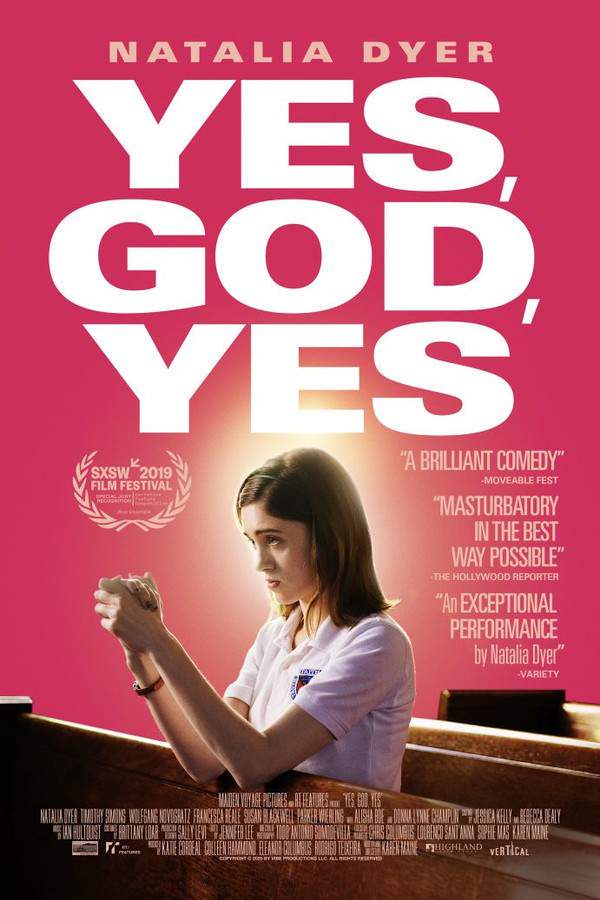
Yes, God, Yes (2017) movie poster

Characters & Themes

Yes, God, Yes (2017) Characters, Setting & Themes Explained

Release, runtime and language
2017 · 11 mins · English
Loading streaming availability…
Directed by
Karen Maine
Starring
Natalia Dyer, John Doherty, Michael Bonini, Wendy Susan Hammer, Merissa Czyz, Joe Reece

Fifteen-year-old Alice has always been a good Catholic, but when an innocent AOL chat turns unexpectedly racy, she finds herself suddenly obsessed with sex.

On this page (8)
  1. 1 Where to watch
  2. 2 Characters explained (9)
  3. 3 Where & when it takes place
  4. 4 Themes & meaning (4)
  5. 5 Character & meaning questions
  6. 6 Movie threads
  7. 7 Movies like Yes, God, Yes
  8. 8 Every angle
Loading streaming availability…

9 main characters · contains spoilers

Yes, God, Yes Characters Explained: Who Is Who

The main characters of Yes, God, Yes (2017), heroes and villains: what drives them, how they change over the course of the story and what each of them reveals about the film's bigger ideas.

  • Alice (Natalia Dyer)

    A sexually inexperienced junior at a strict Midwestern Catholic high school who grapples with burgeoning desires and the fear of damnation. Her curiosity clashes with Father Murphy’s punitive morality, driving a decisive journey toward self-discovery. She is introspective, resilient, and determined to pursue honesty in her feelings, even when it risks social and spiritual consequences. Throughout the retreat and school life, she questions authority and seeks authentic connection.

    • 🎯 Determined
    • 🕊️ Curious
    • 🪞 Self-reflective
  • Father Murphy

    played by John Doherty

    A stern Morality instructor who wields religious authority to police sexuality, often pressuring students to confess and perform penance. He enforces rules with a controlling hand, yet his private behavior undermines the very teachings he imposes. The discovery of his masturbation to a pornographic video in his office reveals a stark hypocrisy central to the conflict. His actions catalyze Alice’s crisis and erode trust in spiritual guidance.

    • 🗝️ Authoritarian
    • 🕯️ Hypocrisy
    • 🤐 Secrecy
  • Chris (senior) (Joe Reece)

    A friendly, enthusiastic senior who leads a group at the Kirkos retreat and becomes a focal point for Alice’s curiosity. He offers warmth and a sense of normalcy, yet his boundaries and reactions reveal adolescent fragility in the face of desire. His dynamic with Alice highlights the tension between attraction and restraint within a high-pressure setting.

    • 🎯 Attractive
    • 🤝 Supportive
    • 🔒 Boundaries
  • Laura

    Alice’s best friend, whose loyalty and perceptions shift under the strain of rumors and social judgment. She oscillates between support and skepticism, ultimately navigating the fallout of gossip and miscommunication. Laura's choices illustrate how friendship can both anchor and fracture under pressure.

    • 👯 Friendship
    • 🗯️ Gossip
    • 💔 Loyalty
  • Wade

    A classmate implicated in the explicit chat rumor; his refusal to deny or apologize fuels the spread of gossip and complicates accountability. His actions—or lack thereof—expose the fragility of truth when rumor becomes weaponized. Wade’s role probes the cost of silence in a rumor-driven culture.

    • 🗣️ Rumor
    • 🧭 Accountability
    • 🤝 Consequences
  • Nina

    A popular senior who appears as a retreat leader, shaping group dynamics and influencing who is seen as acceptable or desirable. Her presence underscores the social hierarchies that students navigate and the pressure to conform to image. Nina embodies the campus’s social power and its potential to both include and exclude.

    • 👑 Popularity
    • 🗺️ Dynamics
    • 🏷️ Labeling
  • Gina

    Owner of a lesbian bar who offers Alice a space away from the school’s moral scrutiny and provides a compassionate perspective on sexual identity and self-acceptance. Gina’s guidance contrasts with campus condemnation, illustrating alternate routes to growth outside religious settings. She acts as a mentor-like figure for Alice’s exploration of who she is.

    • 🌈 Identity
    • 🗺️ Escape
    • 💬 Conversation
  • Heather

    played by Merissa Czyz

    A fellow student who represents the peers who observe, participate, or are affected by the campus’s evolving conversations about sex and faith. Her presence adds texture to the school’s social fabric and the way young people process rumor, guilt, and belonging.

    • 👧 Student
    • 👭 Friend
    • 💡 Observant
  • Sister Louise

    played by Wendy Susan Hammer

    A nun who embodies the religious authority surrounding the students, contributing to the atmosphere of discipline and spiritual guidance within the retreat and school setting.

    • 🕊️ Nun
    • 🗣️ Authority
    • 🧭 Guidance

Last updated: November 22, 2025 at 15:41

Was this helpful?

Setting

Where and When Does Yes, God, Yes Take Place?

The setting of Yes, God, Yes (2017): the year and time period, the places and locations, and how they shape the characters, the mood and the tension of the story.

Time period

Fall 2000

Set at the turn of the millennium, the narrative sits at a moment when dial-up internet, AOL chat rooms, and early mobile phones begin influencing private lives. The Catholic school environment enforces traditional norms while digital culture exposes and accelerates rumors and private curiosities. This period frames a coming-of-age story where modern connectivity clashes with conservative beliefs.

Location

Midwestern Catholic high school, Kirkos retreat campgrounds, lesbian bar

The story mostly unfolds on a strict Midwestern Catholic high school campus, a place where conformity and ritual shape daily life. It also moves to the Kirkos spiritual retreat grounds, a pressure cooker for confession, camaraderie, and temptation. A late-night visit to a lesbian bar offers a stark contrast to campus life, presenting a space where desire and identity can be explored more openly.

  • ❄️ Midwest
  • ⛪ Catholic School
  • 🏕 Retreat Grounds
  • 🍸 Bar Scene

Last updated: November 22, 2025 at 15:41

Was this helpful?

4 major themes

Yes, God, Yes Meaning: Themes & Message Explained

What is Yes, God, Yes (2017) really about? The emotional, social and philosophical themes the film keeps returning to, its symbolism and the message beneath the surface.

  • Religion & Desire

    Alice's awakening collides with the catechism she's taught, forcing a clash between faith and personal longing. The Morality class and confession rituals apply pressure, turning curiosity into guilt. The retreat amplifies this tension, showing how sacred language can suppress or distort genuine feelings. Ultimately, the story probes whether personal authenticity can coexist with religious upbringing.

  • Authority & Hypocrisy

    Father Murphy wields moral authority while his private behavior undermines the teachings he promotes. The school’s leadership often enforces rules while failing to address real misconduct around him, revealing a gap between doctrine and practice. This dynamic exposes how power structures police sexuality and reputation. The tension invites scrutiny of trust in mentors and institutions.

  • Coming of Age

    Alice’s journey is a process of growing independence, testing boundaries, and redefining her values. Interactions with Chris, Laura, and Wade push her toward a more nuanced understanding of desire and responsibility. The retreat acts as a crucible where naive notions give way to complex, and sometimes uncomfortable, truths. Growth is portrayed as messy but essential to self-acceptance.

  • Rumors & Reputation

    Whispers about 'tossing salad' ripple through the campus, shaping how characters present themselves. The rumor mill pressures individuals to masquerade or retaliate, affecting friendships and credibility. Social dynamics during the retreat amplify judgment and conformity, illustrating how quickly reputation can be manufactured or destroyed. The narrative demonstrates the harm caused by gossip and the power of truth-telling.

Last updated: November 22, 2025 at 15:41

Was this helpful?

Character & theme questions

Yes, God, Yes Characters & Meaning: Your Questions Answered

The questions people ask about Yes, God, Yes (2017): who the characters really are, their relationships, what the symbols mean, where it takes place and what the movie is really about. Each answer contains spoilers.

Q1

Where does the story take place?

The movie is set primarily at a strict Midwestern Catholic high school, with key scenes also taking place at the Kirkos spiritual retreat grounds and a late-night visit to a lesbian bar. These three locations contrast each other: the school's rigid environment, the retreat's pressure-cooker atmosphere for confession and temptation, and the bar as a space where desire can be explored more openly.

  • midwest
  • catholic school
  • kirkos retreat
  • setting
  • locations
Q2

When is the movie set?

The story is set in Fall 2000, at the turn of the millennium. This timing is significant because it captures the early internet era with dial-up connections and AOL chat rooms, creating a unique backdrop where digital communication is just beginning to influence private lives while traditional Catholic norms still dominate the social environment.

  • 2000
  • turn of millennium
  • fall 2000
  • time period
  • 90s
  • early 2000s
Q3

What is the religion and desire theme about?

The film explores the clash between Alice's Catholic upbringing and her emerging sexual curiosity. Her Morality class and confession rituals at school and retreat create pressure that turns natural curiosity into guilt. The story examines whether personal authenticity can genuinely coexist with religious doctrine, showing how sacred language can suppress or distort genuine feelings.

  • religion
  • desire
  • faith
  • guilt
  • sexuality
  • catholic
  • morality
  • confession
Q4

Who is Father Murphy and why is he important?

Father Murphy is the stern Morality instructor at Alice's Catholic high school who uses religious authority to police student sexuality. His importance lies in the central hypocrisy revealed when Alice discovers him masturbating to pornography in his office. This moment erodes Alice's trust in spiritual authority and catalyzes her crisis of faith, exposing the gap between the doctrine he preaches and his private behavior.

  • father murphy
  • morality teacher
  • hypocrisy
  • authority
  • priest
  • catholic school
Q5

What is the coming-of-age theme in the movie?

Alice's journey represents a messy but essential process of growing independence and self-acceptance. Through interactions with Chris, Laura, and others at the retreat, she moves from naive notions about sexuality and faith toward a more nuanced understanding of desire and responsibility. The retreat serves as a crucible where she tests boundaries and ultimately redefines her own values.

  • coming of age
  • growth
  • self-discovery
  • alice
  • independence
  • adolescence
Q6

What is the Kirkos retreat and what does it represent?

The Kirkos spiritual retreat is a campground setting that functions as a pressure cooker for confession, camaraderie, and temptation. It represents the intensification of the school's religious environment, where students face heightened expectations to reveal their innermost thoughts. The retreat amplifies the conflict between faith and desire, creating a crucible where Alice's worldview is challenged and transformed.

  • kirkos retreat
  • spiritual retreat
  • campgrounds
  • confession
  • temptation
Q7

How does the movie handle rumors and reputation?

The rumor about 'tossing salad' spreads through the campus, pressuring characters to masquerade or retaliate and affecting friendships and credibility. The story demonstrates how quickly reputation can be manufactured or destroyed through gossip, particularly during the retreat where social dynamics amplify judgment and conformity. Wade's refusal to address the rumor exposes how truth becomes weaponized in rumor-driven cultures.

  • rumors
  • gossip
  • reputation
  • tossing salad
  • social dynamics
  • campus rumors
Q8

Who is Alice and what is her journey?

Alice is a sexually inexperienced junior at a strict Midwestern Catholic high school who grapples with burgeoning desires and fear of damnation. Her journey involves questioning the authority of Father Murphy's punitive morality and seeking honest connection. She evolves from introspection and resilience toward self-acceptance, ultimately reclaiming her sexuality on her own terms despite social and spiritual consequences.

  • alice
  • protagonist
  • main character
  • sexuality
  • self-discovery
  • student
Q9

What is the significance of the lesbian bar scene?

The late-night visit to the lesbian bar provides Alice with a stark contrast to campus life, presenting a space where desire and identity can be explored openly away from the school's moral scrutiny. Owner Gina offers compassionate guidance on sexual identity and self-acceptance, serving as a mentor figure who illustrates alternate routes to growth outside the religious setting.

  • lesbian bar
  • gina
  • sexual identity
  • exploration
  • acceptance
  • coming out
Q10

How does the movie portray authority and hypocrisy?

The film reveals how Father Murphy wields moral authority to police sexuality while his private behavior undermines the very teachings he promotes. The school's leadership enforces rules while failing to address real misconduct, exposing a gap between doctrine and practice. This dynamic invites scrutiny of trust in mentors and institutions, showing how power structures police sexuality and reputation.

  • authority
  • hypocrisy
  • power
  • trust
  • institutions
  • priest
  • moral authority
Q11

What are the main themes of the film?

The film centers on four interconnected themes: Religion & Desire exploring the clash between faith and personal longing; Authority & Hypocrisy examining the gap between doctrine and practice; Coming of Age depicting Alice's messy journey toward self-acceptance; and Rumors & Reputation showing how gossip shapes and damages social dynamics. Together, these themes probe how a repressive environment fosters a secretive but determined journey toward self-knowledge.

  • themes
  • messages
  • meaning
  • religion
  • authority
  • coming of age
  • rumors

Movie threads

More Movies Like Yes, God, Yes, by Mood & Story

Curated lists built around what makes Yes, God, Yes tick: the same mood, the same kind of story or the same emotional payoff. Each list explains why these movies belong together.

Movies about awkward sexual awakening like Yes, God, Yes

Stories of teen self-discovery that clash with rigid social or religious rules. If you enjoyed Yes, God, Yes for its honest take on teenage desire and Catholic guilt, you'll find similar stories here. These movies feature protagonists navigating their sexual self-discovery against restrictive social, religious, or familial expectations, often blending humor with genuine emotional conflict.

  • awkward
  • anxious
  • conflicted
  • rebellious
  • cathartic
  • nostalgic
  • Tone: bittersweet, awkward, anxious
  • Pacing: steady, character-focused
Why these movies?

The story pattern: These narratives typically follow a young protagonist as an event triggers their sexual curiosity, creating a secret internal world that contradicts their public persona. The central conflict is between their emerging identity and the repressive systems around them, often culminating in a moment of personal truth that redefines their relationship with those systems.

Why they belong together: Movies in this thread share a core focus on the specific anxiety of discovering one's sexuality in a context that deems it sinful or wrong. They blend a bittersweet tone with a steady, character-driven pace, creating a relatable and often cathartic viewing experience centered on a universal, yet intensely personal, coming-of-age struggle.


Movies with bittersweet self-liberation like Yes, God, Yes

Character-driven stories where small acts of rebellion lead to personal catharsis. Fans of Yes, God, Yes and its hopeful ending will appreciate these movies about characters finding personal freedom. These stories focus on subtle rebellions and internal growth, resulting in a cathartic but bittersweet sense of liberation where happiness is earned through self-acceptance rather than a perfect resolution.

  • cathartic
  • hopeful
  • introspective
  • conflicted
  • rebellious
  • self-discovery
  • Tone: bittersweet, hopeful, cathartic
  • Pacing: steady, introspective
Why these movies?

The story pattern: The narrative pattern involves a character feeling trapped by a specific ideology, community, or expectation. Through a series of personal challenges and revelations, they gradually dismantle their internalized constraints. The climax is often an act of quiet defiance or a moment of profound self-honesty, leading to an ending that is hopeful for the individual but acknowledges the complexity of their changed relationships.

Why they belong together: These films are grouped by their shared emotional arc: a journey from internal conflict to a nuanced, earned liberation. They possess a medium emotional weight and a steady pace, allowing the viewer to fully invest in the character's subtle transformation. The overall vibe is cathartic and resonant, focusing on the power of personal truth.

If you liked this

Movies Like Yes, God, Yes

Similar movies to Yes, God, Yes: the same genre, themes or kind of story. Each one comes with its own plot summary, timeline and ending explained.

Browse all movie summaries

Every angle

Yes, God, Yes (2017) Explained: Plot, Timeline & Characters

Everything about Yes, God, Yes in one place: what happens in the plot summary, the timeline in chronological order, the characters and meaning and a spoiler-free summary. What's After the Movie adds the cast, box office and post-credit scenes.

Coming soon on iOS and Android

The Plot Explained Movie Summary App

Plot summaries, endings explained and timelines on your phone. Catch up on any movie in minutes, save your favorites and never miss a twist again.

Be the first to know when we launch. Your email stays private, always.

Learn more about the app