










Plot Explained Spoilers guaranteed!
Plot Explained

Browse by genre

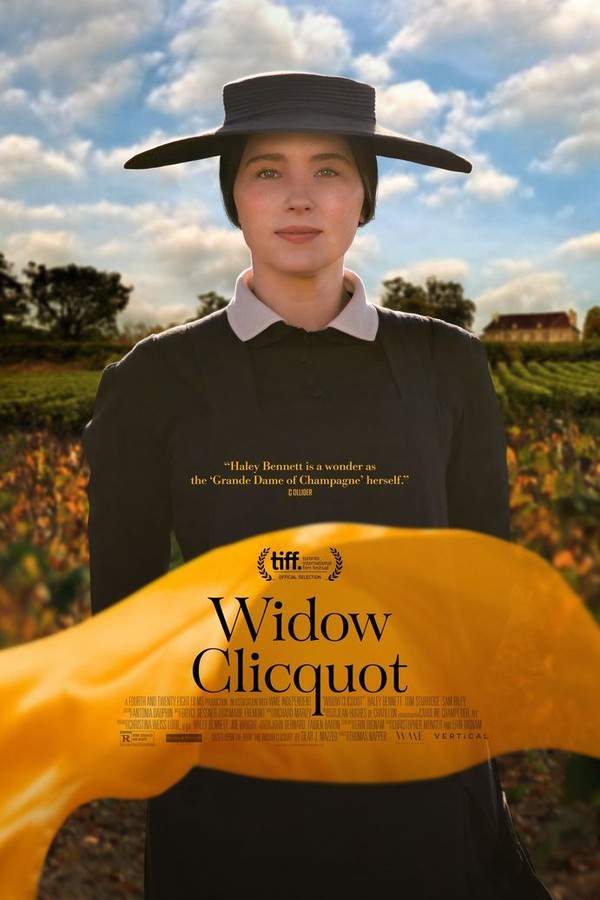
Widow Clicquot (2024) movie poster

Ending Explained

Widow Clicquot (2024) Ending Explained – Final Scene & Meaning

Release, runtime and language
2024 · 1 h 30 m · English
Echo score 73
JustWatch #3,031 27
Directed by
Thomas Napper
Starring
Sam Riley, Nicholas Farrell, Haley Bennett, Tom Sturridge, Paul Rhys, Ben Miles

The story follows Barbe-Nicole Ponsardin, known as Widow Clicquot, as she builds a champagne empire in the late 1700s. Facing significant challenges and breaking through societal barriers, she demonstrates remarkable resilience and ingenuity in establishing a lasting legacy.

On this page (7)
  1. 1 Where to watch
  2. 2 What happens at the end
  3. 3 Final events in order
  4. 4 Ending questions answered
  5. 5 Movie threads
  6. 6 Movies like Widow Clicquot
  7. 7 Every angle

Where to watch

Where to Watch Widow Clicquot (2024)

Where can you watch Widow Clicquot? Stream, rent or buy it in the US, including on Amazon Prime Video, YouTube Free and Amazon Video: current JustWatch availability with up-to-date prices.

Streaming availability powered by JustWatch

Ending explained · contains spoilers

What Happens at the End of Widow Clicquot?

How Widow Clicquot (2024) ends, what the final scene means, which earlier moments set it up and how to read the ending if the film leaves it open. The full ending explained, with every spoiler.

In the ending of Widow Clicquot, Barbe Nicole stands firm in her identity and her dreams, refusing to bow to societal expectations or the silencing laws of her time. Throughout the story, her journey is one of resilience, where she fights against prejudice and patriarchal controls to keep her late husband's vineyard alive. When faced with Louis Bohne’s marriage proposal in court, she chooses her independence over societal approval or personal security. Her refusal is not just about rejecting marriage; it’s a declaration of her commitment to her craft, her legacy, and her own sense of self. By saying no, she affirms that her passion and her visions are more valuable than conforming to the expectations of a society that seeks to diminish her. The film ends with her remaining true to her principles, carrying forward her late husband's dream with pride and integrity, demonstrating that her success was rooted in her authenticity and unwavering dedication. Her story is a powerful testament to the strength and resilience of a woman who refused to be defined by others, and who chose her path despite all the barriers placed before her.

Last updated: June 25, 2025 at 08:44

Was this helpful?

The last 4 events

How Widow Clicquot Ends: The Final Events in Order

The last events of Widow Clicquot (2024) in chronological order, the run-up to the ending explained above. The complete timeline has all 12 events, scene by scene.

Open the full timeline
  1. Trial for owning a business as a woman

    Her rising success unsettles male peers, and she is brought to trial for a law that forbids women from owning businesses. The case tests her authority and threatens the future of the winery. She stands firm in defense of her capabilities.

    When
    c. 1810s–1820s
    Where
    Paris, France
  2. Accusers claim she must marry to keep ownership

    Accusers argue that she refuses to marry Louis Bohne to maintain widow status and keep control of the winery. Barbe-Nicole responds with a forceful defense of her independence and competence. The confrontation highlights gendered expectations of the era.

    When
    c. 1810s–1820s
    Where
    Paris, France
  3. Louis's proposal and her rejection

    Louis publicly proposes to Barbe-Nicole, seeking a formal partnership through marriage. She declines, choosing ongoing autonomy over a traditional union. The moment reinforces her commitment to leading the business on her own terms.

    When
    late 1810s
    Where
    Paris, France
  4. Epilogue and the Veuve Clicquot dynasty

    Epilogue cards reveal that Barbe-Nicole never remarried and that the winery eventually evolves into the Veuve Clicquot champagne dynasty. Her legacy endures through the brand she built with grit and vision. The story closes with the enduring success of her modern champagne house.

    When
    post-1815
    Where
    Champagne, France

Ending questions answered

Widow Clicquot Ending: Your Questions Answered

The questions people ask most about the ending of Widow Clicquot (2024): what the final scene means, how the twist works, what happens to each character and how to read the ending. Each answer contains spoilers.

Q1

Why does Barbe-Nicole refuse Louis Bohne's marriage proposal?

Barbe-Nicole refuses Louis Bohne's proposal because she values her independence and her vision for the champagne empire more than societal approval or personal security. She sees marriage as a potential constraint on her ability to run the business and make her own decisions. Her refusal is a deliberate choice to remain self-reliant and committed to the legacy she and her late husband built, rather than submitting to a patriarchal system that would limit her control over the vineyard.

Foreshadowing: Earlier in the film, Barbe-Nicole demonstrates her independent spirit by insistently involving herself in the business despite her father-in-law's objections.

  • barbe-nicole
  • louis bohne
  • marriage proposal
  • independence
  • refusal
  • champagne business
Q2

What happens to the Clicquot vineyard after Barbe-Nicole refuses marriage?

After refusing Louis Bohne's proposal, Barbe-Nicole continues to run the Clicquot vineyard independently. The ending shows her remaining committed to her late husband's dream, building a lasting champagne legacy. Her refusal solidifies her position as a woman who succeeded on her own terms in a male-dominated industry, proving that she could achieve commercial success without needing a husband to legitimize her business.

Foreshadowing: Throughout the film, she repeatedly proves her competence in winemaking and business, showing she has the skills to succeed without male oversight.

  • clicquot vineyard
  • champagne empire
  • business success
  • independence
  • legacy
Q3

Is the ending of Widow Clicquot happy or bittersweet?

The ending is unambiguously happy in terms of Barbe-Nicole's professional success and personal fulfillment, but it carries a subtle bittersweet nuance. While she achieves her dream of building a lasting champagne empire and remains true to herself, she does so at the cost of personal companionship. She sacrifices the possibility of remarriage and a traditional family life, choosing her passion over personal security.

Foreshadowing: The film consistently balances her professional triumphs with personal losses, establishing this dual tone throughout.

  • ending
  • happy ending
  • bittersweet
  • sacrifice
  • legacy
  • success
Q4

What does Barbe-Nicole's final decision mean for her legacy?

Barbe-Nicole's refusal to marry signifies that her legacy is built entirely on her own terms and achievements. By rejecting the proposal, she ensures that the Clicquot champagne house will be remembered as her accomplishment, not as an extension of a man's business. Her decision demonstrates that she prioritized authenticity and personal vision over conforming to societal expectations, which ultimately made her legacy more remarkable.

Foreshadowing: Her earlier struggles against her father-in-law and the legal system foreshadow her willingness to fight for independent recognition.

  • legacy
  • independence
  • achievement
  • identity
  • self-determination
Q5

Does Barbe-Nicole stay true to her late husband's dream?

Yes, Barbe-Nicole remains true to her late husband's dream throughout the ending. Her refusal to marry is actually an affirmation of that commitment. By choosing to continue building the champagne empire independently, she ensures that François Clicquot's vision lives on through her efforts. The film portrays her as carrying forward his dream with pride and integrity, suggesting their partnership transcended marriage and was truly about shared ambition.

Foreshadowing: Her dedication to perfecting the champagne and expanding the business despite obstacles reflects her loyalty to her husband's original vision.

  • francois clicquot
  • husband
  • dream
  • vineyard
  • commitment
  • dedication
Q6

Why does Barbe-Nicole choose her business over marriage?

Barbe-Nicole chooses her business over marriage because she recognizes that marrying again would likely mean surrendering control of the vineyard to a husband. In her time, a married woman had few legal rights and would be subordinate to her spouse. By refusing Louis Bohne, she preserves her autonomy and her ability to make decisions about the champagne production. Her choice reflects her understanding that true partnership in business was impossible within the constraints of 18th-century marriage.

Foreshadowing: The film shows her battling legal and familial obstacles that would have stripped her of control had she remarried.

  • business
  • marriage
  • autonomy
  • control
  • champagne
  • independence
Q7

What is the message or theme of Widow Clicquot's ending?

The ending delivers a powerful message about self-determination and the value of pursuing one's own vision despite societal barriers. It celebrates Barbe-Nicole as a woman who refused to be defined by others or constrained by the expectations placed on women of her era. The theme emphasizes that true success comes from authenticity and unwavering dedication to one's craft, rather than conforming to what society dictates. Her story becomes a testament to resilience and the strength that comes from staying true to oneself.

Foreshadowing: Her consistent resistance to her father-in-law's control and her refusal to accept the limits placed on women establish this theme throughout the film.

  • theme
  • message
  • self-determination
  • resilience
  • authenticity
  • women's empowerment
Q8

Does Widow Clicquot end with Barbe-Nicole being successful?

Yes, the ending confirms Barbe-Nicole's success. She successfully establishes a champagne empire that lasts beyond her lifetime, proving wrong everyone who doubted a woman could run such a business. The film ends with her remaining true to her principles while carrying forward her late husband's dream. Her success is portrayed as directly rooted in her authenticity and refusal to compromise her vision, making her achievement both commercial and personal.

Foreshadowing: The narrative arc consistently builds toward her recognition as a pioneering businesswoman in the champagne industry.

  • success
  • achievement
  • champagne empire
  • recognition
  • triumph
Q9

Why is Barbe-Nicole's refusal historically significant?

Barbe-Nicole's refusal is historically significant because it represents a rare example of a woman in the 18th century asserting complete control over her business and rejecting marriage as the only viable option for women. Her decision to remain independent and build the Clicquot champagne brand paved the way for future female entrepreneurs. The real Widow Clicquot became one of the first successful female business owners in the champagne industry, and her choices in the film reflect the groundbreaking nature of her actual historical legacy.

Foreshadowing: The film establishes the patriarchal constraints of the era, making her resistance to these norms historically remarkable.

  • historical significance
  • first female entrepreneur
  • champagne industry
  • widow clicquot
  • pioneering
Q10

What personal sacrifice does Barbe-Nicole make in the ending?

Barbe-Nicole's personal sacrifice in the ending is the放弃 of personal companionship and the security that marriage would have provided. By refusing Louis Bohne's proposal, she gives up the chance for a potentially loving relationship and the social acceptance that remarriage would have brought. This sacrifice underscores the cost of her independence in a society that offered women few options. The bittersweet quality of her ending comes from this trade-off between professional triumph and personal fulfillment.

Foreshadowing: The film establishes her grief over losing her husband and hints at her loneliness throughout.

  • sacrifice
  • marriage
  • companionship
  • loneliness
  • choice
  • cost

Movie threads

More Movies Like Widow Clicquot, by Mood & Story

Curated lists built around what makes Widow Clicquot tick: the same mood, the same kind of story or the same emotional payoff. Each list explains why these movies belong together.

Resilient Entrepreneurs Against the Odds like in Widow Clicquot

Stories of innovators who overcome systemic barriers to build a legacy. If you enjoyed the story of Barbe-Nicole Ponsardin in Widow Clicquot, explore more movies about determined founders who overcame barriers. These similar historical dramas and biopics showcase female entrepreneurship and the tenacious journey of building a lasting business empire.

  • determined
  • resilient
  • hopeful
  • tenacious
  • defiant
  • uplifting
  • Tone: hopeful, determined
  • Pacing: steady, methodical
Why these movies?

The story pattern: These narratives typically follow a linear, goal-oriented path where a protagonist faces a series of escalating business and societal challenges. The central conflict often involves overcoming patriarchal structures, economic crises, or personal loss. The arc is one of steadfast perseverance, marked by clever problem-solving and culminating in a legacy of success.

Why they belong together: Movies in this thread share a core theme of defiant resilience in the face of institutional obstacles. They mix a steady, procedural pacing with a consistently hopeful tone, celebrating ingenuity and dogged determination. The emotional journey is grounded but ultimately uplifting.
Hopeful Historical Perseverance movies like Widow Clicquot

Uplifting period dramas about individuals who persevere through adversity. Fans of Widow Clicquot will appreciate these similar inspiring historical dramas. Discover other movies with a steady pace and hopeful tone, featuring tenacious characters who overcome grief and societal barriers to achieve greatness in their respective fields.

  • hopeful
  • inspiring
  • resilient
  • historical
  • uplifting
  • tenacious
  • Tone: hopeful, uplifting, resilient
  • Pacing: steady, character-driven
Why these movies?

The story pattern: The narrative pattern centers on a singular protagonist navigating a specific historical context. The journey is defined by a series of setbacks—personal, professional, or societal—which are met with resilience and ingenuity. The story unfolds at a deliberate pace, allowing for character development and world-building, and concludes with a satisfying, legacy-celebrating resolution.

Why they belong together: These films are grouped by their shared mood of determined optimism within a historical setting. They balance the weight of realistic challenges with an ultimately uplifting and empowering tone. The steady pacing and medium emotional intensity create a compelling yet accessible viewing experience focused on triumph.

If you liked this

Movies Like Widow Clicquot

Similar movies to Widow Clicquot: the same genre, themes or kind of story. Each one comes with its own plot summary, timeline and ending explained.

Browse all movie summaries

Every angle

Widow Clicquot (2024) Explained: Plot, Ending, Timeline & Characters

Everything about Widow Clicquot in one place: what happens in the plot summary, the timeline in chronological order, the characters and meaning, the ending explained and a spoiler-free summary. What's After the Movie adds the cast, box office and post-credit scenes.

Coming soon on iOS and Android

The Plot Explained Movie Summary App

Plot summaries, endings explained and timelines on your phone. Catch up on any movie in minutes, save your favorites and never miss a twist again.

Be the first to know when we launch. Your email stays private, always.

Learn more about the app