Plot Explained Spoilers guaranteed!
Plot Explained

Browse by genre

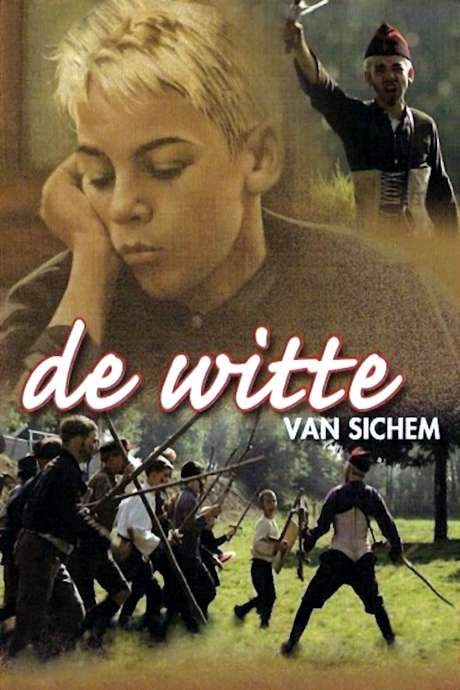
Whitey (1980) movie poster

Characters & Themes

Whitey (1980) Characters, Setting & Themes Explained

Release, runtime and language
1980 · 106 mins · Dutch
Loading streaming availability…
Directed by
Robbe De Hert
Starring
Sam Bogaerts, Anton Cogen, Fred Van Kuyk, Chris Lomme, Jaak Van Assche, Michaël Pas

The colour adaptation of Ernest Claes’ Flemish novel, named after the blond‑haired boy whose nickname means “the White”. A clever but disobedient farmhand’s pranks anger teachers, his father’s landlord and the curate. When his mother catches him skinny‑diving she strips his clothes, forcing a humiliating walk home fearing his father’s wrath. The film highlights the story’s social and Flemish themes.

On this page (8)
  1. 1 Where to watch
  2. 2 Characters explained (8)
  3. 3 Where & when it takes place
  4. 4 Themes & meaning (4)
  5. 5 Character & meaning questions
  6. 6 Movie threads
  7. 7 Movies like Whitey
  8. 8 Every angle
Loading streaming availability…

8 main characters · contains spoilers

Whitey Characters Explained: Who Is Who

The main characters of Whitey (1980), heroes and villains: what drives them, how they change over the course of the story and what each of them reveals about the film's bigger ideas.

  • Louis Verheyden (Eric Clerckx)

    played by Clerckx Eric

    Louis is a mischievous, curious boy whose pranks and experiments push the boundaries of a strict, often punitive world. His imagination drives him to reenact battles and test rules, even as he faces bullying and harsh discipline at home and at school. He is both fearless and vulnerable, learning about consequences while seeking belonging. His colorful attempts at control reveal a hunger for meaning beyond a rigid social order.

    • 👦 Curious
    • ✨ Imaginative
    • ⚡ Rebellious
    • 🧭 Adventurous
  • Moeder van de Witte (Blanka Heirman)

    Louis’s mother is irritable and controlling, constantly worrying about discipline and order at home. Her complaints reflect the pressures of managing a large family under a stern husband. She often acts as the moral compass and the first line of punishment for Louis’s misdeeds. Her relationship with Louis is strained but central to his experience of home life.

    • 😠 Irritable
    • 👩‍👧‍👦 Maternal
    • 🧭 Protective
  • Vader van de Witte (Willy Vandermeulen)

    Louis’s father is aggressive and largely absent, only home at dinner and acting as the household enforcer. His violence and harsh demeanor shape Louis’s fear and desire to resist. He embodies the brutal authority of the family and the rural order that constrains Louis. His presence underscores the danger Louis faces at home.

    • 💪 Dominant
    • 😡 Violent
    • 👨‍🌾 Paternal
  • Boer Coene (Paul S'Jongers)

    Coene is the formidable landowner whose farm and authority dominate the local economy. He assigns Louis tasks and uses money and labor to exert control, intensifying the power dynamic between the boy and the landed class. His interactions with Louis reveal the social hierarchies of the time. Coene’s presence anchors the rural realism of the film.

    • 🏡 Landowner
    • 🧭 Authority
    • 💼 Economic power
  • Liza Coene (Magda De Winter)

    Liza is a key figure in Louis’s social circle, offering a glimpse of affection and conflict. Her relationship with Heinke breaks under social and religious tensions, impacting Louis’s circle and choices. She represents a young perspective on love, trust, and loyalty amid a charged village life.

    • 💞 Romantic
    • 👧 Peer influence
    • 🧭 Social observer
  • Heinke Verheyden (Jos Verbist)

    Heinke is a Catholic friend who also exposes Louis to socialist ideas, signaling the clash of faith and politics in the village. He tries to impress with his stance and relationships, even as the two friends navigate religious and social divides. His evolving attitudes contribute to the story’s tension around belief and belonging.

    • 🕊️ Religious
    • 🪪 Idealistic
    • 🧪 Socially aware
  • Leraar / Fabriekschef (Paul-Emile Van Royen)

    The teacher is a stern, punitive figure who enforces discipline and punishes pupils in the cellar. He embodies the era’s educational harshness and authority, shaping Louis’s perception of school as a site of power. His presence anchors the threat of punishment that drives many of Louis’s schemes.

    • 🏫 Strict
    • 🧰 Punitive
    • 👨‍🏫 Authority
  • Nils Verheyden (Ralf Troch)

    Nils, Louis’s brother, participates in the family’s rough dynamics and contributes to the siblings’ rivalry. He embodies the typical older brother role within a tightly knit, often hostile, family environment. His interactions with Louis highlight the everyday friction within a crowded household.

    • 👦 Brother
    • 🥊 Rivalry
    • 💢 Tension

Last updated: October 04, 2025 at 12:56

Was this helpful?

Setting

Where and When Does Whitey Take Place?

The setting of Whitey (1980): the year and time period, the places and locations, and how they shape the characters, the mood and the tension of the story.

Time period

1901, 1980

The main action unfolds in 1901, a time when corporal punishment in schools and strict family authority prevail. The story shifts to 1980, presenting a modern frame where a blond student resembling Louis works in the Abbey’s printing establishment. The 1980 segment culminates with the 117th reprint of the novel Whitey appearing, linking past and present memory.

Location

Sichem, river Demer, Averbode Abbey

Set in and around Sichem, a small rural town centered on a family farm and the landowner Coene’s estate. The river Demer features in scenes of punishment and play, while Averbode Abbey offers a counterpoint with its beauty, Gregorian singing, and a printing establishment. Public spaces like the fair and a spiegeltent illustrate the social life, religion, and labor that shape the period.

  • 🗺️ Sichem
  • 🏞️ River setting
  • 🏰 Abbey atmosphere

Last updated: October 04, 2025 at 12:56

Was this helpful?

4 major themes

Whitey Meaning: Themes & Message Explained

What is Whitey (1980) really about? The emotional, social and philosophical themes the film keeps returning to, its symbolism and the message beneath the surface.

  • Coming of Age

    Louis’s mischief and curiosity push him toward adulthood as he negotiates punishment, family expectations, and social norms. His actions are a mix of exploration and consequence, shaping his sense of self. The narrative traces how a turbulent childhood environment seeds personal growth and resilience.

  • Authority

    The story is framed by strong authorities—parents, a stern teacher, and religious influence—that discipline and regulate daily life. Louis’s acts reveal the cruelty and rigidity of power, while also exposing moments where authority provides structure and belonging. The presence of socialist movements and communal spaces introduces challenges to this order.

  • Imagination

    Louis turns history into theater, reenacting battles and role-playing as a way to cope with his world. These fantasies offer agency and escape, even as they blur with reality and sometimes invite trouble. The imagination acts as a counterforce to constraint, guiding his reactions to conflict and punishment.

  • Heritage

    The Abbey, the printing press, and local rituals fuse personal memory with historical myth. The discovery of old books links Louis to a broader cultural past, including national tales like The Lion of Flanders. The dual timeline emphasizes how memory preserves a troubled heritage across generations.

Last updated: October 04, 2025 at 12:56

Was this helpful?

Character & theme questions

Whitey Characters & Meaning: Your Questions Answered

The questions people ask about Whitey (1980): who the characters really are, their relationships, what the symbols mean, where it takes place and what the movie is really about. Each answer contains spoilers.

Q1

Where is the movie Whitey set?

Whitey is set in and around Sichem, a small rural town in the Flemish region. The story centers on a family farm and the landowner Coene's estate, with the river Demer serving as a key location for both punishment and play. Averbode Abbey also features prominently, offering a contrasting space of beauty and culture.

Foreshadowing: The Abbey's printing establishment becomes significant in the 1980 timeline, linking past and present.

  • sichem
  • flanders
  • river demer
  • averbode abbey
  • setting
  • rural belgium
Q2

What time period does Whitey take place in?

The main action unfolds in 1901, a period characterized by corporal punishment in schools and strict family authority. The story then shifts to 1980, presenting a modern frame where a student resembling Louis works in the Abbey's printing establishment. The 1980 segment culminates with the 117th reprint of the novel appearing.

Foreshadowing: This dual timeline structure connects Louis's childhood struggles to ongoing cultural memory.

  • 1901
  • 1980
  • flanders
  • historical setting
  • dual timeline
Q3

What are the main themes of Whitey?

Whitey explores several interconnected themes including Coming of Age, as Louis navigates punishment, family expectations, and social norms; Authority, examining the rigid structures of parents, teachers, and religious institutions; Imagination, showing how Louis reenacts battles and role-plays as coping mechanisms; and Heritage, connecting personal memory to broader cultural history through the Abbey and printing press.

Foreshadowing: The discovery of old books links Louis to a broader cultural past and national tales like The Lion of Flanders.

  • coming of age
  • authority
  • imagination
  • heritage
  • flandrian themes
Q4

Who is Louis Verheyden in Whitey?

Louis Verheyden is the protagonist, a mischievous and curious boy whose pranks and experiments push against the boundaries of a strict, punitive world. His imagination drives him to reenact battles and test rules, even as he faces bullying and harsh discipline at home and school. He is both fearless and vulnerable, seeking belonging while learning about consequences.

Foreshadowing: Louis's colorful attempts at control reveal a hunger for meaning beyond a rigid social order.

  • louis verheyden
  • protagonist
  • protagonist
  • mischievous boy
Q5

What role does Averbode Abbey play in Whitey?

Averbode Abbey serves as a counterpoint to the harsh rural world, offering beauty, Gregorian singing, and a printing establishment. In the 1980 timeline, a student resembling Louis works in this printing press, and the 117th reprint of the novel appears there, symbolizing how memory preserves Louis's story across generations.

Foreshadowing: The Abbey connects the 1901 narrative to its 1980 continuation, bridging past and present.

  • averbode abbey
  • printing press
  • heritage
  • memory
  • cultural past
Q6

How does authority feature in Whitey?

The story is framed by strong authorities, parents, a stern teacher, and religious influence, that discipline and regulate daily life. Louis's acts reveal the cruelty and rigidity of power, while also showing moments where authority provides structure and belonging. The presence of socialist movements and communal spaces introduces challenges to this established order.

Foreshadowing: The teacher punishes pupils in the cellar, embodying the era's educational harshness.

  • authority
  • punishment
  • teacher
  • parents
  • social hierarchy
  • religion
Q7

What is Louis's relationship with his parents like?

Louis's relationship with his parents is strained and fearful. His mother is irritable and controlling, acting as the moral compass and first line of punishment. His father is aggressive and largely absent, only appearing at dinner to enforce household rules. The father's violence and harsh demeanor shape Louis's fear and desire to resist, embodying the brutal authority that constrains him.

Foreshadowing: When Louis's mother catches him skinny-dipping, she strips his clothes, forcing the humiliating walk home he fears will bring his father's wrath.

  • father
  • mother
  • family
  • punishment
  • parental authority
  • louis family
Q8

Why is the movie called Whitey?

The movie is adapted from Ernest Claes' Flemish novel named after the blond-haired boy whose nickname means 'the White'. Louis's distinctive white-blond hair earned him the nickname, which becomes central to his identity in the strict, often harsh rural community where he lives.

Foreshadowing: The nickname 'Whitey' contrasts with the dark, punitive world Louis inhabits.

  • whitey
  • nickname
  • louis
  • ernest claes
  • novel adaptation
Q9

What role does the river Demer play in the story?

The river Demer features as a setting for both punishment and play in Whitey. It represents the dual nature of Louis's world, where natural spaces offer moments of freedom and adventure, but also serve as places where he can get into trouble. The river contrasts with the rigid structures of home, school, and church.

Foreshadowing: The river scenes often precede or follow Louis's punishments, linking freedom with consequences.

  • river demer
  • punishment
  • nature
  • freedom
  • flanders countryside
Q10

How does imagination function in Whitey?

Louis turns history into theater, reenacting battles and role-playing as a way to cope with his world. These fantasies offer agency and escape, even as they blur with reality and sometimes invite trouble. The imagination acts as a counterforce to constraint, guiding his reactions to conflict and punishment.

Foreshadowing: Louis's imaginative games often lead to further punishment but also reveal his resilience.

  • imagination
  • fantasy
  • role-playing
  • coping mechanism
  • battles
  • escape

Movie threads

More Movies Like Whitey, by Mood & Story

Curated lists built around what makes Whitey tick: the same mood, the same kind of story or the same emotional payoff. Each list explains why these movies belong together.

Movies about oppressive childhoods like Whitey

Young protagonists endure systemic pressure and punishment in unforgiving communities. If you were captivated by the harsh upbringing in Whitey, this collection features similar movies about children navigating punitive societies. Discover other powerful dramas and historical films that explore rebellion, punishment, and the struggle for identity in unforgiving rural or traditional settings.

  • oppressive
  • gritty
  • rebellious
  • melancholic
  • humiliating
  • nostalgic
  • Tone: melancholic, gritty, oppressive
  • Pacing: steady, episodic
Why these movies?

The story pattern: Stories in this thread typically follow a young protagonist's episodic struggles against the authoritative pillars of their community—be it a strict father, a punitive school, or a dogmatic religious institution. The narrative is often a series of confrontations and humiliations that slowly chip away at the character's innocence, highlighting the tension between individual spirit and societal constraints.

Why they belong together: These films are grouped together due to their shared focus on the melancholic and gritty experience of childhood under oppression. They feature a steady, observational pacing that allows the weight of the environment to settle on the viewer, and often possess a medium to high emotional weight centered on themes of rebellion, punishment, and resilience.

Melancholic coming-of-age stories like Whitey

Bittersweet and reflective stories looking back at a difficult childhood. For viewers who appreciated the reflective and bittersweet mood of Whitey, this list curates similar melancholic coming-of-age movies. Find other dramas that capture the complex emotions of looking back on youth, blending nostalgic imagery with the honest pain of growing up.

  • nostalgic
  • melancholic
  • bittersweet
  • reflective
  • coming of age
  • emotional
  • Tone: nostalgic, melancholic, bittersweet
  • Pacing: steady, reflective
Why these movies?

The story pattern: The narrative pattern often involves a framing device or an overall tone of reminiscence, where the story of youth is told with a blend of affection for the setting and sadness for the hardships endured. The journey is less about a clear triumph and more about capturing the ambiguous, lasting emotional imprint of early life experiences.

Why they belong together: This thread connects films through a specific emotional mix: a nostalgic atmosphere layered over a core of melancholy. The pacing is typically steady, allowing for reflection, and the endings often feel ambiguous or bittersweet, leaving the viewer with a complex sense of loss and memory rather than simple closure.

If you liked this

Movies Like Whitey

Similar movies to Whitey: the same genre, themes or kind of story. Each one comes with its own plot summary, timeline and ending explained.

Browse all movie summaries

Every angle

Whitey (1980) Explained: Plot, Timeline & Characters

Everything about Whitey in one place: what happens in the plot summary, the timeline in chronological order, the characters and meaning and a spoiler-free summary. What's After the Movie adds the cast, box office and post-credit scenes.

Coming soon on iOS and Android

The Plot Explained Movie Summary App

Plot summaries, endings explained and timelines on your phone. Catch up on any movie in minutes, save your favorites and never miss a twist again.

Be the first to know when we launch. Your email stays private, always.

Learn more about the app