Year: 2012
Runtime: 102 min
Language: Italian
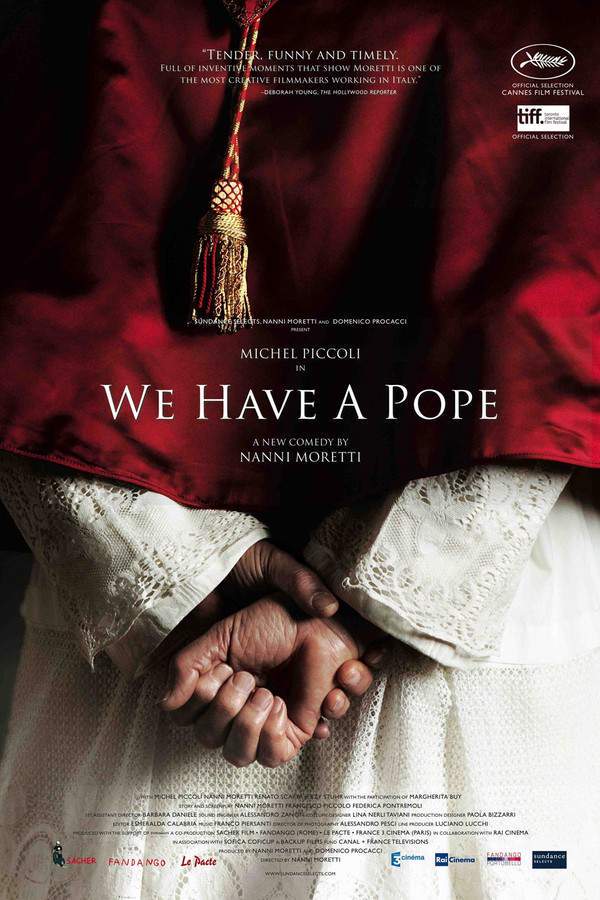
After an unexpected election, Cardinal Melville finds himself named Pope, throwing the Vatican into disarray. Overwhelmed by the immense responsibility, he grapples with a profound crisis. A perceptive therapist is brought in to help him navigate this challenging situation, leading to an insightful exploration of faith, duty, and the human condition as they confront the weight of the papal office and search for inner peace.
Get a spoiler-free look at We Have a Pope (2012) with a clear plot overview that covers the setting, main characters, and story premise—without revealing key twists or the ending. Perfect for deciding if this film is your next watch.
In the quiet corridors of the Vatican, an ancient ritual unfolds after the death of a pontiff: the conclave gathers to choose a successor, shrouded in solemnity and the weight of centuries‑old tradition. The atmosphere is a blend of reverent ceremony and palpable uncertainty, as the cardinals wrestle with the gravity of their secret ballot while the world watches the smoke that signals each round’s outcome. The setting feels both timeless and oddly contemporary, a closed world where every whispered decision reverberates beyond stone walls.
Amid the ritual, Cardinal Melville—a respected yet unassuming prelate—finds his name thrust into the spotlight, an outcome no one anticipated. Suddenly crowned as the new pope, he confronts an overwhelming sense of inadequacy and a deep, personal crisis that clashes with the monumental responsibilities of the papacy. His internal turmoil is juxtaposed against the grand expectations of a faithful global audience, creating a tension that is as much psychological as it is spiritual.
To navigate this unprecedented turmoil, the College of Cardinals summons Professor Brezzi, a psychoanalyst whose reputation for unconventional methods precedes him. The therapist’s presence introduces a subtle, almost absurd counterpoint to the solemnity of the Vatican’s hierarchy, highlighting a clash between rigid doctrine and the messy reality of human emotion. Their uneasy collaboration suggests a delicate dance between faith and reason, where the sacred space becomes a backdrop for an introspective exploration of identity and purpose.
The film balances reverence with a wry, observant tone, inviting viewers to contemplate the fragile intersection of duty, belief, and personal doubt. As the new pontiff grapples with his inner conflict, the story asks how a man can reconcile the immense weight of an ancient office with the simple, universal yearning for inner peace.
Last Updated: August 10, 2025 at 07:17
Discover curated groups of movies connected by mood, themes, and story style. Browse collections built around emotion, atmosphere, and narrative focus to easily find films that match what you feel like watching right now.
Characters breaking under the weight of sacred, high-stakes roles.If you liked We Have a Pope's exploration of a man crushed by duty, you'll find similar stories here. These movies feature characters in positions of great power—religious, political, or corporate—who suffer a private breakdown, creating a tense, contemplative mood within a cloistered world.
The narrative follows an individual unexpectedly thrust into a position of ultimate authority. Instead of embracing power, they are paralyzed by it, leading to an internal crisis that unfolds against the backdrop of a waiting, often bewildered, institution. The conflict is primarily internal, pitting personal doubts against public expectations.
They share a specific mood of anxious introspection generated by the contrast between a solemn, powerful setting and a vulnerable human heart. The pacing is deliberate, the tone is melancholic, and the emotional core is a universal fear of inadequacy and the desire for freedom.
Stories of gentle psychological collapse that defy neat resolution.For viewers who appreciated the subtle crisis and open-ended conclusion of We Have a Pope, this collection features similar films. These stories focus on characters grappling with immense internal pressure in a realistic, understated way, leading to conclusions that are thoughtful rather than tidy.
The narrative arc is one of gradual internal dissolution. A character, often ordinary or placed in an extraordinary situation, confronts a fundamental aspect of their life or identity that they can no longer sustain. The plot prioritizes emotional realism over dramatic action, building to a conclusion that feels authentic and open to interpretation.
They are united by a specific emotional mix: a medium emotional weight carried by a steady pace, a melancholic or contemplative tone, and an ending that lingers in ambiguity. This creates a reflective, deeply human viewing experience that avoids melodrama.
Don't stop at just watching — explore We Have a Pope in full detail. From the complete plot summary and scene-by-scene timeline to character breakdowns, thematic analysis, and a deep dive into the ending — every page helps you truly understand what We Have a Pope is all about. Plus, discover what's next after the movie.
Read a complete plot summary of We Have a Pope, including all key story points, character arcs, and turning points. This in-depth recap is ideal for understanding the narrative structure or reviewing what happened in the movie.
Track the full timeline of We Have a Pope with every major event arranged chronologically. Perfect for decoding non-linear storytelling, flashbacks, or parallel narratives with a clear scene-by-scene breakdown.
Discover the characters, locations, and core themes that shape We Have a Pope. Get insights into symbolic elements, setting significance, and deeper narrative meaning — ideal for thematic analysis and movie breakdowns.
Visit What's After the Movie to explore more about We Have a Pope: box office results, cast and crew info, production details, post-credit scenes, and external links — all in one place for movie fans and researchers.