American physiotherapist Ava Newman, Daisy Ridley, whose husband Mitch Matt Whelan was on a business trip in Woodbridge, volunteers as part of an Australian military effort to retrieve and dispose of the bodies surrounding a detonated experimental weapon off the eastern coast of Tasmania. The blast destroys Hobart and leaves many on the island brain-dead; a troubling subset regains motor function and becomes undead, some turning violent. Ava is assigned to the northern part of the island, far from Woodbridge, where her job is to retrieve bodies and alert soldiers to kill any undead that wake up. The mission is grim, procedural, and morally gray, set against a landscape that feels both beautiful and broken as civilization contends with the fallout of the disaster.
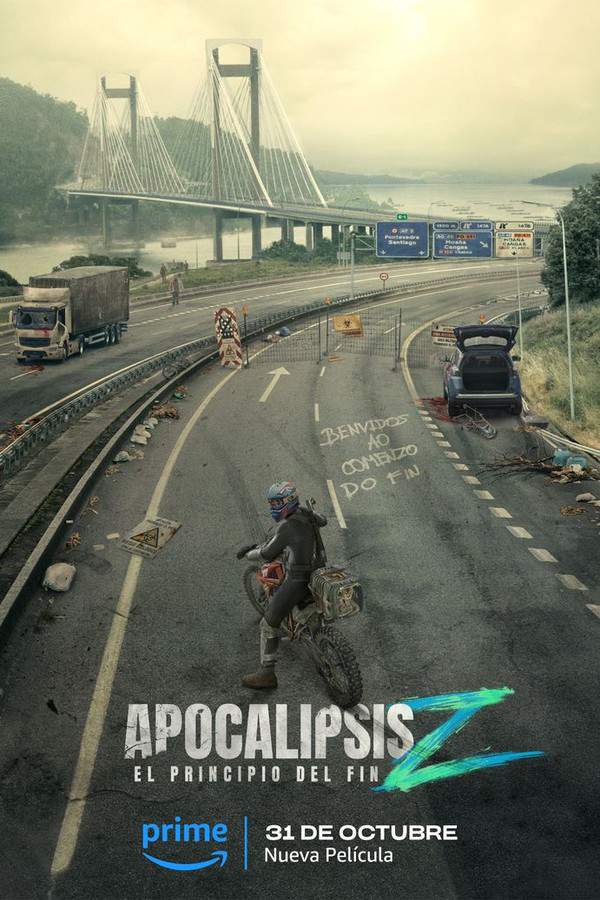
Ava is placed on a small, purposeful team with Clay, Brenton Thwaites. Together they stumble upon a motorcycle in a deserted garage and decide to abandon their formal unit to push north across Tasmania in hopes of reaching Mitch. The journey is tense and fraught with danger as they navigate ruined towns, ash-grey skies, and the constant threat of undead along the road. Their uneasy alliance starts to become something more human as they depend on each other for survival, sharing snippets of their lives before the crisis and the reasons they stayed in the fight.
Their fragile trek is interrupted at an abandoned petrol station, where an undead attack shatters their plan and leaves Ava reeling. A lone survivor, Riley, enters the scene and saves Ava by intervening on Clay’s behalf. Riley, played by Mark Coles Smith, locks Ava in a toilet and interrogates Clay, testing the couple’s resolve and trust under extreme pressure. Ava falls asleep, her mind drifting to memories of Mitch, and when she wakes, Riley reveals that Clay has run off. The encounter marks a turning point for Ava as she negotiates survival with a man who embodies both protection and danger.
Riley offers to guide Ava back toward Woodbridge, but his hospitality then turns ominous. He invites Ava to his home for a meal and begins to cross boundaries, pressing Ava to don his wife Katie’s clothes and dance with him as if they were partners in another life. Katie, a pregnant undead, is a chilling symbol of the ailing relationships and unfinished business that haunt the survivors. The first explicit hint of the emotional cost of the catastrophe lands in this scene, with Riley's insistence that Ava participate in an intimate ritual. Katie’s presence—both undead and pregnant—heightens the sense that the past cannot be neatly severed from the present, and the moment lingers with a disturbing sense of ownership and memory.
Ava agrees to the dance, hoping to reconcile human connection with the surreal reality around her, but the moment spirals when Riley realizes Ava has not removed her wedding ring, and his demeanor shifts from flirtation to violence. Ava escapes through a window and discovers Katie’s bed, where an awoken, pregnant undead lies surrounded by a shrine to the life Riley imagines he could have shared with his wife. Riley presses the notion that he’s alive, that some undead retain unfinished business, and his tormenting certainty becomes a threat that Ava cannot ignore. > "I felt him kick." The line lands as a stark, unsettling testament to a man’s belief that life—real or undead—still carries purpose in his own mind.
Ava escapes and moves through Riley’s world, finding a shed filled with chained undead and notes Riley left behind, evidence of his obsessive attempts to understand their behavior. Riley suggests a grim theory: the undead return when they have unresolved matters, a belief that fuels his cruelty and his fixation on Ava. In a final struggle between the two, Ava kills Riley and escapes in his car, only to realize that Katie has also begun to awaken. The sense that the line between mercy and violence is porous deepens the film’s moral weight as Ava continues her desperate journey.
She pushes onward toward Woodbridge, stopping to rest in a camper van and carefully removing the corpses of a family outside. Later that night, the undead driver resembles a calm, methodical presence as he digs a grave for the four bodies; he does not attack Ava, and in a quiet, unsettling moment she helps him, then ends the threat with a shovel and moves on. This sequence blends eerie serenity with brutality, underscoring how the collapse of society reframes everyday acts of care into acts of survival.
As the narrative unfolds in flashbacks, Ava’s and Mitch’s relationship is revealed to have frayed over infertility and the pain of a failing marriage. Ava’s later affair becomes a source of guilt and consequence once Mitch discovers it just before leaving for his business trip. Ava eventually reaches the resort where Mitch was staying, only to learn that he did not wake from death and that he had cheated on her. The emotional aftershocks deepen the survivor’s resolve to endure, even as the past bleeds into the present.
Clay finds Ava at the hotel, and the bond between them deepens as they share a quiet moment of vulnerability in a world that has stripped away most of its certainty. Clay confesses that his wife and daughter want nothing to do with him, and he joined the mission to prove he’s not selfish. The two spend the night together and, in a bold act, they place Mitch’s body in a motorboat and set it on fire, sending the vessel out to sea as a symbolic rebirth—or perhaps a final act of letting go.
The northward journey culminates in a haunting encounter with Katie, who has given birth. Katie turns and walks away from Ava, Clay, and the distant sound of the newborn. In a poignant conclusion, Ava and Clay stumble upon the infant alive and healthy in nearby stone ruins, lacking the undead haze that marks so many others. The baby’s cry of joy marks a fragile hope amid devastation, and Ava calmly picks up the infant, a small but luminous reminder that life, even after catastrophe, can find a way to endure.