Plot Explained Spoilers guaranteed!
Plot Explained

Browse by genre

Vyasanasametham Bandhumithradhikal (2025) movie poster

Plot Summary

Vyasanasametham Bandhumithradhikal (2025) Plot Summary Explained

Release, runtime and language
2025 · 114 mins · Malayalam
Loading streaming availability…
Directed by
Vipin S
Starring
Arun Kumar, Baiju Santhosh, Noby Marcose, Azees Nedumangad, Mallika Sukumaran, Anaswara Rajan

Savithri is a progressive woman from a middle-class family with two daughters and four grandchildren. She shares a particularly close bond with her eldest granddaughter, Anjali, and dreams of seeing her achieve a happy and independent married life. However, an unexpected death disrupts Anjali's marriage arrangements, creating a ripple of chaos within the family and challenging Savithri's vision for her granddaughter’s future.

On this page (5)
  1. 1 Where to watch
  2. 2 What happens: full plot
  3. 3 Plot questions answered
  4. 4 Movie threads
  5. 5 Every angle
Loading streaming availability…

Full plot summary · contains spoilers

What Happens in Vyasanasametham Bandhumithradhikal: Full Plot Summary

The whole story of Vyasanasametham Bandhumithradhikal (2025) explained, from the opening scene to the final frame: every key event, every twist and what it all adds up to. Read it as a quick recap before the sequel, to check a scene you missed, or to finally understand what really happened.

Murali, a gentle and unassuming shopkeeper, resides in his mother-in-law, Savithriyamma's home along with his wife and daughter, Anjali. As they prepare for Anjali's upcoming marriage to Akhil, a domineering police officer from Pandalam, tensions rise. Akhil, driven by his controlling nature and deep-seated insecurities, constantly scrutinizes Anjali's actions and undermines her local Thiruvananthapuram dialect. He demands constant updates, like call log screenshots, suffocating her every move, leaving Anjali feeling imprisoned. With the emotional weight imposed by her parents' expectations, Anjali begins to question whether this marriage is truly what she desires.

The situation becomes increasingly fraught with the involvement of Venu, a casteist leader whom Murali admires. Venu informs Murali about a young Muslim man named Suhail who has been posting photos of Anjali on his WhatsApp statuses. Though Anjali insists that Suhail is merely an annoying college senior who bothers her, Murali’s unfounded jealousy and paranoia grow. The looming engagement rituals seem almost certain until tragedy strikes: Savithriyamma unexpectedly passes away from a sudden heart attack.

The days that follow are rife with hypocrisy and self-interest. The house, once filled with warmth, now buzzes with invaders — relatives who hardly cared about Savithriyamma but were quick to display exaggerated grief for appearances. They gathered to gossip, bicker over funeral logistics, and indulge in beverages, while a petty neighbor insisted on dictating the location of the cremation pyre due to boundary disputes. Adding to the discord, local politicians attempted to seize control of the funeral plans to bolster their own political aspirations.

Amid this, the absurdity escalated when a group mistook Shakthi, a friend of Suhail, for a migrant laborer, forcing him into strenuous funeral tasks. To exacerbate an already chaotic atmosphere, a loud local music troupe practiced nearby, belting out fast-paced Tamil kuthu dance tracks, completely overshadowing the respectful funeral chants.

Throughout this tumultuous evening, Akhil incessantly bombarded Anjali's phone, not with empathy, but with complaints about the situation. As she witnessed her grandmother's lifeless body being treated amidst this self-serving frenzy, a profound awareness struck Anjali. She recognized the sham within her community, her parents' overblown fear of societal views, and Akhil's careless lack of emotional support.

As the night grew darker and chaos enveloped the household, Anjali found her voice among the tumult of drunken relatives, prying neighbors, and unruly guests. In a courageous moment, she publicly denounced her engagement to Akhil, breaking free from societal chains and reclaiming her autonomy, finally standing firm against the tyranny of expectations placed on her.

Last updated: September 26, 2026 at 05:35

Was this helpful?

Plot questions answered

Vyasanasametham Bandhumithradhikal Plot Explained: Your Questions Answered

The questions people ask most about Vyasanasametham Bandhumithradhikal (2025): what happens in the confusing scenes, why the characters do what they do, the twists, hidden details and what the ending means. Each answer contains spoilers.

Q1

Why did Anjali call off her engagement to Akhil during the funeral?

Anjali broke off her engagement after watching her grandmother Savithriyamma's body being handled amidst a chaotic, self-serving gathering of relatives, neighbors, and politicians. The contrast between her grandmother's quiet love and the shameless behavior of everyone around her crystallized her awareness that her marriage to Akhil was built on similar hypocrisy and control. Her decision was not impulsive but the culmination of pressure she had already been feeling from Akhil's controlling nature and her parents' fixation on societal expectations.

Foreshadowing: Anjali's growing discomfort with Akhil's constant calls and her private doubts about the marriage are visible in the early scenes.

  • anjali engagement
  • akhil breakup
  • vyasanasametham climax
  • funeral confrontation
Q2

What specific moment made Anjali realize she didn't want to marry Akhil?

Anjali's epiphany came as she stood in the middle of the funeral night watching relatives gossip, politicians grandstand, and a loud Tamil kuthu troupe rehearse next door. The sheer disrespect shown to her grandmother's memory, combined with Akhil calling only to complain rather than comfort her, exposed the emptiness behind the social rituals she was expected to submit to. That collision of grief and absurdity convinced her that a marriage enforced by such a society could not offer her the happiness she deserved.

Foreshadowing: Anjali's earlier questions about whether the marriage was truly what she desired set the emotional groundwork for this realization.

  • anjali realization
  • funeral epiphany
  • wedding doubts
Q3

How did Savithriyamma's death lead to Anjali's freedom?

Savithriyamma's sudden death stripped away the one person who had envisioned and protected Anjali's future with genuine warmth. The funeral that followed then became a mirror, reflecting every ugly truth Anjali had been trying to ignore: her fiancé's emotional coldness, her parents' fear of society, and her community's performative morality. Confronted with those truths all at once, Anjali chose to honor her grandmother's dream of a happy, independent life by refusing a marriage that would have imprisoned her.

Foreshadowing: Savithriyamma's deep bond with Anjali and her dream of seeing her granddaughter live independently are established before her passing.

  • savithriyamma death
  • anjali liberation
  • family catalyst
Q4

Why was Akhil so controlling toward Anjali even before the marriage?

Akhil's behavior is driven by deep insecurity and a domineering personality that requires constant reassurance of his authority. As a police officer accustomed to command, he extends that authority into his personal life by demanding call log screenshots, monitoring Anjali's movements, and even criticizing her Thiruvananthapuram dialect to diminish her sense of identity. His control is less about genuine concern and more about neutralizing anything that threatens his dominance in the relationship.

Foreshadowing: Akhil's disapproval of Anjali's dialect and his constant demands for updates appear early, signaling the suffocating dynamic to come.

  • akhil controlling
  • police officer fiance
  • dialect criticism
  • call log screenshots
Q5

Why did Akhil call Anjali during the funeral only to complain?

Akhil's calls during the funeral reveal that he viewed the crisis primarily through the lens of his own inconvenience rather than as a moment requiring emotional support. His domineering nature, already visible in his micromanagement of Anjali, translated grief into another opportunity to assert control and express frustration. This behavior was the final confirmation for Anjali that he lacked the empathy a marriage truly requires.

Foreshadowing: Akhil's earlier pattern of monitoring Anjali's phone and demanding frequent updates foreshadows his inability to be emotionally present.

  • akhil lack of empathy
  • funeral phone calls
  • controlling behavior
Q6

Why was Anjali afraid to speak against the marriage before the funeral?

Anjali's silence stemmed from the weight of her parents' expectations and the broader social pressure that a broken engagement would invite judgment upon the entire family. Murali and his wife had already framed the marriage to Akhil as settled and non-negotiable, and Anjali feared the shame of disappointing them more than she feared the marriage itself. The funeral chaos finally gave her a moral clarity strong enough to outweigh that fear of societal opinion.

Foreshadowing: Anjali's private questioning of the marriage, contrasted with her parents' insistence on proceeding, signals her trapped position early on.

  • anjali silence
  • parental pressure
  • societal expectations
  • marriage fear
Q7

Why did Murali become so suspicious of Suhail despite Anjali's explanations?

Murali's suspicion of Suhail was fueled less by evidence and more by his own jealousy, insecurity, and the influence of Venu, a local casteist leader whose warnings carried disproportionate weight with him. Anjali's repeated clarification that Suhail was merely an annoying college senior failed to override Murali's pre-existing biases and the alarm Venu deliberately raised. His paranoia reflects how caste and religious prejudice can override a daughter's own testimony within a household.

Foreshadowing: Venu's introduction as a casteist figure admired by Murali establishes the ideological lens through which the Suhail situation is interpreted.

  • murali paranoia
  • suhail misunderstanding
  • venu influence
  • caste prejudice
Q8

What was Venu's motive for telling Murali about Suhail's photos?

Venu, a casteist local leader, weaponized the information about Suhail's WhatsApp statuses to stoke communal tension and position himself as a protector of community morals. By alerting Murali, he amplified a minor social interaction into a matter of honor and religious suspicion, which served his larger agenda of keeping caste and religious boundaries intact. His intervention had nothing to do with Suhail's actual behavior and everything to do with asserting ideological control over the family.

Foreshadowing: Venu's identity as a casteist leader is established before the Suhail revelation, hinting that his concern is ideological rather than personal.

  • venu casteist leader
  • suhail photos
  • communal tension
  • murali warning
Q9

Why did so many relatives show exaggerated grief at Savithriyamma's funeral?

Most of the relatives who converged on the funeral had little genuine connection to Savithriyamma but were motivated by appearances, inheritance considerations, and the social performance of mourning. Their exaggerated grief served as currency in a community where visible participation in rituals determines a family's standing and access to property. The film's funeral sequence uses this hypocrisy to expose how communal rituals often mask self-interest rather than reflect real affection.

Foreshadowing: Savithriyamma's modest, private warmth is contrasted with the sudden flood of relatives only after her death.

  • funeral hypocrisy
  • distant relatives
  • performative grief
  • savithriyamma
Q10

Why was Shakthi mistaken for a migrant laborer at the funeral?

Shakthi was misidentified as a migrant laborer because of his appearance and the casual assumptions the community makes about anyone whose identity does not fit a familiar upper-caste Hindu template. As a friend of Suhail, he likely carried markers that triggered the mourners' prejudices, and the chaos of the funeral made it easy for no one to verify his actual identity. The incident exposes how caste and religious bias operate reflexively, even in moments that should demand basic humanity.

Foreshadowing: The earlier introduction of Suhail as a Muslim character already primes the community's suspicion toward anyone connected to him.

  • shakthi mistaken laborer
  • caste prejudice
  • religious bias
  • funeral chaos
Q11

What did the loud Tamil kuthu music during the funeral symbolize?

The blaring Tamil kuthu rehearsal next door represents the intrusion of the outside world into what should be a sacred space for mourning. Its irreverent volume deliberately drowns out the funeral chants, mirroring how social noise, entertainment, and self-interest routinely overwhelm genuine grief in the film's community. Symbolically, the music reinforces the central theme that the rituals surrounding death have lost their meaning, which is exactly the realization that frees Anjali to reject her own hollow engagement.

Foreshadowing: The film's dark comedic tone is established earlier through smaller absurdities, which the music scene escalates into full symbolic force.

  • tamil kuthu music
  • funeral disruption
  • symbolic chaos
  • dark comedy
Q12

Why did the neighbor refuse to allow the cremation pyre near his property?

The neighbor's objection was rooted in a petty land boundary dispute rather than any concern for ritual propriety, revealing how mundane personal grievances are prioritized over collective humanity during a funeral. His insistence on dictating the pyre's location despite the family's grief demonstrates how property concerns and ego override compassion in the community. The absurdity of this confrontation amplifies the film's critique of a society that has lost its sense of basic decency.

Foreshadowing: The neighbor's territorial nature is hinted at through earlier minor conflicts with the household.

  • neighbor cremation dispute
  • boundary conflict
  • petty grievances
  • funeral absurdity

Movie threads

More Movies Like Vyasanasametham Bandhumithradhikal, by Mood & Story

Curated lists built around what makes Vyasanasametham Bandhumithradhikal tick: the same mood, the same kind of story or the same emotional payoff. Each list explains why these movies belong together.

Raucous family showdowns like in Vyasanasametham Bandhumithradhikal

Weddings and funerals explode into dark comedy as grief, gossip, and grudges collide. Movies like Vyasanasametham Bandhumithradhikal where weddings, funerals, and family gatherings become darkly comic battlegrounds. If you loved this Kerala-set satirical drama with chaotic crowds, biting social commentary, and explosive confrontation, you'll enjoy these similarly raucous family-centered stories that balance grief with irreverent humor.

  • raucous
  • darkly comedic
  • chaotic
  • satirical
  • cathartic
  • irreverent
  • Tone: bittersweet, darkly comedic
  • Pacing: variable, escalating chaos
Why these movies?

The story pattern: These stories typically begin with the measured calm of a traditional family ritual, then escalate as relatives converge and old wounds, gossip, caste politics, and gender expectations boil over. What starts as a solemn event transforms into a frenetic, often farcical confrontation, and the chaos frequently becomes the catalyst for a young woman, outsider, or marginalized voice to finally claim their agency. Endings tend to be bittersweet, mixing loss with liberation.

Why they belong together: These films share a tone that fuses heavy social criticism with irreverent, almost farcical humor. They feature raucous ensemble dynamics, generational clashes, and use the family event itself as both setting and metaphor. Pacing tends to escalate from quiet setup to explosive climax, with high tension and high humor running side by side, and endings that are more cathartic than tidy.

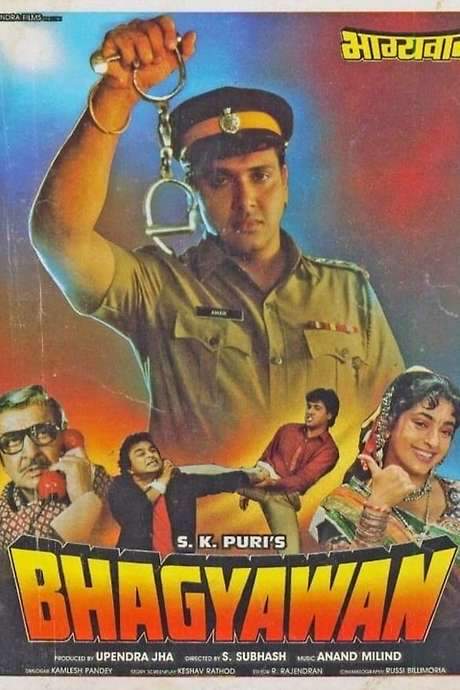
Women finding their voice like in Vyasanasametham Bandhumithradhikal

Bittersweet stories where women finally speak up against family and arranged futures. Movies like Vyasanasametham Bandhumithradhikal where a young woman pressured by arranged marriage, family control, or generational expectations finally claims her autonomy. If you were moved by Anjali's bittersweet liberation amid grief, these empowering stories of women's autonomy in Indian and world cinema will resonate just as deeply.

  • empowering
  • emotionally charged
  • cathartic
  • defiant
  • bittersweet
  • tense
  • Tone: bittersweet, empowering
  • Pacing: variable, character driven
Why these movies?

The story pattern: The protagonist usually begins as someone whose future has been quietly planned by elders, shaped by the weight of tradition. A triggering event—a death, a controlling partner, a public humiliation, or a family scandal—forces her to confront the gap between her own desires and the role assigned to her. Across the runtime she moves from silent compliance to vocal resistance, sometimes through open rebellion, sometimes through quiet self-determination. The story tends to end with bittersweet empowerment rather than easy triumph.

Why they belong together: These films center female autonomy against traditional pressures like arranged marriage, caste expectations, generational control, or controlling partners. They blend personal coming-of-age arcs with broader social critique, and remain emotionally heavy without becoming preachy. The endings often carry loss alongside liberation, making the protagonist's victory feel earned and human rather than neatly victorious.

Every angle

Vyasanasametham Bandhumithradhikal (2025) Explained: Plot, Timeline & Characters

Everything about Vyasanasametham Bandhumithradhikal in one place: what happens in the plot summary, the timeline in chronological order, the characters and meaning and a spoiler-free summary. What's After the Movie adds the cast, box office and post-credit scenes.

Coming soon on iOS and Android

The Plot Explained Movie Summary App

Plot summaries, endings explained and timelines on your phone. Catch up on any movie in minutes, save your favorites and never miss a twist again.

Be the first to know when we launch. Your email stays private, always.

Learn more about the app