Plot Explained Spoilers guaranteed!
Plot Explained

Browse by genre

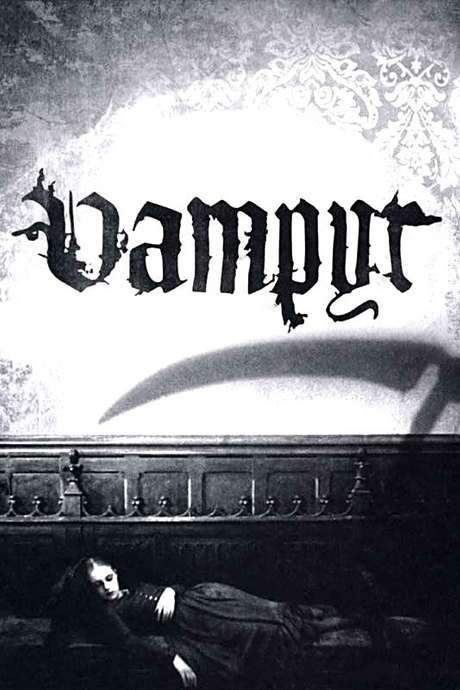
The Vampire (1957) movie poster

Timeline

The Vampire (1957) Timeline Explained – Every Event in Order

Release, runtime and language
1957 · 95 mins · Spanish
Directed by
Fernando Méndez
Starring
Germán Robles, Ariadna Welter, Carmen Montejo, Abel Salazar, José Luis Jiménez, Alicia Montoya

After her beloved aunt dies, a striking young Mexican woman travels back to her hometown to arrange the funeral. While there, unsettling rumors circulate about a vampire infestation in the community. As the whispers intensify, she begins to suspect that her surviving aunt and the enigmatic next‑door neighbor may be entangled in the darkness.

On this page (5)
  1. 1 Events in order (13)
  2. 2 Timeline questions answered
  3. 3 Movie threads
  4. 4 Movies like The Vampire
  5. 5 Every angle

13 events in order · contains spoilers

The Vampire Timeline: Events in Chronological Order

Every key event of The Vampire (1957) in order, scene by scene, with when and where it takes place. Use it to untangle flashbacks, time jumps and parallel storylines, to refresh your memory before the sequel or to find the exact scene you are thinking of.

  1. Campbell's vampire-bat blood experiments

    In San Francisco, Dr. Campbell has begun experimenting with vampire bat blood just before his death. After Campbell's passing, his colleague Paul Beecher discovers a bottle of pills among his effects, hinting at the controversial research behind the blood work.

    When
    Late evening (before his death)
    Where
    Campbell's laboratory, San Francisco
  2. Betsy substitutes pills with migraine tablets

    Betsy Beecher, the doctor’s daughter, accidentally substitutes the vampire-blood pills for her father's migraine tablets. The switch sets off the chain of events that will affect Paul and the course of the investigation.

    When
    That evening
    Where
    Beecher residence
  3. Paul Beecher's blackouts begin

    Driven by the pills, Paul begins experiencing blackouts that disrupt his medical work and judgment. The episodes foreshadow more dangerous consequences linked to Campbell’s experiments.

    When
    The following day
    Where
    Beecher household / hospital
  4. Marion Wilkins dies after Paul’s visit

    During a consultation with Marion Wilkins, who suffers from congenital heart problems, Paul feels unwell and asks her to return the next day. The following morning, Marion grows gravely ill and dies, with two puncture wounds found on her neck.

    When
    The following morning
    Where
    Marion Wilkins' home
  5. Paul returns to Campbell's lab; Beaumont and Winston brief him

    Paul returns to Campbell's lab and encounters Dr. Will Beaumont, the head of the university’s psychiatric department, accompanied by Henry Winston. Beaumont explains that Campbell's work involved regressing minds to a primitive state and reversing the process to advance intellect.

    When
    That evening
    Where
    Campbell's laboratory
  6. Henry Winston is found dead with puncture wounds

    The next morning, Henry Winston is mysteriously found dead, showing puncture wounds on the neck and tissue disintegration. Paul is unsettled by the deaths and the pattern he’s involved in.

    When
    The following morning
    Where
    Campbell's laboratory
  7. Paul struggles during an emergency surgery

    Paul is called to perform an emergency surgery but cannot focus due to the lingering effects of the pills, forcing him to leave the operating room. The incident underscores the growing danger of his condition.

    When
    During the day
    Where
    Hospital operating room
  8. Betsy safety plan and Will's bottle-guarded pills

    Realizing the murders may be his own doing, Paul arranges for Betsy to stay with an aunt for safety. He confronts Dr. Beaumont’s associate Will, who locks the pill bottle in a drawer to prevent access.

    When
    That night
    Where
    Will's laboratory
  9. Paul transforms into a vampire and murders Will

    During the night, Paul transforms into a vampire and murders Will, disposing of his body in a furnace. The crime intensifies the mystery around the pills and Paul's own humanity.

    When
    The night
    Where
    Will's laboratory
  10. Sheriff Buck Donnelly investigates and finds evidence

    Sheriff Buck Donnelly visits the lab and, suspecting Will’s experiments, discovers an audio recorder containing a recording of Will’s murder. The recording confirms foul play and implicates Paul.

    When
    The following day
    Where
    University laboratory
  11. Nurse Carol Butler confronts Paul and witnesses a transformation

    Nurse Carol Butler visits Paul's office and notices a vial of poison. She realizes Paul may intend suicide and witnesses his transformation into a vampire before escaping.

    When
    That afternoon
    Where
    Paul's office
  12. Carol flees through the woods; Buck pursues

    Carol flees into a nearby wood with Paul in pursuit, and Buck Donnelly follows, preparing to intervene as the danger escalates.

    When
    Evening
    Where
    Nearby woods
  13. Officer Ryan shoots Paul; death and transformation reversal

    Officer Ryan arrives and shoots Paul, who falls into a shallow culvert. As he dies, his monstrous body reverts to his ordinary appearance, ending the threat.

    When
    Evening
    Where
    Roadside culvert

Last updated: December 06, 2025 at 16:32

Was this helpful?

Timeline questions answered

The Vampire Timeline Explained: Your Questions Answered

When does it happen, and why in that order? The questions people ask about the chronology of The Vampire (1957): time jumps, flashbacks, cause and effect between scenes and the correct order of events, each answered with spoilers.

Q1

Why does Paul become a vampire?

Paul becomes a vampire after accidentally ingesting pills containing vampire bat blood. His colleague Dr. Campbell had been experimenting with vampire bat blood before his death, and Paul obtained the pills from Campbell's belongings. Paul's daughter Betsy mistakenly swapped these experimental pills for her father's migraine tablets, causing Paul to consume the vampire blood concoction that triggers his transformation.

Foreshadowing: Dr. Campbell's late-night experiments with vampire bat blood establish the supernatural element early in the film.

  • paul beecher
  • vampire transformation
  • vampire bat blood
  • pills
  • dr campbell
Q2

How did Betsy switch the pills?

Betsy accidentally substituted the vampire blood pills for her father's migraine tablets. She did not know the pills were experimental and believed she was helping her father by giving him what she thought were his regular migraine medications. This innocent mistake sets the entire chain of tragic events in motion.

  • betsy beecher
  • pill swap
  • migraine tablets
  • accident
Q3

What causes Paul's blackouts?

Paul's blackouts are caused by the vampire bat blood pills affecting his mind and body. The pills gradually induce a split personality state where Paul loses consciousness and transforms into a vampire, committing murders he cannot remember. These blackouts become more frequent and intense as the story progresses until his transformations become fully visible during the full moon.

Foreshadowing: The blackouts begin immediately after Paul takes the pills, foreshadowing the deeper psychological and physical transformation to come.

  • paul beecher
  • blackouts
  • vampire transformation
  • memory loss
Q4

Why does Paul kill people during blackouts?

Paul kills people during blackouts because the vampire blood pills cause him to transform into a vampire while unconscious. He has no control or memory of these episodes. The murders of Marion Wilkins and Henry Winston occur during these blackouts, with Paul attacking victims and draining their blood through puncture wounds on their necks, exactly like vampire attacks.

  • murder
  • vampire attacks
  • puncture wounds
  • marion wilkins
  • henry winston
Q5

What was Dr. Campbell trying to achieve with his experiments?

Dr. Campbell was conducting research to regress minds to a primitive state and then reverse the process, believing this method could unlock new levels of human intellect. His work with vampire bat blood was part of this controversial research into advancing human intelligence through regression and restoration.

Foreshadowing: The mention of Campbell's work being overseen by the psychiatric department suggests the experiments were meant to impact the mind fundamentally.

  • dr campbell
  • experiments
  • mind regression
  • intelligence
  • vampire bat blood
Q6

How does the Sheriff discover Paul's guilt?

Sheriff Buck Donnelly discovers Paul's guilt by investigating Will Beaumont's laboratory and finding an audio recorder containing a recording of Will's murder. The recording provides concrete evidence that implicates Paul in the killing, confirming what the investigation had been building toward.

  • sheriff buck donnelly
  • evidence
  • audio recording
  • will beaumont
  • investigation
Q7

What happens when Paul transforms into a vampire?

When Paul transforms into a vampire, his physical appearance changes to a monstrous form. He becomes violent and predatory, attacking and killing victims. The transformation is triggered by the vampire blood pills and becomes complete during the full moon. During the final confrontation, Paul pursues Carol Butler through the woods in his vampire form before being shot.

Foreshadowing: The background detail of the growing full moon coincides with Paul's transformation manifesting in its most brutal and undeniable form.

  • vampire form
  • monster
  • transformation
  • full moon
  • pursuit
  • carol butler
Q8

Why does Paul's body return to normal after death?

When Paul is shot and dies, his monstrous vampire body reverts to his ordinary human appearance. This reversal suggests the vampire transformation was caused by the pills rather than being a natural vampiric state. The curse appears to be tied to his living body, and upon death, the supernatural effect ends, leaving only his normal corpse.

  • death
  • transformation reversal
  • corpse
  • vampire curse
Q9

What happens to Marion Wilkins?

Marion Wilkins dies after Paul visits her for a consultation about her congenital heart problems. During the appointment, Paul feels unwell and asks her to return the next day. The following morning, Marion becomes gravely ill and dies, found with two puncture wounds on her neck. This is the first vampire-style killing linked to Paul's blackouts.

Foreshadowing: Paul feeling unwell during the consultation hints at the pills already affecting him.

  • marion wilkins
  • death
  • puncture wounds
  • heart condition
Q10

Why does Paul leave the surgery mid-procedure?

Paul is called to perform an emergency surgery but cannot concentrate due to the lingering effects of the vampire blood pills. The mental fog and physical effects from his condition force him to abandon the operation, demonstrating how deeply his condition is affecting his abilities as a surgeon and his judgment.

  • surgery
  • hospital
  • impairment
  • abandonment
Q11

What does Nurse Carol Butler witness?

Nurse Carol Butler visits Paul's office and discovers a vial of poison, leading her to believe Paul may be contemplating suicide. Her concern escalates when she witnesses Paul's sudden transformation into a vampire right before her eyes. She flees as Paul pursues her through the nearby woods.

  • carol butler
  • witness
  • vampire transformation
  • poison
  • pursuit

Movie threads

More Movies Like The Vampire, by Mood & Story

Curated lists built around what makes The Vampire tick: the same mood, the same kind of story or the same emotional payoff. Each list explains why these movies belong together.

Movies about the monster within like The Vampire

Stories where characters battle a terrifying darkness emerging from inside themselves. If you liked The Vampire's theme of a good person becoming the monster, you'll find similar stories here. These movies explore psychological horror from within, focusing on tragic transformations, loss of control, and the chilling realization that the enemy is oneself. They share a dark tone and heavy emotional weight.

  • psychological
  • fatalistic
  • tragic
  • uneasy
  • chilling
  • paranoid
  • Tone: dark, tragic, fatalistic
  • Pacing: steady, escalating
Why these movies?

The story pattern: Narratives in this thread typically follow a linear, inevitable path as a protagonist uncovers a horrifying truth about their own identity or actions. The conflict is internal and external, as they grapple with guilt while often being pursued by forces outside their control, leading to a tragic and somber conclusion.

Why they belong together: These films are grouped by their central theme of internal monstrosity and the psychological horror that accompanies it. They share a dark, fatalistic tone, a steady pacing that builds dread, and a heavy emotional focus on tragedy, guilt, and the loss of humanity.

Gothic horror movies with a gloomy atmosphere like The Vampire

Atmospheric tales where a creeping supernatural threat leads to a bleak fate. For viewers who enjoyed the gothic, fatalistic dread of The Vampire, this collection highlights similar films. Discover movies with a suspenseful and claustrophobic mood, where supernatural threats create a sense of paranoia and stories move with steady pacing towards a sad or bleak ending.

  • gothic
  • suspenseful
  • claustrophobic
  • fatalistic
  • chilling
  • uneasy
  • Tone: dark, suspenseful, bleak
  • Pacing: steady, deliberate
Why these movies?

The story pattern: These narratives often begin with rumors or a subtle unease that gradually intensifies into a confirmed supernatural threat. The plot follows a logical, steady escalation of events, trapping characters in a web of fear and suspicion from which there is no happy escape, reinforcing a theme of inevitable doom.

Why they belong together: Movies in this thread share a cohesive gothic vibe defined by a dark tone, steady pacing, and a high-intensity feeling of dread. They are united by their use of supernatural elements to create paranoia, a claustrophobic atmosphere, and ultimately, a heavy, tragic emotional payoff.

If you liked this

Movies Like The Vampire

Similar movies to The Vampire: the same genre, themes or kind of story. Each one comes with its own plot summary, timeline and ending explained.

Browse all movie summaries

Every angle

The Vampire (1957) Explained: Plot, Timeline & Characters

Everything about The Vampire in one place: what happens in the plot summary, the timeline in chronological order, the characters and meaning and a spoiler-free summary. What's After the Movie adds the cast, box office and post-credit scenes.

Coming soon on iOS and Android

The Plot Explained Movie Summary App

Plot summaries, endings explained and timelines on your phone. Catch up on any movie in minutes, save your favorites and never miss a twist again.

Be the first to know when we launch. Your email stays private, always.

Learn more about the app