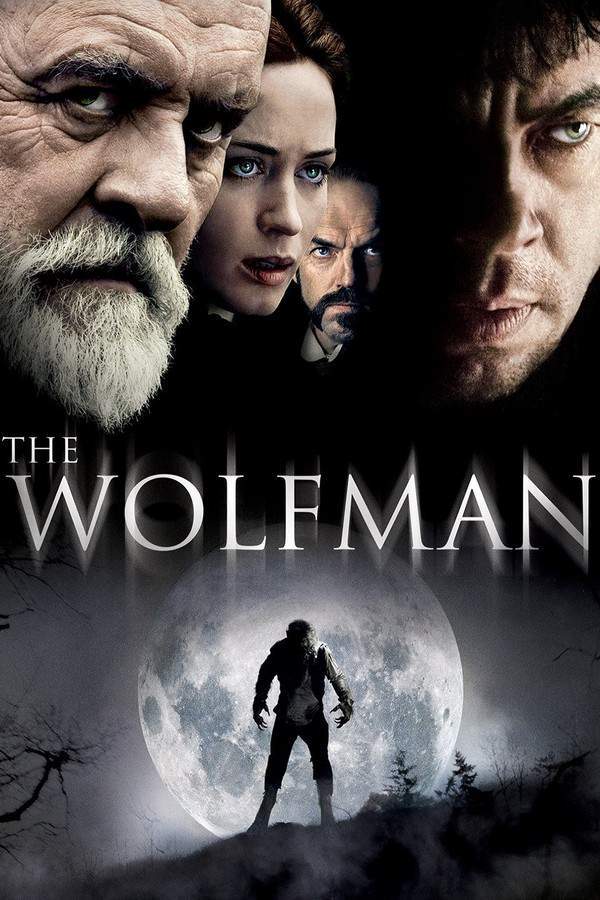
Larry Talbot returns to his ancestral home in Llanwelly, Wales, to bury his recently deceased brother and reconcile with his estranged father, Sir John Talbot. The old manor town feels wrapped in mist, and the homecoming stirs both memory and unease as he steps back into a world where family duty, superstition, and a lurking darkness collide. The town’s quiet rhythm hides a history of fear that shadows every step he takes.
He soon finds himself drawn to a local woman who runs an antique shop, Gwen Conliffe. Their growing affection becomes a bright thread in a town that’s used to keeping secrets, and to win her heart, he buys a walking stick carved with a silver wolf’s head, a detail that seems charming at first but carries a troubling weight. Gwen explains that the wolf motif carries a darker meaning—a werewolf, a man who shifts into a wolf “at certain times of the year”—and she warns that the next victim bears a palm marked with a pentagram. The village elders recite a somber poem whenever the word werewolf is spoken, a ritual of superstition that chills Larry’s blood even as his feelings for Gwen deepen.
Despite Gwen’s initial reticence about dating, the two meet that night, and they are joined by Gwen’s friend Jenny for a session of fortune-telling. The Romani fortuneteller, Bela, senses a pentagram and urges Jenny to leave quickly. While they wait for their turns, Larry and Gwen step outside; Jenny is suddenly attacked by a wolf. Larry fights to save her and kills the assailant with the silver-headed walking stick, but the crime scene leaves a chilling trail: Jenny is found dead, Bela is battered, and Larry’s chest bears a wound that has mysteriously healed by morning. The authorities point to a wolf as the killer, and the obvious gap in Larry’s story—his wound vanished, and the couple’s absence from the scene—feeds a web of suspicion that spirals into whispers of adultery. The town turns on the lovers, making them social pariahs who must contend with fear, rumor, and the pain of a bond that defies easy explanations.
The truth surfaces in a harsh revelation: Maleva, Bela’s mother, explains that Bela was the wolf who bit Larry, and that the bite has infected him with a curse—he is now a werewolf too. Silver is the only thing that can kill a werewolf, she declares, and she gives Larry a charm to keep the transformation at bay. Unable to trust the danger of living with a curse, Larry entrusts Gwen with the charm for protection.
As predicted, the transformation comes on the following night. Larry shifts into a humanoid wolf and commits another killing, then returns to human form with no memory of the act. The people grow more frightened and reckless, setting traps and pursuing the creature they believe stalks the village. Maleva uses a spell to temporarily restore Larry to his human self, allowing him to escape before the hunting party closes in.
Facing the nightmare with mounting despair, Larry decides to flee Llanwelly. When he says goodbye to Gwen, the looming threat becomes personal once more: the pentagram reappears on her palm. He confesses to his father that he is a werewolf who killed Bela and the villager, but Sir John refuses to believe him, insisting the accusation is madness. In a tragic twist that binds duty and fear, the moon rises and Larry cannot resist his curse. He breaks free from his restraints and attacks Gwen. Not recognizing his own son in the feral form, Sir John strikes the werewolf with Larry’s silver-headed cane. Maleva’s magic returns to temporarily restore the beast to human form, and as dawn nears, the horror is laid bare: the creature dies, leaving behind Larry’s lifeless human body. The Talbot family’s tragedy closes with the realization that fear and superstition have claimed more lives than any wolf ever could.