


Plot Explained Spoilers guaranteed!
Plot Explained

Browse by genre

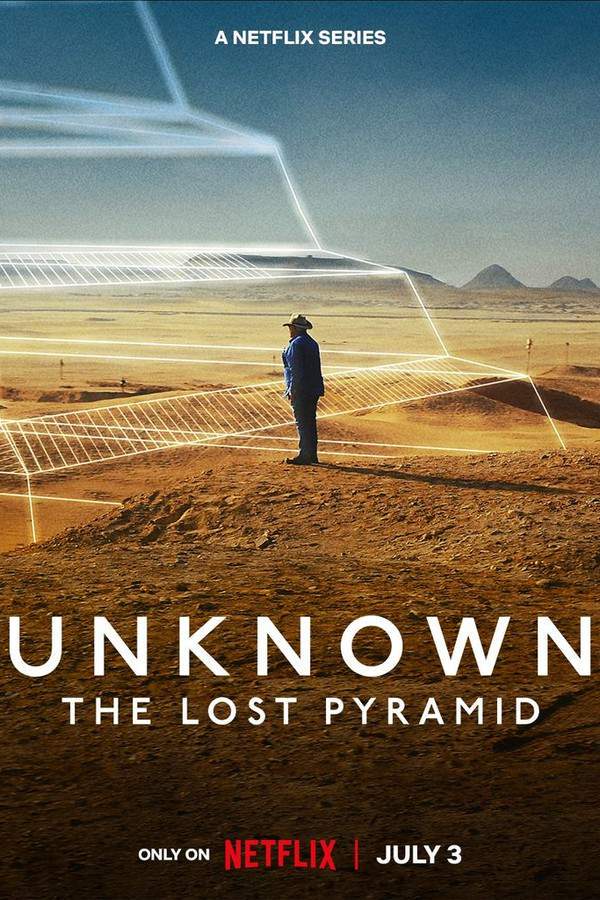
Unknown: The Lost Pyramid (2023) movie poster

Timeline

Unknown: The Lost Pyramid (2023) Timeline Explained – Every Event in Order

Release, runtime and language
2023 · 83 min · English
Echo score 68
JustWatch #18,492
Directed by
Max Salomon
Starring
Afaf Wahba, Ammar El-Amir Sadeq, Ashraf Mohi El Din, Essam Shehab, Hamada Shehata Ahmed Mansour, Mohamed Youssef

In the Saqqara desert, renowned archaeologist Dr. Zahi Hawass pursues the legend of a lost pyramid hidden beneath the sands. Simultaneously, his protégé and rival, Dr. Mostafa Waziri, searches for an undisturbed tomb within an ancient necropolis. The two Egyptology experts find themselves competing for discovery in a thrilling quest to unearth history’s secrets.

On this page (6)
  1. 1 Where to watch
  2. 2 Events in order (14)
  3. 3 Timeline questions answered
  4. 4 Movie threads
  5. 5 Movies like Unknown: The Lost Pyramid
  6. 6 Every angle

Where to watch

Where to Watch Unknown: The Lost Pyramid (2023)

Where can you watch Unknown: The Lost Pyramid? Stream, rent or buy it in the US, including on Netflix and Netflix Standard: current JustWatch availability with up-to-date prices.

Streaming availability powered by JustWatch

14 events in order · contains spoilers

Unknown: The Lost Pyramid Timeline: Events in Chronological Order

Every key event of Unknown: The Lost Pyramid (2023) in order, scene by scene, with when and where it takes place. Use it to untangle flashbacks, time jumps and parallel storylines, to refresh your memory before the sequel or to find the exact scene you are thinking of.

  1. Dr. Hawass's Mission Begins

    Dr. Zahi Hawass embarks on a significant archaeological journey aimed at discovering the pyramid of Huni, the last Pharaoh of Egypt’s Third Dynasty. He believes that finding this burial site will solidify his legacy and contribute to the historical narrative of ancient Egypt.

  2. Hawass's Reluctance

    Initially, Hawass hesitated to pursue a career in archaeology due to the predominant presence of foreign researchers in Egyptian history. He strongly believed that Egyptians should take charge of revealing and preserving their own heritage, as many artifacts were being removed from the country by outsiders.

  3. Excavation Commences

    Hawass and his dedicated team undertake a rigorous nine-month excavation, hoping to uncover vital aspects of Egypt's history. Simultaneously, Mostafa Waziri, his protégé, conducts an excavation at a nearby site known as Bubasteion, following a previous discovery of significant artifacts.

    Where
    Bubasteion
  4. Discovery of the Eye of Horus

    During their excavation, the team finds a shaft which, upon exploration, reveals the Eye of Horus. This exciting discovery indicates the presence of potential coffins, leading to hopes of unearthing an entire burial chamber filled with sarcophagi.

  5. Crucial Limestone Quarry Found

    Hawass's team uncovers an important limestone quarry that supports his theory that Huni's pyramid is located in Gisr-El-Mudir. This discovery, along with the finding of nine statues of elite members from Egyptian history, hints at the existence of a nearby royal necropolis.

    Where
    Gisr-El-Mudir
  6. Inspiration from Howard Carter

    Hawass reflects on the inspiration drawn from the famous archaeologist Howard Carter, who spent five years locating King Tutankhamun's tomb. Hawass embraces Carter's lessons of patience and persistence as he continues the search for Huni's pyramid.

  7. Finding the Skeleton

    After confirming that a tomb hasn’t been disturbed, Hawass’s team discovers a sarcophagus containing a deformed skeleton, likely due to the rudimentary mummification methods of the Old Kingdom. Understanding its context, he decides to leave the coffin intact to preserve its integrity.

  8. Another Significant Coffin Discovered

    As the excavation nears completion, the team finds a newly sealed coffin belonging to a woman named Nebet Hut. Remarkably well-preserved for over 4,300 years, this find includes vibrant blue-green ornaments, adding to the excitement of the discoveries made during the project.

  9. Hawass's Assertion

    Hawass declares that Nebet Hut's mummy might be the oldest and best-preserved found in Egypt. The artifacts suggest a link to royal lineage, indicating that Huni's burial site could be situated nearby, further fueling the hopes of the archaeological team.

  10. Waziri's Tomb Discovery

    Meanwhile, Mostafa Waziri uncovers the entrance to a well-preserved tomb filled with coffins and protective ancient statues. His team's efforts to remove these statues reveal the complexity and intricacies of ancient Egyptian burial practices.

  11. Unveiling of Unique Artifacts

    Upon examining a wooden coffin belonging to an individual named Ahmose, Waziri discovers a bronze statuette of a cat, a gold amulet with a bird head, and remarkably, a well-preserved papyrus. This papyrus later turns out to be the Waziri papyrus, featuring chapters from 'The Book of Death'.

  12. Restoration of the Waziri Papyrus

    The nine-meter long Waziri papyrus, containing 113 chapters that encapsulate ancient Egyptian beliefs, undergoes a meticulous restoration over three weeks. This significant find sheds light on the beliefs and rituals surrounding death in ancient Egypt.

  13. Hope for Huni's Pyramid

    As the excavation team pushes forward, Hawass remains optimistic that significant global attention will soon be on his efforts to discover Huni's pyramid. The documentary highlights their aspirations to rewrite history by illuminating the past while nurturing the future of archaeology in Egypt.

  14. Conclusion of the Excavation

    Despite numerous challenges throughout their final month of excavation, the team maintains high morale, driven by the prospect of unveiling monumental discoveries. Their shared respect for history binds Hawass and Waziri in a profound quest to uncover Egypt's rich heritage.

Last updated: October 25, 2024 at 10:47

Was this helpful?

Timeline questions answered

Unknown: The Lost Pyramid Timeline Explained: Your Questions Answered

When does it happen, and why in that order? The questions people ask about the chronology of Unknown: The Lost Pyramid (2023): time jumps, flashbacks, cause and effect between scenes and the correct order of events, each answered with spoilers.

Q1

Why was Dr. Hawass initially reluctant to pursue a career in archaeology?

Dr. Hawass was reluctant because most researchers in Egyptian history were foreigners at the time. He strongly believed that Egyptians should take the initiative in uncovering and preserving their own heritage, as many artifacts unearthed by foreign archaeologists were being transported out of the country. This sense of national responsibility drove him to pursue archaeology.

Foreshadowing: Earlier in his career, Hawass witnessed foreign-led excavations removing Egyptian artifacts, which shaped his conviction about the importance of local Egyptologists.

  • zahi hawass
  • archaeology career
  • egyptian heritage
  • foreign archaeologists
Q2

How did the discovery of the limestone quarry support Hawass's theory about Huni's pyramid?

The discovery of the limestone quarry at Gisr-El-Mudir reinforced Hawass's theory because pyramids were historically constructed near quarries to streamline material transportation. The finding of nine statues belonging to Egypt's elite near the quarry suggested a royal necropolis was nearby, as high-ranking officials were typically buried adjacent to pharaohs. This increased confidence that Huni's pyramid might also be located there.

Foreshadowing: The placement of elite statues near the quarry mirrored historical patterns of necropolis development around royal burial sites.

  • hunis pyramid
  • limestone quarry
  • gisr-el-mudir
  • pyramid construction
  • royal necropolis
Q3

Why did Hawass decide to leave the deformed skeleton in the coffin intact?

Hawass chose to leave the coffin sealed because the skeleton had undergone significant deformation due to the rudimentary mummification methods used during the Old Kingdom period. Recognizing the damage that would occur if the coffin were opened, he decided to preserve its integrity rather than disturb the remains.

Foreshadowing: The decision reflected lessons from Howard Carter's patient approach to preserving discovered tombs.

  • deformed skeleton
  • old kingdom mummification
  • tomb preservation
  • sarcophagus
Q4

Why is Nebet Hut's mummy considered the oldest and best-preserved in Egypt?

Nebet Hut's remains were preserved exceptionally well for over 4,300 years, with ornaments retaining their vibrant blue-green hues. Hawass asserted this might be the oldest and best-preserved mummy ever found in Egypt. The gilded cane found among the artifacts suggested she held a significant position, likely linked to royal lineage, indicating that a pharaoh's burial site might be nearby.

Foreshadowing: The discovery of elite statues earlier in the excavation hinted at a royal necropolis, making Nebet Hut's high-status burial consistent with that pattern.

  • nebet hut
  • mummy preservation
  • oldest mummy
  • egyptian royal lineage
  • gilded cane
Q5

What is the Waziri papyrus and why is it historically significant?

The Waziri papyrus is a nine-meter scroll discovered in the tomb belonging to an individual named Ahmose. It contains 113 chapters from "The Book of Death," representing one of the most well-maintained records of ancient Egyptian beliefs about death and the afterlife. This unprecedented find among ancient Egyptian scrolls provides exceptional insight into funerary beliefs and rituals.

Foreshadowing: The unfamiliar objects found near the coffin hinted at unique burial practices that the papyrus would later help explain.

  • waziri papyrus
  • book of death
  • ancient egyptian beliefs
  • afterlife
  • funerary rituals
Q6

Why were the protective statues in Waziri's tomb significant and what was their purpose?

The protective statues were essential in ancient Egyptian burial practices, as they were meant to guard the deceased in the afterlife. The strange, unfamiliar objects found littering the area had no written records explaining their purpose, rendering their exact function enigmatic. The team needed to remove these fragile artifacts before accessing the coffins, and conservators spent over ten days restoring them.

Foreshadowing: The unusual nature of these objects reflected the tomb's unique character compared to other discovered burial sites.

  • protective statues
  • ancient egyptian burial
  • afterlife guardians
  • tomb restoration
  • conservation
Q7

Why was the discovery of the Eye of Horus significant during the excavation?

The Eye of Horus discovery was significant because it indicated the presence of potential coffins in the shaft. This promising sign led to hopes of uncovering an entire burial chamber filled with sarcophagi, suggesting the team had found a significant burial site that might contain well-preserved artifacts and remains.

Foreshadowing: The Eye of Horus symbol traditionally represented protection and regeneration, aligning with ancient Egyptian burial customs.

  • eye of horus
  • burial chamber
  • sarcophagi
  • ancient egyptian symbols
Q8

Why was discovering the pyramid of Huni so important for Egyptian history?

Huni was the last Pharaoh of Egypt's Third Dynasty and a pivotal figure from the Old Kingdom, yet very little is known about him. Unlike other pharaohs from the same period who built their tombs at Saqqara, the location of his pyramid remained a mystery for approximately 4,500 years. Finding his burial site would be essential for understanding Egypt's historical narrative and filling a major gap in knowledge about the Third Dynasty.

Foreshadowing: Hawass drew inspiration from Howard Carter's five-year search for King Tutankhamun's tomb, demonstrating the patience required for such significant discoveries.

  • hunie
  • third dynasty
  • old kingdom
  • saqqara
  • pharaoh pyramid
  • egyptian history
Q9

Why did the discovery of nine elite statues suggest a royal necropolis was nearby?

The nine statues belonged to members of Egypt's elite and were found in pristine condition, indicating they had not been looted. In ancient Egypt, it was common for high-ranking officials to be buried adjacent to a pharaoh's tomb. Therefore, the discovery suggested a royal necropolis was situated nearby, increasing the likelihood that Huni's pyramid might also remain undisturbed.

Foreshadowing: This discovery paralleled historical patterns where elite burials surrounded royal pyramid complexes.

  • elite statues
  • royal necropolis
  • tomb looting
  • ancient egyptian officials
Q10

How did Howard Carter's approach influence Hawass's excavation method?

Howard Carter, the famous English archaeologist, took five years to locate King Tutankhamun's tomb. Hawass adopted Carter's lesson of patience and resolve throughout his nine-month excavation. This approach led to the confirmation of a tomb's untouched status before proceeding with discoveries, ensuring the integrity of the findings was preserved.

Foreshadowing: Carter's methodical approach became a guiding principle for Hawass throughout the documentary's excavation process.

  • howard carter
  • king tutankhamun
  • patience archaeology
  • tomb discovery method
Q11

Why was the bronze cat statuette discovered in Ahmose's coffin significant?

The bronze cat statuette was found alongside a gold amulet depicting a bird with a human head in Ahmose's wooden coffin. These artifacts represented important religious and protective symbols in ancient Egyptian culture. Cats were associated with the goddess Bastet and symbolized protection, while the falcon-headed figure likely represented Horus or another deity, indicating the deceased's connection to divine protection in the afterlife.

Foreshadowing: The presence of multiple protective artifacts suggested this was a burial of significant religious importance.

  • bronze cat
  • ahmuose coffin
  • bastet
  • egyptian amulets
  • protective symbols
Q12

How did Dr. Hawass's mission differ from Dr. Waziri's excavation?

Dr. Hawass pursued the legendary pyramid of Huni, the last Pharaoh of Egypt's Third Dynasty, at Gisr-El-Mudir, seeking a discovery that would solidify his legacy. Meanwhile, his protégé Dr. Waziri searched for an undisturbed tomb within the ancient necropolis at Bubasteion, following the earlier discovery of Wahtye's tomb. Their parallel missions represented different approaches to advancing Egyptian archaeology, one focused on locating a pharaoh's burial, the other on uncovering a noble's tomb.

Foreshadowing: Both archaeologists were driven by different but complementary goals that together advanced the understanding of ancient Egyptian burial practices.

  • zahi hawass
  • mostafa waziri
  • archaeological mission
  • burial site comparison

Movie threads

More Movies Like Unknown: The Lost Pyramid, by Mood & Story

Curated lists built around what makes Unknown: The Lost Pyramid tick: the same mood, the same kind of story or the same emotional payoff. Each list explains why these movies belong together.

Movies about academic discovery like Unknown: The Lost Pyramid

Stories focused on the patient, meticulous process of uncovering history and knowledge. If you enjoyed the patient, intellectual journey of discovery in Unknown: The Lost Pyramid, explore these other films focused on academic quests, historical research, and groundbreaking scientific finds. These movies capture the meticulous process and hopeful excitement of uncovering new knowledge.

  • discovery
  • academic
  • meticulous
  • patient
  • reverent
  • hopeful
  • Tone: hopeful, reverent, academic
  • Pacing: steady, methodical
Why these movies?

The story pattern: These narratives typically follow a linear, goal-oriented structure centered on a specific quest for knowledge or artifact. The journey is driven by curiosity and expertise, often involving procedural steps, setbacks, and ultimately, a rewarding breakthrough that validates the effort and passion of the characters.

Why they belong together: Movies in this thread are united by their focus on the intellectual and procedural aspects of discovery. They share a hopeful tone, a steady pacing that reflects careful work, and a medium emotional weight derived from professional passion and the significance of the find, rather than deep personal drama.

Movies with professional rivalry like in Unknown: The Lost Pyramid

Where competition fuels a shared passion for achieving a greater goal. Fans of the compelling dynamic between the Egyptologists in Unknown: The Lost Pyramid will enjoy these films about professional rivalry and collaboration in fields like science, history, and exploration. These stories balance competitive drive with a unifying passion for discovery.

  • professional rivalry
  • collaboration
  • dedication
  • competitive
  • respectful
  • shared goal
  • Tone: hopeful, competitive, respectful
  • Pacing: steady, process-driven
Why these movies?

The story pattern: The narrative often follows two or more parties working on similar or connected goals, with their rivalry creating a source of mild tension and momentum. However, the conflict is typically professional and respectful, ultimately serving to highlight their shared dedication and leading to a mutually satisfying or historically significant conclusion.

Why they belong together: These movies share a specific dynamic: a medium intensity derived from professional competition, balanced by a hopeful tone centered on collective achievement. The pacing is steady, focusing on process, and the ending feel is positive, emphasizing the result of the combined efforts.

If you liked this

Movies Like Unknown: The Lost Pyramid

Similar movies to Unknown: The Lost Pyramid: the same genre, themes or kind of story. Each one comes with its own plot summary, timeline and ending explained.

Browse all movie summaries

Every angle

Unknown: The Lost Pyramid (2023) Explained: Plot, Timeline & Characters

Everything about Unknown: The Lost Pyramid in one place: what happens in the plot summary, the timeline in chronological order, the characters and meaning and a spoiler-free summary. What's After the Movie adds the cast, box office and post-credit scenes.

Coming soon on iOS and Android

The Plot Explained Movie Summary App

Plot summaries, endings explained and timelines on your phone. Catch up on any movie in minutes, save your favorites and never miss a twist again.

Be the first to know when we launch. Your email stays private, always.

Learn more about the app