Plot Explained Spoilers guaranteed!
Plot Explained

Browse by genre

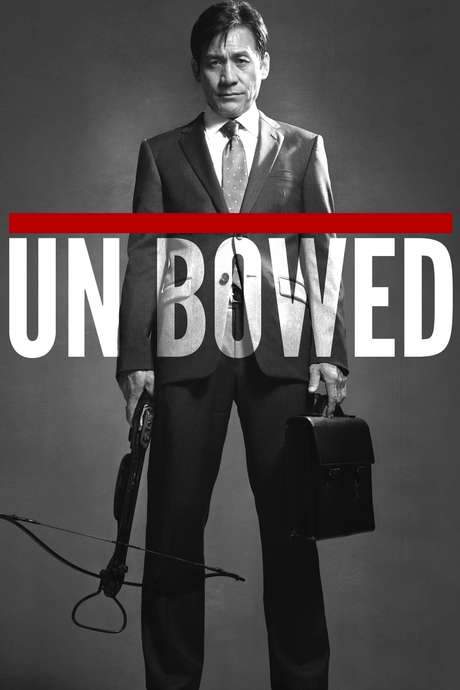
Unbowed (2011) movie poster

Timeline

Unbowed (2011) Timeline Explained – Every Event in Order

Release, runtime and language
2011 · 100 mins · Korean
Loading streaming availability…
Directed by
Chung Ji-young
Starring
Kim Eung-soo, Ahn Sung-ki, Park Won-sang, Jin Kyung, Park Gil-su, Na Young-hee

A conscientious professor finds himself pitted against a corrupt judicial system when he is charged with assault after firing a crossbow at the judge presiding over his appeal of an unjust dismissal. Inspired by the true story of Kim Kyung‑ho, the film examines the clash between law‑abiding citizens and judges who abuse their authority.

On this page (5)
  1. 1 Where to watch
  2. 2 Events in order (12)
  3. 3 Timeline questions answered
  4. 4 Movie threads
  5. 5 Every angle
Loading streaming availability…

12 events in order · contains spoilers

Unbowed Timeline: Events in Chronological Order

Every key event of Unbowed (2011) in order, scene by scene, with when and where it takes place. Use it to untangle flashbacks, time jumps and parallel storylines, to refresh your memory before the sequel or to find the exact scene you are thinking of.

  1. Kim exposes a flaw in the College Scholastic Ability Test

    In 1995, Kim publicly reveals a flaw in the exam, igniting a national debate about the fairness of the test and the professors who drafted it. The controversy overshadows his research achievements and he is denied tenure and forced to resign. Facing limited prospects at home, he moves to the United States to seek opportunities abroad.

    When
    1995
    Where
    South Korea (university setting)
  2. Return home as laws change

    After amendments allow rejected professors to file wrongful dismissal lawsuits, Kim returns to South Korea to renew his challenge. The return marks a shift from exile to active legal pursuit, though the path remains fraught with institutional resistance. He reenters the Korean legal arena in hopes of vindication.

    When
    mid- to late-1990s
    Where
    South Korea
  3. Confrontation outside the judge's residence

    By 2007, exhausted of typical appeals, Kim confronts the appeals judge outside the judge’s residence, bringing along a sporting cross-bow that reflects a personal hobby. A physical struggle ensues and Kim is arrested. The judge reappears with a minor abdominal puncture, sparking intense media attention and a public debate about accountability.

    When
    2007
    Where
    Outside the judge's residence (South Korea)
  4. Media frenzy and public debate

    Assault on a judge is treated as a grave crime, drawing widespread media and public attention. Kim becomes a focal point in a broader conversation about justice, merit, and institutional protection, polarizing opinion across society.

    When
    2007
    Where
    South Korea (media attention)
  5. Park Won-sang approached

    Park Won-sang, a debt-ridden lawyer, is approached by Kim’s wife to take the case. He hesitates due to his own struggles with alcohol, and the situation becomes more complex when Kim’s wife wavers on his involvement. The case then enters a new phase with Park as a potential ally.

    When
    2007
    Where
    Kim's home / Seoul
  6. A new advocate and a contested trial

    Kim’s trial proceeds with a different legal advocate, but he ultimately pleads No Contest, citing prejudice and dishonesty from the trial judge. The decision reflects his distrust of the process rather than an admission of guilt. The plea sets the stage for a prolonged appellate battle.

    When
    Post-2007
    Where
    Courtroom, Seoul
  7. In prison, Kim appeals; Jang's plan

    While incarcerated, Kim files for an appeal and, at journalist Jang’s suggestion, hires Park to rebuild his challenge to the prosecution’s narrative. He continues to argue his case from confinement, repeatedly invoking constitutional rights and court rules to scrutinize the prosecution’s evidence.

    When
    During imprisonment (late 2000s)
    Where
    Prison, South Korea
  8. Judicial delays and obstructions

    As hearings progress, the appeals judge resigns rather than render a ruling favorable to Kim. A new appeals judge appears determined to shield the prosecutor, making it clear that Kim never fired the weapon, yet the pursuit of truth continues against institutional inertia.

    When
    During appeal
    Where
    Courtroom, South Korea
  9. Contradictory timelines and questions about the investigation

    The victim’s account clashes with the timeline, with reports suggesting the victim stabbed himself after Kim's arrest and blood-stained clothes allegedly obtained later. These discrepancies raise serious questions about the case’s investigations and the reliability of key testimony.

    When
    During appeal
    Where
    Courtroom/press, South Korea
  10. Public protests and Park’s precarious move

    Public sentiment swings between protests for Kim’s innocence and demands for a verdict aligned with the prosecution. In a moment of protest, Park contemplates pouring water on the appeals judge, but journalist Jang intervenes to prevent disorder and preserve order.

    When
    During appeal
    Where
    Outside the appeals court, media attention
  11. Prison rape and its aftermath

    Kim’s ordeal intensifies when he is raped in prison by another inmate, highlighting systemic vulnerabilities for prisoners who challenge powerful institutions. This traumatic event strengthens his resolve to seek transparency and accountability, even at personal cost.

    When
    During imprisonment
    Where
    Prison
  12. Verdict, release, and lifelong advocacy

    The appeal is denied, and Kim receives a four-year sentence instead of ten. While in prison, he continues to argue his case and, upon release, dedicates himself to judicial transparency and accountability for future generations.

    When
    Post-appeal; release year unspecified
    Where
    Prison; after release

Last updated: October 09, 2025 at 16:56

Was this helpful?

Timeline questions answered

Unbowed Timeline Explained: Your Questions Answered

When does it happen, and why in that order? The questions people ask about the chronology of Unbowed (2011): time jumps, flashbacks, cause and effect between scenes and the correct order of events, each answered with spoilers.

Q1

Why was Kim denied tenure after exposing the test flaw?

Kim was denied tenure because exposing the flaw in the College Scholastic Ability Test publicly humiliated the professors who drafted it. Despite having strong research credentials, the institution prioritized protecting its own rather than rewarding academic integrity. This decision forced him to resign and ultimately led him to leave South Korea for the United States.

Foreshadowing: The film establishes early that institutional protection outweighs merit, setting up Kim's later conflict with the judicial system.

  • tenure denial
  • exposed test flaw
  • university
  • academic integrity
  • institutional protection
Q2

Why did Kim confront the judge with a crossbow?

By 2007, Kim had exhausted all legal appeals and felt the system was fundamentally unjust. He brought his personal sporting crossbow, a hobby of his, to the judge's residence as a symbolic act of confrontation, not necessarily intending violence. The act was his way of physically standing up against what he perceived as a corrupt judicial system that had consistently ruled against him.

  • crossbow
  • judge confrontation
  • appeal exhaustion
  • protest act
  • judicial corruption
Q3

What happened during Kim's confrontation with the judge?

A physical struggle ensued between Kim and the judge outside the judge's residence. Kim was arrested during the incident. The judge initially appeared uninjured but disappeared briefly and returned with a minor abdominal puncture, requiring a hospital visit. This event transformed the case into a grave assault on a judge, drawing massive media attention.

Foreshadowing: The physical confrontation mirrors Kim's earlier academic rebellion, both are direct actions against institutional power.

  • arrest
  • crossbow incident
  • judge injury
  • hospital
  • media attention
Q4

Why did Kim plead No Contest to the assault charge?

Kim pleaded No Contest because he believed the trial judge was prejudiced and dishonest throughout the proceedings. Rather than admit guilt, he used the plea to express his distrust of the judicial process. This strategy reflected his view that the system was rigged against him rather than an actual admission that he fired the weapon that injured the judge.

  • no contest plea
  • trial judge
  • prejudice
  • distrust of court
  • guilty plea alternative
Q5

Did the judge actually stab himself after Kim's arrest?

Evidence emerged during the appeal that contradicted the judge's account. Reports indicated the judge stabbed himself shortly after Kim's arrest, and his blood-stained clothes were allegedly procured by relatives much later. This timeline discrepancy became a key point in challenging the reliability of the victim's testimony and raised serious questions about the investigation's integrity.

  • judge self-harm
  • blood evidence
  • timeline contradiction
  • investigation inconsistency
  • testimony reliability
Q6

Why did the first appeals judge resign during Kim's case?

The first appeals judge resigned rather than render a ruling that would have favored Kim. By stepping down, the judge avoided issuing a decision that could have exposed procedural flaws in the original trial and potentially vindicated Kim. This resignation was widely seen as avoiding an unfavorable verdict rather than impartial retirement.

  • appeals judge resignation
  • avoid ruling
  • favorable verdict
  • court obstruction
  • judicial resignation
Q7

Why was the second appeals judge biased against Kim?

The replacement appeals judge appeared determined to obstruct Kim's appeal and shield the prosecutor, despite evidence that Kim never fired the weapon causing harm. This obstruction reflected the institutional protection of the judicial system rather than impartial justice, the new judge prioritized maintaining the prosecution's narrative over discovering the truth.

  • biased judge
  • obstructing appeal
  • prosecutor protection
  • institutional cover-up
  • judicial bias
Q8

Why did Kim receive a reduced sentence of four years instead of ten?

Although Kim's appeal was denied, the court sentenced him to four years instead of the ten-year penalty the prosecution sought. The reduced sentence likely reflected growing public sympathy for Kim and increasing awareness of the case's procedural irregularities. His consistent legal arguments and the contradictions in the judge's account may have influenced the more lenient outcome.

  • four year sentence
  • reduced sentence
  • ten year sentence
  • lenient verdict
  • public sympathy
Q9

What happened to Kim after his release from prison?

After serving his sentence, Kim dedicated his life to judicial transparency and accountability. He emerged as a lifelong advocate for reforming the legal system, working to ensure it remains open, accountable, and fair for future generations. His experience transformed him from a wronged professor into a persistent activist for change.

  • post-release advocacy
  • judicial reform
  • lifelong activist
  • accountability movement
  • legal system change
Q10

Why does the film depict Kim being raped in prison?

The prison rape scene underscores the systemic vulnerabilities faced by prisoners who challenge powerful institutions. It highlights the personal toll and trauma Kim endured while fighting for justice, a visceral reminder that speaking truth to corrupt power carries severe physical consequences. This event strengthened his resolve to seek transparency and accountability despite the cost.

Foreshadowing: Earlier scenes establish Kim as someone who refuses to back down, making his vulnerability in prison a stark contrast to his confrontational earlier actions.

  • prison rape
  • systemic abuse
  • trauma
  • vulnerability
  • tough prisoner consequences

Movie threads

More Movies Like Unbowed, by Mood & Story

Curated lists built around what makes Unbowed tick: the same mood, the same kind of story or the same emotional payoff. Each list explains why these movies belong together.

Gritty Legal System Underdog Movies like Unbowed

Stories of individuals fighting an unjust system with quiet, defiant perseverance. If you admired the defiant struggle in Unbowed, explore more movies about individuals fighting corrupt systems. These films share a tense, steady pace, heavy emotional weight, and a focus on the frustrating yet inspiring battle for justice against overwhelming odds.

  • tense
  • frustrating
  • defiant
  • somber
  • inspiring
  • anxious
  • Tone: tense, defiant, somber
  • Pacing: steady, procedural
Why these movies?

The story pattern: The narrative follows a lone protagonist, often an ordinary citizen or professional, who discovers a deep-seated corruption within an established system. The plot unfolds through a series of legal or procedural hurdles, methodically building tension as the character faces setbacks, intimidation, and personal sacrifice, culminating in a resolution that often prioritizes moral victory over a clear-cut win.

Why they belong together: Movies in this thread are grouped by their shared focus on an institutional conflict, a tone of tense frustration, and a protagonist defined by their unyielding integrity. They deliver a specific viewing experience of righteous anger mixed with somber admiration for perseverance.
Movies with Somber Bittersweet Defiance like Unbowed

Journeys where personal loss fuels a legacy of change, ending on a complex note. For viewers moved by the complex ending of Unbowed, this collection features stories where defiance leads to personal sacrifice but also seeds of change. These movies share a heavy emotional feel, a tense mood, and conclusions that are realistically bittersweet rather than purely happy or sad.

  • bittersweet
  • somber
  • defiant
  • inspiring
  • frustrating
  • heavy
  • Tone: somber, tense, bittersweet
  • Pacing: steady, character-driven
Why these movies?

The story pattern: The emotional journey is central, beginning with a clear injustice that sparks resistance. The narrative builds towards a climax where the protagonist endures significant personal defeat or trauma. However, the story concludes by acknowledging that their struggle was not in vain, often inspiring others or creating a small but meaningful shift, resulting in a powerfully mixed emotional payoff.

Why they belong together: This thread connects films through their distinct emotional arc: a heavy, tense build-up culminating in a bittersweet resolution. The shared experience is one of catharsis through acknowledged sacrifice, where the value of the fight is measured not just by victory, but by its impact.

Every angle

Unbowed (2011) Explained: Plot, Timeline & Characters

Everything about Unbowed in one place: what happens in the plot summary, the timeline in chronological order, the characters and meaning and a spoiler-free summary. What's After the Movie adds the cast, box office and post-credit scenes.

Coming soon on iOS and Android

The Plot Explained Movie Summary App

Plot summaries, endings explained and timelines on your phone. Catch up on any movie in minutes, save your favorites and never miss a twist again.

Be the first to know when we launch. Your email stays private, always.

Learn more about the app