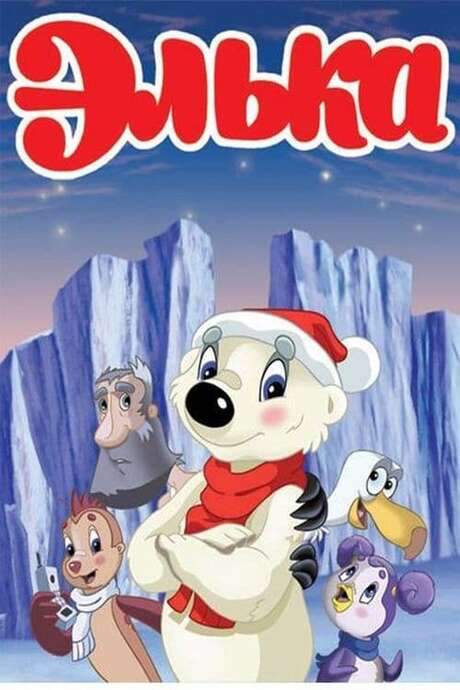
On a cold, moonlit Arctic night, a caring female polar bear teaches her cub Umka how to dig a den in the snow, setting the stage for a calm, observant tale about growing up on the edge of ice and sea. When she tucks him in for the night, he asks for a story about the fish. The mother spins a gentle fable about a sad Fish-Sun who cannot escape from a shark’s teeth, a myth that frames danger and wonder in equal measure. After the tale, the cub asks if their Sun was eaten by a shark too, and she reassures him that the Sun is not a fish and swims above them in the sky. She seals the moment with a lullaby, serenading him into sleep.
The next morning reveals a small camp of human reindeer herders nearby. The mother explains that they are “bears who constantly walk on hind legs and can take off their skin,” a phrase that sticks with the cub as he experiments with standing upright. When he attempts to walk on his hind legs himself, she notes a scent of smoke that threatens to give him away, and she guides him to catch a fish from an ice hole instead. The attempt ends without a catch, and she explains that the difficulty comes from his nose: he is white with a black nose, a combination that might blow his cover. She advises him to touch his nose with his paw, and he wonders aloud if the two-legged bears cover theirs too.
One day, a small Chukchi boy appears after having fallen from a reindeer. The cub sniffs him and discovers the boy smells like milk rather than smoke. The boy jokes about his missing tail by placing a snowball on the cub’s snout, then runs off, tossing his cap into the air. This playful moment makes the cub wonder if the boy has two heads.
Days pass, and the cub encounters the same boy again near a group of reindeer. They talk about their differences and set out toward the sea. The boy stays on land because the water is too cold for him, while the cub dives in. When his mother calls, the cub pretends the boy is lying in the snow and covering his nose with a paw to avoid drawing attention, but the plan falters as the boy crawls away just as the mother arrives. The air fills with the scent of smoke, and to distract her, the cub points to a distant ice hole that seems to hold a fish. The mother heads off to catch it, leaving the boy behind. When the cub returns, the boy has vanished, and only the cap remains as evidence. The cub pockets the cap and rushes to find his friend, only to learn that people are leaving with him.
Feeling the ache of loss, the cub asks his mother to move somewhere else, and she complies. They set off on a shifting ice floe as the second part of the lullaby carries across the cold air. That night, elsewhere, the boy looks up at the stars and sees Ursa Major and Ursa Minor. He imagines the smaller bear as his friend Umka, waving back at him across the night sky. The film ends with the boy calling out for Umka, a quiet echo of companionship that lingers long after the cold has settled.