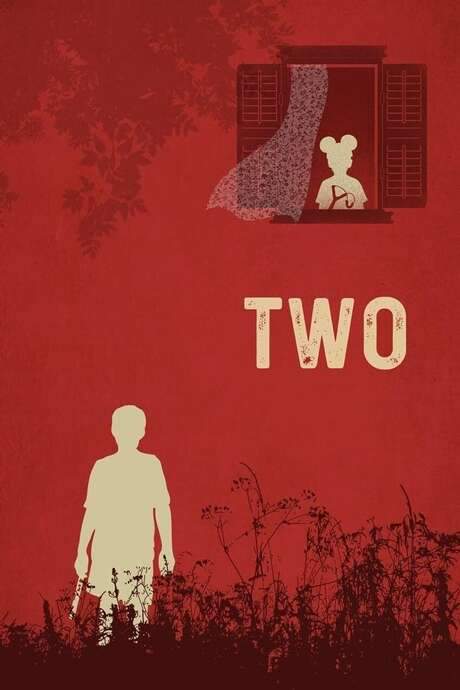
Year: 1965
Runtime: 12 mins
Director: Satyajit Ray
A wordless fable, this short film pits a shantytown child against a wealthy child at a window. Through a series of games—rifles shooting down kites, stacked toys—they vie for supremacy. The rivalry ends as noisy indoor toys contrast with the street child’s simple flute, highlighting opposite worlds. Preserved by the Academy Film Archive in 2006.
Warning: spoilers below!
Haven’t seen Two yet? This summary contains major spoilers. Bookmark the page, watch the movie, and come back for the full breakdown. If you're ready, scroll on and relive the story!
Trace every key event in Two (1965) with our detailed, chronological timeline. Perfect for unpacking nonlinear stories, spotting hidden connections, and understanding how each scene builds toward the film’s climax. Whether you're revisiting or decoding for the first time, this timeline gives you the full picture.
Last updated: October 09, 2025 at 09:24
Find frequently asked questions about the Two (1965) timeline, including chronological order, nonlinear jumps, cause-and-effect links, and scene sequence clarifications. This timeline FAQ helps explain when key events happen, how moments connect, and why the story unfolds in that specific order.
The rich kid views the street kid's existence as a challenge to his privileged position. When he hears the flute, he immediately responds with his toy trumpet to drown it out, demonstrating his need to assert power and control. This behavior establishes the film's central conflict: the privileged using wealth and toys as tools of domination over the less fortunate.
The opening frames establish the rich kid surrounded by symbols of wealth, a bottled drink and endless toys, setting up his possessive nature.
The toys symbolize the arsenal of power available to the privileged. Each toy the rich kid unveils, trumpets, monkey drummer, masks, swords, guns, represents military and economic might used to assert dominance. The street kid's simple homemade mask and bow and arrow illustrate the limited resources of the marginalized, while his flute represents cultural identity that persists despite oppression.
The rich kid's extensive toy collection is visible from the first frame, foreshadowing the escalating arms race between the two boys.
The kite represents the street kid's simple joy and freedom, something the rich kid cannot tolerate seeing. When he spots the kite flying, he becomes enraged that the poorer child has found happiness. He first tries a slingshot, then switches to an air-rifle to systematically destroy the kite, turning a moment of innocent pleasure into an act of cruel domination.
The kite appears as a symbol of hope earlier in the film, making its destruction a pivotal emotional turn.
The persistent flute represents the quiet resilience of the oppressed that cannot be silenced by noise or violence. Even after the rich kid's toys fill the room with chaotic sound, the distant flute continues. This indicates that while the rich kid may win temporary victories through force, the cultural identity and spirit of the marginalized endure despite attempts to suppress them.
The flute appears as the street kid's primary possession from the opening, establishing it as his defining identity marker.
The film explicitly positions the two children as allegorical representations: the rich kid embodies the United States with its overwhelming military superiority, while the street kid represents Vietnam as a smaller, less powerful nation. The 1960s setting directly references the Vietnam War, using the children's rivalry to critique imperialistic power dynamics and the exploitation of weaker nations by stronger ones.
The narrative framing explicitly invites this interpretation, connecting individual conflict to historical forces.
The masks represent the changing faces of aggression and the performative nature of dominance. The rich kid wears various masks, a demon, Native American, and Cowboy, each representing different warrior archetypes from history and fiction. These masks transform play into intimidation, showing how the powerful adopt different identities to threaten and control. The street kid's single homemade mask represents his limited but authentic identity compared to the rich kid's performative threats.
The mask exchange escalates the conflict from auditory competition to visual intimidation.
The street kid retreats because he lacks the resources to compete with the rich kid's overwhelming arsenal of toys. Each time he returns with something, a mask and bow, another mask, he is immediately outmatched. His retreats represent the helpless position of the marginalized, who must withdraw when faced with superior force, as responding directly would be futile.
The opening establishes the hut as the street kid's limited domain, contrasting with the rich kid's expansive room.
A toy robot collides with a tower of toys, causing it to collapse. This symbolic event represents the inevitable collapse of the rich kid's constructed order of dominance. Just as the tower falls, his perceived control over the situation begins to crumble. The crash serves as a moment of reckoning, where the rich kid must confront the consequences of his actions as his organized world of power literally falls apart.
The tower stands as a precarious symbol of constructed dominance throughout the film's latter half.
The window serves as a literal and symbolic border between two worlds. It separates the rich kid's comfortable, toy-filled room from the street kid's humble hut. Throughout the film, the window becomes the stage for their conflict, a liminal space where two vastly different realities intersect. The division underscores the film themes: the privileged and the poor exist side by side yet remain fundamentally separated by walls of wealth and power.
The opening frame establishes the window as the meeting point between these parallel worlds.
The rich kid returns to his toys as a coping mechanism, filling silence with noise to avoid confronting his actions. The cacophony of toys represents his inability to process guilt or recognize the harm he's caused. By surrounding himself with familiar objects of power, he attempts to maintain the illusion of control and superiority rather than acknowledge the emotional weight of his cruelty.
The rich kid's self-satisfied gleam after the street kid's retreat establishes his lack of immediate remorse.
The rich kid cannot escape the memory of what he's done. The persistent flute sound haunts him, representing guilt and the inescapable presence of those he's oppressed. Even as his toys continue their noisy parade, the quiet melody breaks through, symbolizing how the consequences of Actions Against the marginalized linger in the consciousness of the powerful. This final detail suggests the rich kid is not truly at peace.
The flute's persistence despite the toys' cacophony builds throughout the final act.
The film presents the two children as personifications of geopolitical forces during the Vietnam War era. The rich kid represents the United States with its vast arsenal of weapons and toys, symbolizing military and economic power. The street kid represents Vietnam, a smaller nation with fewer resources but cultural richness. Their window-side rivalry mirrors the larger conflict between superpowers and smaller nations, using the innocent medium of children's play to critique imperialistic power dynamics.
The narrative framing explicitly invites this allegorical reading from the opening.
Discover curated groups of movies connected by mood, themes, and story style. Browse collections built around emotion, atmosphere, and narrative focus to easily find films that match what you feel like watching right now.
Films that convey complex themes through visual metaphor and silence.Explore movies like Two that use minimal or no dialogue to build their narrative. If you liked the visual allegory and silent tension in Two, you'll find similar powerful stories here that communicate through imagery and symbolic conflict.
Narratives in this thread unfold through a series of visual contrasts and symbolic gestures. The plot is often straightforward but emotionally rich, built on a foundation of non-verbal communication that highlights themes like power, inequality, or human connection.
Movies are grouped here based on their shared commitment to nonverbal storytelling. They create a unique, contemplative viewing experience defined by a slow, deliberate pacing and a tone that is often melancholic or tense, relying on the power of the image over the spoken word.
Stories where symbolic conflicts mirror real-world inequalities.Discover movies similar to Two that use allegorical stories to comment on economic inequality and power dynamics. If you appreciated the symbolic class conflict in Two, this collection offers more films with a thoughtful, bittersweet feel.
These stories often present a simplified or symbolic world where characters represent different sides of a social divide. The conflict is typically straightforward but deeply meaningful, building to an ending that acknowledges the sadness of the situation while hinting at resilience or a sliver of hope.
These films are united by their use of allegory to tackle weighty social themes. They share a moderate emotional weight, a reflective mood, and a bittersweet conclusion that feels earned rather than simplistically happy or sad, making the social commentary resonate long after the film ends.
Don't stop at just watching - explore Two in full detail. From the complete plot summary and scene-by-scene timeline to character breakdowns, thematic analysis, and a deep dive into the ending - every page helps you truly understand what Two is all about. Plus, discover what's next after the movie.
Read a complete plot summary of Two, including all key story points, character arcs, and turning points. This in-depth recap is ideal for understanding the narrative structure or reviewing what happened in the movie.
Discover the characters, locations, and core themes that shape Two. Get insights into symbolic elements, setting significance, and deeper narrative meaning - ideal for thematic analysis and movie breakdowns.