Year: 1965
Runtime: 12 mins
Director: Satyajit Ray
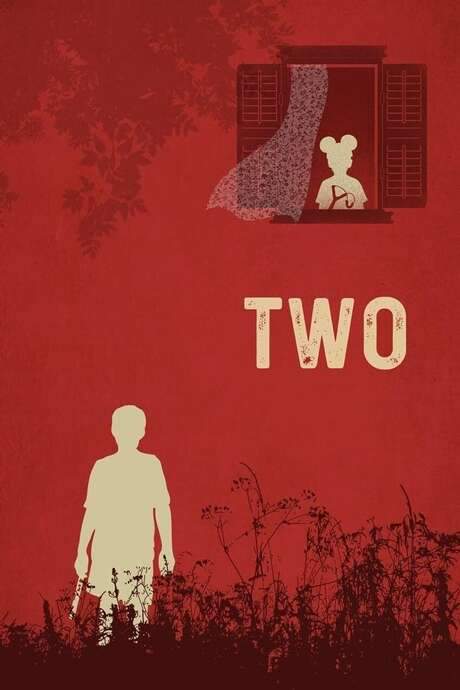
A wordless fable, this short film pits a shantytown child against a wealthy child at a window. Through a series of games—rifles shooting down kites, stacked toys—they vie for supremacy. The rivalry ends as noisy indoor toys contrast with the street child’s simple flute, highlighting opposite worlds. Preserved by the Academy Film Archive in 2006.
Get a spoiler-free look at Two (1965) with a clear plot overview that covers the setting, main characters, and story premise—without revealing key twists or the ending. Perfect for deciding if this film is your next watch.
In a quiet, wordless fable, the screen opens on a cramped shantytown and a polished, sun‑splashed interior, each framed through a single window that separates two worlds. The film lets objects speak: rows of glossy toys, a sparkling bottle, and a simple handmade flute become the language of privilege and perseverance. The atmosphere is deliberately still, inviting the viewer to linger on the stark visual contrast between excess and modesty, while a faint hum of distant life underscores the tension that builds without a single line of dialogue.
Ravi Kiran appears on the wealthy side, a child surrounded by an impressive array of toys that seem to vibrate with the confidence of a first‑world existence. Across the pane, the street child watches from his modest dwelling, his only instrument a humble flute that carries a quiet, persistent melody. Their silent gazes meet, setting the stage for an unspoken competition that unfolds through a series of playful challenges. The tone remains playful yet edged with a subtle undercurrent of rivalry, as each child attempts to assert his own reality through the games they choose.
The film’s visual storytelling turns the ordinary—stacked toys, makeshift masks, a slingshot—into symbols of larger social forces, hinting at the clash between abundance and scarcity without ever naming it. A kite drifts overhead, a kite string glints in the wind, and the children’s attempts to claim it become a metaphor for reach and control. The contrast between the noisy, mechanical cacophony of indoor playthings and the lone, resonant notes of a flute emphasizes how different worlds can coexist, each louder in its own sphere.
Through its minimalist style and careful composition, the short film invites viewers to contemplate the nature of power, the weight of privilege, and the quiet persistence of those who are often unheard. The rivalry remains poised, leaving the audience to wonder which voice will ultimately carry farther across the thin glass that both separates and connects them.
Last Updated: December 04, 2025 at 23:41
Discover curated groups of movies connected by mood, themes, and story style. Browse collections built around emotion, atmosphere, and narrative focus to easily find films that match what you feel like watching right now.
Films that convey complex themes through visual metaphor and silence.Explore movies like Two that use minimal or no dialogue to build their narrative. If you liked the visual allegory and silent tension in Two, you'll find similar powerful stories here that communicate through imagery and symbolic conflict.
Narratives in this thread unfold through a series of visual contrasts and symbolic gestures. The plot is often straightforward but emotionally rich, built on a foundation of non-verbal communication that highlights themes like power, inequality, or human connection.
Movies are grouped here based on their shared commitment to nonverbal storytelling. They create a unique, contemplative viewing experience defined by a slow, deliberate pacing and a tone that is often melancholic or tense, relying on the power of the image over the spoken word.
Stories where symbolic conflicts mirror real-world inequalities.Discover movies similar to Two that use allegorical stories to comment on economic inequality and power dynamics. If you appreciated the symbolic class conflict in Two, this collection offers more films with a thoughtful, bittersweet feel.
These stories often present a simplified or symbolic world where characters represent different sides of a social divide. The conflict is typically straightforward but deeply meaningful, building to an ending that acknowledges the sadness of the situation while hinting at resilience or a sliver of hope.
These films are united by their use of allegory to tackle weighty social themes. They share a moderate emotional weight, a reflective mood, and a bittersweet conclusion that feels earned rather than simplistically happy or sad, making the social commentary resonate long after the film ends.
Don't stop at just watching — explore Two in full detail. From the complete plot summary and scene-by-scene timeline to character breakdowns, thematic analysis, and a deep dive into the ending — every page helps you truly understand what Two is all about. Plus, discover what's next after the movie.
Read a complete plot summary of Two, including all key story points, character arcs, and turning points. This in-depth recap is ideal for understanding the narrative structure or reviewing what happened in the movie.
Track the full timeline of Two with every major event arranged chronologically. Perfect for decoding non-linear storytelling, flashbacks, or parallel narratives with a clear scene-by-scene breakdown.
Discover the characters, locations, and core themes that shape Two. Get insights into symbolic elements, setting significance, and deeper narrative meaning — ideal for thematic analysis and movie breakdowns.
Visit What's After the Movie to explore more about Two: box office results, cast and crew info, production details, post-credit scenes, and external links — all in one place for movie fans and researchers.