Plot Explained Spoilers guaranteed!
Plot Explained

Browse by genre

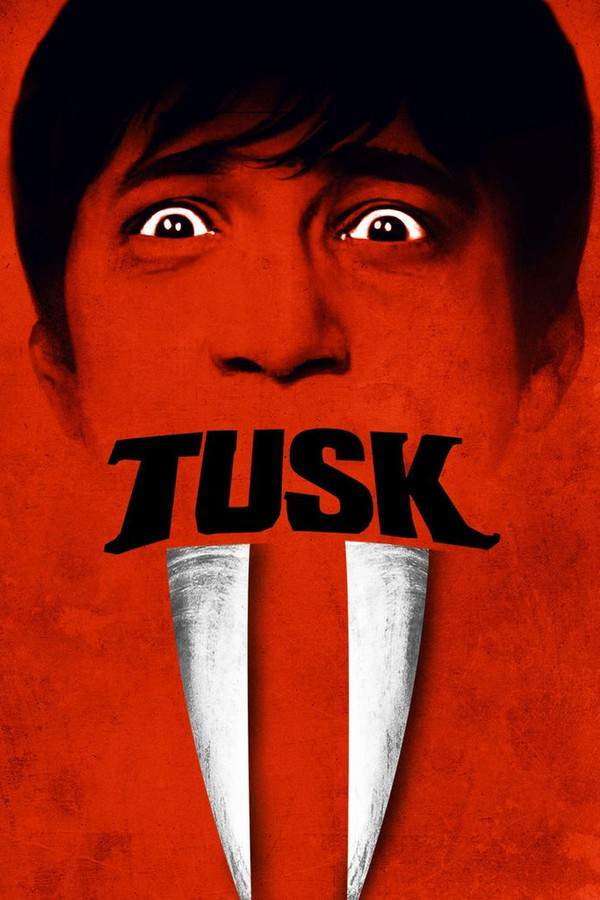
Tusk (2014) movie poster

Plot Summary

Tusk (2014) Plot Summary Explained

Release, runtime and language
2014 · 102 min · English
Loading streaming availability…
Directed by
Kevin Smith
Starring
Génesis Rodríguez, Justin Long, Haley Joel Osment, Michael Parks

While traveling in Canada, a young podcaster becomes fascinated by a mysterious old sailor with a captivating past. He agrees to record the man's life story, but soon discovers a disturbing connection to a giant walrus and a sinister plot. As the podcaster investigates, he finds himself trapped in a terrifying situation where his own identity and sanity are at risk in this darkly comedic horror drama.

On this page (6)
  1. 1 Where to watch
  2. 2 What happens: full plot
  3. 3 Plot questions answered
  4. 4 Movie threads
  5. 5 Movies like Tusk
  6. 6 Every angle
Loading streaming availability…

Full plot summary · contains spoilers

What Happens in Tusk: Full Plot Summary

The whole story of Tusk (2014) explained, from the opening scene to the final frame: every key event, every twist and what it all adds up to. Read it as a quick recap before the sequel, to check a scene you missed, or to finally understand what really happened.

Wallace Bryton, hosted by Justin Long and his friend Teddy Craft, portrayed by Haley Joel Osment, run the popular podcast The Not-See Party, where they ridicule viral videos of embarrassing moments. Their upcoming episode centers on a young man known as the Kill Bill Kid, who tragically amputated his own leg with a katana. Eager to mock the unfortunate youth further, Wallace decides to travel to Canada for an interview. Through woven flashbacks, we learn that Wallace was once an unsuccessful stand-up comedian whose notoriety has grown with the increasing brutality of his podcasting endeavors, much to the distress of his girlfriend, Ally León, played by Génesis Rodríguez, who accuses him of losing touch with his prior self.

Upon reaching Manitoba, Wallace discovers that the Kill Bill Kid has accidentally died, leaving him in a quandary about his plans. Hurt that his Canadian trip has gone awry, he resolves to stay another day in search of an eccentric new interviewee. While at a bar's restroom, he stumbles upon a handbill that promises a free room along with intriguing tales from a local resident. His curiosity leads him to the grand estate of Howard Howe, depicted by Michael Parks, an elderly man in a wheelchair who welcomes Wallace with tea and fascinating nautical stories. Howe is particularly animated when recounting an incident at sea involving a shipwreck while hunting a legendary shark and the walrus he affectionately named Mr. Tusk, who rescued him during the disaster. However, during this storytelling session, Wallace succumbs to the effects of the drugged tea.

The next time he regains consciousness, Wallace finds himself bound to a wheelchair, missing a leg. Howe fabricates a bizarre tale about a spider bite necessitating the amputation. As Wallace grapples with disbelief about his perilous situation, he begins to comprehend Howe's derangement, especially when Howe reveals his true intentions during a dinner conversation: he is determined to create a life-sized walrus costume for Wallace, driven by an eerie fixation on the creature. Attempts by Wallace to reach Ally and Teddy, who are secretly involved with each other behind his back, yield no response before Howe renders him unconscious.

Realizing the threat he faces, Ally and Teddy rush to Canada, but they encounter numerous false leads during their search. Meanwhile, Howe continues to inflict grotesque alterations on Wallace while delving into his own traumatic past. He shares the harrowing details of his childhood filled with abuse, which have twisted his mind into a hatred for humanity. As Wallace is horrifically transformed, his body fashioned into a grotesque walrus-like being, Howe delights in his "creation"—a perverse mix of human and animal.

Local detective Frank Garmin aids Ally and Teddy in contacting Guy Lapointe, a former cop portrayed by Johnny Depp, known for his relentless pursuit of Howe, and who believes Wallace may still be alive but irrevocably changed. With information gathered from two annoyed convenience store clerks, the trio finally discovers Howe’s hideout.

As they confront Howe, Wallace's mind has become so reshaped that he embodies the essence of a walrus. During a chaotic clash, Wallace, now fully transformed, battles Howe, ultimately resulting in the latter's death by Wallace's tusks. Stunned, Ally and Teddy witness Wallace's horrific metamorphosis, culminating in a chilling call from him, echoing the haunting nature of his condition.

Fast forward a year, Wallace resides in a wildlife sanctuary, permanently woven into the walrus pelt. Ally and Teddy, both emotionally scarred from the past events, visit him, feeding him fish. As Ally recalls a poignant moment from their last conversation—where they discussed the tears that differentiate humans from animals—she expresses her enduring love for him before departing in sorrow. Wallace, adorned in his horrifying new form, lets tears mingle with his tusks while emitting a sorrowful bellow, a haunting reminder of what he once was.
Last updated: November 04, 2024 at 00:09

Was this helpful?

Plot questions answered

Tusk Plot Explained: Your Questions Answered

The questions people ask most about Tusk (2014): what happens in the confusing scenes, why the characters do what they do, the twists, hidden details and what the ending means. Each answer contains spoilers.

Q1

Why does Howard Howe want to turn Wallace into a walrus?

Howard Howe became obsessed with walruses after a shipwreck where a walrus named Mr. Tusk saved his life. During the disaster, he made a promise to the walrus that he would create a living replica. His childhood trauma and twisted mind led him to believe that transforming humans into walruses is a way to honor that promise and escape his hatred for humanity by creating 'pure' creatures.

Foreshadowing: Earlier, Howe tells Wallace an elaborate story about being rescued by Mr. Tusk during a storm, planting the seeds of his obsession.

  • howard hoe
  • walrus
  • transformation
  • mr tusk
  • shipwreck
  • motivation
Q2

How does Wallace get drugged and captured?

While visiting Howard Howe's estate, Wallace accepts a cup of tea from his host. The tea was laced with drugs, causing Wallace to lose consciousness. When he wakes up, he is bound to a wheelchair and has already had his leg amputated, trapped in Howe's home.

Foreshadowing: The handbill Wallace found in the bar restroom advertised 'free room' and 'intriguing tales,' drawing him directly into Howe's trap.

  • drugged tea
  • captured
  • kidnapped
  • howe estate
  • roofies
Q3

What happens to Wallace's leg?

Howard Howe amputates Wallace's leg while he is unconscious from the drugged tea. When Wallace wakes up, Howe lies that a spider bite necessitated the amputation. In reality, Howe removed the leg as part of his plan to transform Wallace into a walrus, using surgical alterations to gradually reshape his body.

Foreshadowing: This brutal act foreshadows the complete bodily transformation Wallace will undergo.

  • leg amputation
  • surgery
  • spider bite
  • howe
  • body horror
Q4

Why does Howard Howe hate humanity?

Howe's hatred stems from a childhood filled with severe abuse at the hands of his father. He reveals to Wallace that his traumatic past twisted his mind, leading him to view humans as fundamentally corrupt. This psychologically drives his obsession with creating 'pure' walrus creatures, which he sees as superior to humanity.

Foreshadowing: Howe's disturbing stories about his past hint at deeper psychological damage before he explicitly reveals the abuse.

  • childhood abuse
  • trauma
  • father
  • howe backstory
  • psychopath
Q5

Who is Guy Lapointe and why is he searching for Howe?

Guy Lapointe is a former cop portrayed by Johnny Depp who has been obsessively hunting Howard Howe for years. He believes Howe is responsible for multiple disappearances and suspects victims may still be alive but 'fundamentally changed.' Lapointe aids Ally and Teddy in locating Howe's hideout, providing crucial information that leads to Wallace's rescue attempt.

Foreshadowing: Lapointe's obsession with Howe suggests the antagonist has done this before, hinting at prior victims.

  • guy lapointe
  • johnny depp
  • detective
  • former cop
  • hunt howe
Q6

What triggers Wallace to kill Howe?

By the time of the confrontation, Wallace's mind has been so thoroughly manipulated and reshaped by Howe that he has adopted walrus-like instincts and behaviors. During the chaotic battle, Wallace, now physically transformed with tusks, attacks Howe in a fit of rage and primal fury, killing him with his own tusks. The transformation has fundamentally altered his identity and judgment.

Foreshadowing: Throughout his captivity, Wallace's mental state deteriorates as Howe psychologically breaks him down.

  • wallace kills howe
  • battle
  • tusks
  • death
  • murder
Q7

What happens to Wallace at the end of the movie?

A year after the confrontation, Wallace lives permanently in a wildlife sanctuary, his body completely wrapped in walrus skin. He has been physically transformed into a grotesque human-walrus hybrid and cannot revert to his original form. His mind has been so altered that he now behaves like a walrus, including emitting bellows and eating fish.

Foreshadowing: The slow transformation throughout the film culminates in this irreversible final state.

  • ending
  • final scene
  • sanctuary
  • walrus man
  • transformation permanent
Q8

Why do Ally and Teddy go to Canada to find Wallace?

After Wallace fails to return home or respond to calls, Ally and Teddy become concerned and travel to Canada to search for him. They eventually work with local detective Frank Garmin and Guy Lapointe, following leads that suggest Wallace may be alive but in grave danger. Their investigation leads them to Howard Howe's hideout.

Foreshadowing: Their growing worry and the mysterious circumstances of Wallace's disappearance drive the rescue subplot.

  • ally
  • teddy
  • canada
  • search
  • rescue
  • howe hideout
Q9

Why does Wallace cry at the end of the movie?

In the final scene, Wallace lets out a sorrowful walrus bellow while tears stream down his transformed face. This moment occurs after Ally recalls their last conversation about how tears differentiate humans from animals. Despite his physical transformation into a walrus, his human emotions remain, he still feels grief, loss, and love, making the moment hauntingly tragic.

Foreshadowing: Earlier, Ally and Wallace discussed how humans cry while animals do not, establishing the thematic significance of tears.

  • tears
  • crying
  • bellow
  • ending
  • emotion
  • humanity
  • ally
Q10

What happens to the Kill Bill Kid?

The Kill Bill Kid is the viral sensation Wallace planned to interview, a young man who accidentally amputated his own leg with a katana. By the time Wallace reaches Manitoba to interview him, the Kid has already died, prompting Wallace to search for a different interview subject and ultimately leading him to Howard Howe.

Foreshadowing: The irony of the Kill Bill Kid's fate, losing a leg, foreshadows Wallace's own traumatic amputation.

  • kill bill kid
  • viral
  • interview
  • amputation
  • died

Movie threads

More Movies Like Tusk, by Mood & Story

Curated lists built around what makes Tusk tick: the same mood, the same kind of story or the same emotional payoff. Each list explains why these movies belong together.

Body Horror and Identity Crisis Movies like Tusk

Stories where physical transformation becomes a horrifying psychological ordeal. If the grotesque transformation and psychological unraveling in Tusk captivated you, this thread curates similar movies about body horror and identity loss. Discover films where characters confront the horror of their own changing forms, leading to existential dread and a profound questioning of self, perfect for fans of disturbing and thought-provoking narratives.

  • grotesque
  • disturbing
  • unsettling
  • claustrophobic
  • psychological
  • body horror
  • Tone: dark, disturbing, tragic
  • Pacing: steady, deliberate
Why these movies?

The story pattern: These narratives often follow a protagonist who willingly or unwillingly enters a situation that leads to irreversible physical alteration. The horror stems not just from the visual grotesquerie, but from the slow, methodical erosion of the character's identity, memories, and connection to their former life, often at the hands of a manipulative or mad antagonist. The journey is a downward spiral into a new, monstrous reality.

Why they belong together: Movies are grouped here for their shared, intense focus on physical mutilation as a direct metaphor for psychological trauma. They share a dark tone, heavy emotional weight, and a commitment to exploring the most visceral fears about our bodies and minds being violated and remade into something alien.

Claustrophobic Descent into Madness Movies like Tusk

Tales of confinement where sanity unravels under psychological pressure. For viewers who felt the trapped, anxious dread of Tusk, this collection features films about captivity and psychological manipulation. Explore stories where characters are held against their will, their realities distorted by a captor, leading to a terrifying unraveling of their minds. These movies share a steady, oppressive pacing and a deeply unsettling vibe.

  • claustrophobic
  • anxious
  • unsettling
  • psychological
  • confinement
  • mad scientist
  • Tone: dark, anxious, bleak
  • Pacing: steady, escalating
Why these movies?

The story pattern: The narrative pattern involves a character being lured into a confined space—a room, a house, a situation—from which there is no easy escape. The antagonist, often a charismatic but deeply broken individual, uses isolation and psychological games to exert control. The plot focuses on the protagonist's struggle to maintain their sense of self against an overwhelming force that seeks to remake or destroy them.

Why they belong together: These films are united by their ability to generate a pervasive sense of claustrophobia and psychological unease. They share a steady pacing that methodically increases tension, a dark tone, and a focus on the dynamics between captor and captive, making the experience feel intensely personal and horrifying.

If you liked this

Movies Like Tusk

Similar movies to Tusk: the same genre, themes or kind of story. Each one comes with its own plot summary, timeline and ending explained.

Browse all movie summaries

Every angle

Tusk (2014) Explained: Plot, Timeline & Characters

Everything about Tusk in one place: what happens in the plot summary, the timeline in chronological order, the characters and meaning and a spoiler-free summary. What's After the Movie adds the cast, box office and post-credit scenes.

Coming soon on iOS and Android

The Plot Explained Movie Summary App

Plot summaries, endings explained and timelines on your phone. Catch up on any movie in minutes, save your favorites and never miss a twist again.

Be the first to know when we launch. Your email stays private, always.

Learn more about the app