Plot Explained Spoilers guaranteed!
Plot Explained

Browse by genre

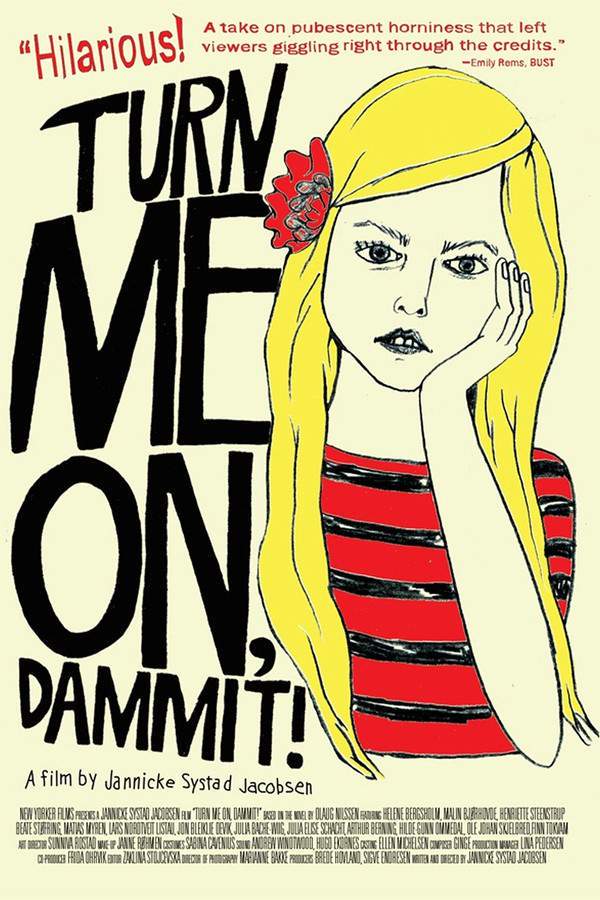
Turn Me On, Dammit! (2012) movie poster

Timeline

Turn Me On, Dammit! (2012) Timeline Explained – Every Event in Order

Release, runtime and language
2012 · 76 min · Norwegian
Loading streaming availability…
Directed by
Jannicke Systad Jacobsen
Starring
Beate Støfring, Helene Bergsholm, Henriette Steenstrup, Malin Bjørhovde

In the quiet Norwegian town of Skoddeheimen, fifteen-year-old Alma struggles with the overwhelming effects of puberty and her burgeoning desires. Caught up in a crush on Artur and grappling with other fantasies, she experiences rejection from her peers and increasing isolation at school. Feeling alone and misunderstood, Alma must confront the challenges of adolescence and find her place in a world that feels increasingly confusing.

On this page (5)
  1. 1 Where to watch
  2. 2 Events in order (12)
  3. 3 Timeline questions answered
  4. 4 Movie threads
  5. 5 Every angle
Loading streaming availability…

12 events in order · contains spoilers

Turn Me On, Dammit! Timeline: Events in Chronological Order

Every key event of Turn Me On, Dammit! (2012) in order, scene by scene, with when and where it takes place. Use it to untangle flashbacks, time jumps and parallel storylines, to refresh your memory before the sequel or to find the exact scene you are thinking of.

  1. Alma's Secret Discoveries

    In the quiet town of Skoddeheimen, Norway, 15-year-old Alma embarks on a personal journey of sexual discovery. She secretly engages in calling hotlines for phone sex, indulging in her fantasies about a classmate named Artur.

    Where
    Skoddeheimen, Norway
  2. The Party Encounter

    During a party, Alma's life takes a dramatic turn when Artur approaches her and exposes himself. This unexpected encounter excites Alma, pushing her to take matters into her own hands and explore her desires more openly.

  3. Doubt Among Friends

    After the shocking event with Artur, Alma excitedly shares the story with her friends. However, they respond with skepticism, and Artur indirectly dismisses the encounter, leading Alma to feel isolated and misunderstood.

  4. The Nickname

    As a result of the party incident, Alma is taunted with the humiliating nickname 'Dick Alma.' This bullying becomes relentless, casting her into a state of isolation as she navigates the harsh social landscape of high school.

  5. The Confrontation

    Alma's mother discovers a shocking phone bill related to Alma's secretive activities and confronts her about it. Alma candidly admits to engaging in phone sex and attributes her behavior to her hypersexuality, sparking a tense dialogue between mother and daughter.

  6. Taking Responsibility

    Determined to take responsibility for her actions, Alma vows to make amends and gets a part-time job at a local convenience store. However, her challenges escalate when she is caught stealing a pornographic magazine, leading her mother to label her behavior as abnormal.

  7. Contemplating Escape

    The relentless bullying at school weighs heavily on Alma, driving her to consider running away from her troubles. Yet, in a moment of vulnerability, her mother embraces her back home, showing a willingness to support her daughter.

  8. Confronting Artur

    Gathering her courage, Alma confronts Artur about the humiliating incident. Artur acknowledges his actions but denies any real attraction to her, leaving Alma feeling even more conflicted about their relationship.

  9. Unexpected Public Acknowledgment

    In a surprising turn of events, Artur offers to publicly acknowledge the truth about their encounter, which suggests a desire to mend their fractured relationship. He even expresses newfound romantic interest in Alma, complicating her feelings further.

  10. Dinner Invitation

    Alma invites Artur to dinner at her home, hoping for a chance to reconnect. This moment is filled with tension as she introduces Artur to her mother, marking a significant step in their complicated dynamic.

    Where
    Alma's home
  11. Parental Protection

    After discovering the emotional turmoil Artur has caused, Alma's mother stands firm against allowing him to stay over. Her protective instincts kick in, emphasizing the complexities of adolescent relationships intertwined with parental guidance.

  12. Ambiguous Ending

    The film concludes ambiguously, leaving viewers to ponder the implications of Alma and Artur's relationship moving forward. The unresolved nature of their connection highlights the themes of youth, desire, and the struggle for parental protection.

Last updated: November 16, 2024 at 14:46

Was this helpful?

Timeline questions answered

Turn Me On, Dammit! Timeline Explained: Your Questions Answered

When does it happen, and why in that order? The questions people ask about the chronology of Turn Me On, Dammit! (2012): time jumps, flashbacks, cause and effect between scenes and the correct order of events, each answered with spoilers.

Q1

Why did Artur expose himself to Alma at the party?

Artur approached Alma at the party and exposed himself, which was a random, impulsive act. The film presents this as an awkward teenage moment rather than a calculated action. Alma's unexpected excitement from the encounter then led her to pursue the situation further.

  • artur
  • party
  • exposure
  • teenage behavior
  • skoddeheimen
Q2

Why didn't Alma's friends believe her story about Artur?

Alma's friends were skeptical because the story seemed exaggerated and hard to verify. Additionally, Artur indirectly dismissed the encounter, denying its significance. This public dismissal, combined with the outlandish nature of Alma's claim, led her friends to doubt her credibility.

  • friends
  • bullying
  • social isolation
  • peer doubt
Q3

How did Alma get the nickname 'Dick Alma'?

After Alma shared the story of Artur exposing himself, the information spread through her social circle. The humiliating nickname emerged as a result of this gossip, likely spread by peers who mocked her claim. The name stuck and became a tool for bullying, isolating Alma further.

  • bullying
  • nickname
  • social ostracization
  • dick alma
Q4

Why did Alma steal the porn magazine from the store?

Alma was already engaging in phone sex and exploring her sexuality secretly. When she started working at the convenience store, she stole a pornographic magazine as a continuation of her hidden sexual exploration. This impulsive act further reinforced her mother's concerns about her behavior.

  • theft
  • porn magazine
  • hypersexuality
  • convenience store
Q5

Why did Artur suddenly express romantic interest in Alma after denying attraction?

During their confrontation, Artur initially acknowledged his actions but denied any attraction. However, he then surprisingly offered to publicly acknowledge the truth and expressed newfound romantic interest. This reversal suggests he may have felt guilt about the incident and wanted to make amends, or perhaps recognized Alma's genuine feelings and decided to give the relationship a chance.

Foreshadowing: Earlier, Artur dismissed the encounter and indirectly contributed to Alma's bullying.

  • artur
  • romantic interest
  • apology
  • public acknowledgment
Q6

Why did Alma's mom let Artur stay for dinner but not allow him to stay overnight?

Alma's mother agreed to dinner as a way to meet the boy her daughter had been dealing with and to show support. However, after learning from a neighbor about the emotional heartache Artur had caused, she drew the line at allowing him to stay overnight. This reflects her protective instincts and desire to shield Alma from further hurt while still allowing her some autonomy.

  • mother
  • parental protection
  • dinner
  • overnight
  • boundaries
Q7

Why did the bullying against Alma become so severe?

The bullying intensified because Alma publicly shared a sensational story that became the subject of ridicule. Once the nickname 'Dick Alma' took hold, it spread through the school social network. The combination of the embarrassing story, Alma's known phone sex activities (revealed by the phone bill), and her general social isolation made her an easy target for relentless teasing.

  • bullying
  • school
  • social isolation
  • peer pressure
Q8

Why did Alma consider running away from home?

The relentless bullying at school, combined with her mother's concerns about her behavior and the overall stress from the situation, became overwhelming. Alma felt isolated, misunderstood, and unable to cope with the dual pressures of social rejection and parental disappointment, leading her to contemplate escape.

  • running away
  • bullying
  • emotional distress
  • teenager
Q9

What did Alma mean when she called herself hypersexual?

When confronted about the phone sex charges, Alma openly acknowledged her behavior and attributed it to her hypersexuality. This was her honest, straightforward way of explaining her intense sexual urges and exploration during puberty. The film presents this matter-of-factly without judgment, reflecting its candid approach to adolescent sexuality.

  • hypersexuality
  • puberty
  • sexual discovery
  • phone sex
Q10

Why did Alma's mother embrace her after she considered running away?

After Alma's emotional breakdown and consideration of running away, her mother chose forgiveness and support over further punishment. This moment represents maternal acceptance and the recognition that Alma needed unconditional support during her difficult adolescence, regardless of her mistakes.

  • mother
  • forgiveness
  • support
  • running away
  • family
Q11

What does the ambiguous ending of the film signify?

The ambiguous ending leaves Alma and Artur's relationship unresolved, reflecting the uncertain nature of adolescent connections. It suggests their complicated dynamic will continue evolving without clear direction. This open conclusion emphasizes the film's themes of youth, desire, and the ongoing struggle to navigate relationships and parental guidance.

  • ambiguous ending
  • relationship
  • unresolved
  • adolescence

Movie threads

More Movies Like Turn Me On, Dammit!, by Mood & Story

Curated lists built around what makes Turn Me On, Dammit! tick: the same mood, the same kind of story or the same emotional payoff. Each list explains why these movies belong together.

Movies like Turn Me On, Dammit! with awkward teenage stories

Candid coming-of-age films about the cringey, confusing reality of adolescence. If you liked the candid humor and relatable cringe of Turn Me On, Dammit!, explore more movies like it. This thread collects similar coming-of-age stories that find comedy and heart in the awkward realities of teenage life, sexual awakening, and social isolation.

  • awkward
  • candid
  • quirky
  • yearning
  • relatable
  • isolated
  • Tone: light, candid, awkwardly humorous
  • Pacing: steady, observational
Why these movies?

The story pattern: These narratives typically follow a young protagonist navigating the turbulent waters of puberty and social dynamics. The plot is often driven by a specific incident of embarrassment or rejection that amplifies their feelings of isolation, leading to a personal journey of self-discovery that is more about small realizations than grand resolutions.

Why they belong together: Movies are grouped here for their shared focus on the vulnerable, humorous, and often painful experience of adolescence. They connect through a light but candid tone, a steady, character-driven pace, and a commitment to portraying teenage desire and social anxiety without judgment or sugar-coating.

Films about quirky isolation in small towns like Turn Me On, Dammit!

Stories of peculiar characters feeling out of place in a mundane setting. Fans of Turn Me On, Dammit! will enjoy this collection of movies with a similar feel of quirky characters navigating life in a small, restrictive town. Discover similar stories that blend humor and melancholy, exploring themes of yearning and feeling misunderstood in a close-knit community.

  • quirky
  • isolated
  • yearning
  • small town
  • candid
  • melancholic
  • Tone: light, melancholic, quirky
  • Pacing: steady, contemplative
Why these movies?

The story pattern: The narrative pattern centers on a character whose internal world—filled with fantasy, desire, or eccentricity—clashes with the subdued, conventional reality of their small-town surroundings. The conflict is often internal and societal, as the protagonist grapples with their identity against a backdrop of gossip, tradition, and limited horizons.

Why they belong together: These films share a specific mood blend: the melancholy of isolation mixed with the humor of quirkiness, all set against the muted canvas of small-town life. They are united by a steady pace that allows for character observation, a medium emotional weight, and an ambiguous sense of whether the protagonist will escape or simply learn to cope.

Every angle

Turn Me On, Dammit! (2012) Explained: Plot, Timeline & Characters

Everything about Turn Me On, Dammit! in one place: what happens in the plot summary, the timeline in chronological order, the characters and meaning and a spoiler-free summary. What's After the Movie adds the cast, box office and post-credit scenes.

Coming soon on iOS and Android

The Plot Explained Movie Summary App

Plot summaries, endings explained and timelines on your phone. Catch up on any movie in minutes, save your favorites and never miss a twist again.

Be the first to know when we launch. Your email stays private, always.

Learn more about the app