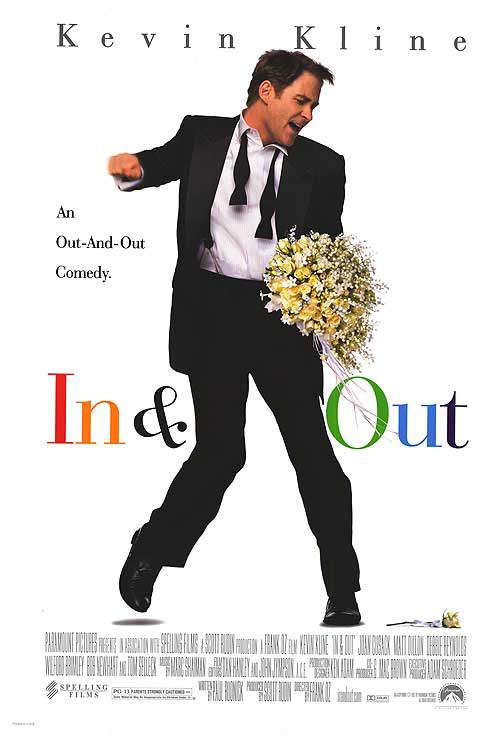
Nelson Hirsch, John Lloyd Young, a 25-year-old real estate agent, finds it increasingly hard to tell his boisterous Jewish parents, Martin Hirsch and Shirley Hirsch, that he is gay and in love with a man — not Angelo Ferraro, but a non-Jewish partner.
Together with Angelo Ferraro Jai Rodriguez, the couple have forged a time-sensitive pact to come clean about their relationship to their families. Yet a complication arises when, through circumstance, Nelson’s mother comes to believe that the new significant other is not Angelo but their neighbor, Sybil Williams, the Playpen Playmate of the month, portrayed by Carmen Electra. This mistaken identity wires the story with tension as the adults wrestle with appearances and expectations.
Shirley’s tendency to hear only what she wants to hear amplifies the strain, since she is trying to reconcile her own preconceived notions about homosexuality with the reality that Nelson is deeply in love with a shiksa who publicly challenges norms. The miscommunication becomes a ripple that touches nearly everyone around them, turning family dinners into tests of patience and understanding, and forcing Nelson and Angelo to navigate not only their own feelings but the reactions of a wider circle.
When Nelson finally reveals the truth to his parents, Martin and Shirley must confront their beliefs and their fears about how friends, relatives, and colleagues will react. They worry especially about Martin’s macho employer, his Uncle Moisha, played by Eddie Levi Lee, and about Shirley’s brother and sister-in-law, [Max] and [Sophie]. The latter is embodied on screen by Phyllis Silver, who brings a sharp perspective to the family’s dynamics and anxieties as the two families try to find a path forward together.
Angelo’s Italian parents, Carmine Ferraro and Terry Ferraro, also have to come to terms with the couple’s relationship. Vincent Pastore portrays Carmine, whose expectations clash with love, culture, and the modern world. The film follows Nelson and Angelo as their bond deepens and their deadline to reveal the truth becomes a catalyst for change, potentially turning the world of this tight-knit group upside down.
All the while, the story stays grounded in warmth and humor, presenting a sensitive, observant look at how families adapt when love challenges inherited norms. It examines the courage it takes to be openly ourselves, the complexities of parental pride, and the ways in which acceptance can grow even in the most unlikely places, leaving audiences with a thoughtful portrait of belonging, compromise, and the power of honest connection.
Last updated: February 17, 2026 at 19:56