









Plot Explained Spoilers guaranteed!
Plot Explained

Browse by genre

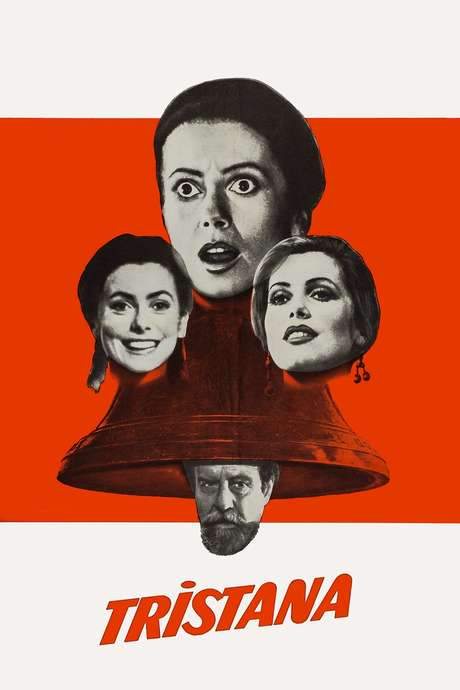
Tristana (1970) movie poster

Timeline

Tristana (1970) Timeline Explained – Every Event in Order

Release, runtime and language
1970 · 98 mins · Spanish
JustWatch #27,301 3
Directed by
Luis Buñuel
Starring
Fernando Rey, Catherine Deneuve, Franco Nero, José Calvo, Aldo Sambrell, Lola Gaos

The unsettling tale follows an orphaned girl raised by the esteemed but predatory Don Lope, a respected community member who exploits his charge. As she matures, she falls for the artistic Horacio, and she learns she must assert herself to break free from Lope’s grip, otherwise their love is doomed by his control. The film examines power, desire and the struggle for autonomy in a repressive world.

On this page (7)
  1. 1 Where to watch
  2. 2 Events in order (11)
  3. 3 Timeline questions answered
  4. 4 The book behind the movie
  5. 5 Movie threads
  6. 6 Movies like Tristana
  7. 7 Every angle

Where to watch

Where to Watch Tristana (1970)

Where can you watch Tristana? Stream, rent or buy it in the US, including on Kanopy, Cineverse and Tubi TV: current JustWatch availability with up-to-date prices.

Streaming availability powered by JustWatch

11 events in order · contains spoilers

Tristana Timeline: Events in Chronological Order

Every key event of Tristana (1970) in order, scene by scene, with when and where it takes place. Use it to untangle flashbacks, time jumps and parallel storylines, to refresh your memory before the sequel or to find the exact scene you are thinking of.

  1. Tristana becomes ward of Don Lope Garrido

    After her mother's death, Tristana is taken in by the notorious nobleman Don Lope Garrido in Toledo. He presents himself as a protector, but his aging charm masks a predatory interest in her innocence. As Lope clings to an old code of honour, he preys on her vulnerability while maintaining a flamboyant, playboy lifestyle.

    When
    late 1920s
    Where
    Toledo
  2. Don Lope's contradictory code of conduct

    The old nobleman preaches that he defends the weak and even fancies himself a defender of justice. Meanwhile, he behaves as lover and guardian to Tristana, treating her as wife and daughter. This hypocrisy sets the tone for the relationship that will shape her future.

    When
    late 1920s
    Where
    Toledo
  3. Tristana begins to demand independence

    By the age of 21, Tristana starts to demand education in music, art, and other subjects to become independent. She resents Lope's belief that women belong at home and yearns for opportunity. Her growing voice marks a turning point in their dynamic.

    When
    circa 1930
    Where
    Toledo
  4. Tristana meets Horacio, the Catalan artist

    While sneaking out, Tristana encounters Horacio, a young artist from Catalonia, and they fall in love. Against the looming presence of Don Lope, their bond offers a path to escape from the old world. The romance becomes central to her future choices.

    When
    circa 1930
    Where
    Toledo
  5. Confrontation outside Lope's apartment

    Horacio challenges Don Lope to a duel after Lope slaps him, asserting his authority over Tristana. Horacio responds with a punch, and the lovers leave the area the next day. The incident crystallizes the clash between Lope’s code and Tristana’s longing for autonomy.

    When
    the day of confrontation
    Where
    Outside Lope's apartment, Toledo
  6. Five years later: Tristana returns ill

    Five years after the escape, Tristana returns having fallen ill and asks to be remanded to Lope's house so she can die there. She endures a lengthy illness but survives, losing a leg in the process, which alters her prospects. The return tests Lope's control and her resilience.

    When
    circa 1935
    Where
    Toledo
  7. Tristana's independence deepens

    She breaks up with Horacio and becomes more independent, openly defying Don Lope's authority. The illness shifts her perspective, and she refuses to return to subservience. Lope's health also worsens, diminishing his grip on her life.

    When
    circa 1935-1936
    Where
    Toledo
  8. Inheritance shifts power and ambition

    Don Lope unexpectedly inherits money from his sister, changing the balance of power and wealth between them. Tristana covets the inheritance as a means to secure her future. The prospect heightens the tension and foreshadows the arranged marriage.

    When
    circa 1935-1936
    Where
    Toledo
  9. Marriage of convenience proposed

    Tristana agrees to a marriage of convenience with Don Lope to correct a previously sinful situation, but she makes clear she harbours no romantic or sexual feelings for him. The arrangement grants Lope control and gives Tristana financial security, though the relationship remains emotionally distant. The social compromise exposes both their vulnerabilities.

    When
    circa 1935-1936
    Where
    Lope's house, Toledo
  10. Lope's heart attack and Tristana's final act

    One night, Don Lope suffers a heart attack in bed. Tristana pretends to search for help, then allows him to fall unconscious and finishes him by opening the window to the winter cold. With Lope dead, her conquest of control over her life concludes in an act of cold calculation.

    When
    one night
    Where
    Don Lope's house, Toledo
  11. Ending montage shifts backward in time

    The film ends with a montage of scenes played in reverse, recapping key moments of their turbulent relationship. It returns to the moment Don Lope first seduced Tristana, underscoring the cyclical nature of power and desire. The finale frames the tragedy as the repetition of a single pattern rather than a single ending.

    When
    end of film

Last updated: October 09, 2025 at 11:14

Was this helpful?

Timeline questions answered

Tristana Timeline Explained: Your Questions Answered

When does it happen, and why in that order? The questions people ask about the chronology of Tristana (1970): time jumps, flashbacks, cause and effect between scenes and the correct order of events, each answered with spoilers.

Q1

Why does Tristana return to Don Lope after running away with Horacio?

Tristana returns to Don Lope five years after escaping with Horacio because she has become gravely ill and believes she is dying. She asks to be kept in his house so she can die there, which represents a desperate return to the only familiar environment she knows. Though she survives, the illness and subsequent loss of her leg fundamentally alter her circumstances and outlook.

Foreshadowing: Earlier scenes establish Tristana's isolation and lack of true support outside Don Lope's household, making her return feel like the only viable option when life becomes desperate.

  • Tristana illness
  • return to Don Lope
  • Tristana sick
  • Horacio leaves Tristana
Q2

Why does Tristana agree to marry Don Lope despite not loving him?

Tristana agrees to a marriage of convenience with Don Lope primarily for financial security and social legitimacy. After her illness and amputation, her prospects have diminished, and Don Lope has unexpectedly inherited money from his sister. She also views the marriage as a way to gain legal control over his assets while denying him the romantic fulfillment he desires, a form of psychological reversal after years of his exploitation.

Foreshadowing: Don Lope's sudden inheritance shifts the power dynamic, and Tristana's earlier ambitions for independence resurface as she learns to manipulate the situation.

  • Tristana marriage
  • Don Lope money
  • marriage of convenience
  • Tristana revenge
Q3

Why does Tristana kill Don Lope at the end?

Tristana kills Don Lope as the culmination of years of psychological abuse and exploitation. When he suffers a heart attack, she sees an opportunity to finally free herself from his control. Rather than seek help, she waits until he loses consciousness and opens the window to let the winter cold seal his fate. This act represents her transformation from victim to executioner, she takes the ultimate control over her own destiny, albeit through cold calculation rather than passion.

Foreshadowing: The film establishes Tristana's growing resentment and her statement that romance and passion are not part of the marriage, signaling her emotional detachment and ultimate plan.

  • Tristana kills Don Lope
  • Don Lope death
  • Tristana murder
  • ending explained
Q4

What is the nature of Don Lope's relationship with Tristana?

Don Lope presents himself as Tristana's protective guardian but actually exploits his position as ward to keep her in a state of dependency and sexual availability. He treats her as both daughter and wife, maintaining a public mask of respectability while harboring possessive, predatory impulses. His code of honor and chivalry is revealed as hollow hypocrisy, he preaches about defending the weak while directly controlling the young woman in his care.

Foreshadowing: The opening establishes Lope's self-serving interpretation of honor, which masks his true intentions toward Tristana from the very beginning.

  • Don Lope control
  • Tristana guardian
  • Lope exploitation
  • predatory relationship
Q5

Why does Tristana's relationship with Horacio end?

Tristana's relationship with Horacio dissolves primarily because of her grave illness and subsequent physical transformation. After she loses her leg and returns to Toledo, her circumstances have changed dramatically. Additionally, the time apart and the psychological toll of her ordeal create distance between them. Horacio represents her escape attempt into a new life, but that path becomes impossible after her illness forces her back into Don Lope's orbit.

Foreshadowing: The confrontation with Don Lope and subsequent flight to Barcelona plant the seeds of the relationship's fragility, as Tristana remains tied to her past.

  • Tristana Horacio break up
  • Tristana loses leg
  • Horacio leaves Tristana
  • love ends
Q6

What does the reverse montage at the end of the film mean?

The reverse montage that concludes the film serves as a narrative device that underscores the cyclical nature of the story's central power dynamic. By playing key moments in reverse, the film returns to the very beginning, when Don Lope first seduces Tristana, revealing how the entire tragic arc flows from that initial act of exploitation. The ending suggests that Tristana's revenge does not break the pattern; rather, it perpetuates a cycle of predatory control and victimization that could repeat itself.

Foreshadowing: The film repeatedly emphasizes the repetitive, claustrophobic nature of Tristana's entrapment throughout the narrative.

  • reverse ending
  • montage meaning
  • film ending explained
  • cyclical story
Q7

Why does Tristana lose her leg during her illness?

Tristana loses her leg as a consequence of her severe illness, which the film implies may be cancer or a similar wasting disease. The exact medical diagnosis is not specified, but her condition deteriorates significantly during the five-year time jump. The amputation represents both a physical and symbolic transformation, she loses a part of herself while surviving, which fundamentally changes her relationship with her own body and her sense of future possibility.

Foreshadowing: The sudden nature of Tristana's return foreshadows the seriousness of her condition.

  • Tristana amputation
  • Tristana leg
  • Tristana disease
  • illness consequences
Q8

Why does Don Lope allow Tristana to pursue art studies?

Don Lope initially refuses Tristana's requests to study music and art, insisting that women belong at home. However, his resistance likely stems from control, education would provide her with tools for independence. The timeline shows he eventually allows or tolerates her artistic pursuits, possibly because his own health is deteriorating and his grip on her weakens. His changing circumstances, including the inheritance, also shift the dynamic in ways that give Tristana more freedom to maneuver.

Foreshadowing: Tristana's early demands for education signal her desire for autonomy and foreshadow her eventual calculated rebellion.

  • Tristana art
  • Tristana studies
  • Don Lope control education
  • independence
Q9

How does Don Lope's inheritance change the story?

Don Lope unexpectedly inherits money from his sister, which fundamentally shifts the power balance between him and Tristana. Previously, he held all financial control over her as her guardian. Now, with significant wealth, he becomes an even more attractive prospect for Tristana, not romantically, but as a means to secure financial independence. She recognizes the inheritance as an opportunity to gain legal access to resources while ultimately denying him the emotional fulfillment he seeks from their marriage.

Foreshadowing: The inheritance arrives during a period when Tristana is already becoming more defiant and calculating.

  • Don Lope money
  • inheritance
  • power shift
  • financial control
Q10

Why does Tristana pretend to look for help during Don Lope's heart attack?

When Don Lope suffers his heart attack, Tristana pretends to search for help but deliberately delays and allows him to fall unconscious. This pretense serves multiple purposes: it maintains her facade of care and innocence, provides her with time to formulate her plan, and gives her psychological distance from the act itself. By the time she actually acts, her choice to open the window to the freezing winter air is coldly deliberate, she uses the circumstance rather than committing a violent act directly.

Foreshadowing: Her earlier statement that romance and passion are absent from the marriage foreshadows her emotional detachment from his fate.

  • Tristana pretends help
  • Don Lope heart attack
  • Tristana kills Lope
  • delayed help
Q11

Why does Tristana let Don Lope die from the cold rather than save him?

Tristana's choice to let Don Lope die from cold rather than actively kill him reflects her calculated approach to freedom. Opening the window to let winter air in during his unconscious state is indirect enough to maintain plausible deniability, yet it is unmistakably intentional. This method aligns with her transformation from passive victim to active agent, she has waited years for this opportunity and chooses to act in a way that ensures her hands appear clean while finally breaking free from his control permanently.

Foreshadowing: The entire film builds toward Tristana's reversal of power, with her marriage of convenience serving as the setup for this final act.

  • Tristana kills Lope
  • cold death
  • window
  • indirect murder
  • Tristana freedom
Q12

Why is the five-year time jump significant to the story?

The five-year time jump in the film serves multiple purposes dramatically. It marks a complete transformation in Tristana's circumstances, her illness, amputation, and return to Don Lope represent a physical and psychological turning point. The jump allows the relationship dynamic to evolve from one of overt exploitation to a more complex, calculating power struggle. It also creates distance between Tristana and Horacio, effectively ending their romantic connection and forcing Tristana to navigate her future within the confines of her original entrapment.

Foreshadowing: The jump occurs immediately after Tristana's boldest act of rebellion, running away with Horacio, suggesting that the escape failed and forced her back into Lope's world.

  • five year jump
  • time passage
  • story timeline
  • Tristana returns

Movie threads

More Movies Like Tristana, by Mood & Story

Curated lists built around what makes Tristana tick: the same mood, the same kind of story or the same emotional payoff. Each list explains why these movies belong together.

Slow burn psychological dramas like Tristana

Stories where a suffocating psychological grip builds with deliberate, chilling tension. If you appreciated the slow, oppressive build of tension in Tristana, discover more movies like it. This collection features dramatic stories centered on psychological manipulation and control, characterized by a deliberate pace, dark tone, and emotionally heavy weight, perfect for viewers seeking similar deep, unsettling experiences.

  • slow burn
  • oppressive
  • claustrophobic
  • psychological
  • unsettling
  • somber
  • Tone: dark, unsettling, oppressive
  • Pacing: slow, deliberate, atmospheric
Why these movies?

The story pattern: Narratives in this thread typically focus on a central, oppressive relationship where one character exerts psychological dominance over another. The conflict is internal and psychological, unfolding gradually as the victim's struggle for autonomy becomes the driving force, often leading to a dramatic and morally complex power shift.

Why they belong together: These films are grouped together because they share a core experience of slow-building dread and psychological tension. They prioritize atmosphere and character psychology over fast-paced action, creating a deeply immersive and often unsettling viewing experience defined by themes of control and the fight for self-determination.

Movies with bleak power dynamics like Tristana

Narratives where toxic dynamics culminate in a chilling and pessimistic inversion of control. For viewers who found the complex power struggle and its unsettling conclusion in Tristana compelling, this list curates similar films. Explore other dramatic stories featuring toxic relationships, psychological manipulation, and a bleak reversal of control, all sharing a dark tone and heavy emotional impact.

  • bleak
  • unsettling
  • psychological
  • somber
  • dark
  • cynical
  • Tone: dark, bleak, cynical
  • Pacing: steady, character-driven
Why these movies?

The story pattern: The narrative pattern follows a victim who, through a journey of suffering and awakening, gains the upper hand in a destructive relationship. However, this 'victory' is pyrrhic; the protagonist often becomes a mirror of their oppressor, resulting in an ending that is morally ambiguous, chilling, and devoid of hope.

Why they belong together: These movies are united by their focus on the grim mechanics of power within intimate relationships. They are less about escape and more about the corrosive nature of control, ultimately presenting a cynical view where freedom is achieved through a loss of innocence or humanity, leading to a powerfully bleak emotional resonance.

If you liked this

Movies Like Tristana

Similar movies to Tristana: the same genre, themes or kind of story. Each one comes with its own plot summary, timeline and ending explained.

Browse all movie summaries

Every angle

Tristana (1970) Explained: Plot, Timeline & Characters

Everything about Tristana in one place: what happens in the plot summary, the timeline in chronological order, the characters and meaning and a spoiler-free summary. What's After the Movie adds the cast, box office and post-credit scenes.

Coming soon on iOS and Android

The Plot Explained Movie Summary App

Plot summaries, endings explained and timelines on your phone. Catch up on any movie in minutes, save your favorites and never miss a twist again.

Be the first to know when we launch. Your email stays private, always.

Learn more about the app