Plot Explained Spoilers guaranteed!
Plot Explained

Browse by genre

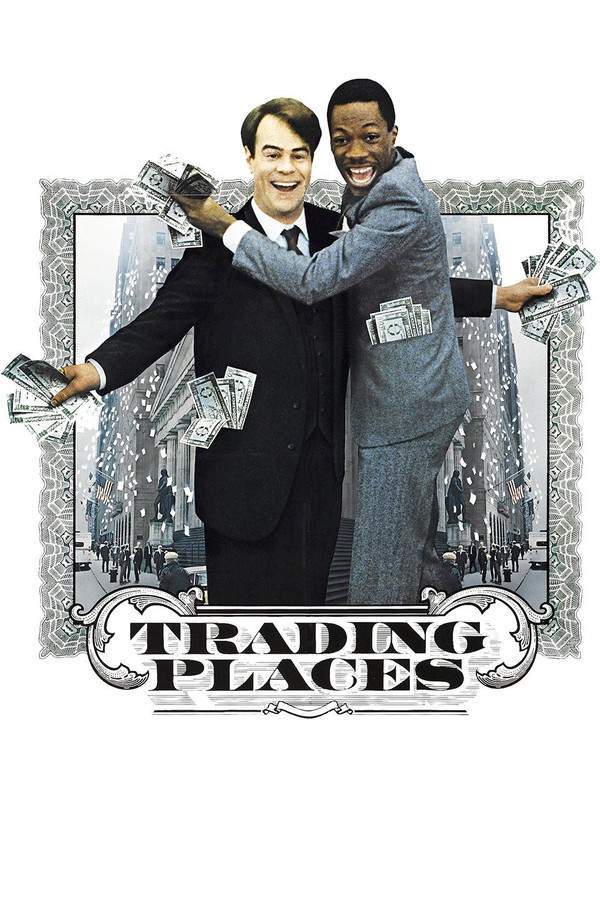
Trading Places (1983) movie poster

Plot Summary

Trading Places (1983) Plot Summary Explained

Release, runtime and language
1983 · 118 min · English
JustWatch #5,213 63
Directed by
John Landis
Starring
Dan Aykroyd, Eddie Murphy, Jamie Lee Curtis

A comedic social experiment unfolds when wealthy brothers wager on swapping the lives of two men. Successful executive Louis Winthorpe III is falsely accused and loses everything, while a resourceful hustler, Billy Ray Valentine, suddenly finds himself in a life of privilege. As they navigate their new circumstances, they discover a larger plot orchestrated by the Dukes, and must team up to expose the scheme and reclaim what was lost.

On this page (6)
  1. 1 Where to watch
  2. 2 What happens: full plot
  3. 3 Plot questions answered
  4. 4 Movie threads
  5. 5 Movies like Trading Places
  6. 6 Every angle

Where to watch

Where to Watch Trading Places (1983)

Where can you watch Trading Places? Stream, rent or buy it in the US, including on YouTube TV, Kanopy and YouTube Free: current JustWatch availability with up-to-date prices.

Streaming availability powered by JustWatch

Full plot summary · contains spoilers

What Happens in Trading Places: Full Plot Summary

The whole story of Trading Places (1983) explained, from the opening scene to the final frame: every key event, every twist and what it all adds up to. Read it as a quick recap before the sequel, to check a scene you missed, or to finally understand what really happened.

In the heart of a bustling Philadelphia, the intriguing Duke brothers, Randolph and Mortimer, engage in a high-stakes wager that pits the age-old debate of nature versus nurture against each other. In a bold and audacious experiment, they decide to swap the lives of two men from completely different backgrounds: the sophisticated and well-mannered Louis Winthorpe III, played by Dan Aykroyd, and the cunning street-smart hustler Billy Ray Valentine, brought to life by Eddie Murphy. Their scheme kicks off when an unexpected encounter between Winthorpe and Valentine leads to Valentine’s arrest, with Winthorpe mistakenly believing he is a victim of robbery.

As fate would have it, the Dukes recruit Clarence Beeks, a man on their payroll, to execute a diabolical plan aimed at tarnishing Winthorpe's reputation. Through a series of manipulative tactics, Beeks frames Winthorpe as a drug dealer and criminal, leading the Dukes to cut off his access to funds, terminate his position at Duke & Duke Commodity Brokers, and abandon him to public disgrace. Meanwhile, Valentine finds an unlikely ally in Ophelia, a prostitute who supports him in his quest for justice and seeks monetary reward for her assistance. Pleased with the progress of their experiment, the Dukes decide to bail Valentine out and elevate him to Winthorpe's former role within the firm.

In the days that follow, Valentine flourishes as an emerging business talent, deftly applying his street smarts and evolving his persona to fit the corporate world. However, during a Christmas celebration at the firm, Winthorpe devises a scheme to sabotage Valentine by planting drugs in his desk and making a dramatic escape. This incident sparks a conversation between the Dukes as they discuss their little wager — only to plan on sending Valentine back to the streets and keeping Winthorpe permanently benched. Unbeknownst to them, Valentine overhears this sinister plot and rushes to save his former adversary, who has just attempted suicide.

With the timely intervention of Ophelia, Valentine, and the steadfast butler Coleman, Winthorpe begins to mend his wounds and learns of the Dukes' manipulative experiment. It is a news segment regarding the USDA's predictions on orange crops that ignites the fire within both men to conspire against their manipulative captors. They realize that Beeks holds the key to the Dukes' plans, as he carries the confidential report that can help corner the orange juice market.

As New Year's Eve reaches its crescendo, Beeks finds himself unexpectedly ensnared in chaos when he is duped by four clever board members posing as traders, seeking to replace a genuine report with a deceptive one. The plot thickens when Beeks is knocked out by a gorilla, setting up an absurd twist that allows the impostors to proceed with their scheme. In the meantime, Winthorpe and Valentine hatch a plan to outsmart the Dukes by investing heavily in frozen concentrated orange juice futures. Their tactical move draws in other traders, creating a whirlwind of market activity.

After a series of intense trading maneuvers, the market takes a nosedive when the actual crop report reveals a normal harvest. Seizing the opportunity, Winthorpe and Valentine recover their short-sold contracts at a lower price, excluding the Dukes, thus fulfilling their obligations while raking in an immense profit.

Once the dust settles from this financial rollercoaster, the duo confronts the Dukes, revealing their gambit: to amass wealth while orchestrating the Dukes' downfall. Faced with a margin call of an astonishing $394 million, the Duke brothers find themselves destitute, their world crumbling around them. As Randolph clutches his chest in despair and Mortimer rails against the futility of their situation, Winthorpe, Valentine, Ophelia, and Coleman toast their newfound prosperity while embarking on a luxurious getaway, leaving behind Beeks and his gorilla friend bound for adventures in Africa.
Last updated: November 21, 2024 at 09:28

Was this helpful?

Plot questions answered

Trading Places Plot Explained: Your Questions Answered

The questions people ask most about Trading Places (1983): what happens in the confusing scenes, why the characters do what they do, the twists, hidden details and what the ending means. Each answer contains spoilers.

Q1

Why did the Duke brothers swap Louis Winthorpe and Billy Ray Valentine?

The Duke brothers made a wager testing the nature versus nurture debate. They wanted to prove that success is determined by background rather than innate ability. Randolph and Mortimer believed that if they gave a street hustler like Billy Ray Valentine the same opportunities as a wealthy executive, he would succeed, while a privileged man stripped of his resources would fail.

  • duke brothers
  • wager
  • nature versus nurture
  • experiment
  • social test
Q2

How did Clarence Beeks frame Louis Winthorpe as a drug dealer?

Clarence Beeks was on the Dukes' payroll and orchestrated the framing as part of their experiment. He planted drugs and criminal evidence in Winthorpe's office and apartment, making it appear that the respected executive was actually dealing drugs. This false evidence led to Winthorpe losing his job, his finances, and his social standing.

  • clarence beeks
  • framing
  • drug dealer
  • duke & duke
Q3

Why did Louis Winthorpe try to sabotage Billy Ray Valentine at the Christmas party?

After losing everything due to the Dukes' scheme, Winthorpe wrongly believed Valentine was partly responsible for his downfall. Desperate to reclaim his former position, Winthorpe planted drugs in Valentine's desk at the Christmas party, hoping to have Valentine arrested and potentially regain his job at Duke & Duke.

  • christmas party
  • sabotage
  • drugs
  • revenge
Q4

Why did Louis Winthorpe attempt suicide?

After being framed, publicly disgraced, and abandoned by everyone he knew, Winthorpe experienced complete despair. The loss of his job, reputation, wealth, and fiancée overwhelmed him, leading him to attempt suicide in Central Park. Valentine rescued him after overhearing the Dukes' plan to permanently ruin both men.

Foreshadowing: The Dukes had earlier discussed sending Valentine back to the streets while keeping Winthorpe permanently disgraced.

  • suicide
  • despair
  • rescue
  • central park
Q5

How did Valentine and Winthorpe plan to get revenge on the Dukes?

After learning about the USDA orange crop report that Beeks was carrying, they realized they could corner the orange juice market. They devised a scheme to invest heavily in frozen concentrated orange juice futures, knowing the report would create market speculation. Their plan was to profit when the market swung while bankrupting the Dukes.

  • revenge
  • orange juice futures
  • commodities
  • USDA report
  • market scheme
Q6

Why was the USDA orange crop report so important to the plan?

The USDA report predicted a freeze that would damage orange crops, which would cause orange juice prices to soar. Beeks had access to this confidential report, and Valentine and Winthorpe planned to use this information to make a fortune in the futures market before the real report was released.

  • USDA report
  • orange crops
  • freeze
  • futures trading
  • orange juice market
Q7

How did the traders trick Beeks on New Year's Eve?

Four board members at Duke & Duke posed as traders and duped Beeks into replacing the real USDA report with a fake one. During the confusion, Beeks was knocked out by a gorilla that had been smuggled into the building. This allowed the impostors to switch the reports, ensuring Beeks delivered the wrong information to the Dukes.

  • beeks
  • gorilla
  • new year's eve
  • impersonation
  • report switch
Q8

Why did the orange juice market crash instead of soaring?

The real USDA report, released after the fake one, revealed that the orange harvest would be normal with no freeze damage. This caused the price of frozen concentrated orange juice futures to plummet instead of rise. Winthorpe and Valentine had short-sold their contracts, allowing them to buy back at the lower price and profit massively.

Foreshadowing: The fake report had caused traders to speculate on rising prices, setting them up for the crash.

  • market crash
  • orange harvest
  • short selling
  • futures profit
Q9

What happened to the Duke brothers at the end of the film?

The Dukes faced financial ruin after their margin call of $394 million came due. They lost everything because they had bet heavily on the orange juice prices rising based on the fake report. Randolph Duke suffered a heart attack from the shock, and both brothers were left destitute while Winthorpe and Valentine celebrated their victory.

  • duke brothers
  • margin call
  • 394 million
  • ruin
  • heart attack
Q10

Why did Ophelia, a prostitute, help Billy Ray Valentine?

Ophelia initially helped Valentine because she saw an opportunity for financial reward and a better life. After Valentine was released from jail and given wealth and status at Duke & Duke, she genuinely supported his quest for justice against the Dukes. She also assisted in saving Winthorpe's life and participated in their revenge scheme.

  • ophelia
  • prostitute
  • ally
  • support
  • redemption
Q11

Why did Coleman the butler remain loyal to Louis Winthorpe after his downfall?

Coleman had worked for the Winthorpe family for decades and viewed Louis as a genuine friend rather than just an employer. Despite Winthorpe's disgrace and the Dukes' orders to abandon him, Coleman refused to leave. He helped nurse Winthorpe back to health after his suicide attempt and later joined the group in their revenge against the Dukes.

  • coleman
  • butler
  • loyalty
  • support
  • family servant
Q12

What was the Duke brothers' real motivation behind their social experiment?

Beyond the nature versus nurture wager, the Dukes were wealthy commodity brokers who enjoyed manipulating people as a form of entertainment. Their experiment was a cruel game to prove their belief that circumstance, not character, determines success. They funded the entire scheme purely for their own amusement and to validate their cynical worldview.

  • motivation
  • manipulation
  • cruelty
  • commodity brokers
  • entertainment

Movie threads

More Movies Like Trading Places, by Mood & Story

Curated lists built around what makes Trading Places tick: the same mood, the same kind of story or the same emotional payoff. Each list explains why these movies belong together.

Cunning Revenge Comedies like Trading Places

Sharp comedies where the underdogs outsmart the elites with ingenious schemes. If you enjoyed the clever, triumphant revenge plot in Trading Places, you'll love these movies. Discover comedies where underdog characters use ingenious schemes to outsmart their wealthy or powerful adversaries, leading to an uproarious and highly satisfying conclusion.

  • cunning
  • triumphant
  • uproarious
  • satirical
  • playful
  • energetic
  • Tone: light, satirical, triumphant
  • Pacing: fast, energetic
Why these movies?

The story pattern: The narrative typically involves a clear power imbalance, where an arrogant villain underestimates a seemingly outmatched protagonist. The story builds through the protagonist's resourceful planning and the formation of an unlikely alliance, culminating in a public and humiliating takedown of the antagonist that serves as poetic justice.

Why they belong together: These films are grouped for their shared focus on witty, elaborate revenge plots, a light and satirical tone, and a fast-paced, energetic structure that makes the victory feel especially triumphant and fun.

Social Experiment Satires like Trading Places

Humorous explorations of class and identity through forced role reversal. Find movies similar to Trading Places that explore themes of class and nature versus nurture through a humorous social experiment. These stories often involve characters being thrust into new lives, leading to satirical commentary and a playful, thought-provoking experience.

  • satirical
  • thought-provoking
  • playful
  • class conflict
  • social experiment
  • nature vs nurture
  • Tone: satirical, playful, thought-provoking
  • Pacing: fast, driven by premise
Why these movies?

The story pattern: The plot is driven by an external force (often wealthy elites) who manipulate the protagonists' lives as part of a wager or experiment. The story follows the characters as they navigate their new, alien circumstances, leading to personal growth and a revelation that exposes the flawed assumptions of the experimenters.

Why they belong together: Movies in this thread share a core premise of a manipulated social experiment, a satirical look at class and identity, and a tone that balances its commentary with lighthearted, comedic execution.

If you liked this

Movies Like Trading Places

Similar movies to Trading Places: the same genre, themes or kind of story. Each one comes with its own plot summary, timeline and ending explained.

Browse all movie summaries

Every angle

Trading Places (1983) Explained: Plot, Timeline & Characters

Everything about Trading Places in one place: what happens in the plot summary, the timeline in chronological order, the characters and meaning and a spoiler-free summary. What's After the Movie adds the cast, box office and post-credit scenes.

Coming soon on iOS and Android

The Plot Explained Movie Summary App

Plot summaries, endings explained and timelines on your phone. Catch up on any movie in minutes, save your favorites and never miss a twist again.

Be the first to know when we launch. Your email stays private, always.

Learn more about the app