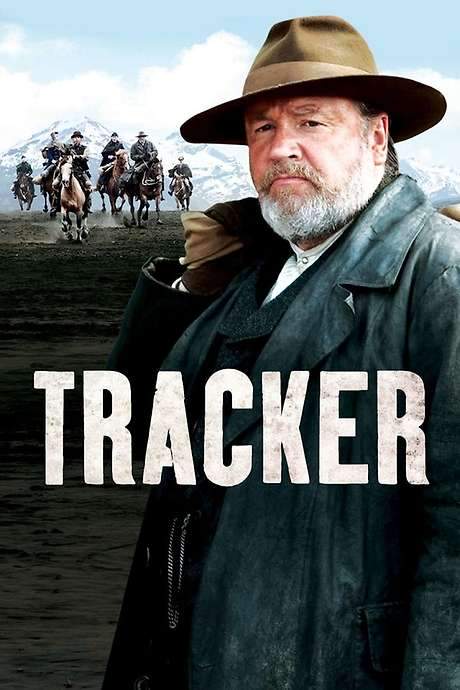
Ex‑Boer war guerrilla Arjan (James Winstone) in New Zealand is tasked with recapturing Maori seaman Kereama (Morrison), accused of killing a British soldier. As they trek through the rugged NZ wilderness they develop mutual respect, while a vengeful British commanding officer leads a posse determined to hang Kereama. The film becomes a tense cat‑and‑mouse chase that tests both men’s bushcraft and wits.
Find where to stream, rent, or buy Tracker (2010) in the US with current JustWatch availability, up-to-date pricing, and platform listings for subscription, rental, and digital purchase options.
Warning: spoilers below!
Haven’t seen Tracker yet? This summary contains major spoilers. Bookmark the page, watch the movie, and come back for the full breakdown. If you're ready, scroll on and relive the story!
Trace every key event in Tracker (2010) with our detailed, chronological timeline. Perfect for unpacking nonlinear stories, spotting hidden connections, and understanding how each scene builds toward the film’s climax. Whether you're revisiting or decoding for the first time, this timeline gives you the full picture.
Last updated: August 05, 2025 at 06:58
Find frequently asked questions about the Tracker (2010) timeline, including chronological order, nonlinear jumps, cause-and-effect links, and scene sequence clarifications. This timeline FAQ helps explain when key events happen, how moments connect, and why the story unfolds in that specific order.
Van Diemen develops respect for Kereama during their journey together after hearing about Kereama's family honor and his desire to fight for freedom like the Boer fighters. Both men share a common hatred of the British due to their losses, the Boers lost their farms and families in the war, while Kereama's grandfather was shamefully defeated. Van Diemen also recognizes the irony of hunting down a man fighting for the same freedom he once fought for, and he cannot bring himself to deliver Kereama to the British who destroyed his own life.
Earlier in the film, van Diemen tells Kereama that he cut off the trigger fingers of captured British officers as a form of grim respect, showing his conflicted loyalty.
At the waterfall, Kereama asks van Diemen to shoot him because he would rather die honorably than be captured and hanged like his grandfather. Van Diemen initially hesitates but ultimately fires. However, van Diemen deliberately shoots to miss, allowing Kereama to fall into the water. He then pistol-whips Kereama to make it look like a struggle, plants a knife near the body, and presents an index finger (which he likely took earlier) as a trophy to the British, convincing them Kereama is dead.
This moment was foreshadowed when van Diemen fed Kereama meat in secret and staged a false trail to help him escape earlier.
Kereama asks van Diemen to shoot him because he refuses to be captured alive by the British. His grandfather was captured and shamefully defeated, and Kereama would rather die on his feet than be hanged as a criminal. He sees death at the hands of someone who understands his cause as more honorable than capture and execution.
Kereama earlier explains to van Diemen that he watched his grandfather and others suffer at British hands, fueling his desire for revenge and justice.
Van Diemen presents a bloodied bandage containing an index finger to Major Carlysle, claiming it as a trophy and proof of Kereama's death. However, this is a deception, van Diemen intentionally shot to miss and staged the body. The finger was likely taken from Kereama earlier (perhaps during the river confrontation or staged fight), and van Diemen uses it to convince the British that Kereama was killed in combat, allowing him to escape.
Earlier, van Diemen mentions cutting off the trigger fingers of captured British officers, establishing his willingness to take fingers as trophies.
Kereama survives because van Diemen deliberately fires wide, missing him intentionally. When Kereama falls into the water, van Diemen pistol-whips him to create the appearance of a fatal struggle, then plants a knife nearby and takes a finger as "proof" of death. This staged scene convinces the British that Kereama is dead, allowing him to escape while van Diemen collects the reward.
Van Diemen's secret feeding of Kereama and creation of a false trail earlier showed his willingness to help Kereama escape.
Major Carlysle realizes Kereama is still alive when he observes a man with a head injury (the result of van Diemen's pistol-whipping). This leads him to understand that van Diemen deceived him. Carlysle then orders his soldiers to watch every port and whaling station for a Maori with a missing index finger, continuing the pursuit to capture Kereama alive.
The scene where Carlysle examines the man with the head injury directly precedes his realization that Kereama survived.
Kereama wears a pouch around his neck containing dust from his grandfather's homeland, symbolizing his deep cultural roots and connection to his heritage. This object represents his identity and his mission to restore his family's honor, his grandfather was shamefully defeated by the British, and Kereama seeks to reclaim that honor through his own fight for freedom.
Kereama's dialogue about his grandfather's defeat establishes why this pouch and the soil within it carry such personal significance.
Van Diemen reveals his family photographs to Kereama as a way of explaining his own pain and why he understands Kereama's desire for revenge. He mentions his wife and children died when the British burned his farm during the Boer War. By sharing this, van Diemen creates a bond with Kereama based on mutual loss and shared hatred of the British, which later motivates him to help Kereama escape.
This moment directly connects to the film's opening context about Boer War refugees losing their farms and families.
Sergeant Saunders recognizes van Diemen from the South African conflict, where he earned the reputation as the "butcher of British soldiers." Saunders is a veteran soldier who served against the Boers, and his hatred stems from van Diemen's notorious past crimes against British soldiers. Saunders immediately tries to arrest and potentially kill van Diemen upon recognizing him, showing deep personal animosity rooted in the war.
The opening scene establishes Saunders' recognition of van Diemen and his violent reaction to seeing the man who butchered British soldiers.
Kereama left his whaling ship just before the hunt begins because his primary goal is to return home and fight for his people's freedom, restoring his family's honor. The whaling expedition would have taken him away from his homeland, delaying or preventing his mission. Van Diemen learns that Kereama is a skilled harpoonist and understands that he left specifically to pursue his own cause rather than continue as a merchant seaman.
This is revealed when van Diemen investigates Kereama's background and discovers he recently left his whaling ship.
Sergeant Saunders attempts to kill Kereama with a pitchfork during the fight at the stable, but in the chaos, he accidentally fatally wounds his own corporal instead. This accidental killing allows Saunders to falsely accuse Kereama of murder, though Major Carlysle remains skeptical of the soldiers' account.
The fight begins when drunk Saunders and his men stumble upon the stable and sense an opportunity to confront Kereama.
Van Diemen accepts the reward because it allows him to leave New Zealand while maintaining the deception that Kereama is dead. By presenting the finger as proof and playing the role of a loyal tracker, van Diemen collects the payment for "killing" Kereama while actually enabling his escape. This money represents his ticket to a new life, and accepting it keeps his true actions hidden from the British.
The reward was offered at the beginning: 100 sovereigns for capturing alive, 25 for dead. Van Diemen's presentation of the finger claims the "dead" reward.
Van Diemen and Kereama develop respect through their conversations during the chase, where they share their stories of loss and their reasons for hating the British. Van Diemen learns about Kereama's family honor and his grandfather's shame, while Kereama learns about van Diemen's murdered family and his brutal war experiences. This mutual understanding of suffering creates a bond that leads van Diemen to risk everything to help Kereama escape.
Their conversations at the river and during the night when van Diemen feeds him meat build this relationship gradually.
The ending suggests Kereama does escape but remains a fugitive. After van Diemen leaves on a launch to Australia, Carlysle discovers Kereama survived and orders ports and whaling stations watched for a Maori with a missing finger. The final scenes show Kereama arriving at a station where officials scrutinize his papers but do not arrest him, leaving him free but under surveillance. Van Diemen rides away with peace, having facilitated the escape, but the pursuit continues.
The earlier reveal that Carlysle ordered the search for a Maori with a missing finger foreshadows this ongoing surveillance.
Discover curated groups of movies connected by mood, themes, and story style. Browse collections built around emotion, atmosphere, and narrative focus to easily find films that match what you feel like watching right now.
Two opposing men find mutual respect while surviving a treacherous journey together.If you liked the evolving dynamic between Arjan and Kereama in Tracker, you'll find similar stories here. These movies feature adversarial characters, often a hunter and their prey, who are forced to rely on each other for survival, leading to unexpected bonds and moral complexity.
The narrative pattern follows a high-stakes pursuit that transforms into a collaborative struggle for survival. The central conflict shifts from an external man-vs-man chase to an internal moral dilemma, as the characters' core beliefs are tested and altered by their shared experience.
These films are grouped by their core character arc: the profound shift from enmity to alliance. They share a tense, gritty atmosphere, a focus on survival in harsh settings, and a heavy emotional weight stemming from themes of honor, redemption, and challenging prejudice.
Intense chase dramas set against a backdrop of colonial conflict and injustice.For viewers seeking more tense historical chase dramas similar to Tracker. These films combine a gripping survival narrative with a heavy, thought-provoking exploration of colonial-era conflicts, moral ambiguity, and the stark beauty of unforgiving landscapes.
The stories are linear, focused pursuits through vast, challenging landscapes. The protagonist is often a morally complex figure caught between duty and conscience, chasing a fugitive who represents a broader societal conflict. The tension is high and sustained, with a bittersweet or bleak resolution that acknowledges the systemic injustices at play.
They share a potent mix of high-intensity action, a steady pacing driven by the pursuit, and a heavy emotional weight derived from their historical setting. The core experience is one of tense survival set against a somber backdrop of loss and injustice.
Don't stop at just watching - explore Tracker in full detail. From the complete plot summary and scene-by-scene timeline to character breakdowns, thematic analysis, and a deep dive into the ending - every page helps you truly understand what Tracker is all about. Plus, discover what's next after the movie.
Read a complete plot summary of Tracker, including all key story points, character arcs, and turning points. This in-depth recap is ideal for understanding the narrative structure or reviewing what happened in the movie.
Discover the characters, locations, and core themes that shape Tracker. Get insights into symbolic elements, setting significance, and deeper narrative meaning - ideal for thematic analysis and movie breakdowns.