Plot Explained Spoilers guaranteed!
Plot Explained

Browse by genre

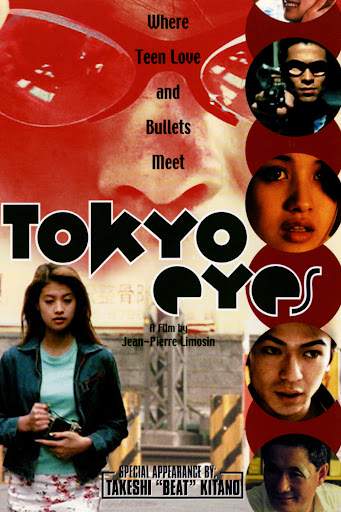
Tokyo Eyes (1998) movie poster

Timeline

Tokyo Eyes (1998) Timeline Explained – Every Event in Order

Release, runtime and language
1998 · 90 mins · Japanese
Loading streaming availability…
Directed by
Jean-Pierre Limosin
Starring
Masayuki Yui, Takeshi Kitano, Hiroyuki Ikeuchi, Ken Mitsuishi, Moro Morooka, Tetta Sugimoto

Amid teenage romance and gunfire, the police hunt a mysterious shooter who seems to target strangers. Meanwhile, a detective’s younger sister discovers that the alleged vigilante may be more complex than the sensational headlines suggest, revealing hidden motives behind the killings.

On this page (5)
  1. 1 Where to watch
  2. 2 Events in order (13)
  3. 3 Timeline questions answered
  4. 4 Movie threads
  5. 5 Every angle
Loading streaming availability…

13 events in order · contains spoilers

Tokyo Eyes Timeline: Events in Chronological Order

Every key event of Tokyo Eyes (1998) in order, scene by scene, with when and where it takes place. Use it to untangle flashbacks, time jumps and parallel storylines, to refresh your memory before the sequel or to find the exact scene you are thinking of.

  1. K debuts as Four-eyes, the vigilante

    K roams the city delivering non-lethal shots to wrong-doers as part of his unconventional vigilante work. Before each shooting he dons a pair of thick glasses, a habit that earns him the nickname Four-eyes. The pattern of his interventions unsettles the city and hints at a hidden moral code behind his actions.

    When
    Daily life
    Where
    Tokyo city streets
  2. Hinano notices a mysterious young man filming passengers in the subway

    While on the subway, Hinano spots a young man secretly filming other passengers. Intrigued, she begins following him to learn who he is and why he records strangers. Her curiosity pulls her toward an increasingly dangerous mystery.

    When
    Daytime
    Where
    Subway, Tokyo
  3. Hinano approaches K and a tentative romance begins

    Hinano finally approaches K and they quickly become friends. He invites her to his apartment and shares his interests in trance music and video games. Although she remains wary, she finds herself drawn into an unconventional romance.

    When
    Evening
    Where
    K's apartment
  4. Roy and the Four-eyes case churn in the background

    Roy, Hinano's police-officer brother, continues his investigation into Four-eyes, though progress remains elusive. The case casts a shadow over Hinano's curiosity and steady cultivation of trust with K. The pursuit adds pressure to K's secret life.

    When
    Ongoing
    Where
    Police investigation scenes around Tokyo
  5. Hinano witnesses one of K's shootings and is conflicted

    Hinano witnesses a shooting carried out by K and is confronted with moral ambiguity. She struggles with what she has learned about him versus what she feels as their growing bond. The event deepens the rift between her curiosity and ethical concerns.

    When
    Unspecified
    Where
    City streets
  6. K explains the pistol is modified to be inaccurate

    During a tense confrontation, K explains that his pistol has been modified so the bullets do not hit their targets. He claims the non-lethal aim is part of a controlled, almost artistic form of justice. Hinano weighs whether the activation of violence can be morally contained.

    When
    Shortly after witnessing
    Where
    Public confrontation near the apartment
  7. K accidentally kills a man during a breakup incident

    In a later encounter, K accidentally kills a man who is breaking up with his girlfriend for another woman. The unintended fatal outcome shatters his claim of non-lethal precision. The line between vigilante and killer blurs in a single moment.

    When
    Evening
    Where
    City street
  8. K reveals how glasses and gaze affect his actions

    K reveals that the thick glasses make his victims hold still, and that he cannot shoot if he looks them in the eye. He also explains that his decision to record is driven by a broader desire to see what is happening in the world. The confession clarifies his inner conflict.

    When
    Following confrontation
    Where
    Walk with Hinano through city streets
  9. K contemplates giving up Four-eyes; Hinano gains cautious hope

    Despite the carnage and his fragile self-control, K says he would give up Four-eyes and distance himself from the world he has built. He tells Hinano that Four-eyes is separable from who he is, which eases her worry about their relationship and future.

    When
    Post-confrontation
    Where
    City streets
  10. A yakuza visit ends with an accidental gunshot to K

    A low-ranking yakuza member arrives to collect K's handgun, and the weapon fires accidentally, injuring K in the lower abdomen. He refuses to go to the hospital and instead continues to move with Hinano. The incident heightens the stakes of his dual life.

    When
    Evening
    Where
    Street/Alley
  11. K avoids hospital and spends time with Hinano, then plans a rooftop meeting

    K declines medical care, choosing instead to walk around with Hinano and eventually propose meeting at the top of Tokyo's tallest building. Their time together becomes a final, fragile bond amid his deteriorating condition. The rooftop request signals a turning point toward the film's climax.

    When
    Late night
    Where
    Various city locations; rooftop of Tokyo's tallest building
  12. The ascent and ambiguous ending

    K asks Hinano to meet him at the top of the tallest building in Tokyo. He succumbs to his wound, swaying near a busy street as the two share a tense moment. In the final shots, Hinano walks away while glimpsing a victorious, smiling face—leaving whether K survived unresolved, a hallmark of the film's ambiguity.

    When
    Night
    Where
    Top of Tokyo's tallest building; later street below
  13. International version adds seven minutes and clarifies the ending

    The international release adds roughly seven minutes of footage and may provide a more explicit ending compared to the original cut. This extra material alters the final scene's tone and interpretation for some viewers. The core ambiguity of K's fate remains a talking point.

    When
    Post-production
    Where
    Film prints; international cut

Last updated: October 09, 2025 at 10:49

Was this helpful?

Timeline questions answered

Tokyo Eyes Timeline Explained: Your Questions Answered

When does it happen, and why in that order? The questions people ask about the chronology of Tokyo Eyes (1998): time jumps, flashbacks, cause and effect between scenes and the correct order of events, each answered with spoilers.

Q1

Why does K wear thick glasses before shooting people?

K wears thick glasses as part of his vigilante ritual. He explains that the glasses cause his victims to hold still, making them easier targets. More importantly, he admits he cannot shoot anyone if he looks them directly in the eye, so the glasses serve as a psychological barrier that allows him to act without confronting the reality of his victims' faces.

  • K
  • Four-eyes
  • glasses
  • shooting
  • vigilante
Q2

Why does K accidentally kill a man during a breakup?

K encounters a man publicly breaking up with his girlfriend for another woman. While attempting to shoot this wrongdoer like his usual targets, his modified pistol, designed to be inaccurate and non-lethal, unexpectedly fires accurately this time, killing the man. This accidental fatality shatters K's self-image as a controlled, non-lethal vigilante and marks a turning point in the story.

  • K
  • accidental killing
  • breakup
  • shooting
  • vigilante
Q3

Does K survive at the end of the film?

The ending is deliberately ambiguous. After being shot in the lower abdomen by a yakuza member and refusing hospital treatment, K walks through Tokyo with Hinano before asking her to meet him at the top of the city's tallest building. As Hinano walks away from the observation deck, she feels a hand grab hers and looks up to see K's smiling face. Whether this is real or a hallucination from his fatal wound remains unresolved.

  • K
  • ending
  • survival
  • ambiguous
  • rooftop
Q4

Why does K shoot strangers as Four-eyes?

K operates as a vigilante who targets wrongdoers he encounters in his daily life. He deliberately modifies his pistol to be inaccurate so his bullets miss, framing his actions as a form of non-lethal, artistic justice. However, his motivations blend moral vigilantism with deeper psychological needs related to observation and control.

  • K
  • Four-eyes
  • vigilante
  • shooting
  • justice
Q5

Why does K say he cannot shoot people if he looks them in the eye?

K reveals that the act of making eye contact with his targets paralyzes him psychologically. The thick glasses serve as a barrier that prevents him from seeing his victims' faces clearly, allowing him to maintain the psychological distance necessary to fire. This confession exposes the deep internal conflict and moral weakness beneath his vigilante persona.

  • K
  • eye contact
  • glasses
  • shooting
  • psychology
Q6

Why does Hinano continue her relationship with K after witnessing his shooting?

After witnessing one of K's shootings, Hinano faces intense moral conflict. However, her growing curiosity and attraction to K's unconventional world pull her deeper into their relationship. Despite knowing his secret, she remains drawn to him, eventually even witnessing his offer to abandon Four-eyes entirely, which gives her hope for their future together.

  • Hinano
  • K
  • relationship
  • shooting
  • acceptance
Q7

Why does K refuse to go to the hospital after being shot?

After the yakuza member's gun accidentally fires and pierces K's lower abdomen, he chooses not to seek medical treatment. Instead, he continues wandering Tokyo with Hinano, suggesting he accepts his fate or prefers to spend his remaining time freely rather than in a hospital bed. This decision drives the film toward its climactic rooftop meeting.

  • K
  • wound
  • hospital
  • yakuza
  • death
Q8

Why does K record videos of strangers?

K's impulse to film people stems from a broader desire to observe the world around him. He explains that recording is not merely about documenting his vigilante acts but about watching life unfold. Despite collecting vast amounts of footage, he admits that seeing clearly, both literally and figuratively, remains a struggle for him.

  • K
  • filming
  • recording
  • observation
  • voyeurism
Q9

Why does a yakuza member come to collect K's handgun?

K had loaned his modified handgun to a low-ranking yakuza member. When the yakuza arrives to return the weapon, an accidental discharge occurs while handling the gun, firing directly into K's lower abdomen. This random act of violence from his own weapon further ironicizes K's claims of controlled vigilante justice.

  • K
  • yakuza
  • handgun
  • loan
  • accident
Q10

How does the international version ending differ from the Japanese cut?

The international release includes approximately seven minutes of additional footage not present in the original Japanese cut. This extra material may offer a more explicit resolution to the story, potentially clarifying whether K survives. However, the core ambiguity surrounding his fate remains a central talking point in both versions.

  • international version
  • Japanese cut
  • ending
  • seven minutes
  • ambiguous
Q11

Why does K tell Hinano he could give up being Four-eyes?

After his accidental killing and the moral collapse of his vigilante persona, K tells Hinano that Four-eyes is separable from who he really is. This moment represents his willingness to abandon the identity entirely, giving Hinano cautious hope that they could have a normal future together beyond his violent double life.

  • K
  • Four-eyes
  • identity
  • give up
  • redemption
Q12

What does Roy discover about Four-eyes during his police investigation?

Roy, Hinano's older brother and the detective assigned to the Four-eyes case, pursues leads throughout the film but makes little progress in identifying the shooter. His investigation stalls while Hinano gets closer to K, creating dramatic irony as the truth remains hidden from the police officer right in his own household.

  • Roy
  • police investigation
  • Four-eyes
  • detective
  • case

Movie threads

More Movies Like Tokyo Eyes, by Mood & Story

Curated lists built around what makes Tokyo Eyes tick: the same mood, the same kind of story or the same emotional payoff. Each list explains why these movies belong together.

Urban Vigilante Mysteries like Tokyo Eyes

Stories that explore the enigmatic figure of a vigilante through an observer's eyes. If you enjoyed the central mystery of the 'Four-eyes' shooter in Tokyo Eyes, this thread gathers movies with similar enigmatic vigilantes. Find other tense dramas where the search for a mysterious do-gooder's identity drives the plot, blending crime investigation with urban melancholy.

  • mysterious
  • tense
  • melancholic
  • observational
  • atmospheric
  • morally ambiguous
  • Tone: tense, mysterious, melancholic
  • Pacing: steady, deliberate
Why these movies?

The story pattern: Narratives in this thread typically follow an investigator or an intrigued civilian as they piece together the identity and motivation of a mysterious vigilante. The plot unfolds as a slow-burn puzzle, where the moral ambiguity of the vigilante's actions is as central as the procedural elements of the investigation.

Why they belong together: Movies are grouped here for their shared focus on a morally complex vigilante as a central mystery. They share a tense, atmospheric tone and a steady pacing that allows for character-driven exploration of justice, identity, and the observer's growing personal investment in the case.

Character-Driven Urban Melancholy movies like Tokyo Eyes

Atmospheric dramas where city life amplifies characters' isolation and moral searches. If you liked the atmospheric, melancholic feel of Tokyo Eyes, this thread finds similar movies steeped in urban loneliness. Discover character-focused dramas where the city's mood mirrors a protagonist's journey of identity and moral ambiguity, with a steady, thoughtful pace.

  • melancholic
  • atmospheric
  • observational
  • urban loneliness
  • curious
  • thoughtful
  • Tone: melancholic, atmospheric, curious
  • Pacing: steady, observational
Why these movies?

The story pattern: These stories unfold through a protagonist navigating the emotional landscape of a city, often feeling isolated amidst the crowd. The plot is secondary to the character's internal journey, which involves grappling with identity, loneliness, and finding connection in an impersonal urban environment.

Why they belong together: These films are united by their strong atmospheric focus on urban melancholy and their prioritization of character depth over fast-paced plotting. They share a similar mood of thoughtful observation, a steady pace, and a medium emotional weight that explores themes of identity and connection.

Every angle

Tokyo Eyes (1998) Explained: Plot, Timeline & Characters

Everything about Tokyo Eyes in one place: what happens in the plot summary, the timeline in chronological order, the characters and meaning and a spoiler-free summary. What's After the Movie adds the cast, box office and post-credit scenes.

Coming soon on iOS and Android

The Plot Explained Movie Summary App

Plot summaries, endings explained and timelines on your phone. Catch up on any movie in minutes, save your favorites and never miss a twist again.

Be the first to know when we launch. Your email stays private, always.

Learn more about the app