Plot Explained Spoilers guaranteed!
Plot Explained

Browse by genre

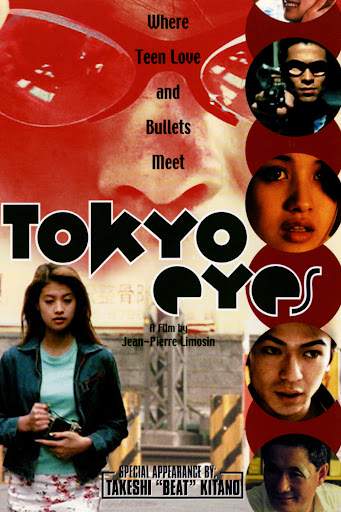
Tokyo Eyes (1998) movie poster

Characters & Themes

Tokyo Eyes (1998) Characters, Setting & Themes Explained

Release, runtime and language
1998 · 90 mins · Japanese
Loading streaming availability…
Directed by
Jean-Pierre Limosin
Starring
Masayuki Yui, Takeshi Kitano, Hiroyuki Ikeuchi, Ken Mitsuishi, Moro Morooka, Tetta Sugimoto

Amid teenage romance and gunfire, the police hunt a mysterious shooter who seems to target strangers. Meanwhile, a detective’s younger sister discovers that the alleged vigilante may be more complex than the sensational headlines suggest, revealing hidden motives behind the killings.

On this page (7)
  1. 1 Where to watch
  2. 2 Characters explained (4)
  3. 3 Where & when it takes place
  4. 4 Themes & meaning (3)
  5. 5 Character & meaning questions
  6. 6 Movie threads
  7. 7 Every angle
Loading streaming availability…

4 main characters · contains spoilers

Tokyo Eyes Characters Explained: Who Is Who

The main characters of Tokyo Eyes (1998), heroes and villains: what drives them, how they change over the course of the story and what each of them reveals about the film's bigger ideas.

  • K

    played by Shinji Takeda

    K is a young Japanese debugger and freelance programmer who moonlights as an unconventional vigilante. He non-fatally shoots wrong-doers, wearing thick glasses that strangely shape his interactions with victims. He admits he modified his pistol to be inaccurate and records footage to observe the world, suggesting a desire to see more than he can safely affect. His struggle to separate the Four-Eyes persona from his true self drives the film's moral tension.

    • 🗡️ Vigilante
    • 🧭 Ethical-conflict
    • 📼 Video-obsessed
  • Hinano

    played by Hinano Yoshikawa

    Hinano is a seventeen-year-old hairdresser who becomes fascinated with K after noticing him in public. She partners with her friend Naomi to investigate the mysterious shooter, blending curiosity with a sense of danger. Her relationship with K pulls her into a morally complex romance that tests her loyalties. Her perspective anchors the audience in the emotional stakes of the vigilante narrative.

    • 💇‍♀️ Hairdresser
    • 🕵️ Curious
    • ❤️ Romantic-involvement
  • Roy

    played by Tetta Sugimoto

    Roy is Hinano's older brother and a police officer assigned to the Four-Eyes case. He is driven and protective, pursuing leads while juggling the tension between duty and family. His investigation remains strained as he confronts the possibility that K might be an ally, a threat, or something in between. Roy embodies the formal, procedural response to a vigilante-driven crisis.

    • 👮 Police
    • 🧩 Investigation
    • 🧡 Protective
  • Naomi

    played by Kaori Mizushima

    Naomi is Hinano's friend and coworker, who joins the investigation out of curiosity and concern. She helps broaden the circle of observers who piece together the mystery surrounding K. Her involvement adds another layer to the moral debate, as alliances form and shift under pressure. Naomi acts as a counterpoint to Hinano's evolving romantic entanglement with K.

    • 🤝 Ally
    • 🧭 Inquisitive
    • 🧩 Relationship

Last updated: October 04, 2025 at 17:07

Was this helpful?

Setting

Where and When Does Tokyo Eyes Take Place?

The setting of Tokyo Eyes (1998): the year and time period, the places and locations, and how they shape the characters, the mood and the tension of the story.

Time period

Location

Tokyo, Japan

Tokyo, Japan provides a neon-drenched, modern backdrop for a vigilante drama. The dense subway network and crowded streets create anonymity and danger as the story unfolds. The skyline and top-of-building sequences frame key moments between K and Hinano, highlighting the city as both stage and witness. The urban environment emphasizes how violence can feel intimate within a bustling metropolis.

  • 🌆 Neon-lit city
  • 🚇 Subway networks
  • 🏙️ Dense urban landscape

Last updated: October 04, 2025 at 17:07

Was this helpful?

3 major themes

Tokyo Eyes Meaning: Themes & Message Explained

What is Tokyo Eyes (1998) really about? The emotional, social and philosophical themes the film keeps returning to, its symbolism and the message beneath the surface.

  • Moral Ambiguity

    The film grapples with the ethics of vigilantism, showing a protagonist who uses non-lethal force yet crosses moral lines. K justifies his actions as exposure and deterrence, complicating the viewer's sense of right and wrong. Hinano's involvement forces consideration of complicity, attraction, and the consequences of taking justice into one's own hands. The ambiguous ending reinforces that moral resolution remains elusive in a city of gray areas.

  • Surveillance

    K's habit of filming scenes and people reveals a compulsion to observe the world beyond his own wellbeing. The camera shapes reality as much as it records it, influencing how others perceive K and the incidents around him. Hinano's curiosity draws her deeper into this gaze, blurring lines between observer and participant. The film questions whether seeing equals understanding or merely viewing without empathy.

  • Identity

    Four-Eyes embodies a split identity: the public persona named by the media versus the private man with vulnerabilities. K admits a paradox—he can harm only when his gaze is averted, complicating notions of agency and intent. His romance with Hinano forces a confrontation with humanity, softness, and the danger of love in the life of a vigilante. The open-ended finale underscores the fragility and flux of identity in a crowded urban space.

Last updated: October 04, 2025 at 17:07

Was this helpful?

Character & theme questions

Tokyo Eyes Characters & Meaning: Your Questions Answered

The questions people ask about Tokyo Eyes (1998): who the characters really are, their relationships, what the symbols mean, where it takes place and what the movie is really about. Each answer contains spoilers.

Q1

Where is Tokyo Eyes set?

The film is set in Tokyo, Japan, using the city's iconic neon-lit streets and dense urban environment as a backdrop. The crowded metropolis provides both anonymity and danger, with the subway network and bustling streets playing a key role in the vigilante's ability to operate unseen.

  • tokyo
  • setting
  • japan
  • city
  • location
Q2

How does Tokyo's urban landscape shape the story?

The dense urban environment creates a stage where violence can feel intimate amid the chaos of daily life. The skyline and rooftop sequences frame key moments between K and Hinano, making the city itself a witness to the events and reinforcing themes of observation and anonymity.

  • urban
  • tokyo
  • city
  • environment
  • skyline
Q3

What does the Moral Ambiguity theme explore in Tokyo Eyes?

The film examines the ethics of vigilantism through K, who uses non-lethal force yet crosses moral lines. His justification of exposure and deterrence complicates the viewer's sense of right and wrong. Hinano's involvement forces consideration of complicity, and the ambiguous ending reinforces that moral resolution remains elusive.

  • moral ambiguity
  • ethics
  • vigilantism
  • justice
  • right wrong
Q4

What is the Surveillance theme about in Tokyo Eyes?

K's habit of filming scenes reveals a compulsion to observe the world beyond his own wellbeing. The camera shapes reality as much as it records it, influencing how others perceive him. Hinano's curiosity draws her deeper into this gaze, blurring lines between observer and participant.

  • surveillance
  • camera
  • observation
  • watching
  • gaze
Q5

What does the Identity theme explore in the film?

Four-Eyes embodies a split identity between the media-created public persona and the private vulnerable man. K admits he can harm only when his gaze is averted, complicating agency and intent. His romance with Hinano forces a confrontation with humanity, and the open-ended finale underscores the fragility of identity.

  • identity
  • four-eyes
  • persona
  • split identity
  • public private
Q6

Who is K in Tokyo Eyes?

K is Shinji Takeda, a young Japanese debugger and freelance programmer who moonlights as an unconventional vigilante. He non-fatally shoots wrong-doers while wearing thick glasses, and records footage to observe the world. His struggle to separate the Four-Eyes persona from his true self drives the film's moral tension.

  • k
  • shinji takeda
  • vigilante
  • four-eyes
  • debugger
Q7

Who is Hinano in Tokyo Eyes?

Hinano Yoshikawa is a seventeen-year-old hairdresser who becomes fascinated with K after noticing him in public. She partners with her friend Naomi to investigate the mysterious shooter, blending curiosity with a sense of danger. Her perspective anchors the audience in the emotional stakes of the vigilante narrative.

  • hinano
  • yoshikawa
  • hairdresser
  • curiosity
  • investigation
Q8

Who is Roy in Tokyo Eyes?

Roy Yoshikawa is Hinano's older brother and a police officer assigned to the Four-Eyes case. He is driven and protective, pursuing leads while juggling the tension between duty and family. His investigation confronts the possibility that K might be an ally, a threat, or something in between.

  • roy
  • yoshikawa
  • police
  • detective
  • brother
  • duty
Q9

What does the name Four-Eyes refer to in the movie?

Four-Eyes is the media-created nickname for the mysterious vigilante, referring to the thick glasses K wears. The name represents his public persona as a shooter who targets wrong-doers, distinct from his private identity as Shinji Takeda, a programmer with a complex relationship to violence and observation.

  • four-eyes
  • glasses
  • media
  • nickname
  • vigilante
Q10

How does Tokyo Eyes portray vigilantism?

The film presents vigilantism as morally complex. K uses non-lethal force and justifies his actions as exposure and deterrence, but the story never fully endorses his methods. Through Hinano's involvement and Roy's investigation, the film explores the consequences of taking justice into one's own hands in a city where moral lines remain gray.

  • vigilantism
  • justice
  • four-eyes
  • crime
  • punishment
Q11

How does the romance element fit into the film's thriller narrative?

The romance between Hinano and K develops as a secondary storyline that tests her loyalties and brings humanity to the vigilante narrative. While present, it remains secondary to the psychological thriller elements, adding emotional weight without overshadowing the central mystery and moral questions.

  • romance
  • hinano
  • k
  • relationship
  • love
  • thriller

Movie threads

More Movies Like Tokyo Eyes, by Mood & Story

Curated lists built around what makes Tokyo Eyes tick: the same mood, the same kind of story or the same emotional payoff. Each list explains why these movies belong together.

Urban Vigilante Mysteries like Tokyo Eyes

Stories that explore the enigmatic figure of a vigilante through an observer's eyes. If you enjoyed the central mystery of the 'Four-eyes' shooter in Tokyo Eyes, this thread gathers movies with similar enigmatic vigilantes. Find other tense dramas where the search for a mysterious do-gooder's identity drives the plot, blending crime investigation with urban melancholy.

  • mysterious
  • tense
  • melancholic
  • observational
  • atmospheric
  • morally ambiguous
  • Tone: tense, mysterious, melancholic
  • Pacing: steady, deliberate
Why these movies?

The story pattern: Narratives in this thread typically follow an investigator or an intrigued civilian as they piece together the identity and motivation of a mysterious vigilante. The plot unfolds as a slow-burn puzzle, where the moral ambiguity of the vigilante's actions is as central as the procedural elements of the investigation.

Why they belong together: Movies are grouped here for their shared focus on a morally complex vigilante as a central mystery. They share a tense, atmospheric tone and a steady pacing that allows for character-driven exploration of justice, identity, and the observer's growing personal investment in the case.

Character-Driven Urban Melancholy movies like Tokyo Eyes

Atmospheric dramas where city life amplifies characters' isolation and moral searches. If you liked the atmospheric, melancholic feel of Tokyo Eyes, this thread finds similar movies steeped in urban loneliness. Discover character-focused dramas where the city's mood mirrors a protagonist's journey of identity and moral ambiguity, with a steady, thoughtful pace.

  • melancholic
  • atmospheric
  • observational
  • urban loneliness
  • curious
  • thoughtful
  • Tone: melancholic, atmospheric, curious
  • Pacing: steady, observational
Why these movies?

The story pattern: These stories unfold through a protagonist navigating the emotional landscape of a city, often feeling isolated amidst the crowd. The plot is secondary to the character's internal journey, which involves grappling with identity, loneliness, and finding connection in an impersonal urban environment.

Why they belong together: These films are united by their strong atmospheric focus on urban melancholy and their prioritization of character depth over fast-paced plotting. They share a similar mood of thoughtful observation, a steady pace, and a medium emotional weight that explores themes of identity and connection.

Every angle

Tokyo Eyes (1998) Explained: Plot, Timeline & Characters

Everything about Tokyo Eyes in one place: what happens in the plot summary, the timeline in chronological order, the characters and meaning and a spoiler-free summary. What's After the Movie adds the cast, box office and post-credit scenes.

Coming soon on iOS and Android

The Plot Explained Movie Summary App

Plot summaries, endings explained and timelines on your phone. Catch up on any movie in minutes, save your favorites and never miss a twist again.

Be the first to know when we launch. Your email stays private, always.

Learn more about the app