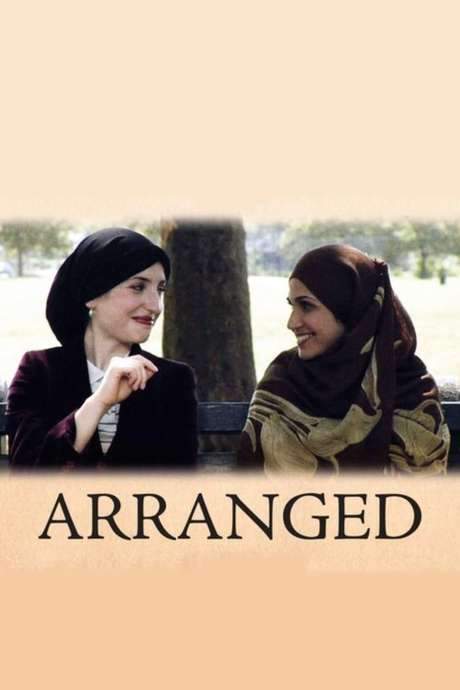
In the bustling heart of New York City, a young French Muslim woman arrives for her first visit to the United States, carrying with her the memories of a modest neighborhood outside Paris and a promise of reunion. The city is painted with the bright, relentless energy of a place that never quite feels like home to newcomers, its streets humming with a mix of possibility and anonymous indifference. Against this backdrop, the atmosphere is charged with an uneasy quiet, hinting at the cultural dissonance that will ripple beneath the surface of every encounter.
When she finally meets her childhood confidante, now living under a new name, the greeting is anything but simple. Zahra—who prefers to be called Sarah—has fully embraced the rhythms of Western life, her identity reshaped by years of assimilation. Their conversation becomes a delicate dance, each word revealing the distance that time and geography have wrought. Through their interaction, the film gently probes themes of belonging, identity, and the subtle ways that personal histories can clash with the expectations of a new environment. The tone remains contemplative, allowing the viewer to feel the tension between nostalgia for a shared past and the stark reality of present differences.
The story unfolds with a quiet, almost observational style, inviting the audience to linger on moments of silence as much as on dialogue. It captures the inner world of the visitor, whose sense of self is both challenged and reaffirmed by the unfamiliar city and by the people she encounters. Amidst the towering skyline and the private corners of the metropolis, the film poses lingering questions about faith, friendship, and the ever‑shifting landscape of cultural identity—leaving viewers eager to see how these threads might intertwine.