
They Came to Blow Up America
Year: 1943
Runtime: 73 mins
Language: English
Director: Edward Ludwig
Based on the 1942 incident in which nine Nazi saboteurs were landed on Long Island by a German submarine and ordered to blow up American defense installations, the film recounts their covert mission, the attempts to destroy key targets, and the ensuing response of U.S. authorities.
Warning: spoilers below!
Haven’t seen They Came to Blow Up America yet? This summary contains major spoilers. Bookmark the page, watch the movie, and come back for the full breakdown. If you're ready, scroll on and relive the story!
Timeline – They Came to Blow Up America (1943)
Trace every key event in They Came to Blow Up America (1943) with our detailed, chronological timeline. Perfect for unpacking nonlinear stories, spotting hidden connections, and understanding how each scene builds toward the film’s climax. Whether you're revisiting or decoding for the first time, this timeline gives you the full picture.
Last updated: October 09, 2025 at 14:13
They Came to Blow Up America (1943) Timeline Questions Answered – Chronology FAQ
Find frequently asked questions about the They Came to Blow Up America (1943) timeline, including chronological order, nonlinear jumps, cause-and-effect links, and scene sequence clarifications. This timeline FAQ helps explain when key events happen, how moments connect, and why the story unfolds in that specific order.
Why did Carl denounce Helga to Colonel Taeger after finding the anti-Nazi leaflets?
Carl discovered Helga had anti-Nazi leaflets and warned her to flee. However, a spy with a telescope witnessed this exchange. To maintain his cover as a loyal German saboteur-in-training, Carl was forced to denounce Helga himself. If he hadn't, his true identity as an FBI agent would have been exposed, ending the entire mission.
Earlier, Colonel Taeger had ordered Carl to continue seeing Helga specifically to gather evidence against her, setting up the dilemma.
Why did Carl rescue Helga after he had her sent to a concentration camp?
Carl denounced Helga only to protect his cover, but he never intended for her to actually suffer that fate. When Taeger ordered her transport to the concentration camp, Carl intercepted the car and rescued her. This act demonstrated that despite his required deception, Carl maintained his personal moral compass and genuine care for Helga's safety.
Carl's earlier warning to Helga about the leaflets showed his personal feelings conflicted with his mission requirements.
Why was Reiter's wife committed to an asylum?
When the real Reiter's wife arrived unexpectedly at Carl's hotel, she threatened to expose his identity as an impostor. To prevent her from betraying him, Carl claimed she had lost her mind and was delusional. After Colonel Taeger personally questioned her and confirmed she appeared unstable, he authorized her commitment to an asylum, effectively silencing her without killing her.
Carl's quick thinking in explaining her arrival as a mental health crisis prevented immediate exposure.
Why did Carl's father Julius tell Dr. Holger about the real mission?
When Carl's father became seriously ill, Craig decided Julius should know the truth about his son's actual FBI work rather than letting him die believing his son was a genuine Nazi. Craig warned Julius not to tell anyone, but Julius was emotionally overwhelmed by the secret and confided in his close friend Dr. Holger, not realizing the doctor was himself a German agent.
This breach of security would later have serious consequences when Carl discovers who the agents are.
How did Carl sink the U-boat after being deployed?
Before leaving the submarine, Carl planted an explosive device on board. When the U-boat was submerged after deploying the saboteurs, the bomb detonated and sank the vessel. This served two purposes: it eliminated evidence of the sabotage mission and ensured the U-boat couldn't deliver the urgent message from Colonel Taeger warning about Carl's true identity.
Carl's earlier success at the sabotage school gave him knowledge of how to construct and plant explosives.
Why is Dr. Holger on the list of German agents?
Dr. Herman Holger was a German agent operating in America, listed as agent number eight on the secret roster Carl obtained during his infiltration. Despite being a close friend of Carl's father, the doctor had been working for German intelligence. When Carl returns home at the film's end, he reveals this information and takes the doctor away, presumably for arrest.
Julius's earlier revelation of the secret to Holger created the dangerous situation where the doctor now knew too much.
Why did Colonel Taeger kill Frau Reiter?
After discovering that Carl Steelman was actually an American agent who had infiltrated the sabotage program, Taeger went to Frau Reiter to verify the information. She confirmed that Steelman was her husband's associate in America. Realizing his mistake had allowed an American agent to rise to a position of power, Taeger shot her to cover up his failure and prevent anyone from learning the truth.
Taeger's earlier trust in Carl despite warnings set up this catastrophic security failure.
Why did Carl agree to turn state's evidence against the other saboteurs?
After being arrested on the beach, Craig instructed Carl to maintain his cover and testify against the other saboteurs. By turning state's evidence, Carl could remain undercover and help bring down the entire network, including the four saboteurs sent to Florida. This strategy allowed the FBI to dismantle the German operation from within.
Carl's successful infiltration had already placed him in position to expose the entire plot.
What happened to Helga Lorenz after Carl rescued her?
After Carl rescued Helga from the concentration camp transport, the narrative doesn't specify her ultimate fate. Given the wartime混乱 and Carl's subsequent departure for America, it's likely she went into hiding or escaped to safety. The focus shifts to Carl's mission completion, and Helga's story remains unresolved in the film's conclusion.
Why was Carl Steelman chosen to infiltrate the German saboteurs?
Carl was selected because he was an American with German heritage, making him fluent in the language and culture. His parents were German-born, which allowed him to convincingly join the German American Bund. His background provided the perfect cover for the FBI to insert him into the sabotage operation, and his legal background as an attorney added to his credibility.

Explore Movie Threads
Discover curated groups of movies connected by mood, themes, and story style. Browse collections built around emotion, atmosphere, and narrative focus to easily find films that match what you feel like watching right now.
Movies about undercover agents like They Came to Blow Up America
Nerve-wracking stories of agents living a dangerous lie.If you liked the tense undercover mission in They Came to Blow Up America, explore more movies about agents infiltrating dangerous organizations. These films share a similar feeling of high-risk deception, constant danger, and the psychological toll of living a double life.

The Assignment
1997

The Thief
1952

Top Secret
2017

Mission: Impossible
1996

Secret Enemies
1942

Black Bag
2025

Spooks: The Greater Good
2015

Who Dares Wins
1982

Infernal Affairs
2004

Agent
2023
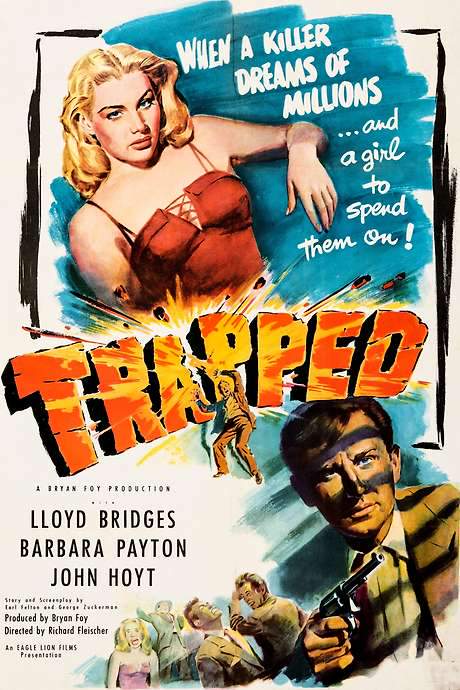
Trapped
1949

The Thirty Nine Steps
1978

Confidential Assignment 2: International
2022

The 39 Steps
2008

Spy Game
2001
Narrative Summary
The narrative follows a protagonist who must infiltrate a hostile group, often adopting a false identity. The plot is driven by close calls, intricate deceptions, and the immense pressure of gathering intelligence while avoiding detection. The character's journey is one of isolation and immense psychological strain.
Why These Movies?
Movies are grouped here for their shared focus on the mechanics and psychology of undercover work. They create a consistent vibe of anxiety and urgency, built on the core tension of a character being deeply embedded with the enemy.
World War Two spy movies similar to They Came to Blow Up America
Pulse-pounding missions to dismantle the enemy from within.Fans of the wartime sabotage plot in They Came to Blow Up America will enjoy these similar World War Two espionage stories. This thread features films about covert missions, enemy agents, and the frantic efforts to protect national security during a global conflict.
Secret Enemies
1942

Counter-Espionage
1942

Operation Crossbow
1965

Secret Command
1944

The Adventures of Tartu
1943

Background to Danger
1943

Cloak and Dagger
1946

Saboteur
1942

Code Name: Emerald
1985

Invisible Agent
1942

Against the Wind
1948

O.S.S.
1946

13 Rue Madeleine
1947

War 2
2025

Operator 13
1934
Narrative Summary
Stories typically involve a race against time to prevent or carry out a devastating attack on critical infrastructure or military targets. The narrative is structured around the planning, execution, and consequences of the mission, often involving cat-and-mouse chases with counter-intelligence.
Why These Movies?
This thread groups movies based on their specific wartime setting and the plot focus on sabotage and covert warfare. They share a distinct historical context and a common narrative engine built on mission-based urgency and geopolitical stakes.
Unlock the Full Story of They Came to Blow Up America
Don't stop at just watching - explore They Came to Blow Up America in full detail. From the complete plot summary and scene-by-scene timeline to character breakdowns, thematic analysis, and a deep dive into the ending - every page helps you truly understand what They Came to Blow Up America is all about. Plus, discover what's next after the movie.
They Came to Blow Up America Summary
Read a complete plot summary of They Came to Blow Up America, including all key story points, character arcs, and turning points. This in-depth recap is ideal for understanding the narrative structure or reviewing what happened in the movie.

Characters, Settings & Themes in They Came to Blow Up America
Discover the characters, locations, and core themes that shape They Came to Blow Up America. Get insights into symbolic elements, setting significance, and deeper narrative meaning - ideal for thematic analysis and movie breakdowns.


Similar Movies to They Came to Blow Up America
Discover movies like They Came to Blow Up America that share similar genres, themes, and storytelling elements. Whether you’re drawn to the atmosphere, character arcs, or plot structure, these curated recommendations will help you explore more films you’ll love.

Operation Valkyrie
2004

The Long Island Four
1980

Submarine Alert
1943

Operation Bikini
1963
Secret Enemies
1942

Underground
1970

Ten Seconds to Hell
1959

In Enemy Country
1968

Submarine Base
1943
Against the Wind
1948

Verboten!
1959

Operation Secret
1952

Atlantic Convoy
1942

I Deal In Danger
1966

The Last Blitzkrieg
1959
Explore More About Movie They Came to Blow Up America
They Came to Blow Up America (1943) Plot Summary & Movie Recap
They Came to Blow Up America (1943) Scene-by-Scene Movie Timeline
They Came to Blow Up America (1943) Spoiler-Free Summary & Key Flow
Movies Like They Came to Blow Up America – Similar Titles You’ll Enjoy
Operation Valkyrie (2004) Full Movie Breakdown
The Long Island Four (1980) Full Summary & Key Details
Submarine Alert (1943) Movie Recap & Themes
Operation Bikini (1963) Detailed Story Recap
Secret Enemies (1942) Ending Explained & Film Insights
Underground (1970) Detailed Story Recap
Ten Seconds to Hell (1959) Movie Recap & Themes
In Enemy Country (1968) Ending Explained & Film Insights
Submarine Base (1943) Ending Explained & Film Insights
Against the Wind (1948) Spoiler-Packed Plot Recap
Verboten! (1959) Full Movie Breakdown
Operation Secret (1952) Spoiler-Packed Plot Recap
Atlantic Convoy (1942) Spoiler-Packed Plot Recap
I Deal In Danger (1966) Complete Plot Breakdown
The Last Blitzkrieg (1959) Ending Explained & Film Insights