Plot Explained Spoilers guaranteed!
Plot Explained

Browse by genre

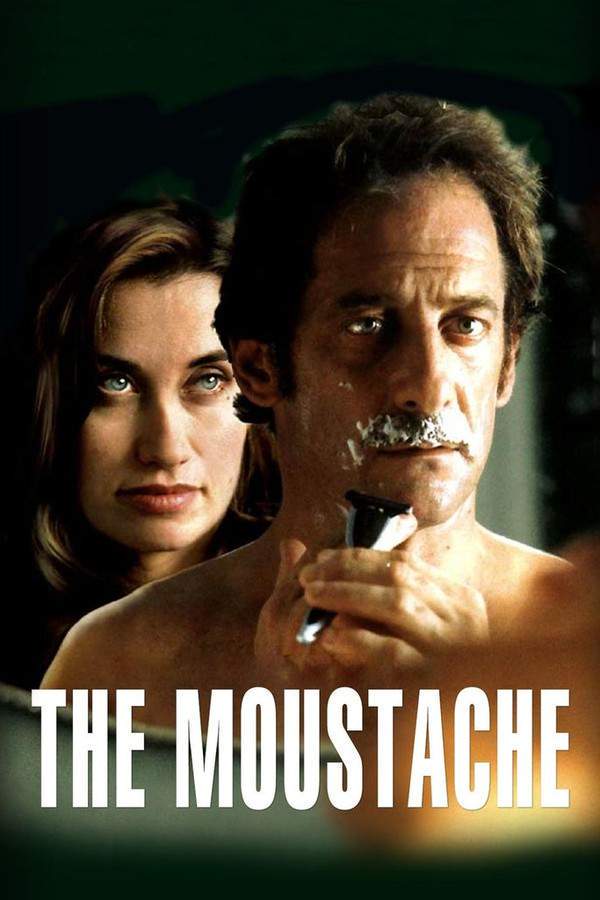
The Moustache (2005) movie poster

Timeline

The Moustache (2005) Timeline Explained – Every Event in Order

Release, runtime and language
2005 · 87 mins · French
Loading streaming availability…
Directed by
Emmanuel Carrère
Starring
Mathieu Amalric, Vincent Lindon, Emmanuelle Devos, Hippolyte Girardot, Denis Ménochet, Au Hin-Wai

On a whim, Marc shaves away the moustache he has worn throughout his adult life, expecting his wife’s reaction. Instead, she and his friends act as if nothing has changed. When he points it out, they all insist he never had a moustache at all, leaving him to question his sanity, wonder if he is the target of a bizarre conspiracy, or suspect that reality itself has slipped out of order.

On this page (7)
  1. 1 Where to watch
  2. 2 Events in order (15)
  3. 3 Timeline questions answered
  4. 4 Movie threads
  5. 5 Movies like The Moustache
  6. 6 Categories
  7. 7 Every angle
Loading streaming availability…

15 events in order · contains spoilers

The Moustache Timeline: Events in Chronological Order

Every key event of The Moustache (2005) in order, scene by scene, with when and where it takes place. Use it to untangle flashbacks, time jumps and parallel storylines, to refresh your memory before the sequel or to find the exact scene you are thinking of.

  1. Marc's Decision to Shave

    Marc Thiriez, a middle-aged Parisian, contemplates shaving off his moustache, which he has had for most of his adult life. His wife Agnès teases him, saying she wouldn't recognize him without it, yet he proceeds to shave it off.

    Where
    Paris
  2. Agnès Returns Home

    Upon Agnès's return, Marc tries to share his surprise of being clean-shaven, but her reaction is nonchalant. Marc lies about breaking his shoelace when Agnès comments on him not opening the door for her, which immediately sets an awkward tone.

    Where
    Marc and Agnès's home
  3. The Party with Friends

    During a car ride to a party with friends Serge and Nadia, Marc eagerly awaits a compliment about his new look. However, Agnès changes the subject, and Serge shares a story about Agnès's past, adding to the tension in the car.

    Where
    En route to a party
  4. Conflict in the Car

    As they return home, Marc's frustration boils over when Agnès downplays the significance of his moustache. This leads to an argument that frightens Agnès, further deepening the rift in their relationship.

    Where
    In the car
  5. Nighttime Confrontation

    That night in bed, another fight breaks out as Agnès insists Marc has never had a moustache. She expresses concern for his mental state, which causes Marc to become increasingly bewildered.

    Where
    Their bedroom
  6. The Photographic Evidence

    Marc discovers a photo album filled with holiday pictures from Bali where he clearly has his moustache. When he confronts Agnès with the evidence, she deliberately avoids the topic, intensifying Marc's confusion.

    Where
    Their home
  7. Further Doubts and Suggestions

    Marc becomes paranoid when co-workers also fail to acknowledge his recent shaving. Agnès suggests that he seek psychiatric help, complicating Marc's feelings and leading him to question his grasp on reality.

    Where
    Marc's workplace
  8. Signs of Delusion

    Marc receives a message from his deceased father, which adds to his fears and confusion. Agnès informs him that his father has been dead for a year, prompting Marc to question the validity of his memories.

    Where
    Their home
  9. Fleeing to Safety

    Overhearing a conversation about committing him to a psychiatric facility, Marc panics and flees his home. In a frantic attempt to escape, he struggles to remember his childhood home in the rain.

    Where
    Paris
  10. Departure from Paris

    Marc decides to flee to Hong Kong, catching the first available flight. He departs with his passport in hand, which still carries a photo of him with a moustache, symbolizing his troubled state of mind.

    Where
    Paris airport
  11. Journeys in Hong Kong

    In Hong Kong, Marc grapples with his decisions and writes an apology postcard to Agnès but never sends it. He spends time on the Star Ferry, reflecting on his life while experiencing the vibrant chaos of the city.

    Where
    Hong Kong
  12. Unexpected Stop

    After spending an uncertain amount of time in Hong Kong, Marc meets local fishermen and is taken to a remote village in China. There, he gradually regrows his moustache, symbolizing a return to his past self.

    Where
    Village in China
  13. Agnès's Surprise Visit

    Marc returns to the hotel one day to find Agnès waiting for him, as if she had never left. Confusion washes over him while Agnès mocks his bright jacket, re-establishing their familiar, yet strained dynamic.

    Where
    Hotel in China
  14. Meeting New Friends

    Agnès introduces Marc to new friends at a casino, whom he has never met before. When recent photos reveal that he has a moustache, Marc's frustration continues to grow as Agnès fails to understand his feelings.

    Where
    Casino
  15. Final Shave

    Back at the hotel, Agnès asks Marc to shave off his moustache again for her. He complies, and Agnès compliments him on how he looks without it, hinting at hope for their relationship.

    Where
    Hotel room

Last updated: October 02, 2026 at 03:21

Was this helpful?

Timeline questions answered

The Moustache Timeline Explained: Your Questions Answered

When does it happen, and why in that order? The questions people ask about the chronology of The Moustache (2005): time jumps, flashbacks, cause and effect between scenes and the correct order of events, each answered with spoilers.

Q1

Why does no one notice that Marc shaved his moustache?

The film deliberately blurs reality around Marc's transformation, and everyone around him, Agnès, Serge, Nadia, and his coworkers, acts as if his appearance has not changed at all. This collective denial establishes the central mystery of The Moustache, forcing viewers to question whether Marc's perception is faulty or whether the people in his life are deliberately refusing to acknowledge the change. The ambiguity is intentional and drives the film's psychological suspense.

Foreshadowing: Agnès's earlier teasing remark, 'I wouldn't recognize him without it', takes on a darker tone once it becomes clear she may be using the comment as a kind of denial rather than affection.

  • moustache shave
  • agnes denial
  • perception
  • reality distortion
  • gaslighting
Q2

Is Marc actually delusional or is he being gaslit in The Moustache?

The film intentionally never resolves the question of whether Marc is mentally ill or being manipulated. Evidence supports both readings: Marc digs through the trash for shaved hairs and confabulates memories of his dead father, suggesting delusion, while Agnès systematically denies photographic evidence, fabricates timelines, and discusses involuntary commitment behind his back, suggesting deliberate gaslighting. The Moustache uses this ambiguity as its core dramatic engine, refusing to give the viewer a definitive answer.

  • delusion
  • gaslighting
  • unreliable narrator
  • mental illness
  • reality
Q3

Why does Agnès dismiss the Bali photographs that clearly show Marc with a moustache?

The Bali photo album is the strongest physical evidence supporting his reality, yet Agnès sidesteps the issue entirely rather than engaging with it. Her refusal to acknowledge what is plainly visible in their own vacation pictures deepens Marc's paranoia and signals that the denial is not a misunderstanding but a chosen strategy. The photographs also reinforce Marc's anchoring to a verifiable past, making Agnès's dismissal feel deliberately cruel.

Foreshadowing: Earlier, Agnès had joked that she 'wouldn't recognize him without it,' which now reads as a rehearsal of the denial she later enforces.

  • bali photos
  • photographic evidence
  • agnes denial
  • memory
Q4

Why does Marc believe his father is still alive when Agnès says he has been dead for a year?

Marc references visiting his parents for dinner as part of his attempt to ground himself in a familiar past, only for Agnès to remind him that the man has been deceased for a year. This revelation functions as one of the film's clearest signals that Marc's memory is unreliable or that Agnès is rewriting his biography. Coming after the moustache dispute, the father detail deepens the uncertainty, since it is the kind of foundational fact that would be hard to misremember or fabricate casually.

  • dead father
  • memory loss
  • reality distortion
  • agnes
Q5

Why does Marc overhear Agnès and Bruno discussing committing him to a psychiatric facility?

Marc wakes to hear Agnès and her friend Bruno calmly discussing the logistics of having him involuntarily institutionalized, which confirms his worst fears that those around him are coordinating against him rather than helping him. The scene reframes Agnès's earlier insistence that he seek psychiatric help as a calculated step toward removal rather than concern. It is the moment the film shifts from psychological ambiguity into active threat, triggering Marc's flight.

Foreshadowing: Agnès's earlier suggestion to consult a psychiatrist friend named François now reads as a prelude to this institutionalization plot.

  • involuntary commitment
  • psychiatric facility
  • agnes
  • bruno
  • escape
Q6

Why does Marc choose to flee to Hong Kong instead of confronting Agnès?

After escaping his apartment, Marc is unable to verify his own childhood address in the rain, suggesting that his grasp of his identity is disintegrating in real time. Fleeing to Hong Kong becomes less about escape from Agnès and more about escape from a Paris that no longer confirms who he is. His passport photo still shows him with the moustache, reinforcing that the version of himself he is fleeing is the one he no longer feels he is.

  • hong kong
  • escape
  • passport
  • flight
  • identity
Q7

Why does Marc regrow his moustache while living in the Chinese village?

After being taken in by local fishermen, Marc gradually allows his moustache to grow back, symbolizing a reclamation of the identity the people around him had insisted never existed. The regrowth happens away from Agnès's gaze and outside the social framework that denied him, suggesting that the moustache was always tied to his sense of self rather than to anyone else's recognition of it. The remote village functions as a space where he can exist without being contradicted.

  • moustache regrowth
  • china village
  • identity
  • fishermen
  • self
Q8

How is Agnès already at the hotel in China waiting for Marc?

When Marc returns to his Hong Kong hotel after time in the village, Agnès is there as if she had been with him all along, and she makes casual references to events he does not remember. The film never clarifies whether she actually traveled, whether the timeline has been distorted, or whether the entire sequence exists only in Marc's mind. This is the film's clearest temporal rupture and a key signal that The Moustache operates outside conventional narrative rules.

  • agnes arrival
  • hotel
  • timeline distortion
  • surreal
  • reality
Q9

What does the ending of The Moustache mean when Marc shaves again at Agnès's request?

In the final scene, Agnès asks Marc to shave his moustache off once more so she can finally see his face without it, and he complies, after which she compliments his appearance. The act frames the moustache as something that has defined, and possibly shielded, his identity throughout their relationship, with Agnès now requesting access to the version of him she had insisted did not exist. The ending is ambiguous: it can read as reconciliation or as a final surrender of self, depending on whether the viewer trusts Agnès or Marc.

Foreshadowing: The entire film has been structured around the question of whether the moustache exists; the ending reverses that by making Agnès the one who requests its removal.

  • ending explained
  • final shave
  • identity
  • agnes
  • reconciliation
Q10

Why does Marc lie to Agnès about being at his mother's house?

When Marc calls Agnès from the cab, he falsely tells her he is at his mother's house and asks her to come collect him, which is a desperate attempt to lure her out so he can confirm whether she and Bruno are still in his apartment. The lie shows Marc beginning to think strategically, using the same kind of manipulation that has been used against him. It also reveals how destabilized he has become: he cannot verify his own childhood home, and his only leverage is deception.

  • lying
  • mother
  • phone
  • agnes
  • manipulation
Q11

Why does Agnès buy Marc a garish clown jacket?

Agnès purchases a flashy jacket that Marc immediately calls 'a clown's jacket,' and it becomes a recurring visual marker of his estrangement from her taste and perception. The garment is loud, conspicuous, and impossible to miss, yet it is one of the few things she actively does acknowledge and engage with, suggesting she may be responding to what she can see while denying what she refuses to. It also becomes a symbol of the couple's disconnect when she later mocks it in Hong Kong.

Foreshadowing: The jacket reappears in China when Agnès jokes about it, becoming the one consistent object between the two realities.

  • clown jacket
  • agnes
  • visual symbol
  • estrangement
Q12

What does Serge mean when he tells Marc he hasn't had a moustache in over a decade?

When Bruno informs Marc that he has not had a moustache in over a decade, it adds another voice to the collective denial and suggests that the rewriting of Marc's appearance is not limited to Agnès. The remark implies that the absence of the moustache may have been true for years before Marc shaved it, deepening the temporal confusion and raising the question of when, if ever, the version of Marc he remembers actually existed.

  • serge
  • bruno
  • decade
  • denial
  • past
Q13

Why does Marc dig through the trash looking for his shaved moustache hairs?

Searching the garbage for his discarded moustache hairs is Marc's attempt to gather physical proof of the change, since every person around him denies it happened. The act is desperate and humiliating, and it terrifies her because it signals just how unmoored he has become. It also establishes that Marc understands he needs tangible evidence to counter the denial, foreshadowing how the psychological conflict will continue to escalate.

  • trash
  • moustache hairs
  • evidence
  • paranoia
  • marc
Q14

Why does Marc write a postcard apologizing to Agnès but never send it?

In Hong Kong, Marc composes a postcard intended as an apology but ultimately does not send it, which signals an unresolved internal conflict between wanting to return to Agnès and knowing that returning means re-submitting to her version of reality. The unsent postcard captures the limbo state of the film's middle act, where Marc is physically free but emotionally tied to the marriage that has destabilized him.

  • postcard
  • apology
  • hong kong
  • agnes
  • unresolved

Movie threads

More Movies Like The Moustache, by Mood & Story

Curated lists built around what makes The Moustache tick: the same mood, the same kind of story or the same emotional payoff. Each list explains why these movies belong together.

Surreal psychological films like The Moustache

Films where the world stops agreeing with you and nothing feels certain anymore. Discover movies like The Moustache that bend reality, blur perception, and leave you questioning everything. These surreal psychological stories use dreamlike imagery, slow-burning tension, and unreliable perspectives to create deeply unsettling cinematic experiences. If you enjoyed The Moustache's quiet paranoia and mind-bending ambiguity, you'll find similar thought-provoking films here.

  • surreal
  • paranoid
  • dreamlike
  • unsettling
  • contemplative
  • disorienting
  • Tone: tense, surreal
  • Pacing: steady, contemplative
Why these movies?

The story pattern: Characters begin with a small, often absurd disturbance in their world — a forgotten event, a stranger's denial, a familiar object gone missing. As they seek confirmation from those around them, the world pushes back with eerie silence or outright contradiction. The story drifts between external and internal explanations, layering mundane domesticity with creeping surreal imagery. By the end, the question is rarely settled, and the audience is left holding the same unresolved dread as the protagonist.

Why they belong together: These films share a commitment to slow atmospheric dread over jump scares, a dreamlike visual language, and a refusal to fully explain their own mysteries. They reward close attention, invite multiple interpretations, and leave a lingering sense that something is fundamentally off. The paranoia is intimate rather than loud, building through repeated denials, strange temporal shifts, and quiet visual cues that refuse to confirm what is real.

Movies like The Moustache — Quiet Gaslighting in Close Relationships

Stories where the people closest to you swear the truth never happened. If you were unsettled by The Moustache's portrayal of a husband driven to the edge by his wife and friends denying a simple fact, this collection of movies captures that same quiet domestic horror. These films explore gaslighting, identity crisis, and the erosion of self within marriage, family, and friendship. Perfect for viewers seeking psychological dramas with disturbing, ambiguous conclusions.

  • gaslighting
  • paranoia
  • identity crisis
  • unsettling
  • domestic
  • psychological
  • Tone: tense, anxious
  • Pacing: steady, deliberate
Why these movies?

The story pattern: A protagonist notices something undeniable about their world — a change, a memory, a small detail. When they turn to the people around them for confirmation, they are met with blank stares, gentle dismissals, or outright contradiction. The story follows their gradual unraveling as the denials multiply and the line between gaslighting and their own mental collapse becomes impossible to draw. Themes of marriage, trust, memory, and identity hover over every scene, and the resolution often refuses to deliver clean answers about who is right.

Why they belong together: These movies share a focus on intimate, interpersonal psychological control rather than external threats. The horror lives in denial, in the gap between two people's versions of reality, and in the way love or familiarity can be weaponized. They are slow, character-driven studies of power, perception, and self-doubt, often ending on notes of ambiguity that leave viewers debating what really happened long after the credits roll.

If you liked this

Movies Like The Moustache

Similar movies to The Moustache: the same genre, themes or kind of story. Each one comes with its own plot summary, timeline and ending explained.

Browse all movie summaries

Categories

Movie Lists Featuring The Moustache

The Moustache appears in these hand-built movie categories. Each one groups movies by a specific mood, theme or story type, with their plot summaries and endings explained.

View all movie categories

Every angle

The Moustache (2005) Explained: Plot, Timeline & Characters

Everything about The Moustache in one place: what happens in the plot summary, the timeline in chronological order, the characters and meaning and a spoiler-free summary. What's After the Movie adds the cast, box office and post-credit scenes.

Coming soon on iOS and Android

The Plot Explained Movie Summary App

Plot summaries, endings explained and timelines on your phone. Catch up on any movie in minutes, save your favorites and never miss a twist again.

Be the first to know when we launch. Your email stays private, always.

Learn more about the app