Plot Explained Spoilers guaranteed!
Plot Explained

Browse by genre

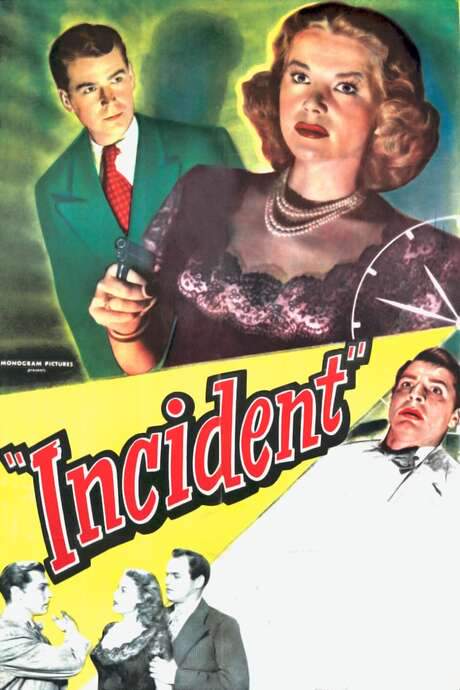
The Incident (1990) movie poster

Timeline

The Incident (1990) Timeline Explained – Every Event in Order

Release, runtime and language
1990 · 100 mins · English
Loading streaming availability…
Directed by
Joseph Sargent
Starring
Barnard Hughes, Robert Carradine, Harry Morgan, Walter Matthau, Peter Firth, William Schallert

When a German officer held at a U.S. Army POW camp in the fictional Colorado town of Bremen is charged with murder, reluctant small‑town attorney Harmon Cobb takes the case. He must defend the Nazi prisoner amid wartime suspicion, while the town’s only doctor, played by Barnard Hughes, dies, forcing Cobb to confront the moral dilemma of representing a man viewed as devil.

On this page (6)
  1. 1 Where to watch
  2. 2 Events in order (12)
  3. 3 Timeline questions answered
  4. 4 Movie threads
  5. 5 Movies like The Incident
  6. 6 Every angle
Loading streaming availability…

12 events in order · contains spoilers

The Incident Timeline: Events in Chronological Order

Every key event of The Incident (1990) in order, scene by scene, with when and where it takes place. Use it to untangle flashbacks, time jumps and parallel storylines, to refresh your memory before the sequel or to find the exact scene you are thinking of.

  1. Murder of Dr. Hansen at Camp Bremen

    In 1944, the town's only doctor, George Hansen, is murdered at the US Army Camp Bremen, which houses German POWs. The killing triggers an investigation and sows wartime suspicion in Lincoln Bluff. This event becomes the catalyst for the legal and covert inquiries that follow.

    When
    1944
    Where
    Camp Bremen
  2. Judge Bell coerces Harmon Cobb into defending Geiger

    Judge Bell pressures Harmon Cobb to take the defense of German prisoner Geiger. Cobb has little desire to see Geiger acquitted, yet he is compelled by the judge’s demand and the wartime climate. The arrangement foreshadows a contested legal battle under heavy external influence.

    When
    1944
    Where
    Lincoln Bluff Courthouse
  3. Cobb begins a nominal defense by seeking character witnesses

    Cobb attempts to build a defense by asking several of Geiger's POW subordinates to testify as character witnesses. When all refuse to testify, Cobb tries to press Geiger to pull rank to procure them on the stand. Geiger refuses, wary of exposing the POWs to potential consequences and the camp’s illicit activities.

    When
    During trial
    Where
    Courtroom
  4. Geiger refuses to pull rank to force testimony

    Cobb pushes Geiger to compel testimony from the subordinates, but Geiger declines, emphasizing the risk to the men and the larger implications. The refusal underscores Geiger's principle and the complexity of prosecuting the case under wartime pressures. The defense remains nominal and heavily constrained.

    When
    During trial
    Where
    Courtroom
  5. Riefenstahl testifies to Geiger's Nazi affiliation

    Sergeant Riefenstahl testifies that Geiger is a member of the Nazi party sworn to kill Americans. The testimony intensifies wartime prejudice in the courtroom and complicates Cobb's defense strategy. It also deepens the emotional stakes for Cobb, who has a son serving abroad.

    When
    During trial
    Where
    Courtroom
  6. Cobb learns his son has been killed; trial delayed

    During the proceedings, Cobb receives word that his son has been killed in action, triggering a two-week delay in the trial. The personal loss sharpens Cobb's motivation to uncover the truth behind Hansen’s death. The pause allows space for further investigation into the camp's operations.

    When
    Two weeks later
    Where
    Courtroom
  7. Wallace brings Hansen's letter, widening the conspiracy

    Officer Wallace approaches Cobb with a letter Hansen wrote on the day of his death. Cobb starts to suspect that Hansen's demise is part of a broader pattern of illicit activities at Camp Bremen. The discovery shifts the focus from a single murder to systemic wrongdoing.

    When
    During hiatus
    Where
    Cobb's Office
  8. Cobb intensifies the investigation; judge warns

    During the hiatus, Cobb digs deeper and seeks a subpoena, challenging Judge Bell's control. Bell warns Cobb that he expected him to fail, signaling the court's corrupt environment. Despite the pressure, Cobb presses on to uncover the truth behind the camp.

    When
    During hiatus
    Where
    Judge Bell's chambers
  9. Camp Bremen visit reveals eight 'natural' death cases

    Cobb and Wallace visit Camp Bremen to review Hansen's medical records for eight prisoners who died of 'natural causes'. Corporal Sweazy reveals Major Lilly tolerates gangs inside the camp that terrorize prisoners. The visit exposes a brutal underground system and hints at systemic abuse.

    When
    Hiatus
    Where
    Camp Bremen
  10. Lager Gestapo and leadership exposed inside the camp

    Sweazy explains that Lager Gestapo prisoners patrol inside the camp and that Riefenstahl leads them. Lilly's complicity allows these abuses, linking the cover-up to the trial at hand. The revelations heighten the stakes for Geiger's defense.

    When
    Hiatus
    Where
    Camp Bremen
  11. Efforts to introduce exculpatory evidence are rebuffed

    Back in the courtroom, Cobb attempts to present exculpatory evidence, but the judge orders him into chambers while the prosecutor objects, threatening a mistrial. The judge suggests a grim bargain: Geiger could be hanged in exchange for three American airmen. The ethical rot within the trial becomes increasingly evident.

    When
    During trial
    Where
    Courtroom
  12. Geiger is acquitted after exposing the conspiracy

    With Domsczek's complicity, Cobb presents witnesses and evidence to expose the Lager Gestapo and the beatings and murders of prisoners, including Hansen's. Riefenstahl killed Hansen and then framed Geiger for the murder. Geiger is subsequently found innocent, vindicating Cobb's relentless pursuit of the truth.

    When
    End of trial
    Where
    Courtroom

Last updated: October 09, 2025 at 15:03

Was this helpful?

Timeline questions answered

The Incident Timeline Explained: Your Questions Answered

When does it happen, and why in that order? The questions people ask about the chronology of The Incident (1990): time jumps, flashbacks, cause and effect between scenes and the correct order of events, each answered with spoilers.

Q1

Why was Dr. Hansen killed and who killed him?

Dr. George Hansen, the town's only doctor, was killed because he was about to expose the illegal activities and brutal conditions at Camp Bremen. He was murdered by Sergeant Riefenstahl, the leader of the Lager Gestapo, a group of Nazi prisoners who terrorized other POWs. Riefenstahl killed Hansen to silence him and then framed Sergeant Geiger for the murder.

Foreshadowing: Earlier in the film, Geiger mentions to Cobb that he should investigate the death of prisoner Ernst Schmidt, hinting at the camp's illicit activities.

  • dr hansen death
  • murdered
  • riefenstahl
  • camp bremen
  • expose
Q2

Why was Geiger framed for Hansen's murder?

Geiger was framed because he was a vocal critic of the Lager Gestapo and their violent activities within the camp. Riefenstahl, who led the Lager Gestapo and killed Hansen, needed a convenient scapegoat. Geiger's known opposition to the group made him the perfect candidate to blame for the doctor's murder.

Foreshadowing: Riefenstahl's testimony against Geiger in court, claiming Geiger was a sworn Nazi killer, was designed to ensure the jury would believe Geiger capable of murder.

  • geiger framed
  • scapegoat
  • riefenstahl
  • false accusation
Q3

What was the conspiracy at Camp Bremen?

Camp Bremen housed a systemic conspiracy where Major Lilly allowed a group of Nazi prisoners called the Lager Gestapo to terrorize and murder other POWs who criticized Hitler or suggested Germany was losing the war. The camp's doctor, George Hansen, was complicit in covering up these deaths by listing them as natural causes. Eight prisoners were killed this way before Hansen's murder.

Foreshadowing: When Cobb reviews Hansen's medical records, he discovers eight prisoners who died of natural causes, which raises his suspicion.

  • camp conspiracy
  • major lilly
  • lager gestapo
  • prisoner abuse
  • cover-up
Q4

Why did Judge Bell want Geiger convicted?

Judge Bell wanted Geiger convicted as part of a secret exchange deal with the Germans. Three American airmen had been sentenced to hang in Germany, and the Germans offered to exchange these condemned Americans for Geiger. Bell arranged for a predetermined guilty verdict so Geiger could be handed over, revealing the judge cared nothing for justice or Geiger's actual guilt or innocence.

Foreshadowing: Judge Bell specifically chose Cobb, an attorney inexperienced in such cases, to defend Geiger because he expected Cobb to lose.

  • judge bell
  • exchange deal
  • convict
  • american airmen
Q5

What was the Lager Gestapo?

The Lager Gestapo was a gang of violent Nazi prisoners who acted as internal camp police at Camp Bremen. Led by Sergeant Riefenstahl, they patrolled the camp's interior, terrorizing and killing POWs who criticized Hitler or expressed doubt about Germany's victory. Major Lilly tolerated and supported their activities, using them to maintain control through fear.

Foreshadowing: Corporal Sweazy explains to Cobb and Wallace that the Lager Gestapo operates inside the camp with Lilly's approval, terrorizing new prisoners.

  • lager gestapo
  • prisoner gang
  • riefenstahl
  • terror
  • camp violence
Q6

Why did Geiger refuse to force his men to testify?

Geiger refused to pull rank and force his subordinates to testify as character witnesses because he did not want to expose them to retaliation from the Lager Gestapo or other consequences. Despite being accused of murder, Geiger prioritized protecting the men under his command from the dangers of testifying against powerful enemies within the camp system.

Foreshadowing: Cobb's initial attempts to build a defense meet resistance, and Geiger's refusal highlights the precarious position of POWs.

  • geiger testimony
  • refuse
  • protect subordinates
  • pow
Q7

What was in the letter Dr. Hansen wrote?

The letter Dr. Hansen wrote on the day of his death was brought to Cobb by Officer Wallace. It contained evidence of Hansen's complicity in covering up prisoner deaths and his growing conscience about the illegal activities at Camp Bremen. This letter sparked Cobb's suspicion that Hansen's death was connected to a larger conspiracy rather than a random murder.

Foreshadowing: Wallace brings the letter to Cobb during the trial hiatus, shifting the investigation from a simple murder to exposing systemic abuse.

  • hansen letter
  • evidence
  • death day
  • conspiracy
Q8

How did Cobb's son's death affect the trial?

When Cobb learned his son had been killed in action fighting the Germans, the trial was delayed for two weeks. This personal tragedy intensified Cobb's determination to uncover the truth about Hansen's death, transforming him from a nominal defense attorney into a genuine investigator determined to expose the conspiracy at Camp Bremen.

Foreshadowing: The timing of this loss, coming during the trial, hardens Cobb's resolve to challenge the court's corruption.

  • cobb son killed
  • trial delay
  • personal tragedy
  • motivation
Q9

Why did Cobb agree to defend Geiger?

Cobb was coerced by Judge Bell into taking Geiger's case and had no desire for Geiger to be acquitted. His personal wartime anti-German sentiment, compounded by having a son serving as an American soldier fighting the Germans, made the assignment deeply uncomfortable. However, Cobb agreed to preserve his self-respect as an ethical attorney, planning to build only a nominal defense.

Foreshadowing: Cobb's initial reluctance sets up his transformation as he discovers the truth about the conspiracy.

  • harmon cobb
  • defend
  • coerce
  • judge bell
  • anti-german
Q10

How was the murder conspiracy exposed in court?

With Prosecutor Domsczek's complicity, Cobb presented witnesses and evidence in court that exposed the Lager Gestapo's beatings and murders of prisoners, including Hansen's death. Cobb proved that Riefenstahl killed Hansen and framed Geiger for the murder. This evidence led to Geiger's acquittal, vindicating Cobb's investigation.

Foreshadowing: Earlier, Sweazy explains the Lager Gestapo structure to Cobb and Wallace, providing the key information needed for the courtroom revelation.

  • exposed
  • court
  • evidence
  • riefenstahl confession
  • acquitted

Movie threads

More Movies Like The Incident, by Mood & Story

Curated lists built around what makes The Incident tick: the same mood, the same kind of story or the same emotional payoff. Each list explains why these movies belong together.

Legal Underdog Movies Like The Incident

Principled lawyers battle systemic injustice and public outrage in high-stakes trials. If you enjoyed the tense legal battle in The Incident, explore more movies where lawyers defend unpopular clients against systemic injustice. These courtroom dramas share a heavy emotional weight and focus on moral principles in the face of public outrage.

  • tense
  • thought-provoking
  • gripping
  • serious
  • courtroom drama
  • moral courage
  • Tone: tense, serious
  • Pacing: steady, procedural
Why these movies?

The story pattern: Stories in this thread follow a legal professional, often an underdog, who is compelled to defend a client despised by the public or the system. The central conflict pits their professional duty and personal ethics against widespread prejudice, corruption, or wartime hysteria, creating a tense procedural investigation.

Why they belong together: These films are grouped by their core narrative of a legal crusade against overwhelming odds. They share a serious tone, high intensity from life-or-death stakes, and a focus on the heavy emotional and ethical burden carried by the protagonist.

Wartime Moral Dilemma Movies Like The Incident

Personal ethics are tested against the brutal backdrop of war and suspicion. Fans of The Incident's exploration of ethics during war will appreciate these films. They depict characters navigating impossible choices, prejudice, and the collapse of civility on the home front, often with a tense and heavy dramatic tone.

  • tense
  • serious
  • thought-provoking
  • unsettling
  • war drama
  • moral dilemma
  • Tone: tense, serious, melancholic
  • Pacing: steady, character-driven
Why these movies?

The story pattern: The narrative pattern involves ordinary people or professionals whose values are severely tested by the extremities of war. The setting—a town, a camp, a unit—becomes a pressure cooker where suspicion reigns, and characters must make defining choices that pit their conscience against the collective mood of fear and hatred.

Why they belong together: This thread groups films by their shared setting of wartime and their central theme of intense moral questioning. They consistently feature a tense atmosphere, heavy emotional weight from grappling with life-and-death ethics, and a steady pacing that allows the moral tension to build.

If you liked this

Movies Like The Incident

Similar movies to The Incident: the same genre, themes or kind of story. Each one comes with its own plot summary, timeline and ending explained.

Browse all movie summaries

Every angle

The Incident (1990) Explained: Plot, Timeline & Characters

Everything about The Incident in one place: what happens in the plot summary, the timeline in chronological order, the characters and meaning and a spoiler-free summary. What's After the Movie adds the cast, box office and post-credit scenes.

Coming soon on iOS and Android

The Plot Explained Movie Summary App

Plot summaries, endings explained and timelines on your phone. Catch up on any movie in minutes, save your favorites and never miss a twist again.

Be the first to know when we launch. Your email stays private, always.

Learn more about the app