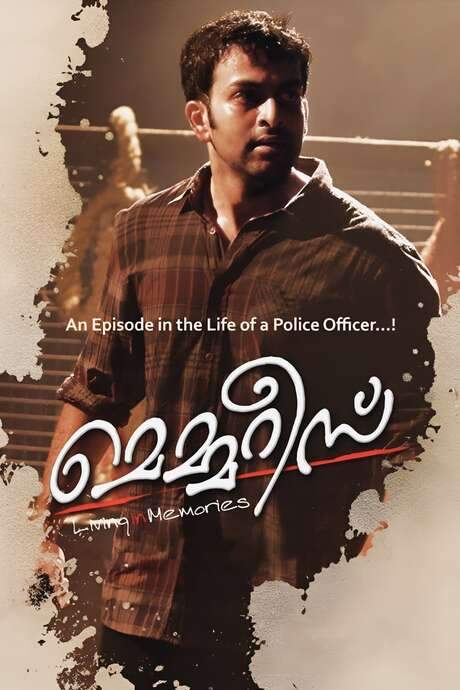
The film opens with a brutal crime: a young man is beaten to death with a club in front of his fiancée, Maya. An intelligent investigation begins as the seasoned officer Alexander and his diligent assistant Ramachandran take charge. Alexander, though adept at connecting clues, refuses to weaponize brutality or torture to extract confessions, choosing to chase solid evidence instead. Meanwhile, in a quiet, secluded corner of the city, Harsha Vardhan, a man of mystery, leads a solitary life in a sprawling house and quietly teaches music to a girl named Sophie. The tension thickens when he suddenly abducts and tortures Raghavan in his cellar, dragging him into a carefully controlled nightmare.
As the trail unfolds, Alexander and Ramachandran build a case that points squarely at Harsha. He kills Raghavan, dismembers the body, and methodically erases every scrap of evidence that could tie him to the crime. When the severed parts surface, the case intensifies, revealing a meticulously planned murder and a suspect who had already slipped out of the city’s reach. The pursuit grows personal for the investigators, and the sense that the truth might stay buried lingers until new discoveries reframe the murder as a calculated act.
Four years earlier, the narrative slips into Harsha’s backstory. He is an aspiring musician wrestling with both a faltering career and the fragile balance of love with Maya. After they marry, Harsha lives with Maya and two friends, Nimmy and Dr. Roy, in a shared space that becomes a crucible for ambition, trust, and betrayal. Maya joins a call center, where tensions rise with Raghavan over a careless driving incident that cascades into tragedy. Harsha heads to Chennai, and while he’s away, Raghavan abducts Maya, killing her and burying her severed head to obscure the crime’s trail. When the truth emerges, Alexander and Ramachandran expose the killer, and Raghavan is imprisoned. The blow devastates Harsha, and he grows furious at the perceived failure of the system: life imprisonment instead of the death penalty and a premature release that lets Raghavan walk free.
Fuelled by grief and anger, Harsha, along with his two friends, hatches a vengeful plan against Raghavan. Nimmy, who becomes entangled in the plot by using his auto to get close to Raghavan, begins to play along. In a carefully orchestrated sequence, Nimmy follows Harsha’s plan, and during a forest-bound ride, she leaps from the vehicle. Harsha confronts Raghavan, overpowering him and rendering him unconscious, signaling the swift escalation from grief to a cold, calculating resolve.
Back in the present, Nimmy and Roy watch the news as the media highlights the system’s failure to identify the dead body, ensuring the case remains unresolved for the time being. When Ramachandran asks what their next move might be, Alexander responds with a wry, almost chilling certainty: "It’s not Jesus Christ who has died. It’s Judas. He’ll have to die." The moment is shared with Ramachandran in a quiet, almost relieved laughter, signaling that they won’t expose Harsha’s hidden hand just yet.
This story threads together heartbreak, moral ambiguity, and a pursuit of justice that defies easy answers. It juxtaposes Harsha’s refined exterior as a musician with the brutal clarity of his revenge, while the investigators wrestle with the ethics of truth-telling in a system that sometimes seems to protect the guilty. The narrative moves through memories and present tense, weaving a tapestry of choices and consequences that challenges the boundaries between vengeance and protection, between memory and reform, and between the law’s reach and a single person’s unrelenting urge to set things right.