#4,84638 Year: 2023
Runtime: 2 h 25 m
Language: French
Director: Anh Hung Tran
Echo Score: 83Budget: $6.5M
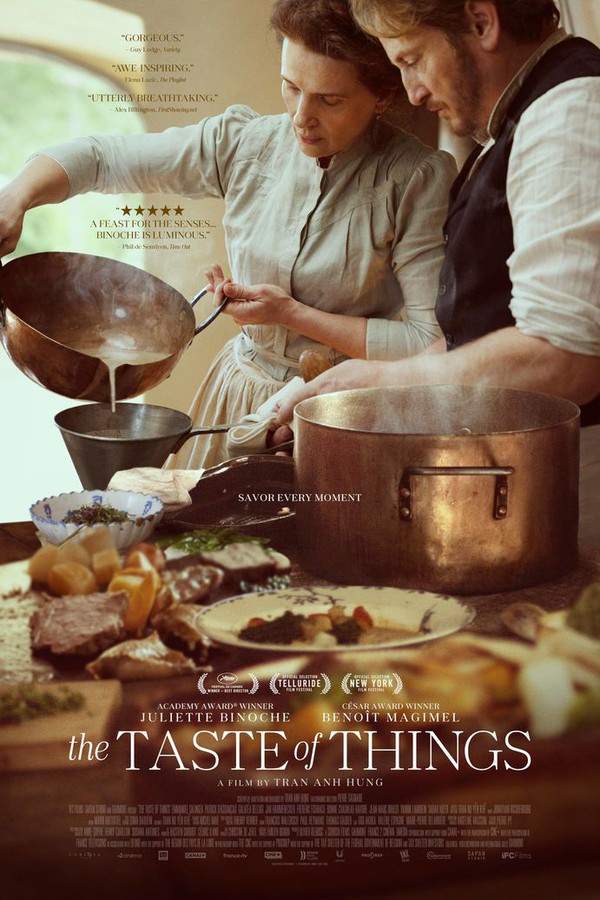
In 1885, Eugenie is a celebrated chef with a long-standing, close relationship with gourmet Dodin. Their shared passion for culinary excellence has fostered a deep admiration and understanding between them, which unexpectedly evolves into a romantic connection. As their bond deepens, they inspire each other to create extraordinary dishes that challenge conventional culinary expectations.
Find where to stream, rent, or buy The Taste of Things (2023) in the US with current JustWatch availability, up-to-date pricing, and platform listings for subscription, rental, and digital purchase options.
Warning: spoilers below!
Haven’t seen The Taste of Things yet? This summary contains major spoilers. Bookmark the page, watch the movie, and come back for the full breakdown. If you're ready, scroll on and relive the story!
Trace every key event in The Taste of Things (2023) with our detailed, chronological timeline. Perfect for unpacking nonlinear stories, spotting hidden connections, and understanding how each scene builds toward the film’s climax. Whether you're revisiting or decoding for the first time, this timeline gives you the full picture.
Last updated: December 31, 2024 at 18:09
Find frequently asked questions about the The Taste of Things (2023) timeline, including chronological order, nonlinear jumps, cause-and-effect links, and scene sequence clarifications. This timeline FAQ helps explain when key events happen, how moments connect, and why the story unfolds in that specific order.
Eugénie preferred their current arrangement because she found fulfillment in being Dodin's cook and culinary partner rather than his wife. Throughout their relationship, she cherished their shared passion for creating dishes together and felt their bond was complete without the formalities of marriage. She explicitly stated she was content with her role in his kitchen rather than becoming his spouse.
Earlier scenes show Eugénie expressing satisfaction with her professional partnership with Dodin, suggesting she valued their unconventional arrangement.
Eugénie dies peacefully in her sleep from natural causes. Earlier in the film, she experiences troubling fainting spells that concern Dodin, who consults his friend Dr. Rabaz. Despite these warning signs, Eugénie dismisses her health issues and assures everyone she is fine. The movie presents her death as a quiet, undramatic passing rather than specifying a particular illness.
Eugénie's fainting spells earlier in the story foreshadow her declining health.
Dodin becomes overwhelmed by grief after losing Eugénie and stops eating as a manifestation of his sorrow. Food had always been central to his identity and his connection with Eugénie, creating meals together was how they expressed their love. Without her, he cannot face cooking or eating, as every meal reminds him of what he has lost. His friends attempt to help by sending a cook to prepare one of Eugénie's omelettes, but he angrily rejects this gesture.
The film establishes that cooking and shared meals were the foundation of Dodin and Eugénie's relationship, making his inability to eat a natural response to losing that connection.
In a poignant flashback, Dodin tells Eugénie, 'You are my cook,' in response to her asking if she was merely his cook or his partner. This line is significant because Dodin is affirming that her role as his cook is not subordinate, it is the highest form of partnership for him. Eugénie accepts this answer with satisfaction because she always valued her culinary identity and did not want to be defined by traditional marriage roles.
This scene occurs in flashback and recontextualizes their entire relationship, showing that Dodin understood and cherished Eugénie for who she was.
Dodin dismisses the cook in a fit of rage because he cannot bear to have someone else recreate Eugénie's dishes. He is not ready to experience her cooking through another person's hands, and the grief is too raw. The attempt to replace her culinary presence with a stranger triggers his anger, showing how deeply her loss affects every aspect of his life, especially food.
Earlier scenes demonstrate that Eugénie's cooking was unique and irreplaceable, making any imitation painful for Dodin.
Pauline, the young girl with natural culinary talent whom Eugénie had wanted to train, becomes determined to learn from Dodin. After Eugénie's death, Pauline's parents approach Dodin to tell him of her desire to learn cooking from him. Though Dodin initially rebuffs them due to his grief, Pauline persists and eventually helps him search for a new cook to prepare the prince's meal. Her presence represents hope for the continuation of Eugénie's legacy.
Eugénie had specifically noted Pauline's remarkable culinary talent and suggested training her, establishing the girl's future importance.
Pot-au-feu is a traditional French stew dish that Dodin plans to serve when inviting the prince for a meal. It represents his dedication to quality French cuisine, he chooses this humble yet classic dish to contrast with the elaborate, showy preparations of other chefs. The meal becomes significant because it motivates Dodin to continue cooking after Eugénie's death, as he must find someone to prepare it for the prince.
Dodin's choice of pot-au-feu reflects his appreciation for authentic, well-crafted food over pretentious cooking.
Eugénie's fainting spells serve as early warnings of her declining health, foreshadowing her eventual death. Dodin becomes deeply concerned and seeks help from his doctor friend Rabaz, but Eugénie downplays the episodes and insists she is fine. These moments highlight Dodin's care for her and create tension, as viewers understand her health is deteriorating even while she remains optimistic.
The fainting spells directly precede and anticipate her peaceful death in sleep.
Despite their long-term romantic relationship, Eugénie and Dodin maintain separate bedrooms throughout their bond. This arrangement reflects their choice to preserve their professional partnership and independence rather than conform to traditional married life. Eugénie valued her autonomy and identity as a cook, and separate living spaces allowed her to maintain that sense of self while still being romantically involved with Dodin.
This unconventional setup highlights why Eugénie was hesitant to marry, as she preferred maintaining her individual identity within the relationship.
After months of grief and isolation, Dodin begins to find hope when a friend introduces him to a nearby cook whose dish excites him. This spark of culinary interest marks the first time since Eugénie's death that he feels any passion for food. With Pauline's assistance, he goes to meet this new cook, signaling his gradual return to life and cooking.
The discovery of this new talent echoes how Eugénie once reignited his passion for culinary creativity.
Discover curated groups of movies connected by mood, themes, and story style. Browse collections built around emotion, atmosphere, and narrative focus to easily find films that match what you feel like watching right now.
Stories where deep-rooted companionship slowly blossoms into a profound and poignant love.Find movies similar to The Taste of Things that explore mature, deeply felt relationships. If you liked the poignant and gentle romance between Dodin and Eugenie, you'll appreciate these stories of late-life love and quiet companionship.
These narratives often follow two individuals with a long-standing bond—be it professional, friendly, or platonic—that gradually deepens into a romantic relationship. The central conflict is seldom external drama but rather the internal realities of time, aging, and the profound appreciation of a love that feels both earned and fragile.
Movies are grouped here for their shared tone of melancholic romance, slow pacing that allows the relationship to breathe, and a focus on the bittersweet interplay between profound joy and the gentle ache of impermanence.
Films that celebrate the beauty and emotional weight of a lifelong dedication to craft.Discover films like The Taste of Things that center on a character's devotion to their craft. If you enjoyed the celebration of culinary artistry and the theme of creative partnership, explore these stories of passion, mentorship, and dedication.
The plot revolves around a master of a specific craft—cooking, woodworking, painting, etc.—whose identity is intertwined with their work. The story often involves passing knowledge to a mentee, facing a personal or professional challenge, and exploring how their dedication shapes their relationships and understanding of life itself.
These films are connected by their meticulous attention to the process of creation, a reflective and often celebratory mood, and the central theme that true artistry is not just a job but a form of expression and legacy.
Don't stop at just watching - explore The Taste of Things in full detail. From the complete plot summary and scene-by-scene timeline to character breakdowns, thematic analysis, and a deep dive into the ending - every page helps you truly understand what The Taste of Things is all about. Plus, discover what's next after the movie.
Read a complete plot summary of The Taste of Things, including all key story points, character arcs, and turning points. This in-depth recap is ideal for understanding the narrative structure or reviewing what happened in the movie.
Discover the characters, locations, and core themes that shape The Taste of Things. Get insights into symbolic elements, setting significance, and deeper narrative meaning - ideal for thematic analysis and movie breakdowns.