


Plot Explained Spoilers guaranteed!
Plot Explained

Browse by genre

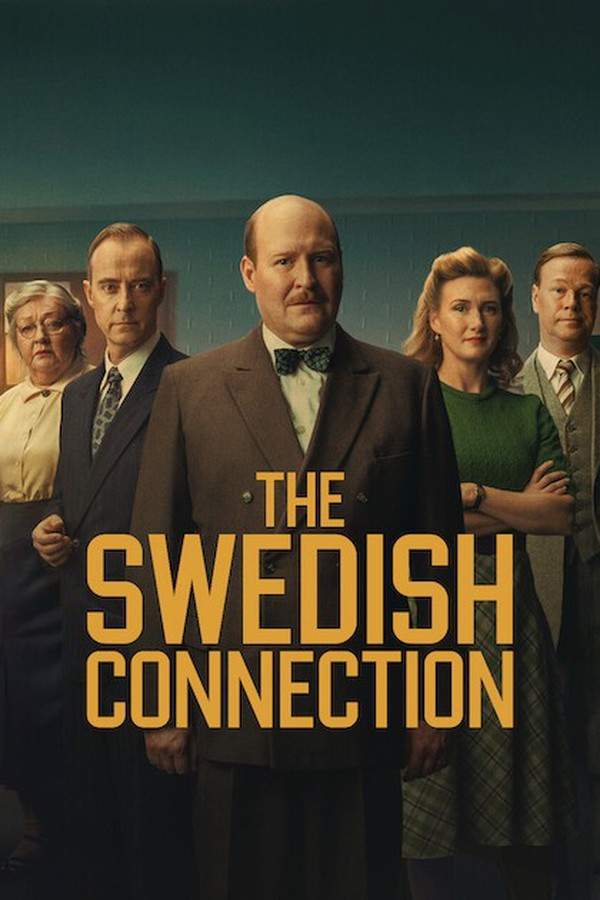
The Swedish Connection (2026) movie poster

Timeline

The Swedish Connection (2026) Timeline Explained – Every Event in Order

Release, runtime and language
2026 · 1 h 42 m · Swedish
JustWatch #14,948 15
Directed by
Marcus Olsson, Thérèse Ahlbeck
Starring
Jonas Karlsson, Christoffer Nordenrot, Sissela Benn, Oscar Töringe, Marianne Mörck, Loa Falkman

Swedish Foreign Ministry bureaucrat Gösta Engzell, largely overlooked during World II, organized covert operations that saved thousands of refugees and turned Sweden’s neutral stance into a moral force. By defying diplomatic conventions, his daring humanitarian work challenged the status quo and forged a lasting legacy of compassion.

On this page (5)
  1. 1 Where to watch
  2. 2 Events in order (15)
  3. 3 Timeline questions answered
  4. 4 Movie threads
  5. 5 Every angle

Where to watch

Where to Watch The Swedish Connection (2026)

Where can you watch The Swedish Connection? Stream, rent or buy it in the US, including on Netflix and Netflix Standard: current JustWatch availability with up-to-date prices.

Streaming availability powered by JustWatch

15 events in order · contains spoilers

The Swedish Connection Timeline: Events in Chronological Order

Every key event of The Swedish Connection (2026) in order, scene by scene, with when and where it takes place. Use it to untangle flashbacks, time jumps and parallel storylines, to refresh your memory before the sequel or to find the exact scene you are thinking of.

  1. Sweden's neutrality erodes as censorship tightens

    In 1942, Sweden proclaims neutrality but censors press to appease Germany. Gösta Engzell runs a basement office handling thousands of asylum requests from Jews and faces resistance from higher-ups.

    When
    1942
    Where
    Stockholm, Sweden
  2. Rut Vogl joins Engzell as secretary

    Engzell welcomes Rut Vogl, who becomes a crucial ally in processing cases. He laments the cramped office and the ongoing Swedish immigration refusals, while cabinet secretary and Söderström rebuff his concerns.

    When
    1942
    Where
    Stockholm, Sweden
  3. Oslo note sparks friction

    The Swedish consul in Oslo reports a Swedish Jew has been taken into police custody, triggering intervention talks. Engzell orders the consulate not to provide a note verbale, but the consul proceeds anyway, highlighting bureaucratic friction.

    When
    1942
    Where
    Oslo, Norway
  4. Final Solution revealed on a Polish train

    On a train in Poland, Göran von Otter learns of the Final Solution from Kurt Gerstein, who finds genocide abhorrent. The revelation motivates Engzell and his team to consider proactive visas to help Jewish refugees.

    When
    1942
    Where
    Poland
  5. Rut pushes for visas to Norwegian Jews

    Rut urges issuing visas for as many Norwegian Jews as possible, arguing for humanitarian action. Engzell initially resists but relents after overhearing Söderström discuss the genocide report and his son's bedtime reading.

    When
    1942
    Where
    Stockholm, Sweden
  6. From 7,000 requests to 150 with Sweden ties

    Engzell orders his team to sift through 7,000 requests and identify about 150 with a Sweden connection, starting with weaker cases to set a precedent. The Bondy case—two Jewish boys in Prague with a Swedish stepfather—becomes a bellwether for intervention.

    When
    1942
    Where
    Stockholm, Sweden
  7. Bondy case meets German rejection

    The Bondy twins' case faces a German refusal, testing whether Sweden can bend the rules without provoking a crisis. The case illustrates the limits of Swedish influence under German occupation.

    When
    1942
    Where
    Prague / Germany
  8. Pressure and threats from Söderström

    Engzell endures a tense meeting with the German consul who suspects the swell of citizenship claims. Söderström threatens to send Engzell to Moscow if he continues; Engzell remains persistent.

    When
    1942
    Where
    Stockholm, Sweden
  9. Norwegian Jews rounded up; press restrictions ease slightly

    Hundreds of Norwegian Jews are being rounded up and sent to death camps, intensifying urgency. Engzell cannot fully report but secures limited reporting through a sympathetic censor, highlighting the struggle for public awareness.

    When
    1942
    Where
    Norway / Sweden
  10. Public outcry pushes change; Engzell emerges as point man

    A public outcry prompts Prime Minister Hansson to demand who is in charge, and Söderström concedes that Engzell is the man. Engzell's diplomacy yields some Norwegian Jewish releases and momentum for broader aid.

    When
    1942
    Where
    Stockholm, Sweden
  11. Bondy twins near Theresienstadt; intervention escalates

    Von Otter negotiates for the Bondy twins, who are in Theresienstadt and may be moved to a death camp. Engzell and von Otter press German officials for relief, risking retaliation from Söderström.

    When
    1942
    Where
    Theresienstadt, Czechoslovakia
  12. Copenhagen detour; Rut's passport stamp raises risk

    Engzell and Rut travel to Copenhagen to meet the Bondy parents, but the twins do not arrive as expected. Back in Sweden, Rut is halted because of a hidden Jewish stamp on her passport; she seeks shelter at the Swedish embassy.

    When
    1942
    Where
    Copenhagen, Denmark
  13. Revoking the visa requirement; a strategic press reveal

    Engzell, Rut, Hammarskjöld, and Kruse work to drop the visa requirement for Jewish immigrants, circumventing legal barriers. They hold a press conference announcing the revocation, avoiding direct confrontation with Söderström.

    When
    1942
    Where
    Stockholm, Sweden
  14. Sweden becomes a refuge and earns praise

    With the policy shift, Sweden begins accepting Jewish refugees and gains international praise for saving Denmark's Jews. The Bondy twins are among those saved, with new photographs shown in the film's epilogue.

    When
    1943
    Where
    Stockholm, Sweden / Copenhagen, Denmark
  15. Wallenberg's visit seals the legacy

    Raoul Wallenberg, revealed as the film's narrator, visits Engzell's department to learn their process and connect the effort to broader rescue work. The provisional visa approach is credited with saving tens of thousands of Jews during the war, including the Bondy twins.

    When
    1943-1944
    Where
    Stockholm, Sweden

Last updated: April 05, 2026 at 17:04

Was this helpful?

Timeline questions answered

The Swedish Connection Timeline Explained: Your Questions Answered

When does it happen, and why in that order? The questions people ask about the chronology of The Swedish Connection (2026): time jumps, flashbacks, cause and effect between scenes and the correct order of events, each answered with spoilers.

Q1

Why did Gösta Engzell work in a basement office?

Engzell was a mid-level bureaucrat in the Swedish Foreign Ministry assigned to handle the massive influx of asylum requests from Jewish refugees. His basement location reflected his low position in the diplomatic hierarchy, important work but overlooked by senior officials who preferred to avoid the politically sensitive issue of Jewish refugees.

Foreshadowing: The dim basement office becomes the nerve center for Sweden's humanitarian response to the Holocaust.

  • gosta engzell
  • basement office
  • foreign ministry
  • diplomat
Q2

How could Sweden stay neutral while helping Jewish refugees?

Sweden officially maintained neutrality to avoid provoking Germany, yet the government quietly permitted bureaucratic workarounds to help Jews. Engzell exploited gaps in the system, finding Swedish connections in refugee cases, that allowed rescue without explicit diplomatic confrontation with Germany.

Foreshadowing: The film's tension stems from this contradiction between public neutrality and private humanitarian action.

  • sweden neutrality
  • world war 2
  • german occupation
  • diplomatic policy
Q3

What was the Bondy twins case and why did it matter?

The Bondy twins were two Jewish boys in Prague with a Swedish stepfather, giving Sweden a legal basis to intervene. Their case became a test: if Sweden could save them without German retaliation, it would set a precedent for rescuing hundreds more. Germany initially rejected the case, but continued diplomatic pressure eventually saved the twins.

Foreshadowing: The Bondy case establishes the pattern of using Swedish family connections as a humanitarian loophole.

  • bondy twins
  • prague
  • jewish children
  • theriesienstadt
Q4

Why did Staffan Söderström oppose Gösta Engzell's rescue efforts?

Söderström represented the cautious diplomatic establishment, he feared that helping Jews would provoke Germany and endanger Sweden's safety. He threatened to transfer Engzell to Moscow and publicly denigrated the rescue work, viewing it as dangerous political meddling rather than humanitarian duty.

Foreshadowing: Söderström's antagonism drives much of the film's tension and eventual political maneuvering.

  • staffan soderstrom
  • diplomat opposition
  • political resistance
Q5

How did Engzell and his team revoke the visa requirement for Jewish immigrants?

Engzell, Rut, Dag Hammarskjöld, and Danish exile minister Johan C.W. Kruse orchestrated a clever workaround: they removed the requirement that Swedish Jewish communities financially sponsor incoming refugees. The team then publicly announced the policy change at a press conference, forcing the government's hand without direct confrontation with Söderström.

Foreshadowing: This bold move fundamentally changed Sweden's refugee policy and opened the country to thousands of survivors.

  • visa requirement
  • immigration policy
  • hammarskjold
  • refugee law
Q6

How did the Swedish rescue effort connect to Raoul Wallenberg?

Raoul Wallenberg appears as the film's narrator and visits Engzell's department in 1943-1944. The film suggests Wallenberg learned and adopted the provisional visa process that Engzell's team pioneered. This connection establishes Engzell as a pioneer whose methods influenced the more famous Wallenberg rescue missions in Budapest.

Foreshadowing: Wallenberg's visit frames Engzell's work as foundational to Sweden's larger rescue legacy.

  • raoul wallenberg
  • budapest
  • rescue mission
  • legacy
Q7

What happened to the Bondy twins?

The Bondy twins were successfully rescued. After being moved to Theresienstadt concentration camp, diplomatic pressure from Göran von Otter and Engzell secured their release. The film's epilogue shows their survival and new photographs, confirming their rescue as one of the successful outcomes of Engzell's work.

Foreshadowing: The twins' rescue represents the successful proof of concept for Engzell's humanitarian strategy.

  • bondy twins
  • survival
  • rescued
  • Theresienstadt
Q8

Why was Rut's passport stamp dangerous?

Rut acquired a Jewish passport stamp while traveling in Copenhagen to help secure the Bondy twins' passage. This stamp identified her as Jewish, which would have endangered her under Nazi occupation. She had to seek shelter in the Swedish embassy to avoid detection and deportation.

Foreshadowing: Rut's dangerous detour to Copenhagen nearly exposes the rescue operation to Nazi authorities.

  • rut vogl
  • passport stamp
  • copenhagen
  • embassy
  • undercover
Q9

How did press censorship about the Holocaust get relaxed in Sweden?

Engzell initially faced press restrictions, but a sympathetic censor named Nils Erik Eklund allowed limited reporting on the genocide. As more information leaked and public outrage grew, Prime Minister Per Albin Hansson demanded accountability, creating political cover for Engzell to escalate the rescue operations.

Foreshadowing: The easing of censorship transformed public opinion and empowered Engzell's work.

  • press censorship
  • nils erik eklund
  • public outcry
  • media
Q10

What did Göran von Otter contribute to the rescue operation?

Göran von Otter was a Swedish diplomat who learned about the Final Solution from Kurt Gerstein on a train through Poland. This firsthand knowledge of the genocide motivated him to work alongside Engzell, particularly negotiating for the Bondy twins' release from Theresienstadt.

Foreshadowing: Von Otter's direct knowledge of the Holocaust added urgency to the diplomatic negotiations.

  • goran von otter
  • kurt gerstein
  • final solution
  • train journey

Movie threads

More Movies Like The Swedish Connection, by Mood & Story

Curated lists built around what makes The Swedish Connection tick: the same mood, the same kind of story or the same emotional payoff. Each list explains why these movies belong together.

Movies about bureaucratic rescuers like The Swedish Connection

Quiet civil servants use their positions to defy authority and save lives. Discover more movies like The Swedish Connection, where protagonists use their administrative roles to perform heroic acts. These similar historical dramas and thrillers feature tense, procedural plots about defying the system from within to achieve a moral victory.

  • tense
  • procedural
  • determined
  • sobering
  • hopeful
  • urgent
  • Tone: tense, hopeful, determined
  • Pacing: steady, procedural
Why these movies?

The story pattern: The narrative follows a protagonist who discovers a profound moral failure within their own organization or government. Their journey involves navigating complex bureaucratic mazes, leveraging rules against their creators, and making quiet, calculated decisions under immense pressure, often risking their career and safety to do what is right.

Why they belong together: These films are grouped by their shared focus on procedural, system-based problem-solving, a steady and tense pacing driven by intellectual maneuvering, and a tone that balances the heaviness of the subject matter with the hopefulness of individual action making a difference.
Hopeful historical dramas about moral courage like The Swedish Connection

Stories of individuals making a difference against overwhelming historical tragedy. If you liked The Swedish Connection, explore these similar movies about hope and defiance during dark historical periods. These dramas share a heavy emotional weight but focus on uplifting stories of survival, compassion, and the individuals who made a difference.

  • hopeful
  • sobering
  • compassionate
  • urgent
  • determined
  • tense
  • Tone: hopeful, sobering, compassionate
  • Pacing: steady, determined
Why these movies?

The story pattern: The narrative is set against a backdrop of widespread historical suffering, such as war or genocide. The central conflict is a moral one, pitting the protagonist's compassion and courage against systemic evil or overwhelming apathy. The plot charts their difficult, often lonely journey to achieve a meaningful, if limited, victory for good.

Why they belong together: These films are united by their specific emotional mix: the heavy weight of their historical setting is counterbalanced by a fundamentally hopeful tone and a focus on successful acts of resistance. They share a steady, determined pacing and deliver a satisfying, happy ending that affirms the value of moral action.

Every angle

The Swedish Connection (2026) Explained: Plot, Ending, Timeline & Characters

Everything about The Swedish Connection in one place: what happens in the plot summary, the timeline in chronological order, the characters and meaning, the ending explained and a spoiler-free summary. What's After the Movie adds the cast, box office and post-credit scenes.

Coming soon on iOS and Android

The Plot Explained Movie Summary App

Plot summaries, endings explained and timelines on your phone. Catch up on any movie in minutes, save your favorites and never miss a twist again.

Be the first to know when we launch. Your email stays private, always.

Learn more about the app