Plot Explained Spoilers guaranteed!
Plot Explained

Browse by genre

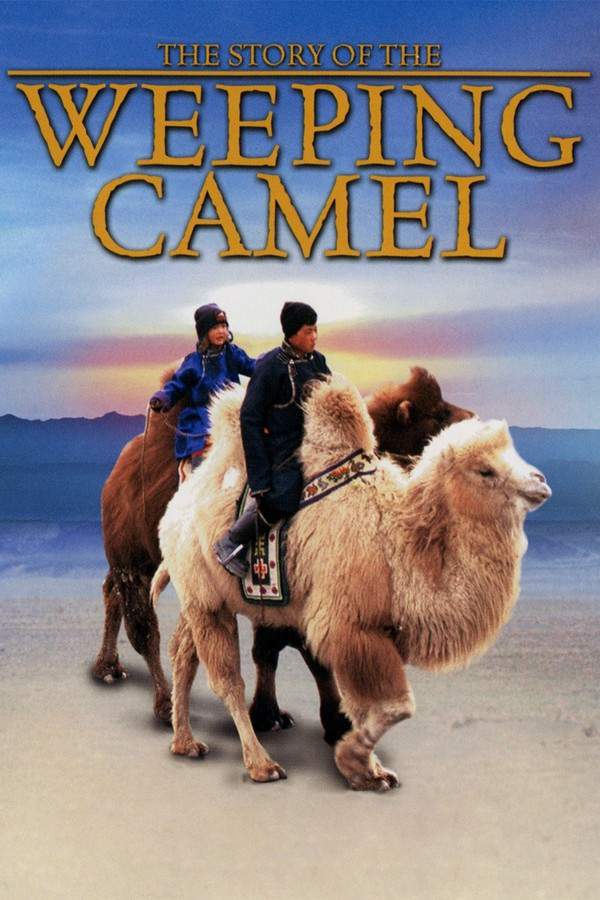
The Story of the Weeping Camel (2004) movie poster

Timeline

The Story of the Weeping Camel (2004) Timeline Explained – Every Event in Order

Release, runtime and language
2004 · Mongolian
Directed by
Byambasuren Davaa, Luigi Falorni
Starring
Amgaabazar Gonson, Chimed Ohin, Janchiv Ayurzana

In the Gobi Desert of South Mongolia, a camel herding family encounters a heartbreaking situation when a mother camel abandons her newborn calf. Determined to reunite them, two young boys embark on a quest to seek the help of a celebrated musician in the capital city. They hope his traditional music and an ancient ritual will persuade the mother camel to accept her baby, preserving the family’s livelihood and way of life in the vast and beautiful landscape.

On this page (5)
  1. 1 Events in order (14)
  2. 2 Timeline questions answered
  3. 3 Movie threads
  4. 4 Categories
  5. 5 Every angle

14 events in order · contains spoilers

The Story of the Weeping Camel Timeline: Events in Chronological Order

Every key event of The Story of the Weeping Camel (2004) in order, scene by scene, with when and where it takes place. Use it to untangle flashbacks, time jumps and parallel storylines, to refresh your memory before the sequel or to find the exact scene you are thinking of.

  1. Spring Season Begins

    As the vibrant spring season arrives, a family of nomadic shepherds embarks on their seasonal journey. This time brings with it the crucial task of assisting in the births of their valuable camel herd, a tradition that is both vital and sacred for their way of life.

  2. Camel Labor Begins

    The family's journey takes a challenging turn when the last camel in their herd begins to experience protracted labor. The shepherds work diligently over two long days, supporting the camel while anxiously awaiting the arrival of the newborn.

  3. Birth of the White Calf

    After much struggle and support from the family, a rare white calf is finally born. This marks a significant event, as the mother camel faces her first experience with calving, filled with the hope of nurturing her new offspring.

  4. Mother Rejects the Calf

    Despite the family's heartfelt efforts to encourage bonding, the mother camel turns away from her newborn. This rejection creates a distressing situation, as the essential care-bond between mother and calf is not established.

  5. Seeking Spiritual Help

    In their desperation to restore harmony, the nomadic family reaches out to a group of lamas for spiritual guidance. They believe that a ritual could help mend the rift between the mother and her calf, prompting them to seek a deeper connection.

  6. Preparations for the Ritual

    The lamas begin preparing for a remarkable spiritual ritual, creating dough effigies that symbolize the mother, calf, and each family member. This thoughtful preparation sets the stage for a ceremony filled with deep meaning and tradition.

  7. The Ritual Commences

    The ceremony begins with the resonant sound of a sacred horn, accompanied by the gentle ringing of bells. Members of the nomadic community gather to participate, all while a stylized victory banner stands tall as a spiritual focal point.

    Where
    Spiritually significant site
  8. Ritual Fails

    Despite the earnest and heartfelt efforts of the lamas and the extended community, the ritual sadly fails to mend the bond between the mother and her calf. The feelings of despair return as the family realizes they must find a new solution.

  9. Seeking a Violinist

    Determined to find a solution, the family decides to enlist the help of a local violinist. They send their two young boys on a journey across the desert to the district center in search of a musician who can perform a *Hoos* ritual.

    Where
    Desert
  10. Finding the Violinist

    After an arduous trek, the boys locate the talented violinist, who plays the *morin khuur*. Excited about their discovery, they summon him back to their camp to assist in restoring the bond between the mother and her calf.

  11. Beginning of the Music Ritual

    Once at the camp, the violinist begins a vibrant ritual filled with folk music and heartfelt chanting. The musician places the *morin khuur* on the first hump of the camel, fostering a sympathetic magical connection that he hopes will resonate with the mother camel.

  12. Connection Established

    As the violinist plays, soothing sounds fill the air, creating an atmosphere of calm. A female family member joins in by humming her child's lullaby, drawing on the familiarity of comforting melodies to help with the connection.

  13. Tears of Reconciliation

    In a poignant moment, tears stream from the mother camel’s eyes as she begins to respond to the music. This emotional connection signifies a turning point, suggesting that the bond between mother and calf may finally be restored.

  14. Mother and Calf Reunited

    Following the touching musical rite, a moment of joy unfolds as the mother camel finally accepts her calf. The calf is able to draw milk from her teat, a heartwarming conclusion that restores peace to the family and herd.

Last updated: November 16, 2024 at 11:17

Was this helpful?

Timeline questions answered

The Story of the Weeping Camel Timeline Explained: Your Questions Answered

When does it happen, and why in that order? The questions people ask about the chronology of The Story of the Weeping Camel (2004): time jumps, flashbacks, cause and effect between scenes and the correct order of events, each answered with spoilers.

Q1

Why does the mother camel reject her newborn calf?

The mother camel rejects her newborn because this was her first experience with calving. First-time camel mothers often lack the maternal instinct to recognize and bond with their newborn immediately after birth. This rejection threatens the calf's survival since it cannot receive the necessary milk and care from its mother.

  • mother camel rejection
  • first time calving
  • camel bonding
Q2

How does the morin khuur ritual heal the mother camel?

The violinist places the morin khuur (Mongolian horsehead fiddle) on the camel's first hump to create what the film describes as a "sympathetic magical connection" between the mother and the harmony of the instrument. As the music plays, a female family member hums a lullaby, and the mother camel begins to cry tears. This emotional response breaks through her rejection, allowing her to accept the calf and permit nursing.

  • morin khuur
  • horsehead fiddle
  • music ritual
  • camel tears
Q3

Why did the lama ritual with effigies fail to reunite the mother and calf?

The lama ritual using torma (dough effigies) representing the mother, calf, and family members failed despite the sacred horn, bells, and presence of a victory banner. The ritual attempted to use spiritual symbolism alone without engaging the mother's natural emotional instincts. Unlike the music approach, it did not create a sensory/emotional bridge that could reach the mother camel's instincts.

Foreshadowing: The lamas' ceremony takes place at a spiritually significant site with traditional elements, but relies entirely on symbolic representation rather than lived experience.

  • lama ritual
  • torma effigies
  • spiritual ceremony failed
Q4

What is the Hoos ritual in Mongolian camel tradition?

The Hoos is a traditional Mongolian musical ritual used to reconnect a mother camel with her rejected calf. It involves a skilled musician playing the morin khuur while a woman hums a lullaby, the same melody used to soothe human infants. The combination of the horsehead fiddle and the lullaby creates an emotional appeal that taps into maternal instincts.

  • hoos ritual
  • traditional mongolian music
  • camel reunion ritual
Q5

Why is the white calf particularly important to the family?

The white calf is extremely rare and valuable in camel herding communities. Its rarity makes it especially significant to the family's livelihood and heritage. Additionally, since it represents the mother's first calving, there was no prior bonding experience to establish her maternal response, making the rejection more likely and the stakes higher.

  • white camel calf
  • rare camel
  • family livelihood
Q6

How do the two boys find the violinist in the desert?

The two young boys undertake a challenging desert journey from their nomadic camp to the district center. Their mission is to locate a local violinist who can perform the Hoos ritual. They successfully find the skilled musician who plays the morin khuur and convince him to return with them to the camp to help restore the bond between the mother camel and her calf.

  • boys journey
  • violinist mongolia
  • desert trek
Q7

What do the mother camel's tears signify in the story?

The mother camel's tears represent a breakthrough in her emotional rejection of the calf. As the morin khuur music fills the air and the lullaby is hummed, the mother begins to cry, a clear sign that the sensory and emotional appeal has reached her. This moment marks the turning point where her maternal instincts override her confusion, allowing her to accept the calf.

Foreshadowing: The film's title refers to this moment when the camel "weeps" in response to the music, suggesting emotional connection rather than mere biological instinct.

  • camel tears
  • emotional reunion
  • maternal instinct
Q8

What is the victory banner used in the lama ceremony?

The victory banner (dhvaja in Sanskrit) is a stylized sacred element fashioned from a log set into the earth and raised heavenward, adorned with blue fabric acting as a prayer flag. It serves as a spiritual focal point during the lama ritual, representing a connection between earth and the divine. A cairn of rocks provides foundation beneath this elevated symbol.

  • dhvaja
  • victory banner
  • prayer flag
  • buddhist ritual

Movie threads

More Movies Like The Story of the Weeping Camel, by Mood & Story

Curated lists built around what makes The Story of the Weeping Camel tick: the same mood, the same kind of story or the same emotional payoff. Each list explains why these movies belong together.

Gentle cultural journeys like The Story of the Weeping Camel

Patient stories about communities preserving their traditions in a changing world. If you enjoyed the patient, hopeful tone of The Story of the Weeping Camel, you'll appreciate these movies. This collection highlights quiet stories about cultural resilience, often set in stunning natural environments. Discover other films that celebrate tradition, family bonds, and the gentle power of perseverance.

  • calm
  • hopeful
  • contemplative
  • patient
  • tender
  • atmospheric
  • Tone: hopeful, contemplative
  • Pacing: slow, observational
Why these movies?

The story pattern: These narratives typically follow a straightforward problem-solving arc, where an external or internal challenge threatens a way of life. The resolution often comes not through force, but through wisdom, cooperation, and the application of traditional knowledge. The journey is introspective and patient, valuing the process as much as the outcome.

Why they belong together: This thread groups movies that share a low-intensity, hopeful tone and a slow, observational pace. They are united by their focus on cultural perseverance, human-animal or human-nature connections, and emotional journeys that are tender rather than tragic. The viewing experience is calm, contemplative, and ultimately uplifting.
Atmospheric narrative documentaries like The Story of the Weeping Camel

Documentary films that unfold like gentle, character-driven stories. Looking for more documentaries with the gentle, story-like quality of The Story of the Weeping Camel? This list features films that blend documentary realism with a narrative's emotional arc. Explore movies that are less about facts and more about feeling, capturing the beauty and drama of everyday life in remote or unique settings.

  • atmospheric
  • observational
  • contemplative
  • immersive
  • gentle
  • patient
  • Tone: neutral, hopeful, observational
  • Pacing: slow, immersive
Why these movies?

The story pattern: These films often have a simple, human-centric plot—a birth, a journey, a ritual—that serves as a vehicle to explore a larger world. The structure is straightforward, allowing the audience to soak in the atmosphere and connect deeply with the subjects. The editing and pacing are patient, creating a sense of being present in the moment.

Why they belong together: Movies are grouped here based on their hybrid nature, blending documentary authenticity with the emotional pacing and character focus of drama. They share a slow, atmospheric pace, medium emotional weight, and a hopeful or bittersweet tone. The experience is less about learning and more about feeling a connection to a different way of life.

Categories

Movie Lists Featuring The Story of the Weeping Camel

The Story of the Weeping Camel appears in these hand-built movie categories. Each one groups movies by a specific mood, theme or story type, with their plot summaries and endings explained.

View all movie categories

Every angle

The Story of the Weeping Camel (2004) Explained: Plot, Timeline & Characters

Everything about The Story of the Weeping Camel in one place: what happens in the plot summary, the timeline in chronological order, the characters and meaning and a spoiler-free summary. What's After the Movie adds the cast, box office and post-credit scenes.

Coming soon on iOS and Android

The Plot Explained Movie Summary App

Plot summaries, endings explained and timelines on your phone. Catch up on any movie in minutes, save your favorites and never miss a twist again.

Be the first to know when we launch. Your email stays private, always.

Learn more about the app