Plot Explained Spoilers guaranteed!
Plot Explained

Browse by genre

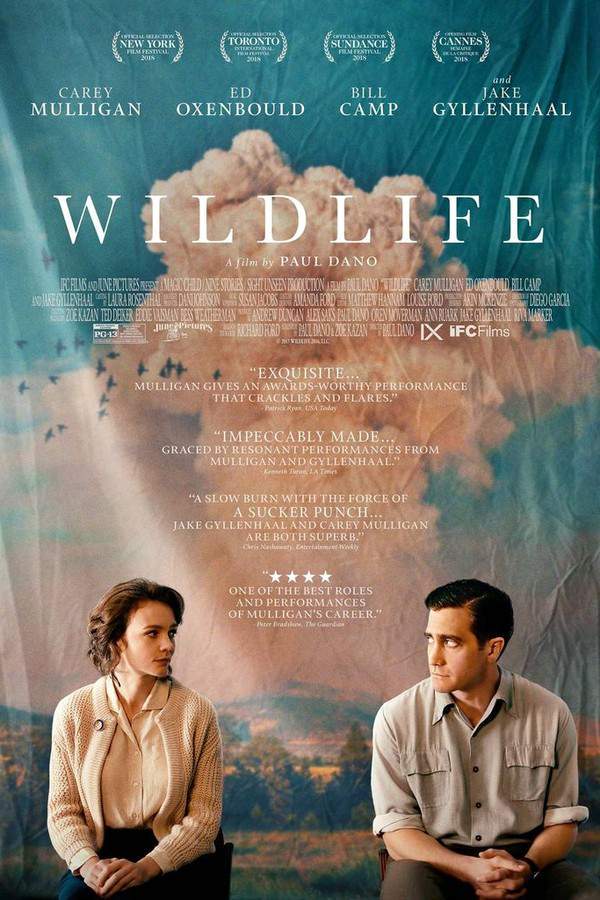
Wildlife (2018) movie poster

Plot Summary

Wildlife (2018) Plot Summary Explained

Release, runtime and language
2018 · 105 min · English
Echo score 77
JustWatch #12,047 10
Starring
Bill Camp, Jake Gyllenhaal, Mollie Milligan, Zoe Margaret Colletti, Carey Mulligan, Ed Oxenbould

In 1960s Montana, a raging forest fire looms over a small town, disrupting the lives of Jeanette and her teenage son, Joe. Their lives are further complicated when Joe's father and Jeanette's husband, a golf pro, leaves to fight the fire, abandoning them to face financial hardship and emotional turmoil. Jeanette struggles to provide for her son while Joe grapples with the absence of a parental figure and navigates a changing family dynamic.

On this page (8)
  1. 1 Where to watch
  2. 2 What happens: full plot
  3. 3 Plot questions answered
  4. 4 The book behind the movie
  5. 5 Movie threads
  6. 6 Movies like Wildlife
  7. 7 Categories
  8. 8 Every angle

Where to watch

Where to Watch Wildlife (2018)

Where can you watch Wildlife? Stream, rent or buy it in the US, including on AMC+, Netflix and Netflix Standard: current JustWatch availability with up-to-date prices.

Streaming availability powered by JustWatch

Full plot summary · contains spoilers

What Happens in Wildlife: Full Plot Summary

The whole story of Wildlife (2018) explained, from the opening scene to the final frame: every key event, every twist and what it all adds up to. Read it as a quick recap before the sequel, to check a scene you missed, or to finally understand what really happened.

In 1960, Jeanette Brinson and Jerry Brinson Brinson have recently moved to Great Falls, Montana, with their teenage son Joe Brinson. Tensions simmer after Jerry is fired from his job as a golf pro at a local country club. He is offered his old position back, but his pride keeps him from taking it. Instead of hunting for work, he sleeps in his car and spends nights watching the local firefighting crews combat a raging forest fire that grips the surrounding mountains. To help the family make ends meet while he searches for steady employment, Jeanette Brinson takes a job as a swimming instructor, though she initially tries to land a teaching post at a school. Their son Joe Brinson scales back his football ambitions and takes on a part-time gig at a local photography studio. The family’s financial strain grows as Jerry’s restlessness persists, and the escalating workload on Jeanette adds pressure to their fragile balance.

As the situation tightens, Jeannette speaks openly with Joe about the trouble in their marriage and the stress that shadows their daily life, a candidness that begins to spill into Joe’s school life. With money tight and uncertainty looming, Jeannette considers a possible move to a smaller place and is introduced to Warren Miller, a prosperous older man who runs a car dealership. She explains that she once taught him to swim and that Miller has offered her work and a path to a more secure future. The introduction shifts the family’s dynamic: Joe is left to cope with his mother’s growing absence as Jeannette spends more time with Miller.

One morning, Joe wakes to find his mother missing from the house. He goes to Miller’s dealership, only to discover that the receptionist doesn’t know who his mother is, underscoring the widening rift at home. After a dinner at Miller’s place, Miller shares a dance with Jeannette and ends up spending the night at Joe’s house, a moment Joe later confronts his mother about. Jeannette does not admit to loving Miller or abandoning Jerry, but she acknowledges that the affair could ease their financial burden and asks Joe to consider a better plan for their family’s future. Joe, however, makes clear he cannot.

The next morning, Joe packs a few belongings and heads toward a bus stop as snow begins to fall, signaling the end of the fires and an uneasy turning point for the family. Jerry returns home to a cool reception, and Jeannette reveals that she has started renting an apartment in town, leaving Joe with a choice about where he will live. Jerry presses Jeannette to admit the truth of the relationship, and in a heated moment he goes to Miller’s house, attempting to set it ablaze. Miller catches him and rebukes him, with Joe watching. Injured and desperate, Jerry pleads with Joe to help him escape before the police arrive, but Joe runs to the nearest police station, learning there that his father has not been arrested. When he returns, he learns from Jerry that Miller will not press charges, yet the marriage is effectively over.

Jeannette moves to Portland, Oregon, to teach, while Joe stays with Jerry, who has become a successful salesman. A weekend visit from Jeannette marks a strained but civil reunion, as she learns that Joe has earned a promotion and is on the honor roll. To commemorate the moment, Joe suggests a family portrait at the photography studio, a hopeful gesture that the three of them, despite the hurt, can share one last moment together. The scene closes on a quiet note: a family portrait that captures a complicated, lingering bond and the unspoken understanding that life has shifted beneath them, even as they attempt to move forward.
Last updated: February 25, 2026 at 08:10

Was this helpful?

Plot questions answered

Wildlife Plot Explained: Your Questions Answered

The questions people ask most about Wildlife (2018): what happens in the confusing scenes, why the characters do what they do, the twists, hidden details and what the ending means. Each answer contains spoilers.

Q1

Why does Jerry refuse to take his old job back at the country club?

Jerry's pride prevents him from accepting the position. After being fired from his golf pro job, he views returning to the same workplace as humiliating, even though the family desperately needs the income. His refusal signals his deeper instability and unwillingness to provide for his family, which sets the stage for the family's financial collapse.

Foreshadowing: Jerry's pride was evident when he first refused the job, foreshadowing his later destructive behavior and inability to function as a provider.

  • jerry brinson
  • pride
  • golf pro
  • job
  • unemployment
Q2

Why does Jeanette start an affair with Warren Miller?

Jeanette seeks financial security and emotional connection. With Jerry unable to work and provide, Miller offers a prosperous future through employment and stability. She explicitly tells Joe that the arrangement could help their financial situation, making clear her choice is driven by desperation rather than romantic passion.

Foreshadowing: Jeannette's earlier mention of needing to move to a smaller place and her discussion about financial stress foreshadow her willingness to seek help elsewhere.

  • jeanette brinson
  • warren miller
  • affair
  • financial security
  • desperation
Q3

Why does Joe choose to stay with Jerry instead of going with his mother?

Joe decides to stay with Jerry despite his father's failures because he believes his loyalty might motivate Jerry to become responsible. Joe also wants to maintain some connection to his old family life. The choice reflects the painful complexity of a child's love for a flawed parent, even when that parent has let him down.

Foreshadowing: Joe's earlier attempts to understand his father's situation and his discomfort with his mother's affair foreshadow his decision to remain loyal to Jerry.

  • joe brinson
  • jerry brinson
  • loyalty
  • choice
  • family
Q4

Why does Jerry try to burn down Miller's house?

Jerry acts out of jealousy and shame when he discovers Jeanette's affair. Drunk and desperate, he travels to Miller's house and attempts to set it ablaze as an act of revenge against both Miller and his wife's betrayal. The confrontation marks the complete collapse of his composure and the end of any hope for reconciliation.

Foreshadowing: Jerry's increasing drinking and restlessness throughout the film build to this violent outburst, showing his inability to cope with the situation.

  • jerry brinson
  • miller
  • fire
  • jealousy
  • violence
Q5

Why does Joe run to the police instead of helping his father escape?

Joe chooses to go to the police because he cannot support his father's criminal act of attempted arson. When Jerry, injured and desperate, begs him to help escape before the police arrive, Joe decides to do what he believes is right rather than enable his father's escape. This moment represents his painful rejection of blind family loyalty.

Foreshadowing: Joe's internal struggle throughout the film between loyalty to his parents and doing what is right builds to this decisive moment.

  • joe brinson
  • police
  • escape
  • arson
  • morality
Q6

What does the snow at the end represent?

The snow falls as Joe heads toward the bus stop, signaling the end of the wildfire season and the close of the family's crisis period. Symbolically, it represents a cleansing and the arrival of a new phase, the destructive fire is over, but it leaves permanent damage. The snow marks both an ending and the beginning of the family's fractured future.
Foreshadowing: The raging forest fire throughout the film mirrors the family's instability, and its end coincides with the family's permanent breakup.

  • snow
  • symbolism
  • fire
  • ending
  • change
Q7

Why does Jeanette tell Joe about her marriage problems?

Jeanette confides in Joe about the strain in her marriage because she has no one else to talk to and treats him as an emotional equal. She also seems to be preparing him for the possibility of her affair, testing whether he might accept that the arrangement could benefit the family's finances. Her openness, while perhaps inappropriate, reflects her desperation and isolation.

Foreshadowing: Jeannette's increasing candidness about their financial struggles and marriage tension foreshadows her eventual decision to seek help outside the marriage.

  • jeanette brinson
  • joe brinson
  • marriage
  • honesty
  • trust
Q8

Why does Joe quit football and start working at the photography studio?

Joe gives up football to take a part-time job at a photography studio, contributing to the family's finances during their hardship. The job adds responsibility to his life and marks his transition from boy to adult. Working at the studio also foreshadows his later involvement with capturing family memories, including the final portrait.

Foreshadowing: Joe's job at the photography studio directly leads to his suggestion of the final family portrait, connecting his adult responsibilities to his desire to preserve family memory.

  • joe brinson
  • football
  • photography studio
  • job
  • maturity
Q9

Why does Jeanette rent an apartment and give Joe a choice about where to live?

Jeanette begins renting an apartment in town before she ultimately moves to Portland, giving Joe the freedom to choose whether to stay with Jerry or come with her. This choice places the burden of decision on her son during an already difficult time, reflecting both her attempt to empower him and the irreversible nature of the family's breakdown.

Foreshadowing: Jeannette's earlier mention of possibly moving to a smaller place due to finances sets up this moment of permanent separation.

  • jeanette brinson
  • apartment
  • joe brinson
  • choice
  • separation
Q10

What does the final family portrait signify?

The family portrait at the end represents a final attempt to create a unified memory despite the family's collapse. Joe suggests it hoping they can share one last moment together, even though their relationships have fundamentally changed. The portrait captures their complicated bond, a carefully arranged moment that hints at lingering love beneath the hurt.

Foreshadowing: Joe's employment at the photography studio throughout the film foreshadows his role in arranging this final family moment.

  • family portrait
  • photography studio
  • reunion
  • memory
  • hope

Movie threads

More Movies Like Wildlife, by Mood & Story

Curated lists built around what makes Wildlife tick: the same mood, the same kind of story or the same emotional payoff. Each list explains why these movies belong together.

Family dramas seen through a child's eyes like Wildlife

Stories where a child witnesses the quiet collapse of their family unit. If you appreciated Wildlife's focus on a son watching his parents' marriage fail, you'll find similar emotional journeys here. These movies explore family conflict, domestic disillusionment, and the loss of innocence from a youthful perspective.

  • domestic
  • somber
  • reflective
  • tense
  • coming of age
  • quiet
  • Tone: melancholic, reflective, somber
  • Pacing: slow, deliberate, character-focused
Why these movies?

The story pattern: These narratives typically follow a young protagonist who acts as a quiet observer of domestic strife. The plot revolves around their gradual realization of their parents' flaws and the irreversible breakdown of their family's foundation, forcing them into a premature maturity.

Why they belong together: Movies are grouped here by their shared narrative perspective and core conflict. They all focus on the emotional impact of adult problems—infidelity, financial stress, emotional neglect—on a child, creating a poignant and intimate look at family disintegration.

Slow-burn dramas about domestic life like Wildlife

Character-driven stories where quiet discontent simmers into profound change. For viewers who liked Wildlife's patient, melancholic portrayal of a family coming apart. These movies share a slow pace, atmospheric tone, and focus on the emotional consequences of personal crises within ordinary settings.

  • melancholic
  • atmospheric
  • slow burn
  • domestic
  • somber
  • reflective
  • Tone: melancholic, atmospheric, bittersweet
  • Pacing: slow, atmospheric, lingering
Why these movies?

The story pattern: The narrative pattern involves a gradual build-up of domestic tension, often triggered by an external event or internal crisis. The story lingers on characters' emotional states, exploring their regrets, quiet desperation, and the bittersweet acceptance of a changed reality.

Why they belong together: These films are connected by their shared mood and pacing. They prioritize atmosphere and emotional realism over plot twists, using a slow, deliberate pace to immerse the viewer in a world of melancholic reflection and domestic unease.

If you liked this

Movies Like Wildlife

Similar movies to Wildlife: the same genre, themes or kind of story. Each one comes with its own plot summary, timeline and ending explained.

Browse all movie summaries

Categories

Movie Lists Featuring Wildlife

Wildlife appears in these hand-built movie categories. Each one groups movies by a specific mood, theme or story type, with their plot summaries and endings explained.

View all movie categories

Every angle

Wildlife (2018) Explained: Plot, Timeline & Characters

Everything about Wildlife in one place: what happens in the plot summary, the timeline in chronological order, the characters and meaning and a spoiler-free summary. What's After the Movie adds the cast, box office and post-credit scenes.

Coming soon on iOS and Android

The Plot Explained Movie Summary App

Plot summaries, endings explained and timelines on your phone. Catch up on any movie in minutes, save your favorites and never miss a twist again.

Be the first to know when we launch. Your email stays private, always.

Learn more about the app