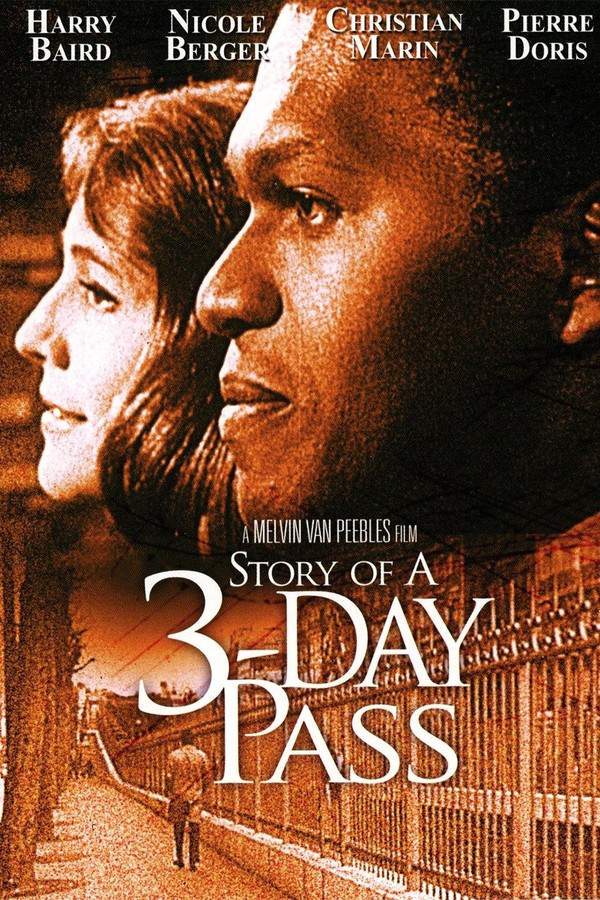
The Story of a Three-Day Pass
Year: 1968
Runtime: 87 min
Language: English
During a three-day leave in Paris, an American soldier named Turner experiences a brief respite from the war. He finds himself falling for Miriam, a captivating French woman, and their passionate romance blossoms amidst the beautiful city. However, their whirlwind affair is shadowed by the looming prospect of his departure and the complexities of racial prejudice, creating challenges that threaten to end their love before it fully develops.
Where to Watch The Story of a Three-Day Pass?
Find where to stream, rent, or buy The Story of a Three-Day Pass (1968) in the US with current JustWatch availability, up-to-date pricing, and platform listings for subscription, rental, and digital purchase options.







Warning: spoilers below!
Haven’t seen The Story of a Three-Day Pass yet? This summary contains major spoilers. Bookmark the page, watch the movie, and come back for the full breakdown. If you're ready, scroll on and relive the story!
Timeline – The Story of a Three-Day Pass (1968)
Trace every key event in The Story of a Three-Day Pass (1968) with our detailed, chronological timeline. Perfect for unpacking nonlinear stories, spotting hidden connections, and understanding how each scene builds toward the film’s climax. Whether you're revisiting or decoding for the first time, this timeline gives you the full picture.
Last updated: October 24, 2024 at 07:57
The Story of a Three-Day Pass (1968) Timeline Questions Answered – Chronology FAQ
Find frequently asked questions about the The Story of a Three-Day Pass (1968) timeline, including chronological order, nonlinear jumps, cause-and-effect links, and scene sequence clarifications. This timeline FAQ helps explain when key events happen, how moments connect, and why the story unfolds in that specific order.
Why does Turner's reflection call him an Uncle Tom?
Turner's reflection taunts him with being an Uncle Tom because he has just accepted a promotion to Assistant Orderly within the military hierarchy, a system dominated by white authority. The internal accusation represents his conflict between pursuing personal advancement in a racist institution and his identity as a Black man. His aimless wandering through Paris on the first day reflects this internal struggle, as he questions whether accepting the promotion makes him complicit in the very oppression he experiences.
What does Miriam's vision of African tribesmen mean?
During an intimate moment, Miriam imagines herself captured and sacrificed by tribal Africans in a forest. This surreal vision represents her deep-seated fears and societal conditioning about interracial relationships. The imagery juxtaposed with white protestors holding dehumanizing posters suggests her psychological struggle between her genuine feelings for Turner and the racial prejudice instilled in her by society. It reveals the psychological toll of their relationship on her, not a literal fear of Black people.
Why do Turner's comrades report his relationship to the captain?
Turner's fellow soldiers report his interracial relationship with Miriam to the captain, leading to his demotion back to the barracks. This action reflects the prevailing racial attitudes among some Black soldiers at the time, who internalized the prejudice of the broader society. Their report demonstrates how external social pressures and internalized racism could undermine Black solidarity, even among those sharing the same racial background.
Why does Turner fight the Spanish man who calls him "negrito"?
Turner gets into a fight when a Spanish man at the nightclub insults him with the term "negrito," which translates to a diminutive racial slur. While the term might seem less overtly hostile than an English slur, Turner recognizes it as a dehumanizing remark that reduces him to his skin color. His strong reaction reflects the cumulative racial tensions he has experienced throughout the film and the broader context of racial prejudice he faces as a Black American soldier in Europe.
Who are the African-American women who convince the commander to lift the restriction?
A group of African-American women visit Turner's commander and advocate for his reinstatement after his demotion. These women appear to be associated with the military base or local community. Their intervention successfully convinces the commander to lift the restriction on Turner, providing a moment of hope and solidarity. This scene highlights the importance of community support and shared struggle against racial discrimination.
What happens to Turner after his demotion?
After his comrades report his interracial relationship, Turner's captain demotes him from Assistant Orderly back to the regular barracks. This demotion represents the concrete consequences he faces for stepping outside the racial boundaries of the time. However, after the African-American women appeal on his behalf, there appears to be a possibility of reinstatement, though the final outcome remains unclear as the story ends with his realization that such relationships are futile.
Why does Turner's last day at the beach lead to his downfall?
On Turner's final day, his comrades unexpectedly arrive at the beach where he is with Miriam. Their presence initially seems friendly, a surprise visit. However, they use this opportunity to report his interracial relationship to the captain, turning what appears to be a friendly reunion into the catalyst for his demotion. This betrayal highlights how deeply entrenched racial prejudice was, even among fellow Black soldiers.
Why does Turner get a three-day pass?
Turner receives a three-day pass because his promotion to Assistant Orderly doesn't begin until Monday, giving him a brief window of free time. This three-day period becomes the entire timeframe for his romance with Miriam. The limited duration creates urgency and foreshadows the inevitable end of their relationship, the pass represents both freedom from military routine and the ticking clock on their affair.
Why does Miriam mention failing her certifying exam?
During the drive to Normandy, Miriam reveals she previously worked as a night school teacher but failed a certifying exam, which now allows her to work Saturdays instead. This detail explains her availability to spend time with Turner, it wasn't simply a fortunate coincidence. The failed exam represents another instance of her feeling inadequate or displaced, paralleling Turner's own sense of displacement as a Black soldier in France.
What is the significance of Turner playing football with French boys?
Turner enjoys playing football with local French boys on the beach, a moment that transcends racial and cultural barriers. This scene demonstrates his ability to connect with others on a human level, free from the prejudice he encounters elsewhere. The children's acceptance contrasts sharply with the adults' prejudice, suggesting that innocence and openness can overcome racial divisions, even if only temporarily.
What does Turner mean when he decides such amorous adventures are futile?
At the film's end, Turner concludes that pursuing relationships like the one with Miriam is futile under the circumstances. This realization comes after experiencing the joy of their romance, the psychological struggle of racial prejudice, his comrades' betrayal, and ultimately being unable to reach Miriam. The ending encapsulates the film's bittersweet tone, Turner accepts the harsh reality that societal barriers make interracial love impractical, even when genuine connection exists.

Explore Movie Threads
Discover curated groups of movies connected by mood, themes, and story style. Browse collections built around emotion, atmosphere, and narrative focus to easily find films that match what you feel like watching right now.
Brief Encounter Romances like in The Story of a Three-Day Pass
Intense, whirlwind romances that are beautiful but doomed by time.If you liked the fleeting yet intense romance in The Story of a Three-Day Pass, you'll appreciate these movies about brief encounters. They capture the beauty and heartache of love stories shadowed by an imminent end, offering similar bittersweet and reflective moods.

Brief Encounter In Shinjuku
1990

Love Affair
1994

An Affair to Remember
1957

Disappearing Acts
2000

Escape Me Never
1947

Old Acquaintance
1943

A Little Romance
1979

All I Desire
1953

Breezy
1973

One True Love
2000

For the Moment
1993

Every Time We Say Goodbye
1986

Before Sunrise
1995

A Perfect Ending
2012

A Summer Place
1959
Narrative Summary
Stories in this thread center on a powerful romantic connection that forms quickly, often during a vacation or a leave of absence. The narrative is driven by the couple's race against time to experience as much joy as possible, all while knowing their separation is inevitable.
Why These Movies?
These movies are grouped by their shared focus on the emotional potency of a time-limited romance. They blend high romance scores with a bittersweet or sad tone, creating a specific, poignant vibe that resonates with viewers who enjoy emotionally rich love stories.
Movies about Forbidden Love and Social Prejudice like The Story of a Three-Day Pass
Romantic relationships that must navigate the harsh realities of societal judgment.Discover movies similar to The Story of a Three-Day Pass that explore romance challenged by social prejudice. These films combine passionate relationships with thoughtful commentary on racial, class, or cultural barriers, creating complex and emotionally resonant dramas.

Passion Flower
1930

The Forbidden Street
1949

Ae Fond Kiss...
2004

The Wedding Banquet
1993

Son of the Gods
1930

The Sleeping Dictionary
2003

Love with the Proper Stranger
1963

What's Love Got to Do with It
1993
A Summer Place
1959
Empire of Light
2022

Salt on Our Skin
1992

Feast of Love
2007
Persuasion
1995

Love in the Buff
2012

The Mistress of Spices
2006
Narrative Summary
The narrative pattern follows two characters from different backgrounds who fall in love. Their relationship is tested by the pervasive judgment and rules of the society around them, forcing them to confront whether their connection can survive in a world that disapproves.
Why These Movies?
This thread groups films where the central conflict of the romance is external societal pressure. They share a specific blend of high romance with the dramatic weight of social commentary, resulting in a reflective and often bittersweet viewing experience.
Unlock the Full Story of The Story of a Three-Day Pass
Don't stop at just watching - explore The Story of a Three-Day Pass in full detail. From the complete plot summary and scene-by-scene timeline to character breakdowns, thematic analysis, and a deep dive into the ending - every page helps you truly understand what The Story of a Three-Day Pass is all about. Plus, discover what's next after the movie.
The Story of a Three-Day Pass Summary
Read a complete plot summary of The Story of a Three-Day Pass, including all key story points, character arcs, and turning points. This in-depth recap is ideal for understanding the narrative structure or reviewing what happened in the movie.

Characters, Settings & Themes in The Story of a Three-Day Pass
Discover the characters, locations, and core themes that shape The Story of a Three-Day Pass. Get insights into symbolic elements, setting significance, and deeper narrative meaning - ideal for thematic analysis and movie breakdowns.


